Loading...
John Lambert vs Samori Toure
Samori Toure leads by 13.8 pts · 2 figures compared
…
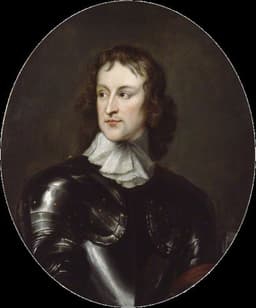
John Lambert
General · Modern
56.7Total
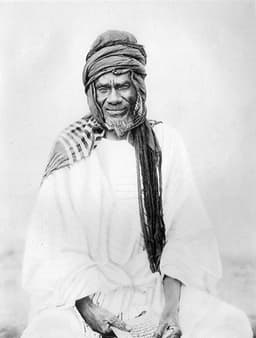
Samori Toure
General · Modern
70.5Total
Basic Information
Born
1619
1830
Died
1684
1900
Era
Modern
Modern
Nationality
England
Wassoulou Empire
Occupation
General
General
Civilization
Western
Other
Score Comparison
Military (10%)
70.0
60.0
Political (20%)
45.0
78.0
Influence (20%)
59.0
68.0
Legacy (20%)
50.0
72.0
Leadership (15%)
68.0
72.0
Strategy (15%)
55.0
70.0
TOTAL
56.7
70.5
John Lambert — Complete Timeline
1648 AD
Battle of PrestonWar◆ Major
John Lambert commanded parliamentary forces at the Battle of Preston, defeating a Scottish royalist army. The victory helped secure the parliamentary cause in the Second English Civil War.
BattleEnglish Civil WarParliament
Impact: national
1653 AD
Drafted the Instrument of GovernmentPolitical Action◆ Major
John Lambert was the principal author of the Instrument of Government, the written constitution that established the Protectorate under Oliver Cromwell. The document created a Lord Protector and a Council of State, but was never fully implemented.
ConstitutionProtectorateCromwell
Impact: nationalconstructive
1662 AD
Exiled to GuernseyPolitical Action◆ Major
After the Restoration, John Lambert was tried for treason and exiled to the island of Guernsey. He spent the remainder of his life in captivity, never regaining political influence.
ExileRestorationPunishment
Impact: nationaltragic
Samori Toure — Complete Timeline
1878 AD
Establishment of the Wassoulou EmpirePolitical Action
Samori Toure founded the Wassoulou Empire in West Africa, uniting various Mandinka states under his rule. He established a centralized administration and a professional army, creating a powerful state that resisted French expansion.
EmpireWassoulouUnification
Impact: regionalconstructive
1880 AD
Military Reforms and ModernizationReform◆ Major
Samori Toure modernized his army by importing firearms from European traders and establishing a standing army of up to 35,000 men. He organized his forces into regular units and introduced new tactics, making them effective against French troops.
Military ReformFirearmsArmy
Impact: regionalconstructive
1882 AD
First Franco-Wassoulou WarWar◆ Major
Samori Toure's forces fought the French army in the first major conflict between the Wassoulou Empire and France. The war ended with a treaty in 1886, recognizing Samori's control over the Niger River region.
WarFranceTreaty
Impact: regional
1891 AD
Second Franco-Wassoulou WarWar◆ Major
The French resumed hostilities, forcing Samori to retreat eastward. He employed a scorched-earth strategy, destroying villages and crops to deny resources to the French, prolonging the conflict for years.
WarScorched EarthRetreat
Impact: regionaltragic
1898 AD
Capture and ExileWar
Samori Toure was captured by French forces after a long campaign. He was exiled to Gabon, where he died in 1900. His capture ended the Wassoulou Empire and marked the completion of French conquest in West Africa.
CaptureExileEnd of Empire
Impact: regionaltragic
Expert Analysis
John Lambert vs Samori Toure
# The General Who Built an Empire, and the General Who Wrote a Constitution
On a dusty battlefield in West Africa in 1898, an aging warrior in his sixties watched his empire crumble around him. Samori Toure had spent two decades outmaneuvering the French army, retreating eastward with his people, burning villages behind him so the enemy would find nothing but ash. A few thousand miles away, in a cold stone cell on the island of Guernsey, another old soldier—John Lambert—sat in exile, his pen stilled after years of drafting constitutions and commanding armies. Both men were generals. Both had risen from obscurity to shape the destiny of nations. But one built an empire with gunpowder and diplomacy, while the other built a republic with ink and parchment. What drove them down such different paths?
Origins
Samori Toure was born around 1830 into a family of traders in what is now Guinea. His early life was shaped by the chaos of a collapsing old order: the great Mali Empire was a memory, the slave trade was ending, and European powers were beginning to carve up Africa. He learned to read the Quran, to negotiate with merchants from the coast, and to read the shifting alliances of tribal chieftains. The world he inherited was one of constant warfare and opportunity, where a man of ambition could carve out a kingdom with a musket and a keen sense of timing.
John Lambert was born in 1619 into the gentry of Yorkshire, England. His world was equally turbulent, but the conflicts were fought with pamphlets and parliamentary speeches as much as with swords. The English Civil War was brewing, a struggle between king and Parliament, between divine right and representative government. Lambert was educated in law and theology, and he entered adulthood when the question of who should rule—a monarch or the people—was being settled by blood.
Two men, two worlds: one where power came from the barrel of a gun and the loyalty of clans, the other where power came from votes, alliances, and the legitimacy of written law.
Rise to Power
Samori Toure’s path to power was forged in war. In the 1870s, he began uniting the fragmented Mandinka states under his leadership, using a combination of military force and marriage alliances. By 1878, he had established the Wassoulou Empire, a sprawling territory that stretched across modern Guinea, Mali, and Ivory Coast. His genius was not just in conquest but in organization: he created a centralized administration, collected taxes, and built a network of roads and fortifications. He understood that to survive, he needed not just an army but a state.
John Lambert rose through the ranks of the Parliamentary army during the Wars of the Three Kingdoms. He was no Cromwell—he lacked the fiery charisma and the iron will—but he was a brilliant organizer and a steady commander. At the Battle of Preston in 1648, he outflanked a Scottish royalist army, capturing thousands of prisoners and effectively ending the Second Civil War. His reward was not land or treasure but political influence. By 1653, he had become the principal architect of the Instrument of Government, the written constitution that established the Protectorate under Oliver Cromwell. Lambert believed that a nation could be governed by laws, not by the whims of a king.
Leadership & Governance
Samori Toure ruled as a traditional African emperor, but he was also a modernizer. In 1880, he reformed his army, importing thousands of breech-loading rifles from European traders and establishing a standing army of up to 30,000 men. He drilled his soldiers in European-style tactics, built factories to repair weapons, and even experimented with a rudimentary telegraph system. His political wisdom lay in his ability to balance the demands of local chiefs with the need for centralized control. He was a master of diplomacy, playing the French against the British and the British against local rivals.
John Lambert’s governance was of a different order. He helped draft a constitution that created a written framework for a republic—a radical idea in the 17th century. The Instrument of Government established a separation of powers between a Lord Protector (Cromwell), a Council of State, and a Parliament. It was flawed, rigid, and ultimately short-lived, but it was a landmark in political thought. Lambert’s leadership style was pragmatic and legalistic; he believed in institutions, not personalities. He was a soldier who thought like a lawyer.
Triumph & Tragedy
Samori Toure’s greatest triumph was his resistance itself. For nearly two decades, he held the French at bay, retreating eastward in a masterful campaign of scorched earth and guerrilla warfare. In 1891, when the French resumed hostilities, he evacuated entire populations, destroyed crops, and poisoned wells. He kept his army intact and his empire alive. But his tragedy was inevitable: the French had unlimited resources, modern artillery, and the will to conquer. In 1898, he was betrayed by a local ally, captured, and exiled to Gabon. He died there in 1900, a prisoner in a land that was not his own.
John Lambert’s triumph was the Instrument of Government, a document that influenced later republican movements across Europe. But his tragedy was the Restoration. When Charles II returned to the throne in 1660, Lambert was tried for treason. He had helped execute a king and abolish the monarchy; now he was at the mercy of the man whose father he had condemned. He was exiled to Guernsey, where he lived out his final years in quiet obscurity, writing and reflecting on the revolution that had consumed his life.
Character & Destiny
Samori Toure was a man of iron resolve. He never surrendered, never compromised his vision of an independent Wassoulou. His personality was shaped by the harsh realities of West African politics: trust was a luxury, betrayal was common, and survival depended on constant vigilance. He was a pragmatist who could be ruthless—he ordered the destruction of entire villages to slow the French advance—but he was also a statesman who built schools, courts, and a functioning bureaucracy.
John Lambert was a man of principle and intellect. He believed in the rule of law, even when it meant opposing his own allies. He fell out with Cromwell over the dissolution of Parliament and later opposed the army’s decision to restore the monarchy. His tragedy was that he was a republican in an age that was not ready for one. He fought for a constitution, but the people he fought for ultimately chose a king.
Legacy
Samori Toure is remembered today as a hero of African resistance, a symbol of the struggle against colonialism. His name is taught in schools across West Africa; his image appears on currency and stamps. He is celebrated for his military genius, his political acumen, and his refusal to bow to European domination. But his legacy is also a reminder of the cost of that resistance—the villages burned, the lives lost, the empire that crumbled into dust.
John Lambert is a footnote in English history, remembered mainly by scholars of the Civil War and constitutional law. He has no statues, no national holidays. But his legacy is embedded in the idea that a nation can be governed by a written constitution, that power can be divided and checked, that the people can rule themselves. The Instrument of Government was flawed, but it was a step toward the modern democratic state.
Conclusion
Two generals, two empires, two fates. Samori Toure built a kingdom with blood and iron, only to see it swallowed by a European empire. John Lambert built a constitution with ink and ideas, only to see it discarded by a restored monarchy. One fought for independence, the other for republicanism. Both lost. But their losses were not meaningless. Samori Toure’s resistance forced the French to pay a heavy price for their conquest, and his story inspires generations who still struggle against domination. John Lambert’s constitution was a blueprint for a future that would eventually arrive, in England and elsewhere.
Perhaps the deepest difference between them lies in what they believed power should serve. Samori Toure believed power was for survival—for protecting his people, his land, his way of life. John Lambert believed power was for justice—for creating a system that could govern without a king. One was a realist, the other an idealist. Both were warriors. Both were makers of history. And both, in their own ways, left the world a little different than they found it.
Rankings
🥇
Samori ToureLeader
Mil: 60.0Pol: 78.0Inf: 68.0
70.5
🥈
John Lambert
Mil: 70.0Pol: 45.0Inf: 59.0
56.7
+13.8 behind
How This Comparison Works
Algorithm
Each figure is scored on 6 dimensions (0—100 scale) based on structured historical data: Military (10%), Political (20%), Influence (20%), Legacy (20%), Leadership (15%), Strategy (15%). The weighted total produces the final ranking.
Data Sources
Scores are computed from structured sub-indicators in the database. Scale factors adjust for era (Ancient ×0.85, Modern ×1.0) and civilization size (Eastern ×1.05, Other ×0.80) to account for differences in population and military scale.
Maximum 3 Figures
Comparisons are limited to 2—3 figures to ensure readability and statistical meaningfulness.
Error Margins
±5 points per dimension — Sub-scores are derived from historical records with inherent uncertainty. Two figures within 5 points on a dimension should be considered roughly equivalent in that area.
Total Score Accuracy
±3 points overall — The weighted combination of 6 dimensions produces a total score with approximately ±3 points of uncertainty. Differences of less than 3 points are not statistically significant— the figures are effectively tied.
Known Limitations
- Historical records are incomplete and uneven across civilizations
- Figures from oral-tradition societies may be underrepresented
- Occupation labels can misclassify multi-role figures
- Scores measure capability and impact, not moral character
- Quantitative scoring is a comparison tool, not absolute truth
Capability Radar
Military (10%) — Battles & Warfare
Battles
65
75
Win Rate
60
65
Expansion
40
60
Political (20%) — Governance & Reform
Reform
55
75
Diplomacy
50
80
Economy
45
60
Influence (20%) — Cultural & Global Reach
Cultural
35
65
Global
30
55
Legacy (20%) — Historical Impact
Historical
50
70
Longevity
40
60
Leadership (15%) — Power & Stability
Tenure
60
70
Stability
40
55
Strategy (15%) — Tactics & Innovation
Strategy
65
85
Tactics
70
80
Reform
55
70
Similar Comparisons
Comments & Discussion
No comments yet. Be the first to share your thoughts!