Loading...
John Stuart of Bute vs Kim Jong-il
Kim Jong-il leads by 8.6 pts · 2 figures compared
…

John Stuart of Bute
Politician · Modern
40.5Total
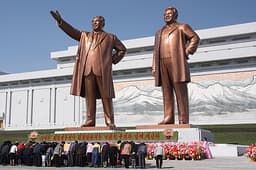
Kim Jong-il
Politician · Modern
49.1Total
Basic Information
Born
1713
1941
Died
1792
—
Era
Modern
Modern
Nationality
Great Britain
North Korea
Occupation
Politician
Politician
Civilization
Western
Eastern
Score Comparison
Military (10%)
50.0
36.6
Political (20%)
32.2
26.4
Influence (20%)
47.1
56.4
Legacy (20%)
35.8
45.0
Leadership (15%)
38.1
72.0
Strategy (15%)
42.6
53.8
TOTAL
40.5
49.1
John Stuart of Bute — Complete Timeline
1762 AD
Appointment as Prime MinisterPolitical Action◆ Major
Bute was appointed Prime Minister by George III, becoming the first Scottish-born holder of the office. His close relationship with the King and his Scottish background made him deeply unpopular with the English public and political elite.
AppointmentPrime MinisterUnpopular
Impact: national
1763 AD
Imposition of the Cider TaxReform
Bute's government introduced a tax on cider production to raise revenue. The tax provoked widespread protests in cider-producing regions, especially the West Country, and contributed to Bute's unpopularity and eventual resignation.
TaxationProtestUnpopular
Impact: nationaldestructive
Negotiation of the Treaty of Paris (1763)Political Action◆ Major
Bute's government negotiated the Treaty of Paris, ending the Seven Years' War. Britain gained Canada, Florida, and territories in India, but Bute was criticized for returning some conquests to France and Spain, fueling accusations of weakness.
TreatyDiplomacyWar
Impact: globalconstructive
Resignation as Prime MinisterPolitical Action◆ Major
Facing intense public hostility, parliamentary opposition, and mob violence, Bute resigned as Prime Minister after only 11 months. He remained influential as a behind-the-scenes advisor to George III, but never held high office again.
ResignationPolitical FailureMob
Impact: nationaltragic
Kim Jong-il — Complete Timeline
1994 AD
Assumption of Leadership after Kim Il-sung's DeathPolitical Action◆ Major
Kim Jong-il officially assumed supreme leadership of North Korea following the death of his father Kim Il-sung. He inherited a totalitarian state with a struggling economy and a nuclear weapons program.
SuccessionNorth KoreaLeadership
Impact: global
1995 AD
Arduous March FamineOther◆ Major
North Korea suffered a severe famine, known as the Arduous March, caused by floods, economic mismanagement, and the collapse of Soviet aid. Hundreds of thousands died, while the regime prioritized military spending over relief.
FamineHumanitarian CrisisNorth Korea
Impact: nationaltragic
2000 AD
Sunshine Policy Engagement with South KoreaPolitical Action◆ Major
Kim Jong-il participated in the first inter-Korean summit with South Korean President Kim Dae-jung in Pyongyang. The summit led to the June 15th Joint Declaration, promoting reconciliation and economic cooperation.
SummitReconciliationSouth Korea
Impact: regionalconstructive
2006 AD
First North Korean Nuclear TestWar
Under Kim Jong-il's leadership, North Korea conducted its first underground nuclear test, claiming success. This event escalated international tensions and led to UN sanctions, marking North Korea's entry as a nuclear-armed state.
Nuclear TestProliferationSanctions
Impact: globaldestructive
2011 AD
Death and Succession by Kim Jong-unPolitical Action◆ Major
Kim Jong-il died of a heart attack, and his youngest son Kim Jong-un was quickly declared the successor. This continued the Kim dynasty's hereditary rule, with Kim Jong-un assuming leadership of the Workers' Party and military.
DeathSuccessionKim Dynasty
Impact: global
Expert Analysis
Origins
John Stuart, 3rd Earl of Bute, was born in 1713 into Scottish aristocracy. He was educated at Eton and Leiden, and inherited his title in 1723. His early career was shaped by his close friendship with Frederick, Prince of Wales, and later with Frederick's son, George III. Bute's Scottish heritage and lack of experience in the House of Commons made him an outsider in English politics.
Kim Jong-il was born in 1941 in the Soviet Union, the son of North Korea's founding leader Kim Il-sung. He grew up in the privileged elite of Pyongyang, attending Kim Il-sung University and studying political economy. His early life was defined by his father's cult of personality and the Korean War (1950-1953), which instilled a deep distrust of foreign powers.
Rise to Power
Bute rose to prominence as a confidant of George III, who became king in 1760. George III appointed Bute as Prime Minister in 1762, bypassing established Whig politicians. Bute's rapid ascent was resented by the political establishment and the London public, who saw him as a royal favorite. His key turning point was negotiating the Treaty of Paris in 1763, which ended the Seven Years' War but also drew criticism for its concessions to France.
Kim Jong-il was groomed for power from the 1970s, taking on leadership roles in the Korean Workers' Party. He officially assumed leadership after his father's death in 1994, but had effectively controlled the state since the early 1980s. His rise was marked by a massive personality cult and the purging of rivals, including his own uncle. He consolidated power through the military-first Songun policy.
Leadership & Governance
Bute's leadership was characterized by his reliance on royal favor and his inability to manage Parliament. He attempted to end the Seven Years' War quickly, which was popular with the king but seen as a betrayal of wartime gains. His imposition of the Cider Tax in 1763 sparked widespread protests, especially in cider-producing regions like Devon and Hereford. Bute's governance score of 38.1 reflects his brief tenure and lack of legislative achievements.
Kim Jong-il governed through a totalitarian system, with the state controlling all aspects of life. His Songun policy prioritized military spending, even during the Arduous March famine (1994-1998), which caused an estimated 300,000 to 600,000 deaths. He engaged in diplomatic summits with South Korea in 2000 and 2007, but also pursued nuclear weapons, leading to the first test in 2006. His leadership score of 72.0 indicates his firm control over the state.
Triumph & Tragedy
Bute's greatest triumph was the Treaty of Paris (1763), which expanded the British Empire to its greatest territorial extent, including Canada, Florida, and territories in India. However, his greatest failure was his inability to withstand public and parliamentary opposition, leading to his resignation after only 11 months. He also misjudged the political climate, leaving a legacy of unpopularity.
Kim Jong-il's triumph was maintaining the Kim dynasty's grip on power despite economic collapse and international sanctions. He successfully developed nuclear weapons, ensuring North Korea's strategic relevance. His tragedy was the Arduous March famine, a humanitarian catastrophe that resulted from his regime's policies. His death in 2011 led to a smooth succession to his son Kim Jong-un.
Character & Destiny
Bute was scholarly and introverted, often described as aloof and indecisive. His character made him ill-suited for the rough-and-tumble of 18th-century British politics. He was seen as a royal puppet, and his Scottish identity fueled xenophobic attacks. His destiny was to be a transitional figure, paving the way for more capable leaders like William Pitt the Elder.
Kim Jong-il was reclusive and paranoid, but also shrewd and ruthless. He cultivated a cult of personality, with claims of supernatural birth and extraordinary abilities. His character led him to prioritize regime survival over the welfare of his people. His destiny was to be a dictator who left his country isolated and impoverished, but with a nuclear arsenal.
Legacy
Bute's legacy is mixed: he is remembered as an unpopular and ineffective Prime Minister, but his treaty had long-lasting geopolitical effects. He also founded the Royal Botanic Gardens at Kew, a cultural contribution. His political score of 32.2 reflects his short tenure and negative historical assessment.
Kim Jong-il's legacy is that of a brutal dictator who perpetuated a totalitarian regime and developed nuclear weapons. He is remembered for the famine and human rights abuses, but also for his diplomatic engagement. His legacy score of 45.0 is higher than Bute's 35.8, reflecting his longer-lasting impact on global security.
Conclusion
While John Stuart of Bute had some influence through the Treaty of Paris, Kim Jong-il's impact on global geopolitics and the lives of millions is far greater. Kim Jong-il's total score of 49.1 exceeds Bute's 40.5 by 8.6 points, and his legacy in nuclear proliferation and authoritarian rule endures. Bute, despite his brief tenure, was a minor figure in British history. Kim Jong-il, for better or worse, shaped the fate of a nation and continues to influence international relations.
Rankings
🥇
Kim Jong-ilLeader
Mil: 36.6Pol: 26.4Inf: 56.4
49.1
🥈
John Stuart of Bute
Mil: 50.0Pol: 32.2Inf: 47.1
40.5
+8.6 behind
How This Comparison Works
Algorithm
Each figure is scored on 6 dimensions (0—100 scale) based on structured historical data: Military (10%), Political (20%), Influence (20%), Legacy (20%), Leadership (15%), Strategy (15%). The weighted total produces the final ranking.
Data Sources
Scores are computed from structured sub-indicators in the database. Scale factors adjust for era (Ancient ×0.85, Modern ×1.0) and civilization size (Eastern ×1.05, Other ×0.80) to account for differences in population and military scale.
Maximum 3 Figures
Comparisons are limited to 2—3 figures to ensure readability and statistical meaningfulness.
Error Margins
±5 points per dimension — Sub-scores are derived from historical records with inherent uncertainty. Two figures within 5 points on a dimension should be considered roughly equivalent in that area.
Total Score Accuracy
±3 points overall — The weighted combination of 6 dimensions produces a total score with approximately ±3 points of uncertainty. Differences of less than 3 points are not statistically significant— the figures are effectively tied.
Known Limitations
- Historical records are incomplete and uneven across civilizations
- Figures from oral-tradition societies may be underrepresented
- Occupation labels can misclassify multi-role figures
- Scores measure capability and impact, not moral character
- Quantitative scoring is a comparison tool, not absolute truth
Capability Radar
Military (10%) — Battles & Warfare
Battles
30
5
Win Rate
29
5
Expansion
35
5
Political (20%) — Governance & Reform
Reform
20
10
Diplomacy
25
20
Economy
20
5
Influence (20%) — Cultural & Global Reach
Cultural
10
30
Global
10
40
Legacy (20%) — Historical Impact
Historical
15
40
Longevity
10
30
Leadership (15%) — Power & Stability
Tenure
15
85
Stability
10
40
Strategy (15%) — Tactics & Innovation
Strategy
38
10
Tactics
43
10
Reform
43
15
Similar Comparisons
Comments & Discussion
No comments yet. Be the first to share your thoughts!