Loading...
John VIII Palaiologos vs Julius Caesar
Julius Caesar leads by 41.5 pts · 2 figures compared
…
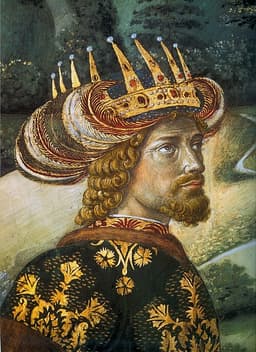
John VIII Palaiologos
Emperor · Medieval
41.3Total

Julius Caesar
General · Ancient
82.8Total
Basic Information
Born
1392
-100
Died
1448
-44
Era
Medieval
Ancient
Nationality
Byzantine Empire
Roman Republic
Occupation
Emperor
General
Civilization
Western
Western
Score Comparison
Military (10%)
10.2
88.0
Political (20%)
36.5
78.0
Influence (20%)
53.3
85.0
Legacy (20%)
45.0
82.0
Leadership (15%)
41.5
80.0
Strategy (15%)
39.6
85.0
TOTAL
41.3
82.8
John VIII Palaiologos — Complete Timeline
1438 AD
Travel to Italy for the Council of FlorencePolitical Action◆ Major
John VIII traveled to Italy with a large delegation of Orthodox clergy to participate in the Council of Florence, which aimed to negotiate church union. His presence underscored the Byzantine Empire's desperation for Western aid.
CouncilDiplomacyByzantine Empire
Impact: regional
1439 AD
Acceptance of the Union of FlorencePolitical Action◆ Major
John VIII Palaiologos, as Byzantine emperor, agreed to the Union of Florence, which temporarily reunited the Eastern Orthodox Church with the Roman Catholic Church under papal authority. This was done to secure Western military aid against the Ottoman Empire, but the union was widely rejected by the Byzantine populace and clergy.
Church UnionDiplomacyOttoman Wars
Impact: regionaldestructive
1448 AD
Death embittered after failed union and Ottoman advancesOther
John VIII died embittered, having failed to secure effective Western military support despite the Union of Florence. The Ottoman Empire continued its conquests, and the union deepened internal divisions within Byzantium.
DeathByzantine EmpireOttoman Wars
Impact: nationaltragic
Julius Caesar — Complete Timeline
58 BC
Gallic WarsWar◆ Major
Caesar, as proconsul of Gaul, launched a series of campaigns that conquered all of Gaul (modern France, Belgium, and parts of Switzerland). He fought numerous battles, including against the Helvetii, the Belgae, and the Gallic chieftain Vercingetorix. The wars brought immense wealth and a loyal army to Caesar.
Gallic WarsConquestRoman Expansion
Impact: regional
49 BC
Crossing the RubiconPolitical Action◆ Major
Caesar led Legio XIII across the Rubicon River into Italy, defying the Roman Senate's order to disband his army. This act triggered a civil war against Pompey and the Optimates, ultimately leading to Caesar's dictatorship and the end of the Roman Republic.
Roman Civil WarEnd of RepublicPower Struggle
Impact: global
48 BC
Battle of PharsalusWar◆ Major
Caesar's outnumbered army defeated the larger forces of Pompey the Great at Pharsalus in Greece. Caesar's tactical use of a reserve line to counter Pompey's cavalry charge proved decisive. Pompey fled to Egypt, where he was assassinated, leaving Caesar as the undisputed master of the Roman world.
Roman Civil WarBattleDecisive Victory
Impact: regional
44 BC
Appointment as Dictator for LifePolitical Action◆ Major
The Roman Senate appointed Caesar dictator perpetuo (dictator for life), granting him unprecedented personal power. This move concentrated military, legislative, and judicial authority in one person, effectively ending the Roman Republic's traditional system of checks and balances and alarming many senators.
DictatorshipEnd of RepublicPower Consolidation
Impact: regionaldestructive
Assassination on the Ides of MarchPolitical Action◆ Major
A group of Roman senators, led by Marcus Junius Brutus and Gaius Cassius Longinus, stabbed Caesar to death at a meeting of the Senate in the Theatre of Pompey. The assassination was intended to restore the Republic, but instead triggered another civil war that led to the rise of the Roman Empire.
AssassinationRoman PoliticsEnd of Republic
Impact: globaldestructive
Expert Analysis
john-viii-palaiologos-vs-julius-caesar
# The Weight of a Name: Caesar and the Last Byzantine Emperor
On a cold January morning in 1448, John VIII Palaiologos lay dying in Constantinople, his empire reduced to little more than the city walls around him. He had spent his reign begging for help from a West that did not care, sacrificing the soul of his church for promises of soldiers that never came. Fifteen centuries earlier, on the banks of the Rubicon, another man had faced a different kind of crisis—not of survival, but of ambition. Julius Caesar crossed that small river and set in motion events that would transform the world. Both men were emperors in all but name. One built an empire; the other watched his crumble. What separated them was not merely time, but the cruel mathematics of historical circumstance.
Origins
Caesar was born into the twilight of the Roman Republic, a world of senatorial intrigue, civil wars, and boundless expansion. His family, the Julii, claimed descent from the goddess Venus, but their political influence had waned. Young Caesar learned early that in Rome, reputation was currency, and debt was a tool. He borrowed fortunes to fund games and bribes, understanding that the Republic rewarded audacity. The Mediterranean was Rome’s oyster, and ambitious men could crack it open.
John VIII inherited a different world. By 1392, when he was born, the Byzantine Empire was a ghost of its former glory. The Fourth Crusade had shattered Constantinople in 1204, and the Ottomans had encircled what remained. John grew up in a palace that still gleamed with gold mosaics but whose treasury was empty. His father, Manuel II, had traveled to Europe begging for aid, only to be entertained and ignored. John learned a bitter lesson: the West saw Byzantium as a relic, not an ally.
Rise to Power
Caesar’s path was forged in blood and politics. He served as a military tribune in Asia, then as quaestor in Spain, where he wept before a statue of Alexander the Great, lamenting that he had achieved nothing at an age when Alexander had conquered the world. He climbed the ladder of Roman offices—aedile, praetor, consul—each step lubricated by bribes and alliances. His governorship of Gaul gave him an army, and his conquest of that vast land gave him wealth and loyalty. When the Senate ordered him to disband his legions, he chose war.
John’s rise was quieter, more desperate. He became co-emperor with his father in 1421, then sole emperor in 1425. There were no Gauls to conquer, no legions to command. His only military tool was diplomacy. He watched the Ottomans tighten their grip, capturing Thessalonica in 1430. The Byzantine army was a skeleton force; the imperial navy was a few rotting ships. John’s power rested not on swords but on the fading prestige of his title.
Leadership & Governance
Caesar governed as he conquered: with speed, clarity, and ruthlessness. As dictator, he reformed the calendar, granted citizenship to provincials, initiated public works, and centralized authority. His military genius lay in speed and logistics—he once marched his army 800 miles in three weeks. He understood that loyalty came from victory, and victory came from decisive action. His political wisdom, however, was flawed. He pardoned his enemies, believing they would be grateful. They were not.
John VIII governed from a position of weakness. His only significant political act was the Union of Florence in 1439, where he accepted papal supremacy in exchange for a crusade that never materialized. He traveled to Italy with Orthodox clergy, debated theology for months, and signed a document that most Byzantines rejected. The union split his court and his church. His military strategy was nonexistent—he had no army to command. Where Caesar could order legions, John could only write letters.
Triumph & Tragedy
Caesar’s greatest moment was his conquest of Gaul, which he recorded in his *Commentaries* with a clarity that still reads like a thriller. His triumph was complete: he had added a vast province to Rome, defeated a million enemies, and made himself the most powerful man in the world. His tragedy was the Ides of March, when sixty senators stabbed him to death in the Senate chamber. He fell at the base of Pompey’s statue, bleeding out on the marble floor, having achieved everything except the one thing he needed: a peaceful transition.
John’s greatest moment was his arrival in Venice in 1438, where he was greeted as the last emperor of the East. He rode through the canals in a golden barge, a living relic of Rome. His tragedy was everything that followed: the union he signed was rejected, the crusade he hoped for never came, and he died embittered in 1448, knowing that his city would fall. Five years later, Constantinople did fall, and John’s brother Constantine XI died fighting on the walls.
Character & Destiny
Caesar was audacity incarnate. He divorced his wife on suspicion, crossed the Rubicon with a single legion, and pardoned men who would later kill him. He believed that fortune favored the bold, and he was right—until he wasn’t. His personality shaped his decisions: he could not imagine defeat, so he never prepared for it. His destiny was to be both the destroyer of the Republic and the founder of the Empire, a paradox that still haunts Western history.
John was patience personified, but patience in a dying empire is just another word for despair. He accepted humiliation, theological compromise, and political isolation because he believed that survival required sacrifice. His personality was shaped by necessity: he could not be bold because he had no army; he could not be decisive because he had no options. His destiny was to be the emperor who tried everything and failed at all of it.
Legacy
Caesar’s legacy is the Roman Empire, the Latin language, the Julian calendar, and a name that became synonymous with ruler: Kaiser, Tsar, Caesar. He is remembered as a military genius, a political reformer, and a cautionary tale about ambition. His assassination did not save the Republic; it destroyed it.
John VIII’s legacy is more fragile. He is remembered, if at all, as the emperor who sold his church for nothing. The Union of Florence was repudiated by the Orthodox world, and his name is a footnote in the story of Byzantium’s fall. Yet there is a quiet tragedy in his memory: he was the last Byzantine emperor to travel to the West, the last to see the cathedrals of Italy, the last to believe that the old world could be saved.
Conclusion
Standing at the edge of history, Caesar and John VIII faced the same question: how do you lead when the world is changing? Caesar answered by changing the world himself, smashing the old order and building a new one on its ruins. John answered by trying to preserve the old order, sacrificing everything to keep it alive a little longer. One succeeded brilliantly and died violently; the other failed quietly and died with dignity. Their stories remind us that leadership is not just about skill or will—it is about the raw materials of history you are given. Caesar had a sword and a continent; John had a pen and a prayer. Both did what they could with what they had. That is all any leader can do.
Rankings
🥇
Julius CaesarLeader
Mil: 88.0Pol: 78.0Inf: 85.0
82.8
🥈
John VIII Palaiologos
Mil: 10.2Pol: 36.5Inf: 53.3
41.3
+41.5 behind
How This Comparison Works
Algorithm
Each figure is scored on 6 dimensions (0—100 scale) based on structured historical data: Military (10%), Political (20%), Influence (20%), Legacy (20%), Leadership (15%), Strategy (15%). The weighted total produces the final ranking.
Data Sources
Scores are computed from structured sub-indicators in the database. Scale factors adjust for era (Ancient ×0.85, Modern ×1.0) and civilization size (Eastern ×1.05, Other ×0.80) to account for differences in population and military scale.
Maximum 3 Figures
Comparisons are limited to 2—3 figures to ensure readability and statistical meaningfulness.
Error Margins
±5 points per dimension — Sub-scores are derived from historical records with inherent uncertainty. Two figures within 5 points on a dimension should be considered roughly equivalent in that area.
Total Score Accuracy
±3 points overall — The weighted combination of 6 dimensions produces a total score with approximately ±3 points of uncertainty. Differences of less than 3 points are not statistically significant— the figures are effectively tied.
Known Limitations
- Historical records are incomplete and uneven across civilizations
- Figures from oral-tradition societies may be underrepresented
- Occupation labels can misclassify multi-role figures
- Scores measure capability and impact, not moral character
- Quantitative scoring is a comparison tool, not absolute truth
Capability Radar
Military (10%) — Battles & Warfare
Battles
10
95
Win Rate
10
92
Expansion
5
97
Political (20%) — Governance & Reform
Reform
20
90
Diplomacy
60
85
Economy
15
82
Influence (20%) — Cultural & Global Reach
Cultural
30
88
Global
30
94
Legacy (20%) — Historical Impact
Historical
40
95
Longevity
30
96
Leadership (15%) — Power & Stability
Tenure
40
75
Stability
10
60
Strategy (15%) — Tactics & Innovation
Strategy
10
94
Tactics
10
96
Reform
5
88
Similar Comparisons
Comments & Discussion
ImperatorUltor6/17/2026
Comparing Palaiologos to Caesar is like comparing a dying candle to a supernova. Caesar crossed the Rubicon with a single legion and rewrote history; John VIII crossed the Bosporus begging for crusaders who never showed. Caesar's Gaul campaigns conquered 800 cities; John's reign saw Constantinople's population drop below 50,000. One man bent fate to his will; the other was crushed by it. This isn't a comparison—it's a tragedy of mismatched ambition and circumstance.
铁幕统计员6/17/2026
数据会撒谎:凯撒死于23处刀伤时仍掌控着罗马的粮道,而巴列奥略王朝连卫城的水道都修不起了。1453年君士坦丁堡陷落时守军不到7000人,凯撒在阿莱西亚战役却能调动6万罗马军团。所谓「历史巧合论」不过是给失败者找台阶——当你的帝国连铸币厂都停工了,就别跟一个征服了300万平方公里的男人比格局。|
NobilissimusSceptic6/17/2026
Spare me the romanticized decline narrative. John VIII wasn't some tragic philosophical emperor—he was a mediocre diplomat who botched the Council of Florence in 1439, trading Orthodox theology for empty Western promises. At least Caesar knew how to leverage religion practically, appointing himself pontifex maximus to control Roman politics. John got excommunicated by both churches and zero troops. That's not "unfortunate timing"; that's strategic incompetence dressed up in imperial purple.
帕列奥列格考据党6/17/2026
你们都在谈政治,却忽略了一个致命差异:凯撒活了56岁,他的《高卢战记》至今是拉丁文范本;约翰八世48岁死于脚气病,连本像样的回忆录都没留下。当凯撒在元老院朗诵《致西塞罗的信件》时,约翰正用希腊文乞求威尼斯商人的贷款——一个在创造文明,一个在典当文明。这不是历史不同,而是灵魂千差万别。|