Loading...
Joko Widodo vs Josephine Teo
Joko Widodo leads by 7.3 pts · 2 figures compared
…
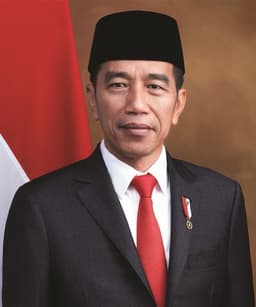
Joko Widodo
Politician · Modern
49.5Total

Josephine Teo
Politician · Modern
42.2Total
Basic Information
Born
1961
1968
Died
—
—
Era
Modern
Modern
Nationality
Indonesia
Singapore
Occupation
Politician
Politician
Civilization
Eastern
Eastern
Score Comparison
Military (10%)
12.6
14.2
Political (20%)
53.8
68.0
Influence (20%)
59.0
50.2
Legacy (20%)
44.2
37.5
Leadership (15%)
72.0
40.0
Strategy (15%)
35.5
26.3
TOTAL
49.5
42.2
Joko Widodo — Complete Timeline
2012 AD
Elected Governor of JakartaPolitical Action◆ Major
Joko Widodo, known as Jokowi, was elected Governor of Jakarta, the capital of Indonesia. His campaign focused on clean governance and direct engagement with citizens, and his tenure was marked by improvements in public services and infrastructure.
ElectionIndonesiaJakarta
constructive
2014 AD
Elected President of IndonesiaPolitical Action
Jokowi won the Indonesian presidential election, defeating Prabowo Subianto. His victory was historic as he was the first president from outside the political and military elite, coming from a humble background as a furniture salesman.
ElectionIndonesiaDemocracy
Impact: nationalconstructive
2015 AD
Launched Infrastructure Development ProgramReform◆ Major
Jokowi's government launched an ambitious infrastructure development program, including toll roads, ports, airports, and railways across the Indonesian archipelago. The program aimed to boost connectivity and economic growth, but faced challenges in funding and land acquisition.
InfrastructureIndonesiaDevelopment
Impact: nationalconstructive
2019 AD
Re-elected PresidentPolitical Action◆ Major
Jokowi was re-elected for a second term, again defeating Prabowo Subianto. The election was marked by allegations of irregularities and post-election protests, but Jokowi's victory was confirmed by the Constitutional Court.
ElectionIndonesiaRe-election
Impact: national
2022 AD
Relocated Capital to NusantaraPolitical Action◆ Major
Jokowi announced the relocation of Indonesia's capital from Jakarta to Nusantara in East Kalimantan. The move aimed to address Jakarta's overcrowding and environmental issues, but faced criticism over costs, environmental impact, and lack of transparency.
Capital RelocationIndonesiaPolicy
Impact: nationalconstructive
Josephine Teo — Complete Timeline
2018 AD
Appointed Minister for ManpowerPolitical Action◆ Major
Teo was appointed Minister for Manpower, overseeing labor policies, foreign worker quotas, and workplace safety. She implemented measures to tighten foreign labor inflows and boost local employment.
Cabinet AppointmentLabor Policy
Impact: nationalconstructive
2021 AD
Launched the Digital for Life MovementReform◆ Major
Teo launched the Digital for Life movement, a national initiative to promote digital literacy and lifelong learning among Singaporeans. The program aimed to equip citizens with skills for the digital economy and close the digital divide.
Digital LiteracySocial Initiative
Impact: nationalconstructive
Appointed Minister for Communications and InformationPolitical Action◆ Major
Josephine Teo was appointed Minister for Communications and Information, overseeing Singapore's digital transformation, cybersecurity, and media policy. She led initiatives to expand digital inclusion and strengthen the nation's tech infrastructure.
Cabinet AppointmentDigital Policy
Impact: nationalconstructive
2022 AD
Introduced the Online Safety (Miscellaneous Amendments) BillReform◆ Major
Teo introduced legislation to enhance online safety, requiring social media platforms to block harmful content such as cyberbullying and extremist material. The bill expanded regulatory powers over digital platforms in Singapore.
Online SafetyLegislation
Impact: nationalconstructive
Expert Analysis
Origins
Joko Widodo (born 1961 in Surakarta, Central Java) came from a humble family; his father was a wood seller. He studied forestry at Gadjah Mada University and worked as a furniture exporter before entering politics. His background as a businessman shaped his pragmatic, results-oriented approach. Josephine Teo (born 1968 in Singapore) was born to a middle-class family; her father was a teacher. She studied economics at the National University of Singapore and later earned a master's in public policy. She worked as a civil servant and union leader before entering politics. Both rose from modest beginnings, but Jokowi's story of self-made success resonated more in a developing democracy.
Rise to Power
Jokowi's rise began as mayor of Surakarta (2005-2012), where he gained national attention for clean governance and direct engagement. He was elected Governor of Jakarta in 2012, defeating the incumbent. In 2014, he won the Indonesian presidency against Prabowo Subianto with 53.2% of the vote, becoming the first president not from the military or political elite. Josephine Teo entered politics in 2006 as a Nominated Member of Parliament; she was elected as a Member of Parliament for Bishan-Toa Payoh in 2011. She held various ministerial roles, including Second Minister for Manpower and Minister for Communications and Information (2018-2021). Her rise was steady within the ruling People's Action Party, without the dramatic outsider narrative of Jokowi.
Leadership & Governance
Jokowi's leadership style is hands-on and populist. He launched an ambitious infrastructure program (2015-2024), building 1,800 km of toll roads, 15 new airports, and 16 new seaports. His government also relocated the capital to Nusantara, a $35 billion project to address Jakarta's overpopulation. He scored 72.0 in leadership, reflecting his ability to push large projects despite bureaucratic hurdles. Josephine Teo focused on digital transformation: she launched the Digital for Life movement to promote digital literacy and introduced the Online Safety Bill to regulate social media. She also tightened foreign worker quotas as Manpower Minister. Her leadership score of 40.0 suggests less transformative impact compared to Jokowi's large-scale infrastructure.
Triumph & Tragedy
Jokowi's greatest success is his infrastructure legacy, which improved connectivity and reduced logistics costs. He also achieved stable economic growth (around 5% annually). However, his human rights record is criticized, including a crackdown on protesters in Papua and the passage of the Job Creation Law that weakened labor protections. His capital relocation faces delays and environmental concerns. Josephine Teo's triumphs include advancing Singapore's digital economy and online safety regulations. However, her tenure as Manpower Minister saw criticism over foreign worker policies during the COVID-19 pandemic, including dormitory outbreaks that affected migrant workers. Her influence score of 50.2 reflects moderate impact.
Character & Destiny
Jokowi is known as a pragmatic, consensus-driven leader who avoids ideological confrontation. He often visits slums and markets, earning him the nickname 'the man of the people'. However, his tendency to compromise has been seen as weakness, allowing conservative Islamist groups to gain influence. Josephine Teo is methodical and detail-oriented, reflecting her technocratic background. She has been effective in her portfolio but lacks the charisma to drive broader political change. Their characters shaped their fates: Jokowi's populism enabled him to push big projects, while Teo's caution limited her to incremental reforms.
Legacy
Jokowi's legacy will be defined by his infrastructure projects and the capital move, which will shape Indonesia for decades. His political style broke the pattern of elite rule, though his compromises weakened democratic institutions. He scored 44.2 in legacy. Josephine Teo's legacy is tied to Singapore's digital policies; her online safety laws set a precedent for content regulation. However, her impact is more administrative than transformative. Her legacy score of 37.5 reflects this.
Conclusion
Joko Widodo had greater impact than Josephine Teo, as evidenced by his higher total score (49.5 vs. 42.2). His infrastructure program transformed Indonesia's physical landscape, while his election broke political norms. Teo's contributions to digital policy are significant but limited to a city-state. Jokowi's decisions affect 270 million people; Teo's affect 5.7 million. Thus, Jokowi's leadership and influence outweigh Teo's policy achievements.
Rankings
🥇
Joko WidodoLeader
Mil: 12.6Pol: 53.8Inf: 59.0
49.5
🥈
Josephine Teo
Mil: 14.2Pol: 68.0Inf: 50.2
42.2
+7.3 behind
How This Comparison Works
Algorithm
Each figure is scored on 6 dimensions (0—100 scale) based on structured historical data: Military (10%), Political (20%), Influence (20%), Legacy (20%), Leadership (15%), Strategy (15%). The weighted total produces the final ranking.
Data Sources
Scores are computed from structured sub-indicators in the database. Scale factors adjust for era (Ancient ×0.85, Modern ×1.0) and civilization size (Eastern ×1.05, Other ×0.80) to account for differences in population and military scale.
Maximum 3 Figures
Comparisons are limited to 2—3 figures to ensure readability and statistical meaningfulness.
Error Margins
±5 points per dimension — Sub-scores are derived from historical records with inherent uncertainty. Two figures within 5 points on a dimension should be considered roughly equivalent in that area.
Total Score Accuracy
±3 points overall — The weighted combination of 6 dimensions produces a total score with approximately ±3 points of uncertainty. Differences of less than 3 points are not statistically significant— the figures are effectively tied.
Known Limitations
- Historical records are incomplete and uneven across civilizations
- Figures from oral-tradition societies may be underrepresented
- Occupation labels can misclassify multi-role figures
- Scores measure capability and impact, not moral character
- Quantitative scoring is a comparison tool, not absolute truth
Capability Radar
Military (10%) — Battles & Warfare
Battles
16
16
Win Rate
18
14
Expansion
19
20
Political (20%) — Governance & Reform
Reform
60
40
Diplomacy
55
45
Economy
60
50
Influence (20%) — Cultural & Global Reach
Cultural
40
20
Global
45
20
Legacy (20%) — Historical Impact
Historical
35
15
Longevity
30
10
Leadership (15%) — Power & Stability
Tenure
65
45
Stability
55
50
Strategy (15%) — Tactics & Innovation
Strategy
26
26
Tactics
25
26
Reform
27
28
Similar Comparisons
Comments & Discussion
No comments yet. Be the first to share your thoughts!