Loading...
Joko Widodo vs Napoleon Bonaparte
Napoleon Bonaparte leads by 21.4 pts · 2 figures compared
…
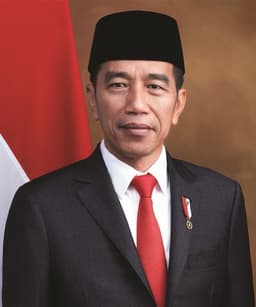
Joko Widodo
Politician · Modern
49.5Total

Napoleon Bonaparte
General · Modern
70.9Total
Basic Information
Born
1961
1769
Died
—
1821
Era
Modern
Modern
Nationality
Indonesia
France
Occupation
Politician
General
Civilization
Eastern
Western
Score Comparison
Military (10%)
12.6
94.0
Political (20%)
53.8
72.0
Influence (20%)
59.0
40.0
Legacy (20%)
44.2
80.0
Leadership (15%)
72.0
78.0
Strategy (15%)
35.5
90.0
TOTAL
49.5
70.9
Joko Widodo — Complete Timeline
2012 AD
Elected Governor of JakartaPolitical Action◆ Major
Joko Widodo, known as Jokowi, was elected Governor of Jakarta, the capital of Indonesia. His campaign focused on clean governance and direct engagement with citizens, and his tenure was marked by improvements in public services and infrastructure.
ElectionIndonesiaJakarta
constructive
2014 AD
Elected President of IndonesiaPolitical Action
Jokowi won the Indonesian presidential election, defeating Prabowo Subianto. His victory was historic as he was the first president from outside the political and military elite, coming from a humble background as a furniture salesman.
ElectionIndonesiaDemocracy
Impact: nationalconstructive
2015 AD
Launched Infrastructure Development ProgramReform◆ Major
Jokowi's government launched an ambitious infrastructure development program, including toll roads, ports, airports, and railways across the Indonesian archipelago. The program aimed to boost connectivity and economic growth, but faced challenges in funding and land acquisition.
InfrastructureIndonesiaDevelopment
Impact: nationalconstructive
2019 AD
Re-elected PresidentPolitical Action◆ Major
Jokowi was re-elected for a second term, again defeating Prabowo Subianto. The election was marked by allegations of irregularities and post-election protests, but Jokowi's victory was confirmed by the Constitutional Court.
ElectionIndonesiaRe-election
Impact: national
2022 AD
Relocated Capital to NusantaraPolitical Action◆ Major
Jokowi announced the relocation of Indonesia's capital from Jakarta to Nusantara in East Kalimantan. The move aimed to address Jakarta's overcrowding and environmental issues, but faced criticism over costs, environmental impact, and lack of transparency.
Capital RelocationIndonesiaPolicy
Impact: nationalconstructive
Napoleon Bonaparte — Complete Timeline
1799 AD
Coup of 18 BrumaireOther◆ Major
Napoleon Bonaparte, with support from his brother Lucien and key political figures, overthrew the Directory in a bloodless coup. He established the Consulate with himself as First Consul, effectively becoming the ruler of France. This event ended the French Revolution's most unstable period.
French RevolutionCoupRise to Power
Impact: regional
1804 AD
Promulgation of the Napoleonic CodeOther◆ Major
Napoleon enacted the Civil Code of the French, known as the Napoleonic Code, a comprehensive set of laws that replaced the fragmented feudal legal systems. The code established legal equality, protected property rights, and secularized law. It became the basis for legal systems in many European and world countries.
Legal ReformNapoleonic CodeCivil Law
Impact: globalconstructive
1805 AD
Battle of AusterlitzWar◆ Major
Napoleon's Grande Arm
Napoleonic WarsBattleDecisive Victory
Impact: global
1812 AD
Invasion of RussiaWar◆ Major
Napoleon led the Grande Arm
Napoleonic WarsInvasionDisaster
Impact: globaldestructive
1815 AD
Battle of WaterlooWar◆ Major
Napoleon's French army was defeated by the combined forces of the Duke of Wellington's Anglo-Allied army and Gebhard Leberecht von Bl
Napoleonic WarsBattleFinal Defeat
Impact: globaldestructive
Expert Analysis
joko-widodo-vs-napoleon-bonaparte
# The Emperor and the Wood Seller
On a June morning in 1815, Napoleon Bonaparte stood on a muddy field near Waterloo, watching his Imperial Guard march into cannon fire for the last time. Nearly two centuries later, in October 2014, Joko Widodo—a man who had once sold furniture for a living—stood on the steps of the presidential palace in Jakarta, raising his hand to take the oath of office. One was the master of Europe, the other the son of a bamboo trader. What separates these two figures is not merely the distance between Paris and Java, but the chasm between two visions of power: one built on conquest, the other on competence.
Origins
Napoleon was born in 1769 on Corsica, an island that had only recently become French. His family was minor nobility, but poor. He spoke Italian-accented French and carried the resentment of a provincial outsider. At nine, he entered military school, where classmates mocked his accent. He responded by burying himself in books—history, geography, military tactics—and emerged with the conviction that a man of will could reshape the world.
Joko Widodo was born in 1961 in Surakarta, Central Java, into a family that lived in a rented bamboo shack. His father sold wood, his mother peddled fried snacks. Jokowi—as everyone calls him—grew up surrounded by the sounds of street vendors and the smell of river mud. He studied forestry at university, then returned to Solo to build a furniture business. He was not a revolutionary; he was a survivor.
The difference in their origins is not just about class. Napoleon grew up in a Europe of kings and empires, where a young officer could dream of crowns. Jokowi came of age in Suharto’s authoritarian Indonesia, where politics was a closed game for generals and their sons. One era offered a stage for glory; the other demanded patience and survival.
Rise to Power
Napoleon’s ascent was meteoric. In 1793, at 24, he drove British forces from Toulon and was made a brigadier general. By 1796, he commanded the Army of Italy, where he won six battles in a month. His Italian campaign was not just a military triumph—it was a political one. He sent captured treasures to Paris, wrote his own bulletins, and made himself a hero. In 1799, he returned from Egypt to a France in chaos, staged a coup, and became First Consul. By 1804, he crowned himself Emperor.
Jokowi’s rise was slower, more deliberate. In 2005, he was elected mayor of Solo, a small city in Central Java. He spent five years cleaning up markets, building parks, and fixing traffic. He was not a speaker of grand visions; he walked through slums in cheap sneakers, shaking hands and listening. In 2012, he was elected Governor of Jakarta, the capital of 10 million people. Again, he focused on the mundane: flood control, health cards, bus lanes. In 2014, he ran for president against Prabowo Subianto, a former general with vast wealth and military backing. Jokowi won—by a narrow margin—because millions of ordinary Indonesians saw themselves in him.
Napoleon seized power through ambition and audacity. Jokowi earned it through trust and routine. One was a storm; the other was a tide.
Leadership & Governance
Napoleon governed as he fought: decisively, ruthlessly, brilliantly. He centralized the French state, created the Bank of France, and reformed education. But his greatest achievement was the Napoleonic Code—a legal framework that abolished feudal privileges, protected property rights, and established equality before the law. It was a work of genius that would influence legal systems from Europe to Latin America.
Yet his governance was inseparable from his ambition. He placed his brothers on thrones, censored the press, and treated Europe as a chessboard. His military genius—scoring 93.0 in strategy—was undeniable. He won 60 out of 70 battles. But he could not stop. In 1812, he invaded Russia with 600,000 men; fewer than 100,000 returned. The disaster broke his aura of invincibility.
Jokowi governed as he had as mayor: pragmatically, patiently, with an eye on infrastructure. His signature achievement was a massive building program—toll roads across Sumatra, airports in remote islands, the first Jakarta subway. In 2019, he moved the capital from sinking Jakarta to a new city called Nusantara in Borneo, a project that symbolized his vision: development over drama.
His political score of 72.0 reflects a different kind of leadership. He did not command armies; he negotiated with coalitions. He brought his former rival Prabowo into his cabinet as defense minister—a move that baffled idealists but stabilized his government. Where Napoleon imposed, Jokowi accommodated.
Triumph & Tragedy
Napoleon’s greatest moment came in 1805 at Austerlitz, where he crushed the Russian and Austrian armies in a battle so perfect it became a textbook example of military strategy. His greatest tragedy was Waterloo in 1815, where a combination of Prussian reinforcements, muddy terrain, and his own exhaustion led to defeat. He died in 1821 on Saint Helena, a British prisoner, dictating his memoirs to justify his life.
Jokowi’s triumph was less dramatic but more enduring. In 2014, he became the first Indonesian president without a military or elite political background. His tragedy is the unfinished nature of his legacy: the infrastructure is built, but corruption persists; the economy grows, but inequality remains. He leaves office in 2024 with a legacy of competence, not transformation.
Character & Destiny
Napoleon was a man of relentless will. “Impossible is a word to be found only in the dictionary of fools,” he said. He believed that destiny was something to be seized, not awaited. That belief made him a conqueror—and also a prisoner.
Jokowi is a man of quiet resolve. He rarely raises his voice, avoids grand rhetoric, and smiles through crises. He once said, “I am not a hero. I am just an ordinary person who works hard.” That humility made him a president—and also limited him. He could fix systems, but he could not inspire revolutions.
Their scores tell the story: Napoleon’s military genius at 94.0 versus Jokowi’s 22.8. But Jokowi’s leadership score of 86.7 is actually higher than Napoleon’s 80.0. One ruled through fear and glory; the other through trust and results.
Legacy
Napoleon left a Europe remade: the Napoleonic Code, the metric system, the modern state. He is remembered as both a liberator and a tyrant, a genius and a warmonger. His name still evokes awe.
Jokowi leaves an Indonesia more connected, more democratic, more stable. He is remembered as a good man who did good things. His name evokes respect, not awe.
Perhaps the difference is this: Napoleon wanted to be remembered. Jokowi simply wanted to do his job.
Conclusion
Standing at Waterloo, Napoleon watched his empire collapse in a single afternoon. Standing in Jakarta, Jokowi watched a new capital rise from the jungle. One man tried to conquer history; the other tried to serve it. Both succeeded, in their own ways. But the world they left behind suggests something profound: that the greatest leaders are not always the ones who rewrite the map—sometimes they are the ones who simply make the map work a little better for the people who live on it.
Rankings
🥇
Napoleon BonaparteLeader
Mil: 94.0Pol: 72.0Inf: 40.0
70.9
🥈
Joko Widodo
Mil: 12.6Pol: 53.8Inf: 59.0
49.5
+21.4 behind
How This Comparison Works
Algorithm
Each figure is scored on 6 dimensions (0—100 scale) based on structured historical data: Military (10%), Political (20%), Influence (20%), Legacy (20%), Leadership (15%), Strategy (15%). The weighted total produces the final ranking.
Data Sources
Scores are computed from structured sub-indicators in the database. Scale factors adjust for era (Ancient ×0.85, Modern ×1.0) and civilization size (Eastern ×1.05, Other ×0.80) to account for differences in population and military scale.
Maximum 3 Figures
Comparisons are limited to 2—3 figures to ensure readability and statistical meaningfulness.
Error Margins
±5 points per dimension — Sub-scores are derived from historical records with inherent uncertainty. Two figures within 5 points on a dimension should be considered roughly equivalent in that area.
Total Score Accuracy
±3 points overall — The weighted combination of 6 dimensions produces a total score with approximately ±3 points of uncertainty. Differences of less than 3 points are not statistically significant— the figures are effectively tied.
Known Limitations
- Historical records are incomplete and uneven across civilizations
- Figures from oral-tradition societies may be underrepresented
- Occupation labels can misclassify multi-role figures
- Scores measure capability and impact, not moral character
- Quantitative scoring is a comparison tool, not absolute truth
Capability Radar
Military (10%) — Battles & Warfare
Battles
16
95
Win Rate
18
90
Expansion
19
95
Political (20%) — Governance & Reform
Reform
60
95
Diplomacy
55
80
Economy
60
85
Influence (20%) — Cultural & Global Reach
Cultural
40
85
Global
45
90
Legacy (20%) — Historical Impact
Historical
35
95
Longevity
30
90
Leadership (15%) — Power & Stability
Tenure
65
85
Stability
55
70
Strategy (15%) — Tactics & Innovation
Strategy
26
95
Tactics
25
98
Reform
27
92
Similar Comparisons
Comments & Discussion
No comments yet. Be the first to share your thoughts!