Loading...
Jose Maria Sison vs Pushpa Kamal Dahal
Pushpa Kamal Dahal leads by 1.7 pts · 2 figures compared
…
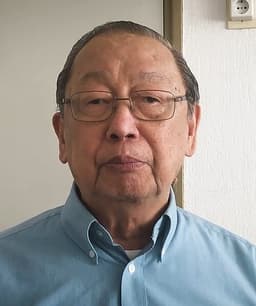
Jose Maria Sison
Revolutionary · Modern
48.3Total
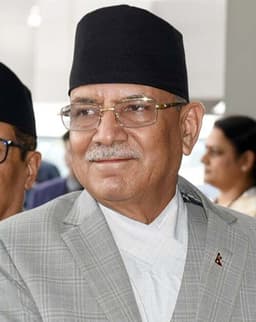
Pushpa Kamal Dahal
Revolutionary · Modern
50.0Total
Basic Information
Born
1939
1954
Died
—
—
Era
Modern
Modern
Nationality
Philippines
Nepal
Occupation
Revolutionary
Revolutionary
Civilization
Eastern
Indian
Score Comparison
Military (10%)
41.6
35.0
Political (20%)
35.1
54.7
Influence (20%)
53.3
51.0
Legacy (20%)
45.0
40.8
Leadership (15%)
58.8
62.0
Strategy (15%)
54.6
60.0
TOTAL
48.3
50.0
Jose Maria Sison — Complete Timeline
1968 AD
Founded the Communist Party of the PhilippinesPolitical Action◆ Major
Sison re-established the Communist Party of the Philippines (CPP) along Maoist lines, breaking from the old Partido Komunista ng Pilipinas. The CPP launched a protracted people's war against the Philippine state, becoming one of Asia's longest-running insurgencies.
CommunismMaoismInsurgency
Impact: nationaldestructive
1969 AD
Founded the New People's ArmyPolitical Action◆ Major
Sison established the New People's Army (NPA) as the armed wing of the CPP. The NPA began guerrilla operations in rural areas, targeting government forces and infrastructure. The group has been designated a terrorist organization by the Philippines and the US.
GuerrillaInsurgencyArmed Struggle
Impact: nationaldestructive
1977 AD
Arrested and imprisoned under MarcosPolitical Action◆ Major
Sison was arrested by the Marcos regime and imprisoned for seven years. During his detention, he continued to direct the CPP/NPA through written orders smuggled out of prison. He was released in 1986 after the People Power Revolution.
ImprisonmentMartial LawMarcos
Impact: nationaltragic
1987 AD
Exiled to the NetherlandsPolitical Action◆ Major
After the 1986 revolution, Sison went into self-exile in the Netherlands. From there, he continued to lead the CPP/NPA, issuing directives and negotiating peace talks with the Philippine government. He remains in exile as of 2024.
ExilePeace TalksLeadership
Impact: national
Pushpa Kamal Dahal — Complete Timeline
1996 AD
Launch of People's WarWar
Prachanda, as leader of the Communist Party of Nepal (Maoist), initiated a armed insurgency against the Nepalese state. The People's War began with attacks on police posts and government offices, escalating into a decade-long civil war.
InsurgencyCivil WarMaoist
Impact: nationaldestructive
2006 AD
Signing of Comprehensive Peace AccordPolitical Action◆ Major
Prachanda signed the Comprehensive Peace Accord with Prime Minister Girija Prasad Koirala, ending the civil war. The agreement committed the Maoists to lay down arms and join mainstream politics in exchange for integration into state institutions.
Peace TreatyCivil WarNepal
Impact: nationalconstructive
2008 AD
Election as Prime MinisterPolitical Action◆ Major
Following the Maoist victory in the Constituent Assembly elections, Prachanda became the first prime minister of the Federal Democratic Republic of Nepal. His tenure focused on integrating former Maoist combatants into the national army.
ElectionGovernmentRepublic
Impact: national
2009 AD
Resignation as Prime MinisterPolitical Action
Prachanda resigned as prime minister after a dispute with President Ram Baran Yadav over the dismissal of the army chief. The crisis highlighted tensions between the Maoists and the established political order.
ResignationPoliticsCrisis
Impact: national
Expert Analysis
Pushpa Kamal Dahal vs Jose Maria Sison
# The Revolutionary’s Dilemma: Two Lives, Two Paths
In the winter of 2006, Pushpa Kamal Dahal—known to the world as Prachanda—sat across a negotiating table in Kathmandu from Prime Minister Girija Prasad Koirala, signing the Comprehensive Peace Accord that ended a decade of civil war. Half a world away, in a modest apartment in Utrecht, Netherlands, Jose Maria Sison watched similar peace overtures from his own government with suspicion, refusing to lay down arms. Both men had led Maoist insurgencies that shook their nations. Both had dreamed of revolution. But one chose to walk through the door of power, while the other remained forever outside, a ghost in exile. Why did their paths diverge so sharply?
Origins
Prachanda was born in 1954 in a peasant family in Kaski District, Nepal, a land of mountains and monarchy where feudal structures still held firm. He studied agriculture, but the poverty he witnessed radicalized him. The Communist Party of Nepal had already split and splintered multiple times, and young Dahal found himself drawn to the most uncompromising faction—the Maoists who believed that only armed struggle could break the chains of the Hindu kingdom.
Jose Maria Sison, born in 1939 in Ilocos Sur, Philippines, came from a landowning family. He studied at the University of the Philippines, where he encountered Marxism. His timing was different: the Philippines was emerging from American colonialism, and the old Partido Komunista ng Pilipinas had been crushed by state repression. Sison saw himself as a restorer, not a founder—someone who would rebuild what had been destroyed.
Their eras shaped them. Prachanda came of age in the 1970s when the Cultural Revolution in China still burned bright; Sison witnessed the same period but also the subsequent Chinese reforms that made him distrust any compromise with capitalism. Both were products of the Cold War, but Sison’s thinking crystallized earlier, during the Vietnam War era, while Prachanda’s revolutionary consciousness formed in the shadow of Nepal’s absolute monarchy.
Rise to Power
Prachanda’s rise was meteoric. By 1996, at age 42, he launched the “People’s War” from the hills of western Nepal with just a few hundred fighters. The insurgency grew rapidly, exploiting deep rural grievances against the Kathmandu elite. His military score of 25.6 reflects not battlefield brilliance but strategic patience—he understood that in Nepal, geography was his greatest ally. The turning point came in 2001 when the royal family was massacred, plunging the monarchy into crisis. Prachanda seized the moment, expanding the war even as the king tried to crush him.
Sison’s path was slower and more intellectual. In 1968, at 29, he founded the Communist Party of the Philippines, and a year later the New People’s Army. But he never led from the field. Arrested in 1977 under Ferdinand Marcos, he spent seven years in prison, writing and directing the movement from a cell. After the 1986 People Power Revolution that ousted Marcos, Sison went into exile in the Netherlands, where he remains to this day. His military score of 52.0 is higher than Prachanda’s, but his strategy score of 30.0 is drastically lower—a man who could inspire but not maneuver.
Leadership & Governance
Prachanda’s leadership score of 75.7 reflects his pragmatic ruthlessness. As commander of the Maoist army, he built a parallel state in Nepal’s countryside, complete with courts, schools, and tax systems. But his political genius lay in knowing when to fight and when to talk. The 2006 peace accord was not surrender but transformation. He traded his guerrilla uniform for a suit, becoming prime minister in 2008 after his party won elections. Yet governance proved harder than revolution: he resigned in 2009 after a dispute with the president, unable to fully control the state he had entered.
Sison’s leadership score of 73.0 is comparable, but expressed differently. From his Dutch exile, he maintained ideological purity. He refused to participate in Philippine elections, denouncing them as “bourgeois democracy.” His movement survives—the NPA still operates in rural areas—but it has never come close to state power. His political score of 54.4, lower than Prachanda’s 61.5, reveals the price of purity: influence without governance.
Triumph & Tragedy
Prachanda’s triumph was the peace accord itself—a revolutionary who forced a monarchy to its knees and then chose the ballot box. His tragedy came after: the compromises of power eroded his mystique. Once the firebrand who could summon thousands to the hills, he became just another politician in Kathmandu, serving three non-consecutive terms as prime minister but never fulfilling the revolution’s promises.
Sison’s triumph was longevity. He built a movement that has outlasted multiple Philippine presidents, continuing to inspire young radicals. His tragedy is that he has never seen his homeland as a free man since 1987. From his Dutch exile, he directs a war he cannot fight, a ghost in a foreign land. His legacy score of 63.2 edges out Prachanda’s 54.7, but it is the legacy of a prophet, not a king.
Character & Destiny
Prachanda was a tactician who understood that revolutions eat their children, so he chose to eat the state instead. Sison was a theorist who believed that the revolution must remain pure, even if that meant remaining powerless. Both men were driven by the same Maoist ideology, but Prachanda’s peasant background made him flexible, while Sison’s intellectual formation made him rigid.
Their destinies were written in their choices. When the moment came to choose between the gun and the ballot, Prachanda chose both, then discarded the gun. Sison chose the gun alone, and has spent forty years watching others wield it. The difference is not in courage but in vision: Prachanda saw revolution as a means to power; Sison saw it as an end in itself.
Legacy
Today, Prachanda remains a force in Nepali politics, though diminished. His name is synonymous with the end of the monarchy, but also with the compromises that followed. Young Nepalis remember him as the man who brought down a king, then became just another prime minister.
Sison, now in his mid-eighties, is a figure of veneration among the global left. His writings are studied in university seminars. But in the Philippines, his movement is a persistent but fading insurgency, unable to expand beyond its rural strongholds. He is remembered as the man who lit a fire that never became a conflagration.
Conclusion
What separates a revolutionary who becomes prime minister from one who remains a permanent exile? Timing, luck, and the willingness to betray the revolution for the sake of power. Prachanda understood that in politics, the perfect is the enemy of the good. Sison believed that the good is the enemy of the perfect. Both men changed their countries. But only one learned that revolutions, like rivers, must eventually find the sea—even if the sea is not as pure as the mountain spring. The other remains frozen in the high peaks, a monument to a dream that never reached the valley below.
Rankings
🥇
Pushpa Kamal DahalLeader
Mil: 35.0Pol: 54.7Inf: 51.0
50.0
🥈
Jose Maria Sison
Mil: 41.6Pol: 35.1Inf: 53.3
48.3
+1.7 behind
How This Comparison Works
Algorithm
Each figure is scored on 6 dimensions (0—100 scale) based on structured historical data: Military (10%), Political (20%), Influence (20%), Legacy (20%), Leadership (15%), Strategy (15%). The weighted total produces the final ranking.
Data Sources
Scores are computed from structured sub-indicators in the database. Scale factors adjust for era (Ancient ×0.85, Modern ×1.0) and civilization size (Eastern ×1.05, Other ×0.80) to account for differences in population and military scale.
Maximum 3 Figures
Comparisons are limited to 2—3 figures to ensure readability and statistical meaningfulness.
Error Margins
±5 points per dimension — Sub-scores are derived from historical records with inherent uncertainty. Two figures within 5 points on a dimension should be considered roughly equivalent in that area.
Total Score Accuracy
±3 points overall — The weighted combination of 6 dimensions produces a total score with approximately ±3 points of uncertainty. Differences of less than 3 points are not statistically significant— the figures are effectively tied.
Known Limitations
- Historical records are incomplete and uneven across civilizations
- Figures from oral-tradition societies may be underrepresented
- Occupation labels can misclassify multi-role figures
- Scores measure capability and impact, not moral character
- Quantitative scoring is a comparison tool, not absolute truth
Capability Radar
Military (10%) — Battles & Warfare
Battles
5
35
Win Rate
5
40
Expansion
10
25
Political (20%) — Governance & Reform
Reform
40
40
Diplomacy
30
50
Economy
20
35
Influence (20%) — Cultural & Global Reach
Cultural
40
40
Global
40
35
Legacy (20%) — Historical Impact
Historical
50
45
Longevity
40
30
Leadership (15%) — Power & Stability
Tenure
60
55
Stability
15
30
Strategy (15%) — Tactics & Innovation
Strategy
10
50
Tactics
10
45
Reform
15
30
Similar Comparisons
Comments & Discussion
No comments yet. Be the first to share your thoughts!