Loading...
Joseph I of Portugal vs Murtaza Nizam Shah I
Joseph I of Portugal leads by 8.9 pts · 2 figures compared
…
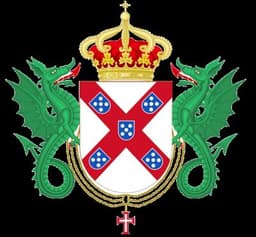
Joseph I of Portugal
Emperor · Modern
52.3Total

Murtaza Nizam Shah I
Emperor · Modern
43.4Total
Basic Information
Born
1714
1565
Died
1777
1588
Era
Modern
Modern
Nationality
Portugal
India
Occupation
Emperor
Emperor
Civilization
Western
Indian
Score Comparison
Military (10%)
12.4
50.0
Political (20%)
72.0
32.2
Influence (20%)
51.8
48.6
Legacy (20%)
43.3
38.3
Leadership (15%)
72.0
58.8
Strategy (15%)
57.3
30.3
TOTAL
52.3
43.4
Joseph I of Portugal — Complete Timeline
1750 AD
Accession to the thronePolitical Action◆ Major
Joseph I became King of Portugal after the death of his father John V. His reign is notable for the effective governance of his chief minister, the Marquis of Pombal.
SuccessionMonarchyPombal
Impact: national
1755 AD
1755 Lisbon earthquakeOther
A massive earthquake, followed by a tsunami and fire, destroyed much of Lisbon. Joseph I and his court survived, and the disaster prompted Pombal's extensive rebuilding and reforms.
EarthquakeDisasterRebuilding
Impact: globaltragic
1758 AD
Távora affairPolitical Action◆ Major
An assassination attempt on Joseph I led to the T
Assassination attemptPurgeNobility
Impact: nationaldestructive
1759 AD
Expulsion of the JesuitsPolitical Action◆ Major
Under Pombal's influence, Joseph I expelled the Jesuits from Portugal and its colonies. This was part of a broader Enlightenment reform to reduce Church power and centralize state authority.
JesuitsExpulsionEnlightenment
Impact: globaldestructive
1760 AD
Reforms of the Marquis of PombalReform◆ Major
Joseph I supported Pombal's reforms, including the abolition of slavery in Portugal, educational reforms, and economic modernization. These reforms strengthened the state but faced opposition from the Church and nobility.
ReformEnlightenmentPombal
Impact: nationalconstructive
Murtaza Nizam Shah I — Complete Timeline
1565 AD
Accession to Ahmadnagar ThronePolitical Action◆ Major
Murtaza Nizam Shah I became sultan of Ahmadnagar after the death of his father Husain Nizam Shah I. His reign began during a period of conflict with the Vijayanagara Empire and internal factionalism among the Deccan sultanates.
SuccessionAhmadnagar Sultanate
Impact: regional
1572 AD
Execution of Regent Tufal KhanPolitical Action◆ Major
Murtaza Nizam Shah I ordered the execution of his powerful regent Tufal Khan, who had effectively ruled the kingdom. This act consolidated the sultan's personal authority but also alienated many nobles and triggered instability.
RegicidePower StruggleCourt Politics
Impact: nationaldestructive
1574 AD
Invasion of BerarWar
Murtaza Nizam Shah I launched a military campaign against the Imad Shahi dynasty of Berar. The invasion succeeded in annexing Berar territory, expanding Ahmadnagar's influence in the northern Deccan.
ConquestBerarDeccan Wars
Impact: regional
1580 AD
Conflict with Chand BibiPolitical Action
Murtaza Nizam Shah I imprisoned his sister Chand Bibi for opposing his policies. This family conflict weakened the dynasty and contributed to the factionalism that later allowed the Mughals to intervene in Ahmadnagar affairs.
Family ConflictImprisonmentDynastic Strife
Impact: nationaldestructive
1588 AD
AssassinationPolitical Action◆ Major
Murtaza Nizam Shah I was assassinated by his own nobles, possibly with the involvement of his son. His erratic rule and executions of key officials had created widespread discontent, leading to his violent death.
AssassinationRegicideEnd of Reign
Impact: nationaltragic
Expert Analysis
Origins
**Joseph I of Portugal** (born 1714) was the third son of King John V and Maria Anna of Austria. He received a religious education, but his older brothers died, making him heir. He ascended the throne in 1750 after his father's death. Joseph was more interested in hunting and music than governance, which allowed his chief minister, Sebastião José de Carvalho e Melo (later Marquis of Pombal), to wield effective power.
**Murtaza Nizam Shah I** (born c. 1545) was the son of Husain Nizam Shah I, sultan of Ahmadnagar in the Deccan. He grew up amid conflict with the Vijayanagara Empire and the Mughals. After his father's death in 1565, Murtaza became sultan at a young age, with Tufal Khan as regent. His early years were marked by court intrigues and military campaigns.
Rise to Power
Joseph I came to power smoothly in 1750, inheriting a wealthy but stagnant kingdom. His reign is defined by the 1755 Lisbon earthquake (score 12.4 military, but disaster management). The earthquake destroyed much of Lisbon, and Joseph's court survived. He empowered Pombal to lead reconstruction, which included rational urban planning and seismic-resistant buildings. Pombal's influence grew, leading to the Távora affair (1758), where an assassination attempt on Joseph was used to crush the powerful Távora family and nobility.
Murtaza Nizam Shah I's rise was more turbulent. He ascended the throne in 1565 after his father's death in battle. Initially, regent Tufal Khan controlled the state. In 1572, Murtaza executed Tufal Khan and his family, consolidating power. He then launched campaigns against neighboring kingdoms, including the invasion of Berar in 1574, which he annexed. His military score of 50.0 reflects modest success, but his political score of 32.2 indicates instability.
Leadership & Governance
Joseph I's leadership score of 72.0 is largely attributable to Pombal's governance. Joseph supported Pombal's reforms: abolition of slavery in Portugal (1761), educational reforms (including the creation of the College of Nobles), economic modernization (reducing British dependence), and the expulsion of the Jesuits (1759). These were Enlightenment-era policies that centralized power under the crown. Joseph's personal involvement was minimal, but his delegation enabled effective rule.
Murtaza Nizam Shah I's leadership score of 58.8 reflects his erratic style. He executed key officials, including Tufal Khan and later his sister Chand Bibi's allies. He imprisoned Chand Bibi for opposing his policies, weakening the dynasty. His governance lacked consistency; he focused on military expansion rather than administrative reform. His strategy score of 30.3 shows poor long-term planning.
Triumph & Tragedy
Joseph I's greatest success was surviving the 1755 earthquake and using it to modernize Lisbon. Pombal's reconstruction set a precedent for disaster management. The Távora affair eliminated noble opposition, but it also demonstrated the dangers of unchecked ministerial power. Joseph's support for Pombal's reforms strengthened the state, but the expulsion of the Jesuits damaged education in colonies.
Murtaza's triumph was the annexation of Berar, expanding Ahmadnagar's territory. However, his tragedy was his assassination in 1588 by his own nobles, possibly with his son's involvement. His erratic rule and executions alienated the nobility, leading to decline. His legacy score of 38.3 reflects a short-lived impact.
Character & Destiny
Joseph I (total score 52.3) was a passive ruler who preferred leisure but had the wisdom to delegate to Pombal. His character allowed for progressive reforms, but he was also complicit in the brutal suppression of the Távora family. His destiny was shaped by the earthquake, which he saw as divine punishment but turned into an opportunity.
Murtaza Nizam Shah I (total score 43.4) was paranoid and violent, executing regents and family members. His character led to isolation and assassination. He failed to build alliances, and his conflict with Chand Bibi divided the dynasty. His destiny was a short, unstable reign.
Legacy
Joseph I's legacy is tied to Pombal's reforms, which modernized Portugal and reduced church influence. The Lisbon reconstruction is a landmark in urban planning. His abolition of slavery in Portugal was ahead of its time. However, his reign also entrenched absolutism and persecution of opponents.
Murtaza Nizam Shah I's legacy is minimal. Ahmadnagar was eventually conquered by the Mughals in 1600. His annexation of Berar was temporary. He is remembered as a tyrant who weakened his kingdom. His influence score of 48.6 is modest, but largely negative.
Conclusion
Joseph I of Portugal had a greater impact than Murtaza Nizam Shah I. Joseph's political score of 72.0 and leadership of 72.0 contrast with Murtaza's 32.2 and 58.8. Joseph's reign, through Pombal, produced lasting reforms in governance, education, and urban planning. Murtaza's rule was destructive and short-lived. While Joseph was not directly involved, his support for reform shaped Portugal's trajectory. Murtaza's score of 43.4 reflects a failure to lead effectively. Joseph's legacy, though complex, outweighs Murtaza's by a clear margin.
Rankings
🥇
Joseph I of PortugalLeader
Mil: 12.4Pol: 72.0Inf: 51.8
52.3
🥈
Murtaza Nizam Shah I
Mil: 50.0Pol: 32.2Inf: 48.6
43.4
+8.9 behind
How This Comparison Works
Algorithm
Each figure is scored on 6 dimensions (0—100 scale) based on structured historical data: Military (10%), Political (20%), Influence (20%), Legacy (20%), Leadership (15%), Strategy (15%). The weighted total produces the final ranking.
Data Sources
Scores are computed from structured sub-indicators in the database. Scale factors adjust for era (Ancient ×0.85, Modern ×1.0) and civilization size (Eastern ×1.05, Other ×0.80) to account for differences in population and military scale.
Maximum 3 Figures
Comparisons are limited to 2—3 figures to ensure readability and statistical meaningfulness.
Error Margins
±5 points per dimension — Sub-scores are derived from historical records with inherent uncertainty. Two figures within 5 points on a dimension should be considered roughly equivalent in that area.
Total Score Accuracy
±3 points overall — The weighted combination of 6 dimensions produces a total score with approximately ±3 points of uncertainty. Differences of less than 3 points are not statistically significant— the figures are effectively tied.
Known Limitations
- Historical records are incomplete and uneven across civilizations
- Figures from oral-tradition societies may be underrepresented
- Occupation labels can misclassify multi-role figures
- Scores measure capability and impact, not moral character
- Quantitative scoring is a comparison tool, not absolute truth
Capability Radar
Military (10%) — Battles & Warfare
Battles
35
30
Win Rate
39
25
Expansion
45
20
Political (20%) — Governance & Reform
Reform
70
20
Diplomacy
55
25
Economy
65
20
Influence (20%) — Cultural & Global Reach
Cultural
30
20
Global
20
10
Legacy (20%) — Historical Impact
Historical
40
25
Longevity
30
15
Leadership (15%) — Power & Stability
Tenure
60
40
Stability
50
15
Strategy (15%) — Tactics & Innovation
Strategy
47
20
Tactics
46
20
Reform
52
15
Similar Comparisons
Comments & Discussion
No comments yet. Be the first to share your thoughts!