Loading...
Joseph I of Portugal vs Rudolf II of Bohemia
Rudolf II of Bohemia leads by 0.7 pts · 2 figures compared
…
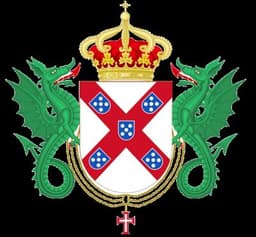
Joseph I of Portugal
Emperor · Modern
52.3Total

Rudolf II of Bohemia
Emperor · Modern
53.0Total
Basic Information
Born
1714
1552
Died
1777
1612
Era
Modern
Modern
Nationality
Portugal
Bohemia
Occupation
Emperor
Emperor
Civilization
Western
Western
Score Comparison
Military (10%)
12.4
20.0
Political (20%)
72.0
54.7
Influence (20%)
51.8
61.0
Legacy (20%)
43.3
49.2
Leadership (15%)
72.0
65.0
Strategy (15%)
57.3
54.6
TOTAL
52.3
53.0
Joseph I of Portugal — Complete Timeline
1750 AD
Accession to the thronePolitical Action◆ Major
Joseph I became King of Portugal after the death of his father John V. His reign is notable for the effective governance of his chief minister, the Marquis of Pombal.
SuccessionMonarchyPombal
Impact: national
1755 AD
1755 Lisbon earthquakeOther
A massive earthquake, followed by a tsunami and fire, destroyed much of Lisbon. Joseph I and his court survived, and the disaster prompted Pombal's extensive rebuilding and reforms.
EarthquakeDisasterRebuilding
Impact: globaltragic
1758 AD
Távora affairPolitical Action◆ Major
An assassination attempt on Joseph I led to the T
Assassination attemptPurgeNobility
Impact: nationaldestructive
1759 AD
Expulsion of the JesuitsPolitical Action◆ Major
Under Pombal's influence, Joseph I expelled the Jesuits from Portugal and its colonies. This was part of a broader Enlightenment reform to reduce Church power and centralize state authority.
JesuitsExpulsionEnlightenment
Impact: globaldestructive
1760 AD
Reforms of the Marquis of PombalReform◆ Major
Joseph I supported Pombal's reforms, including the abolition of slavery in Portugal, educational reforms, and economic modernization. These reforms strengthened the state but faced opposition from the Church and nobility.
ReformEnlightenmentPombal
Impact: nationalconstructive
Rudolf II of Bohemia — Complete Timeline
1583 AD
Move of the Imperial Court to PragueCultural◆ Major
Rudolf II moved the imperial court from Vienna to Prague, making the city the cultural and political center of the Holy Roman Empire. This attracted artists, scientists, and alchemists, fostering a vibrant intellectual environment.
Cultural CenterPragueRenaissance
Impact: regionalconstructive
1599 AD
Patronage of Tycho Brahe and Johannes KeplerCultural◆ Major
Rudolf II invited astronomer Tycho Brahe to Prague and later employed Johannes Kepler as his assistant. This patronage led to Kepler's laws of planetary motion, which revolutionized astronomy and science.
ScienceAstronomyPatronage
Impact: globalconstructive
1609 AD
Letter of MajestyPolitical Action◆ Major
Rudolf II issued the Letter of Majesty, granting religious freedom to Protestants in Bohemia. This concession temporarily eased tensions but failed to prevent the outbreak of the Thirty Years' War in 1618.
Religious ToleranceProtestantismBohemia
Impact: nationalconstructive
1611 AD
Abdication as Holy Roman EmperorPolitical Action◆ Major
Rudolf II was forced to abdicate the throne of Bohemia in favor of his brother Matthias due to his mental instability and inability to govern. This abdication weakened Habsburg authority and contributed to the political crisis leading to the Thirty Years' War.
AbdicationSuccession CrisisHabsburg
Impact: regionaltragic
Expert Analysis
Origins
Joseph I of Portugal (born 1714) was the son of King John V, a monarch renowned for his lavish spending on the Church and the arts. Joseph received a Jesuit education but was more interested in hunting and religious devotions than statecraft. His upbringing in a court dominated by clerical influence and his father's absolutism shaped his reliance on strong ministers.
Rudolf II of Bohemia (born 1552) was the son of Emperor Maximilian II, a tolerant ruler. Rudolf was raised in the Spanish court of his uncle Philip II, where he absorbed a rigid Catholic piety and a passion for the arts and occult sciences. His education was broad, encompassing languages, astronomy, and alchemy, but he lacked practical political training.
Rise to Power
Joseph I ascended the throne in 1750 upon his father's death. He inherited a kingdom with a depleted treasury and a powerful aristocracy. His most significant decision was appointing Sebastião José de Carvalho e Melo (later Marquis of Pombal) as his chief minister. The 1755 Lisbon earthquake, which destroyed much of the capital, became a turning point: Joseph survived, and Pombal's efficient reconstruction efforts cemented his influence.
Rudolf II became Holy Roman Emperor in 1576 after his father's death. He moved the imperial court from Vienna to Prague in 1583, seeking to escape the Habsburg family's political pressures. Prague became a center for artists, scientists, and occultists. Rudolf's patronage attracted Tycho Brahe and Johannes Kepler, leading to Kepler's laws of planetary motion. However, his eccentricity and neglect of governance led to the Long Turkish War (1593–1606) and internal conflicts.
Leadership & Governance
Joseph I ruled as an absolute monarch but delegated authority to Pombal. Under Pombal's direction, the government implemented Enlightenment reforms: the abolition of slavery in Portugal (1761), educational reforms, and economic modernization. The 1755 earthquake response showcased efficient crisis management: the government organized relief, controlled prices, and rebuilt Lisbon with earthquake-resistant buildings. Joseph supported Pombal's suppression of the Távora family (the Távora affair) and the expulsion of the Jesuits in 1759, reducing Church power. Joseph's political score of 72.0 reflects his effective delegation, but his military score of 12.4 indicates minimal personal involvement in warfare.
Rudolf II, by contrast, was a hands-off ruler who prioritized personal interests over governance. He spent hours in his Kunstkammer (cabinet of curiosities) and supported alchemists and astrologers. His religious policy was ambiguous: he issued the Letter of Majesty in 1609, granting religious freedom to Bohemian Protestants, but this was a reactive concession rather than a proactive reform. The Habsburg monarchy's administrative apparatus decayed under his reign. Rudolf's political score of 54.7 is lower than Joseph's, reflecting his inability to manage the empire effectively.
Triumph & Tragedy
Joseph I's greatest triumph was the reconstruction of Lisbon after the 1755 earthquake, a model of urban planning and disaster response. His support for Pombal's reforms modernized Portugal's economy and education. However, the Távora affair and the brutal suppression of the aristocracy stained his reign. The expulsion of the Jesuits disrupted education in the colonies and alienated the Church.
Rudolf II's triumph was his patronage of arts and sciences: Kepler's laws, Brahe's observations, and the flourishing of Mannerist art in Prague. The Letter of Majesty temporarily protected Protestant rights. His tragedy was his mental instability and political paralysis. He was forced to abdicate as emperor of Bohemia in 1611 in favor of his brother Matthias, and his legacy of religious tensions contributed to the Thirty Years' War.
Character & Destiny
Joseph I was a pious and reserved king who trusted Pombal implicitly. His character allowed for decisive action through delegation, but he remained detached from the details of governance. His destiny was shaped by the earthquake, which he interpreted as divine punishment, leading him to support Pombal's secular reforms.
Rudolf II was introverted, melancholic, and obsessed with the occult. His indecisiveness and withdrawal from politics led to the erosion of imperial authority. His character made him a great patron but a poor ruler. The abdication was a direct consequence of his inability to govern.
Legacy
Joseph I's legacy is tied to Pombal's reforms: the reconstruction of Lisbon, the expulsion of the Jesuits, and the modernization of Portugal. His reign marked the height of Portuguese Enlightenment absolutism. However, many reforms were reversed after his death in 1777. His legacy score of 43.3 reflects the transient nature of his achievements.
Rudolf II's legacy is cultural and scientific: Prague's golden age, Kepler's laws, and the Kunstkammer. The Letter of Majesty set a precedent for religious toleration, though it failed to prevent war. His legacy score of 49.2 is slightly higher, as his patronage had lasting intellectual impact.
Conclusion
Rudolf II had a greater long-term impact due to his patronage of Kepler and Brahe, which advanced the Scientific Revolution. While Joseph I's reforms were significant, they were largely reversed and limited to Portugal. Rudolf's support for astronomy and the arts created enduring cultural and scientific contributions. Despite his political failures, his intellectual patronage outweighs Joseph's administrative achievements. Rudolf's total score of 53.0 surpasses Joseph's 52.3, reflecting his broader influence.
Rankings
🥇
Rudolf II of BohemiaLeader
Mil: 20.0Pol: 54.7Inf: 61.0
53.0
🥈
Joseph I of Portugal
Mil: 12.4Pol: 72.0Inf: 51.8
52.3
+0.7 behind
How This Comparison Works
Algorithm
Each figure is scored on 6 dimensions (0—100 scale) based on structured historical data: Military (10%), Political (20%), Influence (20%), Legacy (20%), Leadership (15%), Strategy (15%). The weighted total produces the final ranking.
Data Sources
Scores are computed from structured sub-indicators in the database. Scale factors adjust for era (Ancient ×0.85, Modern ×1.0) and civilization size (Eastern ×1.05, Other ×0.80) to account for differences in population and military scale.
Maximum 3 Figures
Comparisons are limited to 2—3 figures to ensure readability and statistical meaningfulness.
Error Margins
±5 points per dimension — Sub-scores are derived from historical records with inherent uncertainty. Two figures within 5 points on a dimension should be considered roughly equivalent in that area.
Total Score Accuracy
±3 points overall — The weighted combination of 6 dimensions produces a total score with approximately ±3 points of uncertainty. Differences of less than 3 points are not statistically significant— the figures are effectively tied.
Known Limitations
- Historical records are incomplete and uneven across civilizations
- Figures from oral-tradition societies may be underrepresented
- Occupation labels can misclassify multi-role figures
- Scores measure capability and impact, not moral character
- Quantitative scoring is a comparison tool, not absolute truth
Capability Radar
Military (10%) — Battles & Warfare
Battles
35
5
Win Rate
39
5
Expansion
45
5
Political (20%) — Governance & Reform
Reform
70
40
Diplomacy
55
30
Economy
65
40
Influence (20%) — Cultural & Global Reach
Cultural
30
65
Global
20
40
Legacy (20%) — Historical Impact
Historical
40
55
Longevity
30
50
Leadership (15%) — Power & Stability
Tenure
60
60
Stability
50
20
Strategy (15%) — Tactics & Innovation
Strategy
47
10
Tactics
46
5
Reform
52
5
Similar Comparisons
Comments & Discussion
No comments yet. Be the first to share your thoughts!