Loading...
Joseph Stalin vs Lord Dalhousie
Joseph Stalin leads by 10.4 pts · 2 figures compared
…
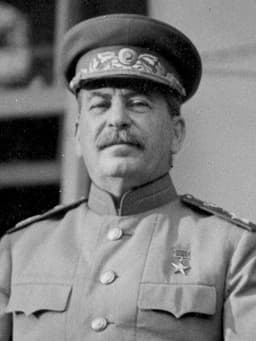
Joseph Stalin
Politician · Modern
68.8Total
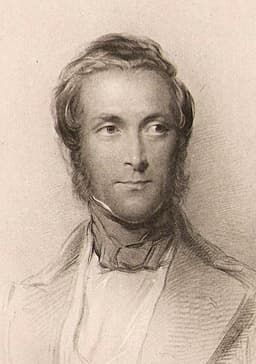
Lord Dalhousie
Politician · Modern
58.4Total
Basic Information
Born
1878
1812
Died
1953
1860
Era
Modern
Modern
Nationality
Russia
United Kingdom
Occupation
Politician
Politician
Civilization
Western
Western
Score Comparison
Military (10%)
75.0
40.0
Political (20%)
70.0
60.0
Influence (20%)
72.0
58.3
Legacy (20%)
55.0
55.0
Leadership (15%)
80.0
74.0
Strategy (15%)
70.0
60.0
TOTAL
68.8
58.4
Joseph Stalin — Complete Timeline
1928 AD
Launched the First Five-Year PlanReform
Stalin initiated a series of centralized economic plans aimed at rapid industrialization and collectivization of agriculture. The First Five-Year Plan set ambitious targets for heavy industry, leading to significant growth but also severe shortages and human cost.
Impact: global
1929 AD
Implemented forced collectivization of agricultureReform
Stalin ordered the consolidation of individual peasant farms into collective farms (kolkhozy). This was met with resistance, leading to the liquidation of kulaks (wealthy peasants) as a class. The policy caused a catastrophic famine, particularly in Ukraine (Holodomor), resulting in millions of deaths.
Impact: nationaldestructive
1937 AD
Conducted the Great Purge (Great Terror)Political Action
Stalin orchestrated a campaign of political repression against alleged enemies of the state. Millions were arrested, executed, or sent to the Gulag labor camps. The purges targeted the Communist Party, military leadership, intellectuals, and ordinary citizens, consolidating Stalin's absolute power.
Impact: nationaldestructive
1945 AD
Led the Soviet Union to victory in World War IIWar
Stalin served as Supreme Commander of the Soviet armed forces. The Soviet Union bore the brunt of the war against Nazi Germany, suffering immense casualties. The Red Army's victory at Stalingrad and the capture of Berlin were key turning points. The war ended with Soviet domination of Eastern Europe.
Impact: global
Established the Eastern Bloc and the Iron CurtainPolitical Action◆ Major
After WWII, Stalin imposed communist governments in Eastern European countries occupied by the Red Army, creating a buffer zone against the West. This division of Europe into Soviet and Western spheres of influence marked the beginning of the Cold War.
Impact: globaldestructive
Lord Dalhousie — Complete Timeline
1848 AD
Second Anglo-Sikh WarWar◆ Major
Dalhousie oversaw the Second Anglo-Sikh War in 1848-1849, which resulted in the British annexation of the Punjab. The Sikh army was defeated at the Battle of Gujrat, and the Treaty of Lahore in 1849 formally annexed the region, ending Sikh sovereignty and extending British rule to the northwest frontier.
Anglo-Sikh WarAnnexationPunjab
Impact: regional
Doctrine of LapsePolitical Action
Lord Dalhousie, as Governor-General of India, implemented the Doctrine of Lapse, a policy that allowed the British to annex any princely state where the ruler died without a natural heir. This policy led to the annexation of states like Satara, Jhansi, and Nagpur, causing widespread resentment among Indian rulers and contributing to the 1857 Rebellion.
AnnexationPolicy1857 Rebellion
Impact: regionaldestructive
1853 AD
Railway and Telegraph ExpansionInvention◆ Major
Dalhousie championed the development of railways and telegraphs in India. The first railway line from Bombay to Thane opened in 1853, and a telegraph network was established connecting major cities. These projects aimed to improve communication, trade, and military control, laying the foundation for India's modern infrastructure.
InfrastructureRailwayTelegraph
Impact: regionalconstructive
1856 AD
Annexation of AwadhPolitical Action◆ Major
Dalhousie annexed the Kingdom of Awadh in 1856 under the pretext of misgovernment. The annexation was highly controversial and deeply resented by the local population and nobility. It became a major cause of the 1857 Indian Rebellion, as Awadh's soldiers and landlords joined the uprising against British rule.
AnnexationAwadh1857 Rebellion
Impact: regionaldestructive
Expert Analysis
Joseph Stalin vs Lord Dalhousie
# Two Architects of Empire
On a cold December night in 1929, Joseph Stalin sat in his Kremlin office, signing orders that would force millions of Russian peasants from their ancestral lands into collective farms. Half a world away and eighty years earlier, another man in a governor’s mansion in Calcutta had signed a very different set of papers—the annexation of the ancient kingdom of Awadh, a decision that would light the fuse of the greatest rebellion the British Empire ever faced. Both men believed they were building a better future. Both were willing to break the world to remake it. But their paths, their tools, and their legacies could not have been more different.
Origins
Stalin was born Ioseb Besarionis dze Jughashvili in 1878, the son of a violent, alcoholic cobbler and a devout washerwoman in the Georgian town of Gori. His childhood was marked by poverty, beatings, and a seminary education that instilled in him a deep hatred of authority—even as he learned to manipulate it. The Russian Empire of his youth was a vast, backward autocracy, cracking under the pressures of industrialization and revolution. Stalin emerged from this world as a Bolshevik operative, a man of the shadows, patient and ruthless.
Lord Dalhousie, born James Andrew Broun-Ramsay in 1812, came from the opposite end of privilege. His father was the 9th Earl of Dalhousie, a Scottish peer and colonial administrator. Educated at Harrow and Oxford, Dalhousie moved through the corridors of British power with the ease of a man born to rule. The Britain of his era was the world’s dominant industrial and naval power, confident in its civilizing mission. Dalhousie absorbed this certainty completely: he believed that British institutions—law, railways, telegraphs—were gifts to be bestowed upon the less fortunate, by force if necessary.
Rise to Power
Stalin’s ascent was slow, brutal, and bureaucratic. He rose through the ranks of the Bolshevik Party not as a speaker or theorist—Lenin and Trotsky outshone him there—but as a practical organizer and fixer. After Lenin’s death in 1924, Stalin outmaneuvered his rivals through patient coalition-building, strategic appointments, and a willingness to do what others would not. By 1928, he was the undisputed master of the Soviet Union.
Dalhousie’s rise was faster and more conventional. He entered Parliament as a Tory in 1837, served as President of the Board of Trade, and in 1848, at just 35, was appointed Governor-General of India—the youngest man ever to hold the post. He arrived in Calcutta with a clear mandate: expand British authority, modernize the subcontinent, and leave a permanent mark.
Leadership & Governance
Here the two men diverged most dramatically. Stalin governed through terror. The First Five-Year Plan, launched in 1928, was a forced march toward industrialization: factories rose, steel mills belched smoke, and millions of workers were driven to exhaustion. But the accompanying collectivization of agriculture, begun in 1929, was a catastrophe. Peasants resisted; Stalin responded with famine. Millions starved in Ukraine and the Volga region. Then came the Great Purge of 1937, when Stalin turned the machinery of repression on the Party itself. Millions were arrested, shot, or sent to the Gulag. He ruled by making everyone afraid.
Dalhousie governed through law and infrastructure—but the result was no less devastating for those in his path. His Doctrine of Lapse, announced in 1848, allowed the British to annex any princely state whose ruler died without a natural male heir. It was a legal fiction, but it swallowed kingdoms whole. The Second Anglo-Sikh War in 1848-49 brought the Punjab under British control. The annexation of Awadh in 1856, justified by claims of misgovernment, was the final straw. Dalhousie also built railways, telegraphs, and roads—modernizing India in ways that would outlast him. But his reforms were imposed from above, without consent, and they uprooted ancient hierarchies.
Triumph & Tragedy
Stalin’s greatest triumph came in 1945. As Supreme Commander of the Soviet armed forces, he led his country through the most devastating war in human history. The Red Army crushed Nazi Germany, and Stalin stood with Churchill and Roosevelt as one of the victors. But the cost was unspeakable: 27 million Soviet dead, entire cities razed, a landscape poisoned by war. In victory, Stalin imposed the Iron Curtain across Eastern Europe, creating a buffer of satellite states that would define the Cold War.
Dalhousie’s triumph was more modest: he expanded British India to its greatest territorial extent, built the foundations of modern infrastructure, and left Calcutta with a new railway system. But his tragedy was immediate. The annexation of Awadh, combined with the Doctrine of Lapse and the heavy-handed reforms, ignited the Indian Rebellion of 1857—a convulsion that nearly ended British rule. Dalhousie had left India in 1856, just months before the storm broke. He died in 1860, a broken man, blamed for the catastrophe.
Character & Destiny
Stalin was paranoid, patient, and utterly without sentiment. He trusted no one, not even his closest allies. “Death solves all problems,” he once said, “no man, no problem.” This cold logic drove his purges, his policies, and his wartime decisions. He was a master of strategy, but his military score of 75 and political score of 72 reflect a man who succeeded through brute force and manipulation, not genius.
Dalhousie was arrogant, energetic, and sincere in his belief that British rule was a blessing. He once wrote that he wished to “leave my mark on India.” His political score of 72 matches Stalin’s, but his military score is a mere 10—he was an administrator, not a soldier. His tragedy was that his confidence blinded him to the resentment he was sowing.
Legacy
Stalin’s legacy is a paradox. He industrialized the Soviet Union, defeated Hitler, and built a superpower—but at a cost of millions of lives. In Russia today, opinion polls show many still view him as a strong leader, even as his victims cry out from the mass graves of the Gulag. His total score of 68.3 places him as a figure of immense but dark influence.
Dalhousie’s legacy is more contained. He is remembered in India as the architect of the Raj’s expansion and the man whose policies sparked the 1857 rebellion. His railways and telegraphs endure, but so does the resentment of his high-handedness. His total score of 61.9 reflects a competent administrator whose reach exceeded his grasp.
Conclusion
What drove these two men? Stalin was shaped by poverty, revolution, and a pathological need for control. Dalhousie was shaped by privilege, empire, and a sincere belief in progress. Both built empires—one through terror, the other through law—and both left ruins in their wake. Their stories remind us that the will to remake the world, whether in the name of communism or civilization, can produce greatness and horror in equal measure. The difference between them lies not in their ambitions, but in the worlds they were given to break.
Rankings
🥇
Joseph StalinLeader
Mil: 75.0Pol: 70.0Inf: 72.0
68.8
🥈
Lord Dalhousie
Mil: 40.0Pol: 60.0Inf: 58.3
58.4
+10.4 behind
How This Comparison Works
Algorithm
Each figure is scored on 6 dimensions (0—100 scale) based on structured historical data: Military (10%), Political (20%), Influence (20%), Legacy (20%), Leadership (15%), Strategy (15%). The weighted total produces the final ranking.
Data Sources
Scores are computed from structured sub-indicators in the database. Scale factors adjust for era (Ancient ×0.85, Modern ×1.0) and civilization size (Eastern ×1.05, Other ×0.80) to account for differences in population and military scale.
Maximum 3 Figures
Comparisons are limited to 2—3 figures to ensure readability and statistical meaningfulness.
Error Margins
±5 points per dimension — Sub-scores are derived from historical records with inherent uncertainty. Two figures within 5 points on a dimension should be considered roughly equivalent in that area.
Total Score Accuracy
±3 points overall — The weighted combination of 6 dimensions produces a total score with approximately ±3 points of uncertainty. Differences of less than 3 points are not statistically significant— the figures are effectively tied.
Known Limitations
- Historical records are incomplete and uneven across civilizations
- Figures from oral-tradition societies may be underrepresented
- Occupation labels can misclassify multi-role figures
- Scores measure capability and impact, not moral character
- Quantitative scoring is a comparison tool, not absolute truth
Capability Radar
Military (10%) — Battles & Warfare
Battles
85
20
Win Rate
80
30
Expansion
85
85
Political (20%) — Governance & Reform
Reform
90
75
Diplomacy
70
55
Economy
85
65
Influence (20%) — Cultural & Global Reach
Cultural
70
40
Global
95
70
Legacy (20%) — Historical Impact
Historical
95
75
Longevity
80
60
Leadership (15%) — Power & Stability
Tenure
95
70
Stability
60
20
Strategy (15%) — Tactics & Innovation
Strategy
85
60
Tactics
60
15
Reform
90
40
Similar Comparisons
Comments & Discussion
OperationBarbarossa6/16/2026
Comparing Stalin to Dalhousie is like comparing a chainsaw to a scalpel. Stalin's collectivization killed millions through engineered famine—that's industrial-scale violence. Dalhousie's Doctrine of Lapse was legalistic theft, displacing elites and sparking the 1857 Rebellion. One was a mass murderer, the other a colonial bureaucrat. The only thing they share is hubris, thinking they could reshape societies overnight without blowback. But don't equate body counts with policies.
数据粉碎机6/16/2026
说斯大林和达豪西都是“帝国建筑师”?这是典型的类比谬误。斯大林在1929年搞集体农庄时,苏联的粮食产量在1932年暴跌60%,导致乌克兰大饥荒。而达豪西在英国人统治的印度,用“失效原则”吞并了7个邦,期间印度GDP还在缓慢增长。一个是系统性屠杀控制人口,另一个是制度性掠夺土地。别把灾难级别混为一谈。数据不会骗人,你的分析在偷换概念。
HellenicSpartan6/16/2026
Both men shared a pathological belief in central control. Stalin's Five-Year Plans forced industrialization but cost 8-10 million lives in the 1930s alone. Dalhousie's railway expansion in India was equally ideological—he built 4,000 km of track to extract resources, not connect people. The real difference? Stalin's legacy is a nuclear superpower built on bones; Dalhousie's is a railway network that still defines India's geography. One creator, one destroyer—same tool, different epoch.
蒸汽朋克史官6/16/2026
我站工程师视角。斯大林把苏联从木犁时代推入核时代,靠的是古拉格和五年计划的野蛮效率。达豪西在印度修铁路、建电报、搞邮政,硬是把200个土邦缝成现代国家的雏形。一个在1928年开始强制集体化,导致1200万人流离失所;另一个在1854年就铺设了孟买到塔纳的首条铁路线。两人都拿人命当垫脚石,但达豪西至少留下了轨道,斯大林只留下核弹按钮。工具比目的诚实。
青花瓷碎片6/16/2026
从亚洲视角看,这两人都是“文明手术师”的灾难版本。斯大林用1930年的集体农庄粉碎了俄罗斯农民的千年村社传统;达豪西在1848年吞并旁遮普时,直接废除了锡克帝国的领主体系。前者导致农村饥荒,后者引发1857年抗英起义。一个用政治警察,一个用东印度公司士兵。唯一的区别是:斯大林失败了,建立了苏联的农业废墟;达豪西成功了,让英国又多统治了一个世纪。成功才是失败的另一种形式。