Loading...
Joshua Nkomo vs Qin Shi Huang
Qin Shi Huang leads by 33.8 pts · 2 figures compared
…

Joshua Nkomo
Revolutionary · Modern
51.4Total
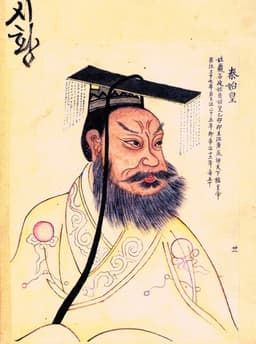
Qin Shi Huang
Emperor · Ancient
85.2Total
Basic Information
Born
1917
-259
Died
1999
-210
Era
Modern
Ancient
Nationality
Zimbabwe
China
Occupation
Revolutionary
Emperor
Civilization
Other
Eastern
Score Comparison
Military (10%)
45.0
80.0
Political (20%)
45.1
90.0
Influence (20%)
56.4
85.0
Legacy (20%)
48.3
90.0
Leadership (15%)
64.5
78.0
Strategy (15%)
43.3
82.0
TOTAL
51.4
85.2
Joshua Nkomo — Complete Timeline
1961 AD
Co-founded Zimbabwe African People's UnionPolitical Action◆ Major
Nkomo co-founded ZAPU as a nationalist movement opposing white minority rule in Rhodesia. The party became a major force in the liberation struggle, with Nkomo as its leader.
NationalismLiberation Movement
Impact: nationalconstructive
1964 AD
Detained by Rhodesian GovernmentPolitical Action◆ Major
Nkomo was arrested and detained by the Rhodesian government without trial for 10 years. He was held at Gonakudzingwa restriction camp, becoming a symbol of the struggle against white rule.
DetentionPolitical Prisoner
Impact: nationaltragic
1976 AD
Formed Patriotic Front with MugabePolitical Action◆ Major
Nkomo's ZAPU formed the Patriotic Front alliance with Robert Mugabe's ZANU to coordinate the armed struggle against the Rhodesian government. The alliance was fragile but crucial for the liberation war.
AllianceLiberation War
Impact: nationalconstructive
1979 AD
Signed Lancaster House AgreementPolitical Action
Nkomo, as co-leader of the Patriotic Front, signed the Lancaster House Agreement which ended the Rhodesian Bush War and paved the way for Zimbabwe's independence.
Peace TreatyIndependence
Impact: nationalconstructive
1980 AD
Appointed Vice President of ZimbabwePolitical Action◆ Major
Nkomo was appointed Vice President of Zimbabwe by Prime Minister Robert Mugabe after ZAPU merged with ZANU. He served in this role until his death in 1999.
Vice PresidencyUnity Government
Impact: national
1983 AD
Survived Gukurahundi MassacresWar◆ Major
During the Gukurahundi massacres in Matabeleland, Nkomo's ZAPU supporters were targeted by Mugabe's North Korean-trained Fifth Brigade. Nkomo fled the country briefly but returned after a unity agreement.
MassacreEthnic ViolenceCivil War
Impact: nationaltragic
Qin Shi Huang — Complete Timeline
246 BC
Construction of the Mausoleum and Terracotta ArmyOther◆ Major
Qin Shi Huang commissioned a vast mausoleum complex near Xi'an, guarded by thousands of life-sized terracotta soldiers, horses, and chariots. The project employed hundreds of thousands of workers and reflected his obsession with immortality and imperial power.
Impact: global
230 BC
Conquest of the Six Warring StatesWar
From 230 to 221 BCE, Ying Zheng led the Qin state in a series of campaigns that conquered the Han, Zhao, Wei, Chu, Yan, and Qi states. This unified China under a single ruler for the first time, ending the Warring States period.
Impact: global
221 BC
Standardization of Writing, Currency, and MeasurementsReform◆ Major
Qin Shi Huang ordered the standardization of Chinese script, currency, and weights and measures across the unified empire. This facilitated administration, trade, and cultural integration, laying a foundation for future dynasties.
Impact: globalconstructive
Proclamation of the Qin DynastyPolitical Action
After conquering the last independent state, Ying Zheng declared himself Shi Huangdi (First Emperor), founding the Qin Dynasty. He adopted a new title to signify his supreme authority and initiated centralized imperial rule.
Impact: global
214 BC
Initiation of the Great Wall ConstructionOther◆ Major
Qin Shi Huang ordered the connection and extension of existing northern fortifications to create a unified defensive wall against nomadic Xiongnu raids. This project involved massive conscripted labor and became the precursor to the later Great Wall.
Impact: regional
213 BC
Burning of Books and Burying of ScholarsPolitical Action◆ Major
On the advice of Li Si, Qin Shi Huang ordered the burning of historical records and philosophical texts not aligned with Legalist doctrine. He also had 460 Confucian scholars buried alive to suppress dissent and consolidate ideological control.
Impact: nationaldestructive
Expert Analysis
joshua-nkomo-vs-qin-shi-huang
# The First Emperor and the Last Nationalist: Two Paths to Unity
On a summer day in 221 BCE, a thirty-eight-year-old king stood before his assembled generals in the city of Xianyang and declared himself *Shi Huangdi*—the First Emperor. Two thousand two hundred years later, on a February morning in 1980, a sixty-three-year-old revolutionary stood in Salisbury, Rhodesia, and watched a black majority government take power for the first time. Both men had spent their lives fighting to unite fractured lands. One succeeded with terrifying finality; the other succeeded only to watch his victory slip through his fingers.
Origins
Ying Zheng was born in 259 BCE into a world of chaos. The Warring States period had torn China apart for two centuries—seven kingdoms locked in endless conflict, each claiming the Mandate of Heaven. His father was a prince, his mother a concubine, and his childhood was spent as a hostage in another state. He learned early that trust was a weapon others used against you.
Joshua Nkomo was born in 1917 in the Semokwe reserve of Southern Rhodesia, the son of a cattle-owning farmer. Unlike Zheng, he grew up with a sense of rootedness—his people, the Ndebele, had their own kings and traditions. He studied at a mission school, worked as a social worker, and later as a trade union leader. Where Zheng was forged in the crucible of war, Nkomo was shaped by the slow, grinding humiliation of colonial rule.
Rise to Power
Zheng’s path was direct: he inherited the Qin throne at thirteen and, by twenty-two, had purged his regent and his mother’s lover in a single bloody stroke. From 230 to 221 BCE, he unleashed a campaign of systematic conquest—Han fell first, then Zhao, Wei, Chu, Yan, and finally Qi. Each victory was methodical, brutal, and final. He did not negotiate; he annihilated.
Nkomo’s rise was a study in patience and compromise. He co-founded the Zimbabwe African People’s Union (ZAPU) in 1961, but spent ten of the next fifteen years in detention—first at Gonakudzingwa, where guards forced him to sleep on concrete, then in prison. When he emerged, he found that a younger, more radical leader named Robert Mugabe had stolen the spotlight. In 1976, Nkomo did what Zheng never would have done: he formed an alliance with his rival, the Patriotic Front, to fight the white minority government together.
Leadership & Governance
Qin Shi Huang ruled like a force of nature. He standardized writing, currency, and measurements across his empire—a reform that would outlast his dynasty by two millennia. He ordered the connection of northern fortifications into what would become the Great Wall. But his governance had a dark side: in 213 BCE, on the advice of his chancellor Li Si, he ordered the burning of all historical records and philosophical texts that did not align with Legalist doctrine, and had 460 scholars buried alive. He believed that unity required uniformity, and uniformity required terror.
Nkomo governed through negotiation and coalition. As Vice President of Zimbabwe from 1990 until his death in 1999, he wielded influence but never power. He was the father of the nation in name, but Mugabe was the father in fact. Nkomo’s ZAPU had merged with Mugabe’s ZANU after independence, a decision that many of his followers saw as surrender. Where Zheng built an empire of iron, Nkomo built a political career of rubber—bending, surviving, but never quite shaping the world around him.
Triumph & Tragedy
Zheng’s greatest moment was also his most terrible: the unification of China. He had achieved what no one before him had dared to imagine—a single empire from the Gobi to the jungles of the south. But his tragedy came swiftly. He died in 210 BCE at age forty-nine, possibly from mercury poisoning in his quest for immortality. His dynasty collapsed within four years of his death, consumed by the very authoritarianism he had perfected.
Nkomo’s triumph was the Lancaster House Agreement of 1979, which ended the Rhodesian Bush War and paved the way for majority rule. But his tragedy unfolded in the 1980s, when Mugabe turned on Nkomo’s supporters in Matabeleland. The Gukurahundi massacres—named after the Shona word for “the early rain that washes away the chaff”—killed an estimated 20,000 Ndebele civilians. Nkomo survived, but his people were shattered. He had fought for unity, and unity had devoured his own.
Character & Destiny
Qin Shi Huang was a man of absolute will. He believed that history began with him—hence the burning of books that recorded earlier dynasties. He built a mausoleum guarded by eight thousand terracotta soldiers, each face unique, as if he could command even death itself. His personality was his destiny: he could not share power, could not delegate, could not imagine a world that did not revolve around his singular vision.
Nkomo was a man of endurance. He was called “Father Zimbabwe” not because he conquered, but because he persisted. He survived detention, exile, political marginalization, and genocide. His personality was also his destiny: he believed in negotiation over confrontation, in alliance over domination. This made him a great nationalist but a poor revolutionary. In the end, he was a unifier who could not hold his own creation together.
Legacy
Qin Shi Huang’s legacy is monumental—literally. The Great Wall, the Terracotta Army, the standardized script that every Chinese person still uses today. He is remembered as both a tyrant and a founder, the man who made China possible. His name is synonymous with power.
Joshua Nkomo’s legacy is quieter. A statue stands in Harare, but his party is gone, his vision of a multi-ethnic Zimbabwe buried under Mugabe’s corruption. He is remembered as a symbol of the struggle, but not its victor. His name is spoken with respect, but also with sadness.
Conclusion
Two unifiers, separated by two millennia, connected by a single truth: that making one nation from many requires a violence that leaves scars. Qin Shi Huang’s violence was swift and absolute; Nkomo’s was slow and betrayed. The First Emperor unified China through terror and standardization; the last nationalist tried to unify Zimbabwe through compromise and was crushed. Both men wanted the same thing—a single people under a single sky. But one held the sword, and the other held only a handshake. History, as always, remembered the sword.
Rankings
🥇
Qin Shi HuangLeader
Mil: 80.0Pol: 90.0Inf: 85.0
85.2
🥈
Joshua Nkomo
Mil: 45.0Pol: 45.1Inf: 56.4
51.4
+33.8 behind
How This Comparison Works
Algorithm
Each figure is scored on 6 dimensions (0—100 scale) based on structured historical data: Military (10%), Political (20%), Influence (20%), Legacy (20%), Leadership (15%), Strategy (15%). The weighted total produces the final ranking.
Data Sources
Scores are computed from structured sub-indicators in the database. Scale factors adjust for era (Ancient ×0.85, Modern ×1.0) and civilization size (Eastern ×1.05, Other ×0.80) to account for differences in population and military scale.
Maximum 3 Figures
Comparisons are limited to 2—3 figures to ensure readability and statistical meaningfulness.
Error Margins
±5 points per dimension — Sub-scores are derived from historical records with inherent uncertainty. Two figures within 5 points on a dimension should be considered roughly equivalent in that area.
Total Score Accuracy
±3 points overall — The weighted combination of 6 dimensions produces a total score with approximately ±3 points of uncertainty. Differences of less than 3 points are not statistically significant— the figures are effectively tied.
Known Limitations
- Historical records are incomplete and uneven across civilizations
- Figures from oral-tradition societies may be underrepresented
- Occupation labels can misclassify multi-role figures
- Scores measure capability and impact, not moral character
- Quantitative scoring is a comparison tool, not absolute truth
Capability Radar
Military (10%) — Battles & Warfare
Battles
30
85
Win Rate
40
90
Expansion
25
90
Political (20%) — Governance & Reform
Reform
50
95
Diplomacy
60
75
Economy
30
90
Influence (20%) — Cultural & Global Reach
Cultural
55
95
Global
45
85
Legacy (20%) — Historical Impact
Historical
60
95
Longevity
50
95
Leadership (15%) — Power & Stability
Tenure
55
70
Stability
35
65
Strategy (15%) — Tactics & Innovation
Strategy
45
85
Tactics
35
80
Reform
30
95
Similar Comparisons
Comments & Discussion
XianyangSword6/17/2026
Comparing Qin Shi Huang to Nkomo is like comparing a wildfire to a leaky faucet. Nkomo's unity was always conditional, shattered by Mugabe's ambition within months. The First Emperor's legions didn't just conquer—they standardized script, weights, and roads, creating a civilizational framework that outlasted his dynasty. Nkomo got a handshake and a fading legacy. Give me the man who burned books but built the Great Wall.
战马独眼龙6/17/2026
Nkomo就是个悲情副手,连上台都靠白人施舍。秦始皇呢?他坑杀儒生、焚书,但那是为了国家统一!对比太不公平——一个是拿着殖民者给的钥匙开门,一个是亲手砸碎两百年的战乱。Nkomo在1980年欢呼时,他的"胜利"连十年都没撑住。
DataSkepticRonin6/17/2026
Let's be real: the "unifier" label for Qin is overblown. His realm had maybe 30 million people spread across warring states that already shared roots. Nkomo faced a deeply polarized settler colony with 3-to-1 black majority—totally different demographics. Also, Qin's "uniformity" destroyed regional economies; Nkomo at least negotiated some land reform. Apples to nuclear warheads.
青铜剑客6/17/2026
秦始皇是铁血统一,但别忘了他的暴政让小孩都不敢夜啼。Nkomo更聪明——他不搞种族清洗,在万隆会议后搞非暴力抗争。一个靠刀剑,一个靠外交。你选谁?我宁可要那个在谈判桌上赢的人,至少津巴布韦没像秦朝一样二世而亡。