Loading...
Josip Broz Tito vs Qin Shi Huang
Qin Shi Huang leads by 19.9 pts · 2 figures compared
…

Josip Broz Tito
Politician · Modern
65.3Total
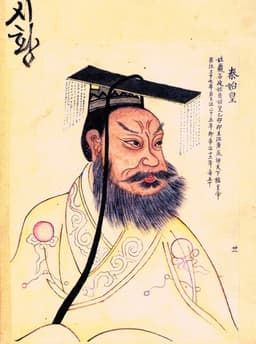
Qin Shi Huang
Emperor · Ancient
85.2Total
Basic Information
Born
1892
-259
Died
1980
-210
Era
Modern
Ancient
Nationality
Yugoslavia
China
Occupation
Politician
Emperor
Civilization
Western
Eastern
Score Comparison
Military (10%)
70.0
80.0
Political (20%)
75.0
90.0
Influence (20%)
68.0
85.0
Legacy (20%)
55.0
90.0
Leadership (15%)
72.0
78.0
Strategy (15%)
55.0
82.0
TOTAL
65.3
85.2
Josip Broz Tito — Complete Timeline
1948 AD
Tito-Stalin splitPolitical Action
Tito's Yugoslavia was expelled from the Cominform after he refused to submit to Stalin's control. This break made Yugoslavia the first communist state to defy the Soviet Union, leading to an independent path of 'self-managing socialism' and non-alignment.
Cold WarCommunismIndependence
Impact: globalconstructive
1961 AD
Founding of the Non-Aligned MovementPolitical Action◆ Major
Tito co-founded the Non-Aligned Movement with Nehru, Nasser, Sukarno, and Nkrumah at the Belgrade Conference. The movement provided a third way for developing countries during the Cold War, avoiding alignment with either the US or Soviet blocs.
Cold WarDiplomacyThird World
Impact: globalconstructive
1974 AD
Yugoslav Constitution of 1974Reform◆ Major
Tito enacted a new constitution that devolved significant powers to Yugoslavia's six republics and two autonomous provinces. While intended to manage ethnic tensions, it weakened the federal government and laid the groundwork for the country's later disintegration.
ConstitutionFederalismNationalism
Impact: regional
1980 AD
Death of TitoOther
Tito died in Ljubljana after a long illness. His death removed the central unifying figure of Yugoslavia, leading to a rotating presidency system that proved ineffective. Ethnic tensions soon escalated, culminating in the Yugoslav Wars a decade later.
DeathYugoslaviaSuccession Crisis
Impact: regionaltragic
Qin Shi Huang — Complete Timeline
246 BC
Construction of the Mausoleum and Terracotta ArmyOther◆ Major
Qin Shi Huang commissioned a vast mausoleum complex near Xi'an, guarded by thousands of life-sized terracotta soldiers, horses, and chariots. The project employed hundreds of thousands of workers and reflected his obsession with immortality and imperial power.
Impact: global
230 BC
Conquest of the Six Warring StatesWar
From 230 to 221 BCE, Ying Zheng led the Qin state in a series of campaigns that conquered the Han, Zhao, Wei, Chu, Yan, and Qi states. This unified China under a single ruler for the first time, ending the Warring States period.
Impact: global
221 BC
Standardization of Writing, Currency, and MeasurementsReform◆ Major
Qin Shi Huang ordered the standardization of Chinese script, currency, and weights and measures across the unified empire. This facilitated administration, trade, and cultural integration, laying a foundation for future dynasties.
Impact: globalconstructive
Proclamation of the Qin DynastyPolitical Action
After conquering the last independent state, Ying Zheng declared himself Shi Huangdi (First Emperor), founding the Qin Dynasty. He adopted a new title to signify his supreme authority and initiated centralized imperial rule.
Impact: global
214 BC
Initiation of the Great Wall ConstructionOther◆ Major
Qin Shi Huang ordered the connection and extension of existing northern fortifications to create a unified defensive wall against nomadic Xiongnu raids. This project involved massive conscripted labor and became the precursor to the later Great Wall.
Impact: regional
213 BC
Burning of Books and Burying of ScholarsPolitical Action◆ Major
On the advice of Li Si, Qin Shi Huang ordered the burning of historical records and philosophical texts not aligned with Legalist doctrine. He also had 460 Confucian scholars buried alive to suppress dissent and consolidate ideological control.
Impact: nationaldestructive
Expert Analysis
josip-broz-tito-vs-qin-shi-huang
# The Unifiers and Their Shadows
In the winter of 221 BC, a king in northern China declared himself the First Emperor, believing his dynasty would last ten thousand generations. In the spring of 1980, an old partisan fighter died in a Slovenian hospital, and within a decade the country he had forged from blood and ideology had vanished from the map. Qin Shi Huang and Josip Broz Tito never met, never corresponded, never breathed the same century's air. Yet both men faced the same impossible task: holding together a collection of warring peoples who shared little but geography. One succeeded for two millennia. The other failed within a generation. The difference tells us something profound about power, memory, and the weight of history.
Origins
Ying Zheng was born in 259 BC, the son of a king held hostage in another state and a concubine whose origins remain mysterious. His childhood was a game of thrones played with daggers and poison. He watched his father die young, saw rivals eliminated, and learned early that trust was a luxury for the dead. China in his youth was a chaos of seven warring states, each with its own script, its own currency, its own axle width for chariots, its own way of measuring the world. The land bled constantly, and no one could remember a time when it did not.
Josip Broz was born in 1892 in a Croatian village, the seventh of fifteen children in a poor peasant family. He learned to read late, worked as a locksmith, traveled through the Austro-Hungarian Empire, and was drafted into the army of a dying empire. He fought in the First World War, was wounded, captured by the Russians, and there, in the chaos of revolution, he found his faith. Where Qin Shi Huang inherited a throne, Tito inherited a world on fire. The difference in their origins—one born to rule, the other born to struggle—shaped everything that followed.
Rise to Power
Qin Shi Huang's path was systematic and brutal. From 230 to 221 BC, he led his armies in a series of campaigns that devoured the other six kingdoms one by one. Han fell first, then Zhao, then Wei. The conquest of Chu required 600,000 men and years of war. Yan and Qi followed. When it was done, Ying Zheng proclaimed himself Shi Huangdi—the First Emperor—and declared a new age. He was thirty-eight years old.
Tito's rise was slower, more contingent. He became secretary-general of the Yugoslav Communist Party in 1939, a position of modest importance in a country about to be devoured by Hitler. During the Second World War, while other resistance movements waited, Tito's Partisans fought. They fought in the mountains of Bosnia, in the forests of Serbia, in the streets of Belgrade. By 1945, Tito had liberated his country largely without Soviet help, and that independence became the foundation of his power. He did not conquer his people; he led them through fire.
Leadership & Governance
Qin Shi Huang governed through standardization. He ordered that all writing be unified under a single script, that all currency be cast in round coins with square holes, that all axle widths be made identical so carts could travel any road in the empire. He built roads and canals, connected the northern fortifications into what would become the Great Wall, and imposed a single legal code across lands that had never known unity. It was the most ambitious administrative project in human history up to that point, and it worked.
But there was a shadow. In 213 BC, on the advice of his chancellor Li Si, the Emperor ordered the burning of all historical records and philosophical texts not aligned with Legalist doctrine. Scholars who protested were buried alive. The First Emperor believed that the past must be erased to make way for the new order. He wanted not just political unity but historical unity—a single story, his story, written over all others.
Tito governed through balance. He created a federal Yugoslavia of six republics and two autonomous provinces, each with its own identity, its own language, its own history. He broke with Stalin in 1948, refusing to submit to Soviet control, and charted an independent path. In 1961, he co-founded the Non-Aligned Movement, positioning Yugoslavia as a bridge between East and West. He gave his people something rare in the twentieth century: relative prosperity, relative freedom, and a sense of dignity on the world stage. But he gave them no mechanism for unity beyond himself.
Triumph & Tragedy
Qin Shi Huang's triumph was complete and immediate. He unified China. His standardization of writing meant that a man from the Yangtze could communicate with a man from the Yellow River. His legal code, his roads, his currency—they created the template for every Chinese dynasty that followed. The tragedy came in his obsessions. He searched for the elixir of immortality, consumed mercury pills prescribed by alchemists, and died at forty-nine, possibly poisoned by his own quest. His dynasty collapsed within four years of his death.
Tito's triumph was the survival of Yugoslavia. He held together a country of Serbs, Croats, Slovenes, Bosniaks, Montenegrins, Macedonians, and Albanians—peoples who had spent centuries killing each other. He did it through force, through charisma, through the memory of their shared struggle against fascism. The tragedy came after. When Tito died in 1980, the system he had built had no center. The 1974 constitution had devolved power to the republics, assuming that Tito would always be there to arbitrate. He was not. Within a decade, Yugoslavia dissolved in the bloodiest war Europe had seen since 1945.
Character & Destiny
Qin Shi Huang believed that order could be imposed from above, that the past could be burned away, that unity required uniformity. He was paranoid, ruthless, and visionary. He saw the world as a problem to be solved by will and force. Tito believed that unity could be negotiated, that diversity could be managed, that a shared future could overcome a divided past. He was pragmatic, charismatic, and patient. He saw the world as a balance to be maintained by skill and compromise.
Both were right. Both were wrong. The First Emperor's method created a civilization that has endured for two thousand years, but it required a level of control that no modern state could sustain. Tito's method held a fragile peace for thirty-five years, but it depended on a single man's authority and could not survive his absence. The difference was not in their intelligence or their ambition. It was in the weight of history they carried. Qin Shi Huang was building from nothing, creating a new world. Tito was trying to hold together a world that had always been fragmenting.
Legacy
Qin Shi Huang is remembered as both founder and tyrant. His Terracotta Army, buried for two thousand years and rediscovered in 1974, stands as a monument to his vision and his arrogance. China today bears his mark in every character of its written language, every coin in its economy, every mile of its roads. He is the father of China, and the Chinese know that fathers can be harsh.
Tito is remembered as a ghost. In the countries that once formed Yugoslavia, his image appears on walls and in memories, but no one agrees on what he meant. To some, he was a dictator who suppressed nationalism. To others, he was the last man who kept them safe. His mausoleum in Belgrade draws visitors, but his country is gone. He is the father of a nation that no longer exists.
Conclusion
The First Emperor and the Partisan Marshal never met, but their stories converge on a single truth: unity is the hardest thing a leader can achieve, and the easiest to lose. Qin Shi Huang built a unity so deep that it became invisible, woven into the fabric of a civilization. Tito built a unity so fragile that it shattered at his death. Both men did what they could with the tools they had—one the sword and the seal, the other the word and the memory of war. Their failures are as instructive as their successes. For every leader who dreams of forging a nation, the question remains: will your work outlast you? And if it does, will those who come after thank you, or curse your name?
Rankings
🥇
Qin Shi HuangLeader
Mil: 80.0Pol: 90.0Inf: 85.0
85.2
🥈
Josip Broz Tito
Mil: 70.0Pol: 75.0Inf: 68.0
65.3
+19.9 behind
How This Comparison Works
Algorithm
Each figure is scored on 6 dimensions (0—100 scale) based on structured historical data: Military (10%), Political (20%), Influence (20%), Legacy (20%), Leadership (15%), Strategy (15%). The weighted total produces the final ranking.
Data Sources
Scores are computed from structured sub-indicators in the database. Scale factors adjust for era (Ancient ×0.85, Modern ×1.0) and civilization size (Eastern ×1.05, Other ×0.80) to account for differences in population and military scale.
Maximum 3 Figures
Comparisons are limited to 2—3 figures to ensure readability and statistical meaningfulness.
Error Margins
±5 points per dimension — Sub-scores are derived from historical records with inherent uncertainty. Two figures within 5 points on a dimension should be considered roughly equivalent in that area.
Total Score Accuracy
±3 points overall — The weighted combination of 6 dimensions produces a total score with approximately ±3 points of uncertainty. Differences of less than 3 points are not statistically significant— the figures are effectively tied.
Known Limitations
- Historical records are incomplete and uneven across civilizations
- Figures from oral-tradition societies may be underrepresented
- Occupation labels can misclassify multi-role figures
- Scores measure capability and impact, not moral character
- Quantitative scoring is a comparison tool, not absolute truth
Capability Radar
Military (10%) — Battles & Warfare
Battles
75
85
Win Rate
70
90
Expansion
60
90
Political (20%) — Governance & Reform
Reform
90
95
Diplomacy
95
75
Economy
70
90
Influence (20%) — Cultural & Global Reach
Cultural
70
95
Global
80
85
Legacy (20%) — Historical Impact
Historical
75
95
Longevity
60
95
Leadership (15%) — Power & Stability
Tenure
85
70
Stability
65
65
Strategy (15%) — Tactics & Innovation
Strategy
80
85
Tactics
65
80
Reform
85
95
Similar Comparisons
Comments & Discussion
铁血史官6/17/2026
这俩人一个靠青铜剑统一度量衡,一个靠铁托主义捏合南斯拉夫。始皇书同文车同轨那是真刀真枪削平六国,光统一文字就让华夏文明有了千年骨架。铁托呢?临走前搞个轮值主席国制度,民族矛盾全靠个人魅力压着,死后尸体都没凉透国家就裂了。一个创立了帝国模板,一个只留下总统山雕像。强弱胜负,历史早给答案了。
Tito's Ghostwriter6/17/2026
The comparison is fundamentally flawed because it conflates conquest with institutional survival. Qin Shi Huang standardized writing, currency, and law across China, creating a bureaucratic DNA that outlived his dynasty. Tito inherited Yugoslavia as a WWII accident and kept it together through cold war leverage—the Non-Aligned Movement gave him geopolitical breathing room, not national cohesion. One built a civilization's immune system; the other just suppressed the fever. The spark wasn't chari
数据拆解师6/17/2026
都是硬凑的题目。公元前221年铁器都没普及,秦朝兵力最多60万,连修长城带打仗都靠棍棒和青铜。南斯拉夫解体时人均GDP三千美元,有铁路有电视,民族矛盾是现代化国家通病。拿这两个比,不如比秦始皇和彼得大帝。一个统一时农业帝国死一半人口,一个靠不结盟运动续命四十年。历史跨度差两千年,方法论天差地别。
Centurion's Heir6/17/2026
Let's talk about succession. Qin Shi Huang's system of centralized bureaucracy survived because he appointed meritocratic officials over hereditary nobles, creating a model that China's later dynasties would mimic. Tito, however, relied on a rotating presidency that diluted executive power—a recipe for paralysis. When the Cold War ended, Yugoslavia had no ideological glue, no common enemy, and no clear successor. One built a machine that ran without him; the other built a house of cards that col
冷眼旁观者6/17/2026
吹秦始皇的统一功绩时别忘了,他晚年寻仙求药、焚书坑儒,南斯拉夫的铁托晚年搞个人崇拜、打压异见。区别在于,一个活在两千年前被神化,一个死在现代被祛魅。真要比较,不如问:如果秦朝只存续40年,后人会怎么评价?历史偏爱胜利者,但更偏爱活得久的失败者。铁托输就输在他没能让民族差异消失,而秦始皇赢在把“书同文”刻进了帝国骨髓。