Loading...
Juan Carlos I vs Wilhelm I
Wilhelm I leads by 13.8 pts · 2 figures compared
…
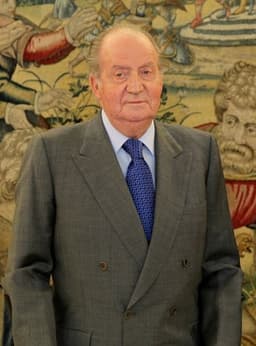
Juan Carlos I
Emperor · Modern
57.5Total
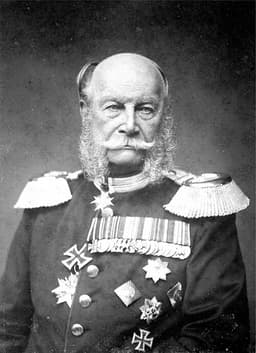
Wilhelm I
Emperor · Modern
71.3Total
Basic Information
Born
1938
1797
Died
—
1888
Era
Modern
Modern
Nationality
Spain
Germany
Occupation
Emperor
Emperor
Civilization
Western
Western
Score Comparison
Military (10%)
26.8
65.0
Political (20%)
75.0
72.0
Influence (20%)
55.0
72.0
Legacy (20%)
52.0
72.0
Leadership (15%)
72.0
80.0
Strategy (15%)
60.0
60.0
TOTAL
57.5
71.3
Juan Carlos I — Complete Timeline
1975 AD
King of Spain CoronationPolitical Action◆ Major
Juan Carlos I was crowned King of Spain on November 22, 1975, two days after Francisco Franco's death. He inherited a dictatorship and immediately began steering the country toward democratic reform.
CoronationTransitionDemocracy
Impact: nationalconstructive
1976 AD
Spanish Transition to DemocracyReform
Juan Carlos I appointed Adolfo Suarez as Prime Minister and supported the Political Reform Act of 1976, which dismantled Francoist institutions. He used his authority to push through democratic reforms, leading to free elections in 1977.
DemocratizationReformConstitution
Impact: nationalprogressive
1981 AD
1981 Spanish Coup d'état AttemptPolitical Action
On February 23, 1981, Civil Guard officers led by Antonio Tejero stormed the Spanish Congress. Juan Carlos I appeared on national television in military uniform, denouncing the coup and ordering the military to remain loyal, which ended the attempt.
Coup AttemptCrisisLeadership
Impact: nationalconstructive
2014 AD
Abdication in Favor of Felipe VIPolitical Action◆ Major
Juan Carlos I abdicated the throne on June 2, 2014, citing personal reasons and the need for generational renewal. His son Felipe VI succeeded him. The abdication followed years of declining popularity due to scandals and economic crisis.
AbdicationMonarchySuccession
Impact: national
2020 AD
Corruption Scandals and ExilePolitical Action◆ Major
In August 2020, Juan Carlos I left Spain for the United Arab Emirates amid investigations into alleged financial irregularities, including hidden bank accounts and commissions from a high-speed rail contract in Saudi Arabia. He remained in self-imposed exile.
CorruptionExileScandal
Impact: nationaldestructive
Wilhelm I — Complete Timeline
1862 AD
Appointed Otto von Bismarck as Minister President of PrussiaPolitical Action
Wilhelm I appointed Otto von Bismarck as Minister President of Prussia to resolve a constitutional crisis over military reforms. Bismarck's appointment led to a period of conservative dominance and aggressive foreign policy that culminated in German unification.
BismarckPrussiaGerman Unification
Impact: global
1866 AD
Led Prussia in the Austro-Prussian WarWar◆ Major
Wilhelm I, as King of Prussia, led the Prussian army in the Austro-Prussian War. The decisive Prussian victory at K
Austro-Prussian WarGerman UnificationMilitary
Impact: regional
1871 AD
Proclaimed German Emperor at VersaillesPolitical Action
Wilhelm I was proclaimed German Emperor in the Hall of Mirrors at the Palace of Versailles, following the Franco-Prussian War. This event formally unified the German states into the German Empire, with Wilhelm as hereditary emperor and Bismarck as chancellor.
German UnificationEmpireFranco-Prussian War
Impact: globalconstructive
1878 AD
Survived Two Assassination AttemptsOther◆ Major
Wilhelm I survived two assassination attempts in May and June 1878. The first attempt by Max H
Assassination AttemptAnti-Socialist LawsBismarck
Impact: nationaltragic
Expert Analysis
Origins
Juan Carlos I was born on January 5, 1938, in Rome, Italy, into the Spanish Bourbon family. His grandfather, King Alfonso XIII, had been exiled after the Second Spanish Republic. Juan Carlos spent his early years in exile, receiving education in military academies in Spain under Francisco Franco's regime. This background positioned him as the future king, groomed by Franco to continue the dictatorship.
Wilhelm I was born on March 22, 1797, in Berlin, Prussia, the second son of King Frederick William III. He received a strict military education, serving in the Prussian army against Napoleon. His upbringing emphasized duty and conservatism. Unlike his brother Frederick William IV, Wilhelm was pragmatic and less inclined to romanticism.
Rise to Power
Juan Carlos I was designated as Franco's successor in 1969, becoming king after Franco's death on November 22, 1975. He immediately began dismantling the Francoist regime, appointing Adolfo Suárez as Prime Minister. The Political Reform Act of 1976, which dismantled Francoist institutions, was a turning point. Juan Carlos used his royal authority to push for democratic reforms, legalizing political parties and holding free elections in 1977.
Wilhelm I became King of Prussia in 1861 after his brother's death. He faced a constitutional crisis over military reforms, which he resolved by appointing Otto von Bismarck as Minister President in 1862. Bismarck's appointment was a turning point. Wilhelm led Prussia in the Austro-Prussian War (1866), defeating Austria and excluding it from German affairs. After the Franco-Prussian War (1870-1871), he was proclaimed German Emperor at Versailles on January 18, 1871, uniting Germany under his rule.
Leadership & Governance
Juan Carlos I's leadership style was constitutional monarch. He actively intervened in the transition, using his influence to steer Spain away from a potential military dictatorship. He scored 72.0 in leadership, reflecting his role in guiding Spain to democracy. His governance was indirect, allowing elected officials to lead. He remained a symbol of unity, especially during the 1981 coup attempt.
Wilhelm I ruled as a constitutional monarch but with significant influence. He scored 80.0 in leadership, higher than Juan Carlos. He delegated much governance to Bismarck, who served as Chancellor. Wilhelm supported Bismarck's policies, including the Anti-Socialist Laws and Kulturkampf. He had a strong sense of duty but was often cautious, deferring to Bismarck on tactical matters.
Triumph & Tragedy
Juan Carlos's greatest triumph was overseeing Spain's peaceful transition from dictatorship to democracy, a model for other nations. He scored 55.0 in influence. His stand against the 1981 coup attempt solidified his reputation. However, his later years were marred by corruption scandals, including hidden bank accounts. He abdicated in 2014 to preserve the monarchy's reputation, but in 2020 he left Spain amid investigations, tarnishing his legacy.
Wilhelm I's greatest triumph was unifying Germany, achieving a long-held nationalist goal. He scored 72.0 in influence. He survived two assassination attempts in 1878, which Bismarck used to pass anti-socialist laws. His tragedies include the death of his wife Augusta in 1890 and the political fallout from Bismarck's resignation in 1890, which occurred after Wilhelm I's death. He died on March 9, 1888, just months before his son Frederick III's brief reign.
Character & Destiny
Juan Carlos I was pragmatic and adaptable. He understood the need for change and risked his position to promote democracy. His character allowed him to navigate the transition, but his later scandals suggest a lack of accountability. He scored 60.0 in strategy, indicating a calculated approach.
Wilhelm I was conservative and duty-bound. He was not a strategic genius but relied on Bismarck's expertise. His character was shaped by military discipline and a sense of royal responsibility. He scored 60.0 in strategy, similar to Juan Carlos. His destiny was to be the figurehead of German unification, but his legacy is overshadowed by Bismarck's dominance.
Legacy
Juan Carlos I's legacy is mixed. He is credited with democratizing Spain, but his exit under a cloud of scandal diminished his reputation. His son Felipe VI has sought to restore the monarchy's image. His role in the transition remains a positive example of peaceful change.
Wilhelm I's legacy is profound as the first German Emperor. He is remembered as the unifier of Germany, though his grandson Wilhelm II's actions in World War I often overshadow his reign. His statue still stands in many German cities. He scored 72.0 in legacy, higher than Juan Carlos's 52.0.
Conclusion
Wilhelm I had a greater impact on world history than Juan Carlos I. Wilhelm's unification of Germany created a major European power that shaped the 20th century. His total score of 71.3 surpasses Juan Carlos's 57.5. While Juan Carlos's democratic transition was significant, its influence is more regional. Wilhelm I's legacy endures in the German state and its geopolitical consequences.
Rankings
🥇
Wilhelm ILeader
Mil: 65.0Pol: 72.0Inf: 72.0
71.3
🥈
Juan Carlos I
Mil: 26.8Pol: 75.0Inf: 55.0
57.5
+13.8 behind
How This Comparison Works
Algorithm
Each figure is scored on 6 dimensions (0—100 scale) based on structured historical data: Military (10%), Political (20%), Influence (20%), Legacy (20%), Leadership (15%), Strategy (15%). The weighted total produces the final ranking.
Data Sources
Scores are computed from structured sub-indicators in the database. Scale factors adjust for era (Ancient ×0.85, Modern ×1.0) and civilization size (Eastern ×1.05, Other ×0.80) to account for differences in population and military scale.
Maximum 3 Figures
Comparisons are limited to 2—3 figures to ensure readability and statistical meaningfulness.
Error Margins
±5 points per dimension — Sub-scores are derived from historical records with inherent uncertainty. Two figures within 5 points on a dimension should be considered roughly equivalent in that area.
Total Score Accuracy
±3 points overall — The weighted combination of 6 dimensions produces a total score with approximately ±3 points of uncertainty. Differences of less than 3 points are not statistically significant— the figures are effectively tied.
Known Limitations
- Historical records are incomplete and uneven across civilizations
- Figures from oral-tradition societies may be underrepresented
- Occupation labels can misclassify multi-role figures
- Scores measure capability and impact, not moral character
- Quantitative scoring is a comparison tool, not absolute truth
Capability Radar
Military (10%) — Battles & Warfare
Battles
34
40
Win Rate
39
75
Expansion
41
80
Political (20%) — Governance & Reform
Reform
85
70
Diplomacy
80
65
Economy
60
60
Influence (20%) — Cultural & Global Reach
Cultural
55
50
Global
65
75
Legacy (20%) — Historical Impact
Historical
70
80
Longevity
60
70
Leadership (15%) — Power & Stability
Tenure
65
85
Stability
75
75
Strategy (15%) — Tactics & Innovation
Strategy
44
60
Tactics
46
30
Reform
52
55
Similar Comparisons
Comments & Discussion
No comments yet. Be the first to share your thoughts!