Loading...
Juba I vs Zoskales
Juba I leads by 0.5 pts · 2 figures compared
…
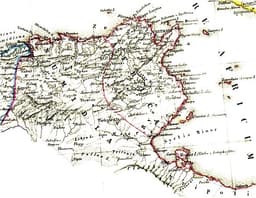
Juba I
Emperor · Ancient
40.8Total
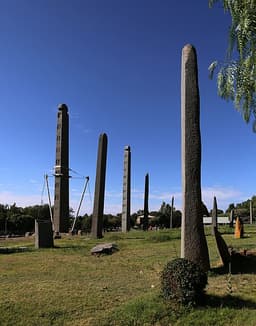
Zoskales
Emperor · Ancient
40.3Total
Basic Information
Born
-85
80
Died
-46
120
Era
Ancient
Ancient
Nationality
Numidia
Ethiopia
Occupation
Emperor
Emperor
Civilization
Other
Other
Score Comparison
Military (10%)
45.0
50.0
Political (20%)
30.8
29.3
Influence (20%)
45.5
44.8
Legacy (20%)
36.7
35.8
Leadership (15%)
48.4
45.0
Strategy (15%)
38.3
39.6
TOTAL
40.8
40.3
Juba I — Complete Timeline
49 BC
Alliance with PompeyPolitical Action◆ Major
Juba I allied with Pompey and the Optimates against Julius Caesar at the outbreak of the Roman Civil War. He provided cavalry and supplies to Pompey's forces in North Africa, hoping to expand Numidian territory at Rome's expense.
Roman Civil WarAlliancePompey
Impact: regional
46 BC
Battle of ThapsusWar
Juba I fought alongside the Pompeian forces at the Battle of Thapsus in North Africa. Caesar's forces decisively defeated the Pompeian army, and Juba's Numidian troops were routed, leading to the collapse of his kingdom.
Roman Civil WarBattleDefeat
Impact: regionaldestructive
Suicide after ThapsusPolitical Action◆ Major
After the defeat at Thapsus, Juba I committed suicide rather than be captured by Caesar. He died in a suicide pact with the Roman general Marcus Petreius at his Numidian palace, ending the independent Kingdom of Numidia.
SuicideEnd of KingdomNumidia
Impact: regionaltragic
Zoskales — Complete Timeline
100 AD
Mention in the Periplus of the Erythraean SeaCultural◆ Major
Zoskales is mentioned in the Periplus of the Erythraean Sea, a Greek merchant's guide to trade routes. The text describes him as the ruler of Aksum, controlling the port of Adulis and trading ivory, tortoiseshell, and spices with Roman Egypt.
Historical RecordTradeAksum
Impact: regional
110 AD
Expansion of Aksumite TradePolitical Action◆ Major
Zoskales oversaw the expansion of Aksum's trade networks through the port of Adulis, connecting the Red Sea trade with the interior of Ethiopia. This trade brought wealth and influence to Aksum, establishing it as a major regional power.
TradeEconomic GrowthAksum
Impact: regionalconstructive
Expert Analysis
Origins
Juba I was born around 85 BCE as the son of King Hiempsal II of Numidia, a client kingdom of Rome in North Africa. He inherited a throne that was heavily dependent on Roman favor, having been restored to power by the Sullan faction. His education was likely in the Hellenistic and Roman traditions, preparing him for a role as a client king. Numidia was a fertile grain-producing region with a strong cavalry tradition.
Zoskales, by contrast, is known only from the Periplus of the Erythraean Sea (c. 1st century CE), which describes him as the ruler of Aksum and the port of Adulis. His exact birth and family are unknown, but he likely belonged to the early Aksumite aristocracy. Aksum was a rising power in the Horn of Africa, controlling trade routes between the Red Sea and the interior. Zoskales was literate in Greek, as the Periplus notes he was 'well versed in Greek letters.'
Rise to Power
Juba I became king after his father's death around 60 BCE. He maintained Numidia's independence by aligning with the Optimates, the conservative Roman faction led by Pompey. When the Roman Civil War broke out in 49 BCE, Juba sided with Pompey, supplying cavalry and grain. His key turning point was the Battle of Thapsus (46 BCE), where he commanded the left wing of the Pompeian army. The defeat was decisive; Juba escaped but found his kingdom occupied by Caesar's ally, Sallust.
Zoskales's rise is obscure, but he likely consolidated control over the port of Adulis and the highland region of Aksum. His mention in the Periplus indicates he was a significant regional power by the mid-1st century CE. He expanded trade networks, exporting ivory, tortoise shell, and spices to the Roman world and importing textiles, glass, and metals.
Leadership & Governance
Juba I governed as an absolute monarch, but his rule was constrained by Roman hegemony. He maintained a Numidian court and army, but his decisions were heavily influenced by Roman politics. His alliance with Pompey was a gamble that failed. He did not implement major internal reforms; his reign was focused on external alliances.
Zoskales ruled a growing kingdom with a mixed economy of agriculture and trade. The Periplus describes him as 'a man of high character and well versed in Greek letters,' suggesting a cultured, diplomatic leader. He likely standardized taxes on trade, which funded the expansion of Aksum. His governance was more stable and forward-looking, building the foundations of the Aksumite Empire.
Triumph & Tragedy
Juba I's greatest success was maintaining Numidian independence for over a decade in the shadow of Rome. He also defeated Caesar's general, Gaius Scribonius Curio, at the Battle of the Bagradas River (49 BCE), killing Curio and routing his army. However, his greatest failure was backing the losing side in the civil war. His suicide after Thapsus ended his dynasty; Numidia was annexed and divided between Roman settlers and the Mauretanian king.
Zoskales's triumph was the expansion of Aksumite trade, linking the Red Sea to the interior. His reign saw the growth of Adulis as a commercial hub. The tragedy is the lack of records; we know little of his personal life or challenges. His legacy is that Aksum became a major power, but his individual role is shadowy.
Character & Destiny
Juba I was a proud king who chose death over submission. His decision to ally with Pompey was rational given Pompey's earlier support for his father, but he underestimated Caesar's military genius. His character was that of a traditional monarch, valuing honor over pragmatism. Historical assessments like that of historian Michael Grant note his 'tragic miscalculation.'
Zoskales is depicted in the Periplus as a shrewd, cultured ruler. He embraced Greek culture to facilitate trade, showing adaptability. His destiny was to be the first named king of Aksum, a civilization that would later adopt Christianity. His character favored diplomacy and commerce over warfare.
Legacy
Juba I's legacy is primarily as a footnote in Roman history. He scored 36.7 in Legacy. His son, Juba II, was raised in Rome and became a learned king of Mauretania, but Numidia never recovered its sovereignty. The kingdom was absorbed into the Roman Empire, and its culture was largely lost.
Zoskales's legacy is more enduring. He scored 35.8 in Legacy, slightly lower, but Aksum continued to thrive for centuries, becoming a major empire that minted its own coinage and later embraced Christianity. The Periplus reference is the earliest written record of an Aksumite king, making Zoskales a foundational figure in Ethiopian history.
Conclusion
While Juba I scored marginally higher overall (40.8 vs 40.3), Zoskales had greater long-term impact. Juba's role was reactive, tied to Roman civil wars, and his kingdom vanished. Zoskales laid the groundwork for a civilization that lasted over a millennium. In terms of enduring influence, Zoskales is the more significant figure.
Rankings
🥇
Juba ILeader
Mil: 45.0Pol: 30.8Inf: 45.5
40.8
🥈
Zoskales
Mil: 50.0Pol: 29.3Inf: 44.8
40.3
+0.5 behind
How This Comparison Works
Algorithm
Each figure is scored on 6 dimensions (0—100 scale) based on structured historical data: Military (10%), Political (20%), Influence (20%), Legacy (20%), Leadership (15%), Strategy (15%). The weighted total produces the final ranking.
Data Sources
Scores are computed from structured sub-indicators in the database. Scale factors adjust for era (Ancient ×0.85, Modern ×1.0) and civilization size (Eastern ×1.05, Other ×0.80) to account for differences in population and military scale.
Maximum 3 Figures
Comparisons are limited to 2—3 figures to ensure readability and statistical meaningfulness.
Error Margins
±5 points per dimension — Sub-scores are derived from historical records with inherent uncertainty. Two figures within 5 points on a dimension should be considered roughly equivalent in that area.
Total Score Accuracy
±3 points overall — The weighted combination of 6 dimensions produces a total score with approximately ±3 points of uncertainty. Differences of less than 3 points are not statistically significant— the figures are effectively tied.
Known Limitations
- Historical records are incomplete and uneven across civilizations
- Figures from oral-tradition societies may be underrepresented
- Occupation labels can misclassify multi-role figures
- Scores measure capability and impact, not moral character
- Quantitative scoring is a comparison tool, not absolute truth
Capability Radar
Military (10%) — Battles & Warfare
Battles
30
10
Win Rate
25
10
Expansion
20
15
Political (20%) — Governance & Reform
Reform
20
15
Diplomacy
30
25
Economy
25
30
Influence (20%) — Cultural & Global Reach
Cultural
20
15
Global
10
10
Legacy (20%) — Historical Impact
Historical
25
20
Longevity
15
15
Leadership (15%) — Power & Stability
Tenure
40
30
Stability
20
25
Strategy (15%) — Tactics & Innovation
Strategy
25
10
Tactics
30
10
Reform
10
5
Similar Comparisons
Comments & Discussion
No comments yet. Be the first to share your thoughts!