Loading...
Julius Caesar vs Mahatma Gandhi
Julius Caesar leads by 14.1 pts · 2 figures compared
…

Julius Caesar
General · Ancient
82.8Total
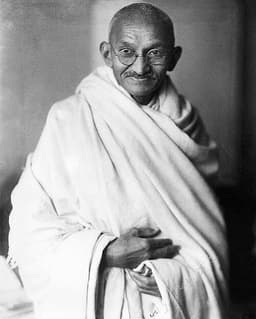
Mahatma Gandhi
Politician · Modern
68.7Total
Basic Information
Born
-100
1869
Died
-44
1948
Era
Ancient
Modern
Nationality
Roman Republic
India
Occupation
General
Politician
Civilization
Western
Indian
Score Comparison
Military (10%)
88.0
42.3
Political (20%)
78.0
65.0
Influence (20%)
85.0
80.0
Legacy (20%)
82.0
75.0
Leadership (15%)
80.0
70.0
Strategy (15%)
85.0
55.0
TOTAL
82.8
68.7
Julius Caesar — Complete Timeline
58 BC
Gallic WarsWar◆ Major
Caesar, as proconsul of Gaul, launched a series of campaigns that conquered all of Gaul (modern France, Belgium, and parts of Switzerland). He fought numerous battles, including against the Helvetii, the Belgae, and the Gallic chieftain Vercingetorix. The wars brought immense wealth and a loyal army to Caesar.
Gallic WarsConquestRoman Expansion
Impact: regional
49 BC
Crossing the RubiconPolitical Action◆ Major
Caesar led Legio XIII across the Rubicon River into Italy, defying the Roman Senate's order to disband his army. This act triggered a civil war against Pompey and the Optimates, ultimately leading to Caesar's dictatorship and the end of the Roman Republic.
Roman Civil WarEnd of RepublicPower Struggle
Impact: global
48 BC
Battle of PharsalusWar◆ Major
Caesar's outnumbered army defeated the larger forces of Pompey the Great at Pharsalus in Greece. Caesar's tactical use of a reserve line to counter Pompey's cavalry charge proved decisive. Pompey fled to Egypt, where he was assassinated, leaving Caesar as the undisputed master of the Roman world.
Roman Civil WarBattleDecisive Victory
Impact: regional
44 BC
Appointment as Dictator for LifePolitical Action◆ Major
The Roman Senate appointed Caesar dictator perpetuo (dictator for life), granting him unprecedented personal power. This move concentrated military, legislative, and judicial authority in one person, effectively ending the Roman Republic's traditional system of checks and balances and alarming many senators.
DictatorshipEnd of RepublicPower Consolidation
Impact: regionaldestructive
Assassination on the Ides of MarchPolitical Action◆ Major
A group of Roman senators, led by Marcus Junius Brutus and Gaius Cassius Longinus, stabbed Caesar to death at a meeting of the Senate in the Theatre of Pompey. The assassination was intended to restore the Republic, but instead triggered another civil war that led to the rise of the Roman Empire.
AssassinationRoman PoliticsEnd of Republic
Impact: globaldestructive
Mahatma Gandhi — Complete Timeline
1917 AD
Champaran SatyagrahaPolitical Action
Gandhi led his first nonviolent protest in India, supporting indigo farmers in Champaran, Bihar, against exploitative British planters. He organized a campaign of civil disobedience and negotiations, resulting in the abolition of the oppressive tinkathia system.
Civil disobedienceFarmers' rightsBritish Raj
Impact: nationalprogressive
1919 AD
Jallianwala Bagh massacre aftermathPolitical Action◆ Major
After British troops killed hundreds of unarmed civilians in Amritsar, Gandhi organized a nationwide hartal (strike) and nonviolent protests. He returned his medals and launched the Rowlatt Satyagraha, marking a shift from cooperation to non-cooperation with British rule.
ProtestBritish RajMassacre
Impact: nationaltragic
1930 AD
Salt MarchPolitical Action
Gandhi led a 240-mile march from Sabarmati to Dandi, Gujarat, to defy the British salt monopoly. Thousands joined him, making salt from seawater. This act of civil disobedience sparked mass protests across India and drew global attention to the independence movement.
Civil disobedienceSalt taxIndependence movement
Impact: globalprogressive
1942 AD
Quit India Movement launchPolitical Action◆ Major
Gandhi launched the Quit India Movement, calling for an end to British rule with the slogan 'Do or Die'. The British arrested him and other leaders, but the movement led to widespread protests and repression, accelerating the end of colonial rule.
IndependenceCivil disobedienceBritish Raj
Impact: nationalprogressive
1948 AD
AssassinationPolitical Action
Gandhi was shot and killed by Nathuram Godse, a Hindu nationalist, during a prayer meeting in New Delhi. His assassination shocked the world and led to a wave of grief and violence, but also reinforced his legacy as a martyr for nonviolence.
AssassinationMartyrdomNonviolence
Impact: globaltragic
Expert Analysis
Julius Caesar vs Mahatma Gandhi: Historical Comparison
Julius Caesar, a military genius and pivotal figure of the Roman Republic, and Mahatma Gandhi, the spiritual and political leader of India’s independence movement, represent two vastly different archetypes of historical influence—one forged through conquest, the other through nonviolent resistance.
Dimension Analysis
**Military: Julius Caesar 88 / Mahatma Gandhi 52**
Caesar’s conquest of Gaul and his civil war victories demonstrate unparalleled tactical brilliance, while Gandhi deliberately rejected military force, achieving political change through civil disobedience.
**Political: Julius Caesar 78 / Mahatma Gandhi 70**
Caesar dismantled the Roman Republic to become dictator, wielding raw power effectively, whereas Gandhi built a mass movement that pressured the British Empire, though he never held formal office.
**Influence: Julius Caesar 85 / Mahatma Gandhi 85**
Caesar’s actions ended the Republic and set the stage for the Roman Empire, while Gandhi’s philosophy of nonviolence inspired global movements for civil rights, from Martin Luther King Jr. to Nelson Mandela.
**Legacy: Julius Caesar 82 / Mahatma Gandhi 80**
Caesar’s name became synonymous with imperial ambition, shaping Western political thought for millennia; Gandhi’s legacy endures as a moral icon of peaceful resistance, though his economic vision remains contested.
**Leadership: Julius Caesar 82 / Mahatma Gandhi 75**
Caesar commanded legions through personal charisma and ruthless decisiveness; Gandhi led through moral authority and self-sacrifice, but his decentralized movement sometimes struggled with cohesion.
Verdict
Julius Caesar leads overall due to his superior military and strategic scores, which outweigh Gandhi’s moral influence in this comparative framework.
FAQ
Q: Who ranks higher? A: Julius Caesar ranks higher, primarily because of his exceptional military and strategic achievements, though Gandhi ties in influence and nearly matches in legacy.
Rankings
🥇
Julius CaesarLeader
Mil: 88.0Pol: 78.0Inf: 85.0
82.8
🥈
Mahatma Gandhi
Mil: 42.3Pol: 65.0Inf: 80.0
68.7
+14.1 behind
How This Comparison Works
Algorithm
Each figure is scored on 6 dimensions (0—100 scale) based on structured historical data: Military (10%), Political (20%), Influence (20%), Legacy (20%), Leadership (15%), Strategy (15%). The weighted total produces the final ranking.
Data Sources
Scores are computed from structured sub-indicators in the database. Scale factors adjust for era (Ancient ×0.85, Modern ×1.0) and civilization size (Eastern ×1.05, Other ×0.80) to account for differences in population and military scale.
Maximum 3 Figures
Comparisons are limited to 2—3 figures to ensure readability and statistical meaningfulness.
Error Margins
±5 points per dimension — Sub-scores are derived from historical records with inherent uncertainty. Two figures within 5 points on a dimension should be considered roughly equivalent in that area.
Total Score Accuracy
±3 points overall — The weighted combination of 6 dimensions produces a total score with approximately ±3 points of uncertainty. Differences of less than 3 points are not statistically significant— the figures are effectively tied.
Known Limitations
- Historical records are incomplete and uneven across civilizations
- Figures from oral-tradition societies may be underrepresented
- Occupation labels can misclassify multi-role figures
- Scores measure capability and impact, not moral character
- Quantitative scoring is a comparison tool, not absolute truth
Capability Radar
Military (10%) — Battles & Warfare
Battles
95
45
Win Rate
92
46
Expansion
97
51
Political (20%) — Governance & Reform
Reform
90
85
Diplomacy
85
80
Economy
82
40
Influence (20%) — Cultural & Global Reach
Cultural
88
85
Global
94
90
Legacy (20%) — Historical Impact
Historical
95
90
Longevity
96
85
Leadership (15%) — Power & Stability
Tenure
75
60
Stability
60
55
Strategy (15%) — Tactics & Innovation
Strategy
94
52
Tactics
96
56
Reform
88
55
Similar Comparisons
Comments & Discussion
Historian7206/16/2026
凯撒和甘地,一个是罗马的项羽,一个是印度的刘备?但仔细想想不对。凯撒征服高卢相当于秦始皇灭六国,都是靠武力统一版图;而甘地更像东汉末年的郑玄——以经学教化天下,弟子遍及四方,最终影响了整个时代的政治伦理。但西方历史评分往往高估凯撒的军事成就,低估甘地的政治谋略。你们看甘地1930年食盐进军,本质上跟韩信“明修栈道暗度陈仓”一样,是精心计算过的非对称战术。他选择食盐税这个议题,精准打击了英国殖民统治的经济基础,同时让全球舆论倒向印度。凯撒的《高卢战记》是军事教材,甘地的《印度自治》是政治兵法。论战略深度,我认为甘地不输凯撒。
ColdMind486/16/2026
这个评分体系有意思,但我觉得有问题。凯撒军事88分,甘地52分,这个差距我能理解。但政治分78对70,我怀疑是不是给甘地打低了?甘地虽然没有正式官职,但他领导的国大党实际上在1920-1940年代就构建了一套平行政府体系,包括税收、司法、教育。这跟中国历史上朱元璋“高筑墙、广积粮、缓称王”的策略异曲同工——不占官方名号,却实质控制基层。另外,影响力两人都是85分,但甘地的非暴力思想影响了马钉路德·金和曼德拉,凯撒的影响力更多是权力结构的模板,后者更间接。我建议政治分至少调到75对75。