Loading...
Julius Caesar vs Nelson Mandela
Julius Caesar leads by 25.8 pts · 2 figures compared
…

Julius Caesar
General · Ancient
82.8Total
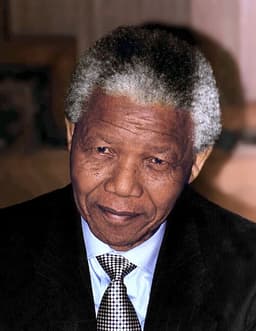
Nelson Mandela
Politician · Modern
57.0Total
Basic Information
Born
-100
1918
Died
-44
2013
Era
Ancient
Modern
Nationality
Roman Republic
South Africa
Occupation
General
Politician
Civilization
Western
Other
Score Comparison
Military (10%)
88.0
10.0
Political (20%)
78.0
78.0
Influence (20%)
85.0
40.0
Legacy (20%)
82.0
68.0
Leadership (15%)
80.0
82.0
Strategy (15%)
85.0
50.0
TOTAL
82.8
57.0
Julius Caesar — Complete Timeline
58 BC
Gallic WarsWar◆ Major
Caesar, as proconsul of Gaul, launched a series of campaigns that conquered all of Gaul (modern France, Belgium, and parts of Switzerland). He fought numerous battles, including against the Helvetii, the Belgae, and the Gallic chieftain Vercingetorix. The wars brought immense wealth and a loyal army to Caesar.
Gallic WarsConquestRoman Expansion
Impact: regional
49 BC
Crossing the RubiconPolitical Action◆ Major
Caesar led Legio XIII across the Rubicon River into Italy, defying the Roman Senate's order to disband his army. This act triggered a civil war against Pompey and the Optimates, ultimately leading to Caesar's dictatorship and the end of the Roman Republic.
Roman Civil WarEnd of RepublicPower Struggle
Impact: global
48 BC
Battle of PharsalusWar◆ Major
Caesar's outnumbered army defeated the larger forces of Pompey the Great at Pharsalus in Greece. Caesar's tactical use of a reserve line to counter Pompey's cavalry charge proved decisive. Pompey fled to Egypt, where he was assassinated, leaving Caesar as the undisputed master of the Roman world.
Roman Civil WarBattleDecisive Victory
Impact: regional
44 BC
Appointment as Dictator for LifePolitical Action◆ Major
The Roman Senate appointed Caesar dictator perpetuo (dictator for life), granting him unprecedented personal power. This move concentrated military, legislative, and judicial authority in one person, effectively ending the Roman Republic's traditional system of checks and balances and alarming many senators.
DictatorshipEnd of RepublicPower Consolidation
Impact: regionaldestructive
Assassination on the Ides of MarchPolitical Action◆ Major
A group of Roman senators, led by Marcus Junius Brutus and Gaius Cassius Longinus, stabbed Caesar to death at a meeting of the Senate in the Theatre of Pompey. The assassination was intended to restore the Republic, but instead triggered another civil war that led to the rise of the Roman Empire.
AssassinationRoman PoliticsEnd of Republic
Impact: globaldestructive
Nelson Mandela — Complete Timeline
1964 AD
Rivonia TrialPolitical Action
Nelson Mandela and other anti-apartheid leaders were tried for sabotage and conspiracy. Mandela was sentenced to life imprisonment, delivering a speech from the dock that became a rallying cry against apartheid. The trial drew international attention to the anti-apartheid struggle.
Impact: global
1990 AD
Release from PrisonPolitical Action
After 27 years of imprisonment, Mandela was released from Victor Verster Prison by President F.W. de Klerk. His release was a pivotal moment in South Africa's transition from apartheid to multiracial democracy, leading to negotiations for a new constitution.
Impact: globalprogressive
1993 AD
Awarding of the Nobel Peace PrizeCultural◆ Major
Mandela and F.W. de Klerk were jointly awarded the Nobel Peace Prize for their roles in ending apartheid and laying the foundations for a democratic South Africa. The award recognized their peaceful transition and commitment to reconciliation.
Impact: globalprogressive
1994 AD
Inauguration as President of South AfricaPolitical Action
Mandela was inaugurated as South Africa's first Black president after the country's first fully democratic elections. His presidency focused on national reconciliation, establishing the Truth and Reconciliation Commission, and dismantling the legacy of apartheid.
Impact: globalprogressive
Expert Analysis
Julius Caesar vs Nelson Mandela
# The General and the Prisoner: Two Roads to Power
On a January morning in 49 BCE, Julius Caesar stood at the banks of the Rubicon River, a small stream separating his province of Gaul from Italy proper. To cross with his army would be an act of war against the Roman Republic. He hesitated, then spoke: "The die is cast." On February 11, 1990, a gaunt but dignified Nelson Mandela walked hand-in-hand with his wife Winnie through the gates of Victor Verster Prison, a free man after 27 years. One man chose war to seize power; the other chose peace to share it. What drove these two figures, separated by two millennia and every conceivable circumstance, to such different destinies?
Origins
Julius Caesar was born into the patrician Julian clan, one of Rome's oldest families, but his branch had fallen into relative obscurity. The Rome of 100 BCE was a republic in crisis—corrupt senators, landless veterans, and slave revolts tearing at its fabric. Caesar's father died when he was sixteen, and he was raised in the volatile Subura district, learning early that survival required cunning. He fled Rome during Sulla's proscriptions, refusing to divorce his wife as the dictator demanded—a defiance that marked his character.
Nelson Mandela was born Rolihlahla Mandela in 1918 in the rural village of Mvezo, in what is now South Africa's Eastern Cape. His father was a Thembu chief, but after a dispute with a colonial magistrate, the family lost its status. Mandela was raised by the regent Jongintaba, immersed in tribal councils where consensus was sacred. He attended a Methodist mission school, where a teacher gave him the English name "Nelson." The collision of tribal tradition and British colonialism shaped his worldview: power could be negotiated, not just seized.
Rise to Power
Caesar's path was a ladder of military commands and political debts. He served as quaestor in Spain, then aedile in Rome, spending borrowed fortunes on gladiatorial games to win the mob's love. The turning point came in 60 BCE, when he formed the First Triumvirate with Pompey and Crassus. As governor of Gaul from 58 to 50 BCE, he conquered the entire region, writing his own propaganda in *Commentaries on the Gallic War*. The Senate demanded he disband his army; instead, he crossed the Rubicon.
Mandela's rise was slower and more painful. He joined the African National Congress in 1943, co-founding its Youth League. For two decades, he organized peaceful protests and strikes. But after the Sharpeville massacre of 1960, when police killed 69 unarmed protesters, Mandela concluded that nonviolence was failing. He co-founded Umkhonto we Sizwe, the armed wing of the ANC, leading a sabotage campaign against government installations. In 1964, at the Rivonia Trial, he was sentenced to life imprisonment. His speech from the dock—"I have fought against white domination, and I have fought against black domination"—was his entry into global consciousness.
Leadership & Governance
Caesar ruled as a military autocrat. As dictator for life, he reformed the calendar (introducing the Julian calendar), extended citizenship to provinces, redistributed land to veterans, and reduced debt. But his style was personal and absolute: he packed the Senate with his supporters, issued laws without consultation, and accepted divine honors. His military genius was unmatched—he won the Gallic Wars, the Civil War, and campaigns in Egypt and Pontus—but he never built institutions that could outlast him. His governance was a one-man show.
Mandela governed as a reconciler. As South Africa's first Black president from 1994 to 1999, he prioritized unity over revenge. He kept his former jailers on the presidential security detail, invited the apartheid-era prosecutor to lunch, and wore the Springbok rugby jersey—a symbol of white Afrikanerdom—during the 1995 Rugby World Cup. His Truth and Reconciliation Commission, chaired by Archbishop Desmond Tutu, offered amnesty in exchange for full confession, avoiding a bloodbath. His political score of 80 reflects a leader who understood that power is most durable when it is shared.
Triumph & Tragedy
Caesar's greatest triumph was the conquest of Gaul, which brought Rome its richest province and made him the most powerful man in the Mediterranean. His tragedy was the Ides of March, 44 BCE, when sixty senators stabbed him to death in the Senate chamber. He died at 55, at the height of his power, leaving no clear successor and plunging Rome into 13 more years of civil war. His final words—"Et tu, Brute?"—are likely apocryphal, but they capture the betrayal that destroyed him.
Mandela's triumph was the 1994 election, where millions of South Africans—Black and white—voted for the first time in a fully democratic election. His tragedy was more subtle: the personal cost of 27 years in prison, the collapse of his marriage to Winnie, and the knowledge that economic inequality and HIV/AIDS would plague his country long after his presidency. He died in 2013 at 95, surrounded by family, having seen his nation transformed but not perfected.
Character & Destiny
Caesar was driven by *ambitio*—the Roman hunger for glory and honor. He was ruthless, calculating, and supremely confident, believing that his destiny was to rule. "I came, I saw, I conquered" was not a boast but a statement of fact. His personality made him a great general but a poor politician in the long term: he could win battles but could not build a stable peace. His assassination was the direct result of his inability to share power.
Mandela was driven by *ubuntu*—the African philosophy that "a person is a person through other persons." He was patient, empathetic, and strategic, understanding that his enemy was not white people but apartheid. "Resentment is like drinking poison and then hoping it will kill your enemies," he said. His 27 years in prison were not wasted; they gave him time to learn Afrikaans, study his jailers, and prepare for negotiation. His personality made him a poor revolutionary but a masterful peacemaker.
Legacy
Caesar's legacy is the Roman Empire itself. His name became the title "Kaiser" in German and "Tsar" in Russian. His military tactics are still studied at West Point. But his legacy is also a warning: power concentrated in one man, no matter how brilliant, leads to ruin. The Roman Republic died on the Ides of March, and the empire that replaced it was born from Caesar's corpse.
Mandela's legacy is the peaceful transition to democracy in South Africa, a model for divided societies from Northern Ireland to Rwanda. He is remembered not just as a president but as a moral symbol—the man who chose forgiveness over vengeance. His birthday, July 18, is celebrated as Mandela Day, a global call to public service. Yet his legacy is also a challenge: his successors have struggled to fulfill his vision of a just, equal South Africa.
Conclusion
Standing at the Rubicon, Caesar chose to cross. Standing at the prison gate, Mandela chose to walk. One man believed that history was made by the sword; the other believed it was made by the handshake. Both were right, and both were wrong. Caesar's Rome became an empire of iron, but it collapsed under its own weight. Mandela's South Africa became a rainbow nation, but it still struggles with the shadows of its past. Perhaps the deepest lesson is not about which path is better, but about what each man saw in the mirror: Caesar saw a conqueror; Mandela saw a servant. The world needs both, but it remembers the servant longer.
Rankings
🥇
Julius CaesarLeader
Mil: 88.0Pol: 78.0Inf: 85.0
82.8
🥈
Nelson Mandela
Mil: 10.0Pol: 78.0Inf: 40.0
57.0
+25.8 behind
How This Comparison Works
Algorithm
Each figure is scored on 6 dimensions (0—100 scale) based on structured historical data: Military (10%), Political (20%), Influence (20%), Legacy (20%), Leadership (15%), Strategy (15%). The weighted total produces the final ranking.
Data Sources
Scores are computed from structured sub-indicators in the database. Scale factors adjust for era (Ancient ×0.85, Modern ×1.0) and civilization size (Eastern ×1.05, Other ×0.80) to account for differences in population and military scale.
Maximum 3 Figures
Comparisons are limited to 2—3 figures to ensure readability and statistical meaningfulness.
Error Margins
±5 points per dimension — Sub-scores are derived from historical records with inherent uncertainty. Two figures within 5 points on a dimension should be considered roughly equivalent in that area.
Total Score Accuracy
±3 points overall — The weighted combination of 6 dimensions produces a total score with approximately ±3 points of uncertainty. Differences of less than 3 points are not statistically significant— the figures are effectively tied.
Known Limitations
- Historical records are incomplete and uneven across civilizations
- Figures from oral-tradition societies may be underrepresented
- Occupation labels can misclassify multi-role figures
- Scores measure capability and impact, not moral character
- Quantitative scoring is a comparison tool, not absolute truth
Capability Radar
Military (10%) — Battles & Warfare
Battles
95
0
Win Rate
92
7
Expansion
97
9
Political (20%) — Governance & Reform
Reform
90
95
Diplomacy
85
95
Economy
82
60
Influence (20%) — Cultural & Global Reach
Cultural
88
85
Global
94
90
Legacy (20%) — Historical Impact
Historical
95
90
Longevity
96
80
Leadership (15%) — Power & Stability
Tenure
75
60
Stability
60
80
Strategy (15%) — Tactics & Innovation
Strategy
94
8
Tactics
96
12
Reform
88
17
Similar Comparisons
Comments & Discussion
CONQUEROR_CEASAR6/16/2026
Caesar was a genius of realpolitik, but let's not romanticize him. The Rubicon crossing wasn't a tragic choice—it was a calculated power grab by a man who already had his legions' loyalty. Compare that to Mandela, who emerged from 27 years in prison preaching reconciliation, not revenge. Two millennia apart, and one learned that true power isn't about seizing a city—it's about building a nation. History remembers the builders, not just the conquerors.
DATA_SKEPTIC_2026/16/2026
This comparison is lazy clickbait. You're cherry-picking two vastly different historical contexts: Caesar in a civil war within a slave-owning republic, Mandela in a 20th-century anti-colonial struggle. Where's the economic data on their policies? Caesar's agrarian reforms vs. Mandela's Truth and Reconciliation? Without GDP per capita or violence statistics, this is just moralizing. Show me numbers on public spending or crime rates, then we'll talk.
罗马幽灵6/16/2026
凯撒和曼德拉?这就像是拿核弹对比蜡烛。凯撒的武功建立在十万高卢人尸骨上,他的仁慈是给敌人递刀子的虚伪——想想他赦免庞培派却最终被刺杀。而曼德拉,27年监狱生涯没让他变成暴君,反而甘愿与昔日敌人共饮一杯茶。一个要当终身独裁官,一个只当了一届总统就主动退休。这不是历史选择,这是人格的差距。我站曼德拉。
军阀与圣人6/16/2026
别被浪漫史骗了。凯撒是古代版的战争机器,他跨过卢比孔河时考虑过平民的鲜血吗?《高卢战记》里他写自己屠杀了100万高卢人,那只是数字游戏。曼德拉的真相与和解委员会呢?至少给种族隔离受害者一个发声平台。但说真的,两人都太极端了——凯撒是力量至上,曼德拉是道德楷模。历史需要中间人,不是两个神话。我选第三个选项:图拉真,他既打仗又修路。
学术修勾6/16/2026
从史学方法论看,这对比建立在一个危险假设上:领袖的道德能超越时代。但凯撒活在罗马共和国崩溃期,不跨卢比孔河,他就会被政敌清算——那是生存本能。曼德拉在20世纪的非暴力运动浪潮中,有甘地、马丁·路德·金做榜样。拿两个不同历史结构的产物比较,就像比较苹果和西瓜的营养价值。我建议读读《罗马革命》和《漫漫自由路》,然后重新思考这个问题。