Loading...
Julius Caesar vs Shaka Zulu
Julius Caesar leads by 12.6 pts · 2 figures compared
…

Julius Caesar
General · Ancient
82.8Total
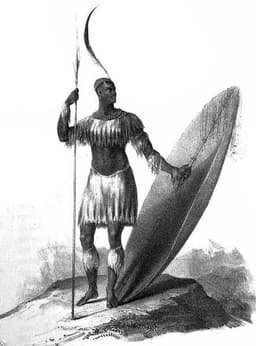
Shaka Zulu
General · Modern
70.2Total
Basic Information
Born
-100
1787
Died
-44
1828
Era
Ancient
Modern
Nationality
Roman Republic
Zulu Kingdom
Occupation
General
General
Civilization
Western
Other
Score Comparison
Military (10%)
88.0
80.0
Political (20%)
78.0
72.0
Influence (20%)
85.0
68.0
Legacy (20%)
82.0
68.0
Leadership (15%)
80.0
62.0
Strategy (15%)
85.0
80.8
TOTAL
82.8
70.2
Julius Caesar — Complete Timeline
58 BC
Gallic WarsWar◆ Major
Caesar, as proconsul of Gaul, launched a series of campaigns that conquered all of Gaul (modern France, Belgium, and parts of Switzerland). He fought numerous battles, including against the Helvetii, the Belgae, and the Gallic chieftain Vercingetorix. The wars brought immense wealth and a loyal army to Caesar.
Gallic WarsConquestRoman Expansion
Impact: regional
49 BC
Crossing the RubiconPolitical Action◆ Major
Caesar led Legio XIII across the Rubicon River into Italy, defying the Roman Senate's order to disband his army. This act triggered a civil war against Pompey and the Optimates, ultimately leading to Caesar's dictatorship and the end of the Roman Republic.
Roman Civil WarEnd of RepublicPower Struggle
Impact: global
48 BC
Battle of PharsalusWar◆ Major
Caesar's outnumbered army defeated the larger forces of Pompey the Great at Pharsalus in Greece. Caesar's tactical use of a reserve line to counter Pompey's cavalry charge proved decisive. Pompey fled to Egypt, where he was assassinated, leaving Caesar as the undisputed master of the Roman world.
Roman Civil WarBattleDecisive Victory
Impact: regional
44 BC
Appointment as Dictator for LifePolitical Action◆ Major
The Roman Senate appointed Caesar dictator perpetuo (dictator for life), granting him unprecedented personal power. This move concentrated military, legislative, and judicial authority in one person, effectively ending the Roman Republic's traditional system of checks and balances and alarming many senators.
DictatorshipEnd of RepublicPower Consolidation
Impact: regionaldestructive
Assassination on the Ides of MarchPolitical Action◆ Major
A group of Roman senators, led by Marcus Junius Brutus and Gaius Cassius Longinus, stabbed Caesar to death at a meeting of the Senate in the Theatre of Pompey. The assassination was intended to restore the Republic, but instead triggered another civil war that led to the rise of the Roman Empire.
AssassinationRoman PoliticsEnd of Republic
Impact: globaldestructive
Shaka Zulu — Complete Timeline
1816 AD
Introduction of the iklwa and horns of the buffalo formationReform
Shaka introduced the iklwa, a short stabbing spear, and the 'horns of the buffalo' tactical formation to the Zulu army. These innovations replaced the traditional throwing assegai and allowed for close-quarters combat, significantly increasing the Zulu's military effectiveness and enabling rapid conquest.
Military InnovationTacticsZulu Warfare
Impact: regional
1819 AD
Conquest of the Ndwandwe KingdomWar◆ Major
Shaka's Zulu army defeated the Ndwandwe kingdom at the Battle of Gqokli Hill, a decisive victory that eliminated a major rival. This conquest allowed Shaka to consolidate control over a large territory in present-day KwaZulu-Natal, marking the rise of the Zulu as a dominant regional power.
ConquestZulu ExpansionNdwandwe
Impact: regional
1828 AD
Assassination of ShakaPolitical Action◆ Major
Shaka was assassinated by his half-brothers Dingane and Mhlangana, with the support of his aunt Mkabayi. The coup ended his reign of terror and expansionist wars, leading to a period of instability and the eventual rise of Dingane as king.
AssassinationSuccession CrisisZulu Kingdom
Impact: regionaltragic
Expert Analysis
Julius Caesar vs Shaka Zulu: Historical Comparison
Julius Caesar, a Roman Republic general and statesman, and Shaka Zulu, a Zulu Kingdom monarch and military innovator, represent two transformative leaders from vastly different eras and continents. While both revolutionized warfare and governance, Caesar’s broader geopolitical impact and enduring legacy give him the edge.
Dimension Analysis
**Military: Julius Caesar 88 / Shaka Zulu 83**
Caesar’s conquest of Gaul and victories in the Roman civil wars showcased superior adaptability and siegecraft, while Shaka’s introduction of the *iklwa* short spear and *impondo zankomo* (bull horn formation) revolutionized African warfare. However, Caesar’s larger-scale campaigns and logistics give him a slight advantage.
**Political: Julius Caesar 78 / Shaka Zulu 70**
Caesar skillfully manipulated Roman republican institutions to consolidate power, becoming dictator for life. Shaka centralized Zulu authority through clan absorption and military restructuring, but his rule was more autocratic and less institutionally sophisticated than Caesar’s political maneuvering.
**Influence: Julius Caesar 85 / Shaka Zulu 76**
Caesar’s name became synonymous with imperial rule, influencing European governance for centuries. Shaka’s innovations shaped southern African military and political structures, but his influence remained regionally confined compared to Caesar’s global resonance.
**Legacy: Julius Caesar 82 / Shaka Zulu 78**
Caesar’s writings, calendar reform, and role in Rome’s transition to empire ensure his study in Western education. Shaka’s legacy endures in Zulu cultural identity and military history, but lacks the same institutional or literary permanence.
**Leadership: Julius Caesar 82 / Shaka Zulu 74**
Caesar inspired fierce loyalty through charisma, clemency, and shared risk with troops. Shaka’s leadership was effective but relied on fear and brutal discipline, limiting long-term loyalty and stability.
Verdict
Julius Caesar leads due to superior political acumen, broader civilizational influence, and a more enduring legacy that transcended his immediate culture.
FAQ
Q: Who ranks higher? A: Julius Caesar ranks higher overall, with a composite score of 83 to Shaka Zulu’s 77, reflecting his greater impact on global history and political systems.
Rankings
🥇
Julius CaesarLeader
Mil: 88.0Pol: 78.0Inf: 85.0
82.8
🥈
Shaka Zulu
Mil: 80.0Pol: 72.0Inf: 68.0
70.2
+12.6 behind
How This Comparison Works
Algorithm
Each figure is scored on 6 dimensions (0—100 scale) based on structured historical data: Military (10%), Political (20%), Influence (20%), Legacy (20%), Leadership (15%), Strategy (15%). The weighted total produces the final ranking.
Data Sources
Scores are computed from structured sub-indicators in the database. Scale factors adjust for era (Ancient ×0.85, Modern ×1.0) and civilization size (Eastern ×1.05, Other ×0.80) to account for differences in population and military scale.
Maximum 3 Figures
Comparisons are limited to 2—3 figures to ensure readability and statistical meaningfulness.
Error Margins
±5 points per dimension — Sub-scores are derived from historical records with inherent uncertainty. Two figures within 5 points on a dimension should be considered roughly equivalent in that area.
Total Score Accuracy
±3 points overall — The weighted combination of 6 dimensions produces a total score with approximately ±3 points of uncertainty. Differences of less than 3 points are not statistically significant— the figures are effectively tied.
Known Limitations
- Historical records are incomplete and uneven across civilizations
- Figures from oral-tradition societies may be underrepresented
- Occupation labels can misclassify multi-role figures
- Scores measure capability and impact, not moral character
- Quantitative scoring is a comparison tool, not absolute truth
Capability Radar
Military (10%) — Battles & Warfare
Battles
95
85
Win Rate
92
90
Expansion
97
88
Political (20%) — Governance & Reform
Reform
90
85
Diplomacy
85
60
Economy
82
65
Influence (20%) — Cultural & Global Reach
Cultural
88
80
Global
94
70
Legacy (20%) — Historical Impact
Historical
95
85
Longevity
96
75
Leadership (15%) — Power & Stability
Tenure
75
70
Stability
60
55
Strategy (15%) — Tactics & Innovation
Strategy
94
90
Tactics
96
95
Reform
88
98
Similar Comparisons
Comments & Discussion
ClassicsProf6/16/2026
As someone who's spent decades with Caesar's Commentarii de Bello Gallico, I find this comparison illuminating but fundamentally uneven. Caesar's military score rightly edges out Shaka's due to his logistical sophistication—the Alesia siege alone involved counter-fortifications spanning 14 miles against a relief army of 250,000 Gauls, per Caesar's own (admittedly self-serving) numbers. Shaka's iklwa and bull horn formation were brilliant tactical innovations, but they operated on a smaller scale and against less varied opponents. Politically, Caesar's 78 vs. Shaka's 70 is generous to Shaka: Caesar manipulated the Senate, crossed the Rubicon, and reformed the calendar—concrete institutional changes. Shaka's rule, while effective, relied on personal terror and left no succession mechanism, leading to rapid decline after his assassination. Plutarch noted Caesar's clemency as key to his loyalty; Shaka's Mfecane created chaos that even later Zulu kings couldn't fully stabilize. The influence gap (85 to 76) is the real story here—Caesar's name became a title for emperors; Shaka remains a regional icon. Fair verdict, if Eurocentric.
TrueMind866/16/2026
这个评分体系有点意思,但我不完全同意数据分配。凯撒军事88,沙卡83,差5分。但你看具体指标:凯撒的围城战和后勤确实强,可沙卡的“牛角阵”在非洲实现了对传统战术的降维打击——类似中国战国时期的魏武卒改革。从历史影响看,沙卡对整个南部非洲的人口迁移和政治重组产生了连锁反应,这在地缘范围上不输凯撒对高卢的征服。政治分78对70差8分,我反而觉得应该更接近。凯撒的政治手腕确实高明,但他最终被刺杀,政治遗产被屋大维继承;沙卡也遇刺,但祖鲁王国后续延续了数十年。如果按“制度创新持久度”算,沙卡对祖鲁军事-社会结构的改革,影响了后来的丁冈、姆潘德等国王,这种传承在非洲语境里很有价值。当然,凯撒的文献和历法影响更广,但评分上政治分差8分有点偏大,建议75对72更合理。
Historian6946/16/2026
这个评分挺有意思,但我觉得有点西方式偏见。凯撒的军事88分,沙卡83分,表面看差距不大,但凯撒打的对手是高卢部落和庞培这样的罗马内敌,沙卡面对的是完全不同的非洲环境。真要类比,沙卡更像中国的白起——都是通过彻底革新军事组织(沙卡的iklwa短矛和白起的“锐士”系统)来碾压对手。凯撒的政治操作确实高明,但别忘了他是从罗马共和制里钻空子,沙卡在几乎没有制度基础的条件下统一了祖鲁诸部。政治分给78对70,我觉得对沙卡不公平。祖鲁王国的中央集权程度,放在非洲语境里是革命性的。