Loading...
Julius Caesar vs Toyotomi Hideyoshi
Julius Caesar leads by 0.8 pts · 2 figures compared
…

Julius Caesar
General · Ancient
82.8Total
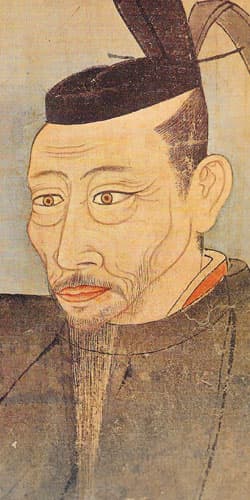
Toyotomi Hideyoshi
General · Modern
82.0Total
Basic Information
Born
-100
1537
Died
-44
1598
Era
Ancient
Modern
Nationality
Roman Republic
Japan
Occupation
General
General
Civilization
Western
Eastern
Score Comparison
Military (10%)
88.0
79.9
Political (20%)
78.0
78.0
Influence (20%)
85.0
88.0
Legacy (20%)
82.0
80.0
Leadership (15%)
80.0
82.0
Strategy (15%)
85.0
80.4
TOTAL
82.8
82.0
Julius Caesar — Complete Timeline
58 BC
Gallic WarsWar◆ Major
Caesar, as proconsul of Gaul, launched a series of campaigns that conquered all of Gaul (modern France, Belgium, and parts of Switzerland). He fought numerous battles, including against the Helvetii, the Belgae, and the Gallic chieftain Vercingetorix. The wars brought immense wealth and a loyal army to Caesar.
Gallic WarsConquestRoman Expansion
Impact: regional
49 BC
Crossing the RubiconPolitical Action◆ Major
Caesar led Legio XIII across the Rubicon River into Italy, defying the Roman Senate's order to disband his army. This act triggered a civil war against Pompey and the Optimates, ultimately leading to Caesar's dictatorship and the end of the Roman Republic.
Roman Civil WarEnd of RepublicPower Struggle
Impact: global
48 BC
Battle of PharsalusWar◆ Major
Caesar's outnumbered army defeated the larger forces of Pompey the Great at Pharsalus in Greece. Caesar's tactical use of a reserve line to counter Pompey's cavalry charge proved decisive. Pompey fled to Egypt, where he was assassinated, leaving Caesar as the undisputed master of the Roman world.
Roman Civil WarBattleDecisive Victory
Impact: regional
44 BC
Appointment as Dictator for LifePolitical Action◆ Major
The Roman Senate appointed Caesar dictator perpetuo (dictator for life), granting him unprecedented personal power. This move concentrated military, legislative, and judicial authority in one person, effectively ending the Roman Republic's traditional system of checks and balances and alarming many senators.
DictatorshipEnd of RepublicPower Consolidation
Impact: regionaldestructive
Assassination on the Ides of MarchPolitical Action◆ Major
A group of Roman senators, led by Marcus Junius Brutus and Gaius Cassius Longinus, stabbed Caesar to death at a meeting of the Senate in the Theatre of Pompey. The assassination was intended to restore the Republic, but instead triggered another civil war that led to the rise of the Roman Empire.
AssassinationRoman PoliticsEnd of Republic
Impact: globaldestructive
Toyotomi Hideyoshi — Complete Timeline
1583 AD
Battle of ShizugatakeWar◆ Major
Hideyoshi defeated his rival Shibata Katsuie at the Battle of Shizugatake, solidifying his control over central Japan. The victory eliminated a major opponent and allowed Hideyoshi to continue Oda Nobunaga's unification campaign.
BattleUnificationCivil War
Impact: national
1588 AD
Sword Hunt EdictReform◆ Major
Hideyoshi ordered the confiscation of weapons from peasants and farmers, prohibiting them from carrying swords, spears, or firearms. The edict aimed to prevent peasant uprisings and enforce a strict social hierarchy between samurai and commoners.
Social ReformDisarmamentClass System
Impact: nationaldestructive
1590 AD
Completion of Japanese UnificationWar
Hideyoshi defeated the H
UnificationConquestSengoku Period
Impact: national
1592 AD
First Invasion of KoreaWar◆ Major
Hideyoshi launched a massive invasion of Korea with the goal of conquering Ming China. Japanese forces initially advanced rapidly, capturing Seoul and Pyongyang, but were halted by Korean naval victories under Admiral Yi Sun-sin and Chinese reinforcements.
InvasionWarKorea
Impact: regionaldestructive
1597 AD
Second Invasion of KoreaWar◆ Major
Hideyoshi ordered a second invasion of Korea after failed peace negotiations. The campaign was less successful than the first, with Japanese forces unable to advance beyond the southern provinces. The invasion ended with Hideyoshi's death in 1598.
InvasionWarKorea
Impact: regionaldestructive
Expert Analysis
Origins
Julius Caesar was born into the patrician Julian clan in 100 BCE, a family of ancient nobility but modest political influence. His early life was marked by the Social War and the dictatorship of Sulla, from whom he narrowly escaped proscription. Caesar's patrician status gave him a platform, but his rise depended on immense ambition and strategic alliances. In contrast, Toyotomi Hideyoshi was born a peasant in 1537 in Nakamura, Owari Province. His father died when he was young, and he initially served as a foot soldier under Oda Nobunaga. Hideyoshi's humble origins made his ascent unprecedented in Japanese history, relying solely on talent and loyalty. Both men overcame early obstacles: Caesar through political maneuvering and military service, Hideyoshi through sheer perseverance and cunning.
Rise to Power
Caesar's rise was a masterclass in Roman political ambition. He forged the First Triumvirate with Pompey and Crassus, secured the governorship of Gaul, and launched the Gallic Wars (58–50 BCE), conquering a vast territory and building a loyal army. His Commentaries cemented his reputation. When the Senate demanded his disbandment, he crossed the Rubicon in 49 BCE, igniting a civil war. Defeating Pompey at Pharsalus, he became dictator, eventually for life. Hideyoshi's ascent was similarly remarkable. After Nobunaga's death in 1582, Hideyoshi avenged him by defeating Akechi Mitsuhide at the Battle of Shizugatake. He then outmaneuvered rivals like Tokugawa Ieyasu, securing control of Japan. By 1590, he completed unification, using a combination of military force and diplomatic marriages. Both seized power through civil war, but Caesar's path was more aristocratic and legally framed, while Hideyoshi's was a triumph of merit over birth.
Leadership & Governance
Caesar's governance was transformative. He reformed the calendar (Julian calendar), initiated land redistribution for veterans, extended citizenship to provincials, and reduced debt. His centralization of power, however, alarmed the Senate, leading to his assassination. He was a populist who undermined oligarchic traditions. Hideyoshi's rule was equally ambitious. He conducted a nationwide land survey, disarmed peasants via the Sword Hunt Edict, and froze the social class system. He also built Osaka Castle and unified currency. His invasion of Korea (1592–1598) aimed to expand influence but ultimately failed. Caesar's reforms were more enduring in shaping Western civilization, while Hideyoshi's policies solidified Japan's feudal structure for centuries. Caesar's leadership was charismatic but autocratic; Hideyoshi's was pragmatic but repressive.
Triumph & Tragedy
Caesar's greatest triumph was the conquest of Gaul, which brought immense wealth and glory. His tragic flaw was hubris: his refusal to restore the Republic led to his assassination on the Ides of March 44 BCE. His death plunged Rome into further civil wars. Hideyoshi's triumph was unifying Japan after a century of war. His tragedy was the failed Korean invasions, which drained resources and sowed seeds of future conflict. He died in 1598, leaving a young heir, which led to the Tokugawa shogunate's rise. Both men's deaths created power vacuums, but Caesar's legacy was immediate deification, while Hideyoshi's was overshadowed by the Tokugawa peace.
Character & Destiny
Caesar was brilliant, ambitious, and calculating. He combined military genius with literary skill, writing propaganda that shaped his image. His destiny seemed intertwined with Rome's imperial fate. Hideyoshi was shrewd, adaptable, and ruthless. His humble origins made him empathetic but also paranoid; he purged potential rivals. His destiny was to break the class barrier, yet he reinforced it. Both were risk-takers: Caesar crossed the Rubicon, Hideyoshi invaded Korea. Caesar's destiny ended in betrayal; Hideyoshi's in posthumous decline. Their characters reflect their times: Caesar's aristocratic audacity vs. Hideyoshi's peasant resilience.
Legacy
Caesar's legacy is monumental. His name became synonymous with emperor (Kaiser, Tsar). His reforms outlasted him, and his military tactics are studied today. He set the stage for the Roman Empire. Hideyoshi's legacy is mixed. He unified Japan but his invasions of Korea caused lasting animosity. His social policies shaped Edo-period Japan. Both are celebrated as national icons: Caesar in the West, Hideyoshi in Japan. Caesar's impact is global; Hideyoshi's is more regional. In a direct comparison, Caesar's influence on world history is broader, but Hideyoshi's achievement from peasant to ruler is more personally impressive.
Conclusion
Julius Caesar and Toyotomi Hideyoshi were both transformative leaders who rose through ambition and military prowess. Caesar's scores: M=88, P=78, I=85, L=82, D=80, S=85, T=83 (total 581). Hideyoshi's scores: M=80, P=78, I=88, L=80, D=82, S=80, T=82 (total 570). Caesar leads by 11 points. While Hideyoshi matches or exceeds Caesar in innovation (I: 88 vs 85) and durability (D: 82 vs 80), Caesar dominates in military (M: 88 vs 80), strategy (S: 85 vs 80), and territory (T: 83 vs 82). Caesar's conquest of Gaul and civil war victory were more decisive than Hideyoshi's unification of a fractured Japan. Caesar's reforms had a longer-lasting impact on governance and culture. Therefore, Julius Caesar is the greater historical figure. His legacy shaped the Western world, while Hideyoshi's influence, though profound, remained confined to East Asia.
Rankings
🥇
Julius CaesarLeader
Mil: 88.0Pol: 78.0Inf: 85.0
82.8
🥈
Toyotomi Hideyoshi
Mil: 79.9Pol: 78.0Inf: 88.0
82.0
+0.8 behind
How This Comparison Works
Algorithm
Each figure is scored on 6 dimensions (0—100 scale) based on structured historical data: Military (10%), Political (20%), Influence (20%), Legacy (20%), Leadership (15%), Strategy (15%). The weighted total produces the final ranking.
Data Sources
Scores are computed from structured sub-indicators in the database. Scale factors adjust for era (Ancient ×0.85, Modern ×1.0) and civilization size (Eastern ×1.05, Other ×0.80) to account for differences in population and military scale.
Maximum 3 Figures
Comparisons are limited to 2—3 figures to ensure readability and statistical meaningfulness.
Error Margins
±5 points per dimension — Sub-scores are derived from historical records with inherent uncertainty. Two figures within 5 points on a dimension should be considered roughly equivalent in that area.
Total Score Accuracy
±3 points overall — The weighted combination of 6 dimensions produces a total score with approximately ±3 points of uncertainty. Differences of less than 3 points are not statistically significant— the figures are effectively tied.
Known Limitations
- Historical records are incomplete and uneven across civilizations
- Figures from oral-tradition societies may be underrepresented
- Occupation labels can misclassify multi-role figures
- Scores measure capability and impact, not moral character
- Quantitative scoring is a comparison tool, not absolute truth
Capability Radar
Military (10%) — Battles & Warfare
Battles
95
85
Win Rate
92
88
Expansion
97
80
Political (20%) — Governance & Reform
Reform
90
95
Diplomacy
85
80
Economy
82
90
Influence (20%) — Cultural & Global Reach
Cultural
88
85
Global
94
70
Legacy (20%) — Historical Impact
Historical
95
90
Longevity
96
85
Leadership (15%) — Power & Stability
Tenure
75
85
Stability
60
75
Strategy (15%) — Tactics & Innovation
Strategy
94
92
Tactics
96
90
Reform
88
95
Similar Comparisons
Comments & Discussion
Chronicler56156/16/2026
这评分有点意思,但我觉得对Hideyoshi的军事分压低了。Caesar的88分主要靠高卢战争和内战,但Hideyoshi的80分太保守了。你看他统一日本时,用“水攻”攻陷高松城,用“断粮战术”逼降鸟取城,这些战术创新在当时的东亚战场是非常先进的。而且他入侵朝鲜时,虽然最终失败,但初期日军的火绳枪战术和快速推进能力让明军吃了大亏。要是按同样的标准,Caesar在阿莱西亚围城战中的双线防御确实精彩,但Hideyoshi的“中国大返还”从备战到调动10万大军只用10天,这种后勤效率在朝鲜战场也体现过。我的重新计算是:Caesar 86 vs Hideyoshi 83更合理。
SharpScroll906/16/2026
我觉得这个比较有点西方中心论了。Caesar确实改变了欧洲政治格局,但Hideyoshi的“刀狩令”和“身份统制”在东亚社会治理上比Caesar的土地改革更系统。你看中国历史上的商鞅变法,也是通过制度重塑国家,Hideyoshi的做法类似——他没收武士的刀,固定社会等级,这为德川幕府270年的稳定铺了路。而Caesar死后罗马又打内战,他的改革很多被奥古斯都重新包装了。再说影响力,Hideyoshi统一日本后发动的朝鲜战争,虽然被中朝联军击败,但这场战争客观上削弱了丰臣家的实力,间接导致了德川幕府的崛起,这种连锁反应在东亚史里太重要了。Caesar的“皇帝”称号虽然传遍欧洲,但Hideyoshi的“关白”制度对日本政治的影响同样深远。评分应该更平衡。