Loading...
Julius Caesar vs Ulysses S. Grant
Julius Caesar leads by 16.0 pts · 2 figures compared
…

Julius Caesar
General · Ancient
82.8Total
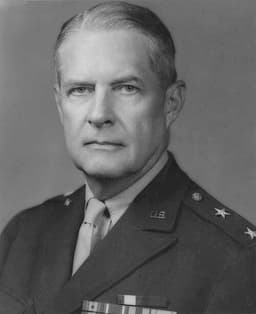
Ulysses S. Grant
General · Modern
66.8Total
Basic Information
Born
-100
1822
Died
-44
1885
Era
Ancient
Modern
Nationality
Roman Republic
United States
Occupation
General
General
Civilization
Western
Western
Score Comparison
Military (10%)
88.0
72.0
Political (20%)
78.0
45.0
Influence (20%)
85.0
72.0
Legacy (20%)
82.0
68.0
Leadership (15%)
80.0
72.0
Strategy (15%)
85.0
70.0
TOTAL
82.8
66.8
Julius Caesar — Complete Timeline
58 BC
Gallic WarsWar◆ Major
Caesar, as proconsul of Gaul, launched a series of campaigns that conquered all of Gaul (modern France, Belgium, and parts of Switzerland). He fought numerous battles, including against the Helvetii, the Belgae, and the Gallic chieftain Vercingetorix. The wars brought immense wealth and a loyal army to Caesar.
Gallic WarsConquestRoman Expansion
Impact: regional
49 BC
Crossing the RubiconPolitical Action◆ Major
Caesar led Legio XIII across the Rubicon River into Italy, defying the Roman Senate's order to disband his army. This act triggered a civil war against Pompey and the Optimates, ultimately leading to Caesar's dictatorship and the end of the Roman Republic.
Roman Civil WarEnd of RepublicPower Struggle
Impact: global
48 BC
Battle of PharsalusWar◆ Major
Caesar's outnumbered army defeated the larger forces of Pompey the Great at Pharsalus in Greece. Caesar's tactical use of a reserve line to counter Pompey's cavalry charge proved decisive. Pompey fled to Egypt, where he was assassinated, leaving Caesar as the undisputed master of the Roman world.
Roman Civil WarBattleDecisive Victory
Impact: regional
44 BC
Appointment as Dictator for LifePolitical Action◆ Major
The Roman Senate appointed Caesar dictator perpetuo (dictator for life), granting him unprecedented personal power. This move concentrated military, legislative, and judicial authority in one person, effectively ending the Roman Republic's traditional system of checks and balances and alarming many senators.
DictatorshipEnd of RepublicPower Consolidation
Impact: regionaldestructive
Assassination on the Ides of MarchPolitical Action◆ Major
A group of Roman senators, led by Marcus Junius Brutus and Gaius Cassius Longinus, stabbed Caesar to death at a meeting of the Senate in the Theatre of Pompey. The assassination was intended to restore the Republic, but instead triggered another civil war that led to the rise of the Roman Empire.
AssassinationRoman PoliticsEnd of Republic
Impact: globaldestructive
Ulysses S. Grant — Complete Timeline
1863 AD
Battle of VicksburgWar◆ Major
Grant led Union forces to capture Vicksburg, Mississippi, after a lengthy siege. This victory gave the Union control of the Mississippi River, splitting the Confederacy and marking a turning point in the Civil War.
Civil WarVicksburgUnion Victory
Impact: regional
1865 AD
Surrender at Appomattox Court HouseWar
Grant accepted the surrender of Confederate General Robert E. Lee at Appomattox Court House, effectively ending the Civil War. Grant's generous terms allowed Confederate soldiers to return home, promoting reconciliation.
Civil WarAppomattoxReconciliation
Impact: nationalconstructive
1868 AD
Election as 18th President of the United StatesPolitical Action◆ Major
Grant was elected president as a Republican, winning the popular vote. His presidency focused on Reconstruction, but was marred by corruption scandals and economic depression.
PresidencyReconstructionUS Politics
Impact: national
1870 AD
Signing of the Enforcement ActsPolitical Action◆ Major
Grant signed the Enforcement Acts, which aimed to protect African American voting rights and combat the Ku Klux Klan. These laws were used to prosecute Klan members and enforce the 14th and 15th Amendments.
ReconstructionCivil RightsKu Klux Klan
Impact: nationalprogressive
1873 AD
Panic of 1873 and Economic DepressionOther◆ Major
The Panic of 1873, a financial crisis triggered by the collapse of Jay Cooke & Company, led to a severe economic depression during Grant's presidency. Grant's policies, including the Specie Resumption Act, were criticized for worsening the downturn.
Economic DepressionPanic of 1873Financial Crisis
Impact: nationaldestructive
Expert Analysis
# The Rubicon and the Potomac
On a cold January morning in 49 BCE, Julius Caesar stood at the banks of a small river in northern Italy, the Rubicon. He knew that crossing it meant civil war—an irreversible break with the Senate and the laws of the Republic. He is said to have muttered, "The die is cast," and marched his men across. Nineteen centuries later, in April 1865, Ulysses S. Grant sat in a modest parlor at Appomattox Court House, accepting the surrender of Robert E. Lee. There was no river to cross, no dramatic gesture—only a quiet exchange and generous terms. One man launched a war to seize power; the other ended a war and offered peace. Both were generals who became the most powerful men in their worlds. Yet their journeys, their characters, and their legacies could not be more different.
Origins
Julius Caesar was born into the chaos of the late Roman Republic, a world of senatorial intrigue, street violence, and crumbling traditions. His family, the Julii, claimed descent from the goddess Venus, but they were politically marginalized. Caesar grew up watching his uncle Marius fight civil wars against Sulla, and he learned early that in Rome, survival meant ambition. He was a patrician by birth but a populist by instinct, fluent in the language of power and patronage.
Ulysses S. Grant was born in 1822 in Point Pleasant, Ohio, the son of a tanner and a devout mother. There was no divine lineage, no political theatre—just the quiet rhythms of frontier life. Grant hated his father's tannery and escaped to West Point, not out of military passion but because it offered a free education. He was shy, unremarkable, and deeply ordinary. The world that shaped him was not the marble halls of Rome but the muddy fields of the American Midwest, a young democracy still wrestling with the meaning of its own founding.
The difference in their eras is crucial. Caesar lived in a world where one man could remake the state through conquest and charisma. Grant lived in a world of constitutions, parties, and public opinion—forces that constrained even the most celebrated general.
Rise to Power
Caesar's path was theatrical. He borrowed enormous sums to fund games and bribes, climbing the political ladder through sheer audacity. His military career began in earnest when he became proconsul of Gaul in 58 BCE. Over eight years, he conquered what is now France and Belgium, fighting hundreds of battles and killing perhaps a million people. The Gallic Wars made him a legend and gave him an army loyal to him alone, not to the Republic.
Grant's rise was painfully slow. He graduated from West Point in 1843, served competently in the Mexican-American War, then resigned from the army in 1854 under a cloud of rumors about drinking. For seven years, he failed at farming, real estate, and clerking. When the Civil War broke out in 1861, he was working in his father's leather store in Galena, Illinois. He volunteered, was given a colonelcy through political connections, and began a long, bloody climb from obscurity.
The contrast is stark. Caesar rose by breaking the rules of the Republic. Grant rose by proving himself within the system—though a system on the verge of collapse.
Leadership and Governance
As a military commander, Caesar was audacity incarnate. At the Battle of Pharsalus in 48 BCE, he faced Pompey's larger army and won through tactical brilliance, personally leading charges and inspiring his men. He wrote his own commentaries, crafting a narrative of inevitability and genius. As dictator, he reformed the calendar, granted citizenship to provincials, and launched public works. But he also centralized power, packed the Senate with his supporters, and accepted the title "dictator for life" in 44 BCE.
Grant's military style was different: relentless, methodical, and brutal. At Vicksburg in 1863, he conducted a brilliant campaign of maneuver and siege, splitting Confederate forces and capturing the city. As general-in-chief in 1864, he pursued a strategy of total war, grinding down Lee's army through attrition. He was not flashy—he chewed cigars, wore mud-spattered uniforms, and wrote clear, unadorned orders. But he understood that modern war meant destroying the enemy's capacity to fight.
As president, Grant struggled. He signed the Enforcement Acts in 1870 and 1871, using federal power to protect African American voting rights and combat the Ku Klux Klan—a morally courageous stand. But his administration was plagued by corruption scandals, and the Panic of 1873 plunged the nation into a deep depression. Grant meant well but lacked the political cunning that Caesar wielded so easily.
Triumph and Tragedy
Caesar's greatest moment was his triumph over Gaul and Pompey—the conquest of the known world. His tragedy was the Ides of March, 44 BCE, when senators stabbed him to death in the Senate chamber. He died believing he had saved Rome, but his assassination plunged the Republic into another round of civil wars, ending with the rise of Augustus and the end of the Republic he had loved.
Grant's greatest moment was Appomattox. He offered Lee generous terms: officers could keep their sidearms, soldiers could go home with their horses. "The war is over," he said. "The rebels are our countrymen again." His tragedy was his presidency—a man who could win a war could not govern a peace. He left office in 1877, his reputation tarnished, and died in 1885, writing his memoirs to pay off debts.
Character and Destiny
Caesar was driven by an insatiable need for glory. He believed he was destined for greatness, and he was right—but that belief blinded him to the resentment he bred. He pardoned his enemies, but they killed him anyway. His personality was that of a gambler who kept winning until the house took everything.
Grant was driven by duty and a quiet sense of honor. He hated war but waged it ruthlessly. He drank to escape his demons but always pulled himself back. He was a man of deep feeling who could not express it, a leader who inspired loyalty through competence rather than charisma. He never wanted to be president; he accepted it because his country asked.
Legacy
Caesar's legacy is the end of the Roman Republic and the birth of the Roman Empire. His name became synonymous with imperial ambition—"Caesar" was adopted as a title by rulers from Augustus to the Kaiser and Tsar. He changed the course of Western history forever.
Grant's legacy is more contested. For decades, he was dismissed as a drunk and a failure. But historians have revised that judgment. His military campaigns are studied as models of strategy. His commitment to Reconstruction and civil rights places him among the most principled presidents on race. He died believing he had failed, but he had saved the Union and given meaning to the sacrifice of hundreds of thousands.
Conclusion
Caesar crossed the Rubicon and changed the world. Grant sat in a parlor and ended a war. One was a man of destiny who destroyed the Republic he claimed to love. The other was a man of duty who preserved the Union he had sworn to defend. Both were flawed, both were great, and both remind us that history is not made by perfect people—but by people who, in their own ways, decide to act when the moment demands it.
Rankings
🥇
Julius CaesarLeader
Mil: 88.0Pol: 78.0Inf: 85.0
82.8
🥈
Ulysses S. Grant
Mil: 72.0Pol: 45.0Inf: 72.0
66.8
+16.0 behind
How This Comparison Works
Algorithm
Each figure is scored on 6 dimensions (0—100 scale) based on structured historical data: Military (10%), Political (20%), Influence (20%), Legacy (20%), Leadership (15%), Strategy (15%). The weighted total produces the final ranking.
Data Sources
Scores are computed from structured sub-indicators in the database. Scale factors adjust for era (Ancient ×0.85, Modern ×1.0) and civilization size (Eastern ×1.05, Other ×0.80) to account for differences in population and military scale.
Maximum 3 Figures
Comparisons are limited to 2—3 figures to ensure readability and statistical meaningfulness.
Error Margins
±5 points per dimension — Sub-scores are derived from historical records with inherent uncertainty. Two figures within 5 points on a dimension should be considered roughly equivalent in that area.
Total Score Accuracy
±3 points overall — The weighted combination of 6 dimensions produces a total score with approximately ±3 points of uncertainty. Differences of less than 3 points are not statistically significant— the figures are effectively tied.
Known Limitations
- Historical records are incomplete and uneven across civilizations
- Figures from oral-tradition societies may be underrepresented
- Occupation labels can misclassify multi-role figures
- Scores measure capability and impact, not moral character
- Quantitative scoring is a comparison tool, not absolute truth
Capability Radar
Military (10%) — Battles & Warfare
Battles
95
85
Win Rate
92
80
Expansion
97
75
Political (20%) — Governance & Reform
Reform
90
55
Diplomacy
85
60
Economy
82
50
Influence (20%) — Cultural & Global Reach
Cultural
88
60
Global
94
65
Legacy (20%) — Historical Impact
Historical
95
80
Longevity
96
70
Leadership (15%) — Power & Stability
Tenure
75
65
Stability
60
45
Strategy (15%) — Tactics & Innovation
Strategy
94
90
Tactics
96
70
Reform
88
75
Similar Comparisons
Comments & Discussion
Aurelian'sShadow6/20/2026
Caesar’s tactical speed in the Gallic Wars—like at Alesia, where he built a double circumvallation against 200,000 Gauls—dwarfs Grant’s grinding Overland Campaign. Grant won by attrition, not genius. Caesar’s sieges were surgical; Grant’s were industrial. The comparison isn’t even close on battlefield audacity.
城楼醉剑6/20/2026
数据化评分里“影响力”一项,凯撒完爆格兰特。凯撒写《高卢战记》塑造了西方军事思想两千年,格兰特的回忆录只是内战叙事的一部分。一个用笔让历史为己所用,一个只是记录事实。这不是量级差异,是维度差异。
GrizzledVet6/20/2026
Grant’s real genius wasn’t battle tactics but logistics and strategy—he coordinated Sherman’s March and the siege of Petersburg across multiple theaters. Caesar had no supply chains like that, just speed and luck. In a modern war game, Grant wins hands down.
史坑常客6/20/2026
别吹凯撒的“快速征服”了。高卢战争本质是殖民屠杀,他灭了百万高卢人,格兰特打内战是为了国家统一。道德维度上,格兰特的名声比凯撒干净。数据不体现这些,但历史评价不能不提。