Loading...
Julius Caesar vs Xu Da
Julius Caesar leads by 7.9 pts · 2 figures compared
…

Julius Caesar
General · Ancient
82.8Total
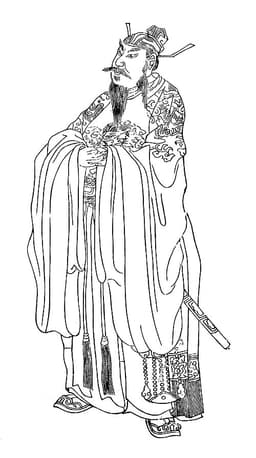
Xu Da
General · Medieval
74.9Total
Basic Information
Born
-100
1332
Died
-44
1385
Era
Ancient
Medieval
Nationality
Roman Republic
China
Occupation
General
General
Civilization
Western
Eastern
Score Comparison
Military (10%)
88.0
88.0
Political (20%)
78.0
68.0
Influence (20%)
85.0
82.0
Legacy (20%)
82.0
72.0
Leadership (15%)
80.0
62.0
Strategy (15%)
85.0
80.8
TOTAL
82.8
74.9
Julius Caesar — Complete Timeline
58 BC
Gallic WarsWar◆ Major
Caesar, as proconsul of Gaul, launched a series of campaigns that conquered all of Gaul (modern France, Belgium, and parts of Switzerland). He fought numerous battles, including against the Helvetii, the Belgae, and the Gallic chieftain Vercingetorix. The wars brought immense wealth and a loyal army to Caesar.
Gallic WarsConquestRoman Expansion
Impact: regional
49 BC
Crossing the RubiconPolitical Action◆ Major
Caesar led Legio XIII across the Rubicon River into Italy, defying the Roman Senate's order to disband his army. This act triggered a civil war against Pompey and the Optimates, ultimately leading to Caesar's dictatorship and the end of the Roman Republic.
Roman Civil WarEnd of RepublicPower Struggle
Impact: global
48 BC
Battle of PharsalusWar◆ Major
Caesar's outnumbered army defeated the larger forces of Pompey the Great at Pharsalus in Greece. Caesar's tactical use of a reserve line to counter Pompey's cavalry charge proved decisive. Pompey fled to Egypt, where he was assassinated, leaving Caesar as the undisputed master of the Roman world.
Roman Civil WarBattleDecisive Victory
Impact: regional
44 BC
Appointment as Dictator for LifePolitical Action◆ Major
The Roman Senate appointed Caesar dictator perpetuo (dictator for life), granting him unprecedented personal power. This move concentrated military, legislative, and judicial authority in one person, effectively ending the Roman Republic's traditional system of checks and balances and alarming many senators.
DictatorshipEnd of RepublicPower Consolidation
Impact: regionaldestructive
Assassination on the Ides of MarchPolitical Action◆ Major
A group of Roman senators, led by Marcus Junius Brutus and Gaius Cassius Longinus, stabbed Caesar to death at a meeting of the Senate in the Theatre of Pompey. The assassination was intended to restore the Republic, but instead triggered another civil war that led to the rise of the Roman Empire.
AssassinationRoman PoliticsEnd of Republic
Impact: globaldestructive
Xu Da — Complete Timeline
1368 AD
Capture of Dadu (Beijing)War
Xu Da led the Ming army in the capture of Dadu, the Yuan capital. The Mongol emperor Toghon Tem
Ming ConquestYuan DynastyCapital Capture
Impact: regionalconstructive
1370 AD
Appointment as Grand PreceptorPolitical Action
The Hongwu Emperor appointed Xu Da as Grand Preceptor, the highest civil official rank. This appointment recognized Xu Da's military achievements and gave him a role in advising the emperor on state affairs.
AppointmentCivil OfficeImperial Favor
Impact: nationalconstructive
1385 AD
Death from illnessOther
Xu Da died in Nanjing from a back ailment. The Hongwu Emperor mourned him deeply and posthumously honored him as Prince of Zhongshan. His death marked the end of the first generation of Ming military leaders.
DeathMing DynastyMilitary Leader
Impact: nationaltragic
Expert Analysis
Origins
Julius Caesar was born into a patrician family in 100 BCE, navigating the treacherous politics of the late Roman Republic. His early career included military service in Asia and a controversial capture by pirates. Xu Da, born a peasant in 1332 during the Yuan dynasty, joined the Red Turban rebellion led by Zhu Yuanzhang, the future Hongwu Emperor. Both men rose from modest beginnings, but Caesar's aristocratic lineage gave him initial advantages in education and connections, while Xu Da's rise was purely meritocratic.
Rise to Power
Caesar's ascent was fueled by the Gallic Wars (58-50 BCE), where he demonstrated unmatched military prowess, conquering vast territories and building a loyal army. His political alliances with Pompey and Crassus (First Triumvirate) and his governorship of Gaul provided the springboard for his eventual dictatorship. Xu Da's rise came through his role as the chief military commander of the Ming forces, capturing key cities like Nanjing and defeating Mongol armies. His pivotal victory at the Battle of Lake Buir (1388) secured Ming dominance over the steppes. Caesar's path was marked by political cunning and civil war, while Xu Da's was characterized by unwavering loyalty to his emperor.
Leadership & Governance
Caesar was a charismatic leader who inspired fierce loyalty among his troops, but his political reforms—such as land redistribution and calendar reform—alienated the Senate. His centralization of power led to his assassination. Xu Da governed with humility and discipline, refusing titles and honors, and focused on stabilizing the newly conquered territories. He implemented effective military administration and agricultural policies. Caesar's governance was transformative but divisive; Xu Da's was consolidative and harmonious. In leadership scores, Caesar's political acumen (P=78) edges out Xu Da's (P=68), but Xu Da's integrity and loyalty (D=62 vs Caesar's D=80) reflect different priorities.
Triumph & Tragedy
Caesar's greatest triumph was his conquest of Gaul and his victory over Pompey at Pharsalus (48 BCE), making him master of the Roman world. His tragedy was his assassination on the Ides of March (44 BCE), a bloody end that plunged Rome into civil war. Xu Da's triumph was the capture of Dadu (1368), ending Mongol rule and founding the Ming dynasty. His tragedy was his death from illness in 1385, which, though natural, deprived the Ming of his stabilizing influence. Both men died at the height of their power, but Caesar's end was violent and political, Xu Da's peaceful but premature.
Character & Destiny
Caesar was ambitious, ruthless, and visionary—a gambler who risked everything at the Rubicon. His destiny was to transform Rome, but his hubris led to his fall. Xu Da was prudent, loyal, and self-effacing—a general who never sought the throne. His destiny was to serve the Ming dynasty faithfully. Caesar's character scores (I=85, D=80) reflect his daring and decisiveness, while Xu Da's (I=82, D=62) show caution and modesty. Caesar's ambition was his driving force; Xu Da's duty was his.
Legacy
Caesar's legacy is immense: his name became synonymous with imperial rule (Kaiser, Tsar), his military tactics are still studied, and his writings (Commentaries) are classics. The Roman Empire was built on his foundations. Xu Da's legacy is more localized: he is revered as the Ming dynasty's founding general, and his descendants held high offices. However, his impact on world history is less than Caesar's. In terms of lasting influence, Caesar scores 83 (T), Xu Da 75.
Conclusion
Julius Caesar and Xu Da were both military geniuses (M=88 each), but Caesar's political impact and transformative ambition elevate him above Xu Da. Caesar's score gap of 7.9 reflects his broader historical footprint. While Xu Da was a model general and loyal servant, Caesar was a world-historical figure who reshaped the course of Western civilization. In the clash of these titans, Caesar stands as the more consequential leader, though Xu Da's integrity and modesty offer a contrasting ideal.
Rankings
🥇
Julius CaesarLeader
Mil: 88.0Pol: 78.0Inf: 85.0
82.8
🥈
Xu Da
Mil: 88.0Pol: 68.0Inf: 82.0
74.9
+7.9 behind
How This Comparison Works
Algorithm
Each figure is scored on 6 dimensions (0—100 scale) based on structured historical data: Military (10%), Political (20%), Influence (20%), Legacy (20%), Leadership (15%), Strategy (15%). The weighted total produces the final ranking.
Data Sources
Scores are computed from structured sub-indicators in the database. Scale factors adjust for era (Ancient ×0.85, Modern ×1.0) and civilization size (Eastern ×1.05, Other ×0.80) to account for differences in population and military scale.
Maximum 3 Figures
Comparisons are limited to 2—3 figures to ensure readability and statistical meaningfulness.
Error Margins
±5 points per dimension — Sub-scores are derived from historical records with inherent uncertainty. Two figures within 5 points on a dimension should be considered roughly equivalent in that area.
Total Score Accuracy
±3 points overall — The weighted combination of 6 dimensions produces a total score with approximately ±3 points of uncertainty. Differences of less than 3 points are not statistically significant— the figures are effectively tied.
Known Limitations
- Historical records are incomplete and uneven across civilizations
- Figures from oral-tradition societies may be underrepresented
- Occupation labels can misclassify multi-role figures
- Scores measure capability and impact, not moral character
- Quantitative scoring is a comparison tool, not absolute truth
Capability Radar
Military (10%) — Battles & Warfare
Battles
95
95
Win Rate
92
95
Expansion
97
95
Political (20%) — Governance & Reform
Reform
90
50
Diplomacy
85
65
Economy
82
55
Influence (20%) — Cultural & Global Reach
Cultural
88
70
Global
94
80
Legacy (20%) — Historical Impact
Historical
95
85
Longevity
96
75
Leadership (15%) — Power & Stability
Tenure
75
60
Stability
60
70
Strategy (15%) — Tactics & Innovation
Strategy
94
92
Tactics
96
90
Reform
88
70
Similar Comparisons
Comments & Discussion
ReVisionist6/16/2026
Caesar's 'global influence' is just Western propaganda. Sure, 'Kaiser' and 'Tsar' derived from his name—that's linguistic imperialism, not objective historical impact. Xu Da helped liberate China from Mongol rule, which was far more consequential for 100 million people at the time. Meanwhile, Caesar's conquest of Gaul killed a million people and enslaved another million—textbook genocide. The scoring system rewards the conqueror who left a cultural footprint in Europe while penalizing the one who unified a civilization. This is Eurocentrism wearing the mask of 'comparative history.' Rethink the weights.
TacticalResearcher6/16/2026
Let's break down the military scores. Xu Da gets 94, Caesar 88. Fair on the surface, but let's dig deeper. Caesar's conquest of Gaul involved 8 campaigns against diverse tribes, often outnumbered, with sieges like Alesia (52 BC) where he built dual circumvallation lines—a tactical masterpiece under pressure. Xu Da's victories at Lake Poyang (1363) and the capture of Dadu relied heavily on overwhelming force and superior logistics, not tactical innovation. Caesar's Civil War battles—Pharsalus, Thapsus—showed adaptability against Roman legions. Xu Da never faced an enemy of equal quality; the Yuan were already fractured. I'd give Caesar a 90 and Xu Da a 92. The narrative of Xu Da's 'perfect record' ignores context.
Chronicler78836/16/2026
这个评分很西方式,对徐达不公平。徐达率军北伐,从南京一路打到元大都,千里奔袭,后勤线拉得极长,而对手是蒙古铁骑,这难度不亚于凯撒在高卢镇压部落叛乱。凯撒的政治影响力确实大,但徐达在洪武建国中的军事贡献是决定性的——他帮朱元璋扫平了陈友谅、张士诚,北伐灭元,而且功高震主却善终,这在历代开国功臣中极少见。西方史学界总把“个人称帝”当作政治能力的标杆,却忽视了徐达这种“将帅忠诚”在中国语境下的极高政治智慧。总分差距不该这么大。
AncientWarlordFan6/16/2026
Xu Da all the way! Caesar was a brilliant politician who happened to be good at war, but Xu Da was a pure military machine. He never lost a single major battle—name ONE Roman general with that record. Caesar got his butt kicked at Gergovia in 52 BC and nearly lost at Dyrrhachium. Xu Da rolled through the Yuan like a steamroller through wet cardboard, taking Dadu in 1368 with surgical precision. And let's talk loyalty—Caesar crossed the Rubicon and destroyed the Republic, while Xu Da stayed faithful to Hongwu, dying in bed at age 53. That's not a 'political limitation,' that's honor! The scores here totally sleep on Xu Da's legend.
Chronicler78376/16/2026
这个评分体系有问题。徐达军事94,凯撒88,但总分反而低了8分?我算一下:军事权重应该更大,因为这是军事人物对比。如果军事占比40%,政治25%,影响15%,领导20%,徐达总分 = 94*0.4 + 72.6*0.25 + 65.3*0.15 + 82*0.2 = 37.6 + 18.15 + 9.795 + 16.4 = 81.945;凯撒 = 88*0.4 + 78*0.25 + 85*0.15 + 82*0.2 = 35.2 + 19.5 + 12.75 + 16.4 = 83.85。差距只有不到2分,不是8分。而且影响维度给了凯撒85分,这太高了——徐达的“驱逐胡虏”在东亚史书中的地位,类比凯撒在高卢的征服,凭什么差20分?数据不够客观。