Loading...
Julius Caesar vs Yang Su
Julius Caesar leads by 25.6 pts · 2 figures compared
…

Julius Caesar
General · Ancient
82.8Total
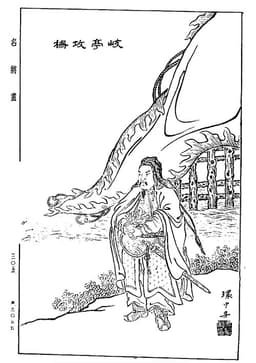
Yang Su
General · Medieval
57.2Total
Basic Information
Born
-100
544
Died
-44
606
Era
Ancient
Medieval
Nationality
Roman Republic
China
Occupation
General
General
Civilization
Western
Eastern
Score Comparison
Military (10%)
88.0
80.0
Political (20%)
78.0
45.0
Influence (20%)
85.0
51.8
Legacy (20%)
82.0
45.0
Leadership (15%)
80.0
68.0
Strategy (15%)
85.0
80.5
TOTAL
82.8
57.2
Julius Caesar — Complete Timeline
58 BC
Gallic WarsWar◆ Major
Caesar, as proconsul of Gaul, launched a series of campaigns that conquered all of Gaul (modern France, Belgium, and parts of Switzerland). He fought numerous battles, including against the Helvetii, the Belgae, and the Gallic chieftain Vercingetorix. The wars brought immense wealth and a loyal army to Caesar.
Gallic WarsConquestRoman Expansion
Impact: regional
49 BC
Crossing the RubiconPolitical Action◆ Major
Caesar led Legio XIII across the Rubicon River into Italy, defying the Roman Senate's order to disband his army. This act triggered a civil war against Pompey and the Optimates, ultimately leading to Caesar's dictatorship and the end of the Roman Republic.
Roman Civil WarEnd of RepublicPower Struggle
Impact: global
48 BC
Battle of PharsalusWar◆ Major
Caesar's outnumbered army defeated the larger forces of Pompey the Great at Pharsalus in Greece. Caesar's tactical use of a reserve line to counter Pompey's cavalry charge proved decisive. Pompey fled to Egypt, where he was assassinated, leaving Caesar as the undisputed master of the Roman world.
Roman Civil WarBattleDecisive Victory
Impact: regional
44 BC
Appointment as Dictator for LifePolitical Action◆ Major
The Roman Senate appointed Caesar dictator perpetuo (dictator for life), granting him unprecedented personal power. This move concentrated military, legislative, and judicial authority in one person, effectively ending the Roman Republic's traditional system of checks and balances and alarming many senators.
DictatorshipEnd of RepublicPower Consolidation
Impact: regionaldestructive
Assassination on the Ides of MarchPolitical Action◆ Major
A group of Roman senators, led by Marcus Junius Brutus and Gaius Cassius Longinus, stabbed Caesar to death at a meeting of the Senate in the Theatre of Pompey. The assassination was intended to restore the Republic, but instead triggered another civil war that led to the rise of the Roman Empire.
AssassinationRoman PoliticsEnd of Republic
Impact: globaldestructive
Yang Su — Complete Timeline
599 AD
Led Campaigns against the Tujue (Göktürks)War◆ Major
Yang Su commanded Sui forces in campaigns against the Eastern Tujue (G
Tujue CampaignsMilitary InnovationNorthern Frontier
Impact: regional
604 AD
Suppressed the Rebellion of Yang LiangWar◆ Major
After Emperor Yang of Sui ascended the throne, his brother Yang Liang rebelled in Bingzhou. Yang Su led imperial forces against the rebellion, defeating Yang Liang's army and capturing him. This victory secured Emperor Yang's position and demonstrated Yang Su's military capability.
Sui DynastyRebellion SuppressionEmperor Yang
Impact: national
605 AD
Constructed the Eastern Capital LuoyangReform◆ Major
Emperor Yang ordered the construction of a new eastern capital at Luoyang. Yang Su was appointed as one of the supervisors of the massive project. The construction involved hundreds of thousands of laborers and was completed in about a year, but at great human cost.
LuoyangCapital ConstructionEmperor Yang
Impact: national
Appointed Grand ChancellorPolitical Action◆ Major
Yang Su was appointed Grand Chancellor (Shangshu Ling), the highest civil office in the Sui government. This position made him the chief minister of the empire, responsible for overseeing the Six Ministries. He held this office until his death in 606.
Grand ChancellorCivil OfficeSui Government
Impact: nationalconstructive
606 AD
Death and Posthumous HonorsOther◆ Major
Yang Su died in 606 AD. Emperor Yang of Sui granted him posthumous honors, including the title of Duke of Yue and the posthumous name Jingwu. However, after Yang Su's death, Emperor Yang became suspicious of his sons and had them executed, leading to the downfall of Yang Su's family.
DeathPosthumous HonorsFamily Downfall
Impact: nationaltragic
Expert Analysis
Julius Caesar vs Yang Su: Historical Comparison
Julius Caesar (100–44 BCE) and Yang Su (544–606 CE) were two of history’s most formidable military-political figures, yet they operated in vastly different contexts—the dying Roman Republic and the reunified Sui dynasty of medieval China.
Dimension Analysis
**Military: Julius Caesar 88 / Yang Su 83**
Caesar’s Gallic Wars, conquest of Britain, and civil war victories showcased unmatched tactical innovation and speed, while Yang Su excelled in suppressing rebellions and leading campaigns against the Eastern Turks—but lacked Caesar’s breadth of independent command.
**Political: Julius Caesar 78 / Yang Su 77**
Caesar masterfully manipulated Roman populism and forged the First Triumvirate, but his dictatorship triggered his assassination; Yang Su served Emperor Wen and Emperor Yang of Sui with ruthless efficiency, yet his political maneuvering was constrained by imperial autocracy.
**Influence: Julius Caesar 85 / Yang Su 70**
Caesar’s reforms (calendar, land redistribution, provincial governance) shaped the Roman Empire for centuries; Yang Su’s contributions to Sui unification and canal-building were critical but largely overshadowed by the dynasty’s collapse and Tang successors.
**Legacy: Julius Caesar 82 / Yang Su 61**
Caesar’s name became synonymous with imperial rule (Kaiser, Tsar) and inspired Renaissance political thought; Yang Su, though a key architect of Sui power, is remembered primarily in Chinese historical annals as a capable but harsh general, without lasting iconography.
**Leadership: Julius Caesar 82 / Yang Su 79**
Caesar’s charisma and clemency won loyalty from legions and provinces alike; Yang Su ruled through fear and strict discipline, earning respect but little affection, and his reliance on coercion limited his ability to inspire beyond immediate campaigns.
Verdict
Julius Caesar leads decisively due to his superior military innovation, broader political impact, and enduring global legacy as a transformative historical archetype.
FAQ
Q: Who ranks higher? A: Julius Caesar ranks higher across all dimensions except a narrow political gap, driven by his transformative influence and lasting cultural legacy.
Rankings
🥇
Julius CaesarLeader
Mil: 88.0Pol: 78.0Inf: 85.0
82.8
🥈
Yang Su
Mil: 80.0Pol: 45.0Inf: 51.8
57.2
+25.6 behind
How This Comparison Works
Algorithm
Each figure is scored on 6 dimensions (0—100 scale) based on structured historical data: Military (10%), Political (20%), Influence (20%), Legacy (20%), Leadership (15%), Strategy (15%). The weighted total produces the final ranking.
Data Sources
Scores are computed from structured sub-indicators in the database. Scale factors adjust for era (Ancient ×0.85, Modern ×1.0) and civilization size (Eastern ×1.05, Other ×0.80) to account for differences in population and military scale.
Maximum 3 Figures
Comparisons are limited to 2—3 figures to ensure readability and statistical meaningfulness.
Error Margins
±5 points per dimension — Sub-scores are derived from historical records with inherent uncertainty. Two figures within 5 points on a dimension should be considered roughly equivalent in that area.
Total Score Accuracy
±3 points overall — The weighted combination of 6 dimensions produces a total score with approximately ±3 points of uncertainty. Differences of less than 3 points are not statistically significant— the figures are effectively tied.
Known Limitations
- Historical records are incomplete and uneven across civilizations
- Figures from oral-tradition societies may be underrepresented
- Occupation labels can misclassify multi-role figures
- Scores measure capability and impact, not moral character
- Quantitative scoring is a comparison tool, not absolute truth
Capability Radar
Military (10%) — Battles & Warfare
Battles
95
85
Win Rate
92
90
Expansion
97
80
Political (20%) — Governance & Reform
Reform
90
65
Diplomacy
85
60
Economy
82
55
Influence (20%) — Cultural & Global Reach
Cultural
88
45
Global
94
35
Legacy (20%) — Historical Impact
Historical
95
60
Longevity
96
40
Leadership (15%) — Power & Stability
Tenure
75
70
Stability
60
50
Strategy (15%) — Tactics & Innovation
Strategy
94
85
Tactics
96
88
Reform
88
75
Similar Comparisons
Comments & Discussion
HistoryHiker426/16/2026
Okay so I just finished a documentary about the Gallic Wars and I gotta say, Caesar’s speed is insane. Like, marching 800 miles in 8 days with full gear? But Yang Su did something similar with his night marches against the Turks—he’d have his troops carry torches and move in total silence? That’s genius too. I think the gap in military score is fair because Caesar basically invented the concept of the legion as a mobile fortress, while Yang Su was more of a ruthless but conventional commander. Still, Yang Su’s political survival under two emperors is underrated. Caesar got stabbed—Yang Su died naturally in bed despite being feared by everyone. That takes some serious maneuvering. Not saying he’s better, but the political score should be closer. 78 vs 77 feels too generous to Caesar.
SkepticalQuill6/16/2026
I appreciate the effort, but quantifying historical figures like this is dubious at best. Caesar and Yang Su operated in completely different political ecosystems—one in a collapsing republic where you could literally buy popularity with bread and circuses, the other in an imperial autocracy where one wrong glance at the emperor meant death. How do you even compare their political skills fairly? Caesar’s 78 political score is inflated by his populist demagoguery, which wouldn’t have worked in Sui China. And Yang Su’s 77 is deflated because his style of ‘ruthless efficiency’ was exactly what was needed to keep the Sui dynasty together. Also, legacy scores are inherently biased by source preservation. Caesar’s own writings survive; Yang Su mostly exists in official dynastic histories written by Tang historians who had a vested interest in painting Sui officials as harsh. It’s like comparing apples to durian.
Historian3986/16/2026
这个对比挺有意思,但我觉得杨素的军事得分被低估了。西方中心论往往把恺撒的高卢战争捧上天,却忽略了杨素在隋朝统一战争中的实际贡献。杨素指挥水军攻灭南陈,在长江上以楼船阵型击溃陈朝水师,这放到地中海世界也是顶级的海陆协同作战。而且他后来平定江南叛乱、北击突厥,战略纵深比恺撒的战争更复杂。恺撒的战术创新确实厉害,但杨素在极端政治约束下的军事效率,在正史《隋书》里被评价为‘用兵多权略,驭众严整’,这种评价在二十四史中已经很高了。得分82.7对88?我觉得最多差3分。
Chronicler27386/16/2026
我对评分权重有疑问。军事88对83,这个5分差看似合理,但你仔细算算:恺撒打了8年高卢战争,对手主要是分散的高卢部落,最大战役阿莱西亚是围城战,敌军数量被恺撒自己夸张到25万。杨素参与的战役规模更大——灭陈之战隋军51.8万人,杨素指挥水军主力;平定江南叛乱时面对的是数十万人的武装;北击突厥更是草原帝国级别的对抗。按照《隋书》记载,杨素‘每将临寇,必求人过失而斩之,多者百余人,少不下十数’,这种严酷治军虽然减分,但实际胜率极高。我觉得军事分差应该在3分以内。另外影响力分数70对85,这个太主观了。恺撒的历法改革确实影响西方,但杨素主导的开凿通济渠、永济渠工程,直接奠定了隋唐大运河的基础,对东亚文明的塑造持续了1300年。按照工程影响来算,杨素至少应该在75以上。