Loading...
Julius Caesar vs Yi Seong-gye
Julius Caesar leads by 7.0 pts · 2 figures compared
…

Julius Caesar
General · Ancient
82.8Total
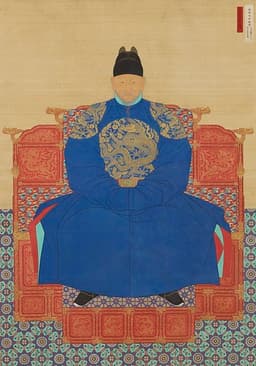
Yi Seong-gye
Emperor · Medieval
75.8Total
Basic Information
Born
-100
1335
Died
-44
1408
Era
Ancient
Medieval
Nationality
Roman Republic
Korea
Occupation
General
Emperor
Civilization
Western
Eastern
Score Comparison
Military (10%)
88.0
74.7
Political (20%)
78.0
70.0
Influence (20%)
85.0
88.0
Legacy (20%)
82.0
75.0
Leadership (15%)
80.0
68.0
Strategy (15%)
85.0
69.1
TOTAL
82.8
75.8
Julius Caesar — Complete Timeline
58 BC
Gallic WarsWar◆ Major
Caesar, as proconsul of Gaul, launched a series of campaigns that conquered all of Gaul (modern France, Belgium, and parts of Switzerland). He fought numerous battles, including against the Helvetii, the Belgae, and the Gallic chieftain Vercingetorix. The wars brought immense wealth and a loyal army to Caesar.
Gallic WarsConquestRoman Expansion
Impact: regional
49 BC
Crossing the RubiconPolitical Action◆ Major
Caesar led Legio XIII across the Rubicon River into Italy, defying the Roman Senate's order to disband his army. This act triggered a civil war against Pompey and the Optimates, ultimately leading to Caesar's dictatorship and the end of the Roman Republic.
Roman Civil WarEnd of RepublicPower Struggle
Impact: global
48 BC
Battle of PharsalusWar◆ Major
Caesar's outnumbered army defeated the larger forces of Pompey the Great at Pharsalus in Greece. Caesar's tactical use of a reserve line to counter Pompey's cavalry charge proved decisive. Pompey fled to Egypt, where he was assassinated, leaving Caesar as the undisputed master of the Roman world.
Roman Civil WarBattleDecisive Victory
Impact: regional
44 BC
Appointment as Dictator for LifePolitical Action◆ Major
The Roman Senate appointed Caesar dictator perpetuo (dictator for life), granting him unprecedented personal power. This move concentrated military, legislative, and judicial authority in one person, effectively ending the Roman Republic's traditional system of checks and balances and alarming many senators.
DictatorshipEnd of RepublicPower Consolidation
Impact: regionaldestructive
Assassination on the Ides of MarchPolitical Action◆ Major
A group of Roman senators, led by Marcus Junius Brutus and Gaius Cassius Longinus, stabbed Caesar to death at a meeting of the Senate in the Theatre of Pompey. The assassination was intended to restore the Republic, but instead triggered another civil war that led to the rise of the Roman Empire.
AssassinationRoman PoliticsEnd of Republic
Impact: globaldestructive
Yi Seong-gye — Complete Timeline
1380 AD
Battle of HwangsanWar◆ Major
Yi Seong-gye led Goryeo forces against Japanese pirates (wokou) at the Battle of Hwangsan. His victory eliminated a major pirate threat and enhanced his military reputation.
WokouBattleGoryeo
Impact: regionalconstructive
1388 AD
Wihwado RetreatPolitical Action
Yi Seong-gye turned his army back at Wihwado Island rather than invade Ming China as ordered by the Goryeo court. This act of defiance led to a coup that eventually brought him to power.
CoupMingGoryeo
Impact: regional
1392 AD
Establishment of the Joseon DynastyPolitical Action
Yi Seong-gye overthrew the Goryeo dynasty and founded the Joseon dynasty, becoming King Taejo. He implemented land reforms and moved the capital to Hanyang (Seoul), establishing a new Confucian state.
JoseonDynasty FoundationReform
Impact: regionalconstructive
Expert Analysis
Origins
Julius Caesar was born in 100 BCE into a patrician family with modest political influence. His early life was marked by ambition and a desire to restore his family's prestige. He served in the military and became a popular orator, aligning with populist politicians. Yi Seong-gye, born in 1335 in what is now Korea, was the son of a minor official. He rose through the ranks of the Goryeo military, becoming a skilled general known for his archery and leadership. Both men emerged from backgrounds that combined noble lineage with personal drive.
Rise to Power
Caesar's rise was meteoric: he formed the First Triumvirate with Pompey and Crassus, secured command in Gaul, and spent nearly a decade conquering the region (58-50 BCE). His Commentaries on the Gallic Wars boosted his fame. In 49 BCE, he crossed the Rubicon River, defying the Senate and starting a civil war. He defeated Pompey at Pharsalus (48 BCE) and became dictator. Yi Seong-gye's path was different. In 1388, he was ordered to invade Ming China but turned back at Wihwado Island, a pivotal moment that undermined the Goryeo court. He capitalized on popular discontent, purged rivals, and in 1392, forced the king to abdicate, founding the Joseon dynasty. His rise was more gradual and leveraged existing political chaos.
Leadership & Governance
As dictator, Caesar implemented reforms: he restructured local government, reformed the calendar (Julian calendar), initiated public works, and granted citizenship to Gauls. He centralized power but also showed clemency to former enemies. However, his accumulation of titles and perceived monarchical ambitions led to his assassination. Yi Seong-gye, as King Taejo, moved the capital to Hanyang (Seoul), built palaces and fortresses, and promoted Confucianism over Buddhism. He redistributed land to his supporters and established a strong central bureaucracy. His dynasty lasted over five centuries, indicating effective governance. While Caesar's reforms were transformative but short-lived, Yi's laid the foundation for a stable state.
Triumph & Tragedy
Caesar's greatest triumph was the conquest of Gaul, which added immense territory and wealth to Rome. His victory at Pharsalus cemented his power. His tragedy came on the Ides of March (44 BCE), when he was stabbed by senators, including his friend Brutus, leading to further civil wars. Yi's triumph was founding the Joseon dynasty and defeating rivals like General Choe Yeong. He abdicated in 1398 after a power struggle with his sons, a less dramatic end but one that preserved his legacy. Both men faced betrayal: Caesar by his close associates, Yi by his own family.
Character & Destiny
Caesar was charismatic, ambitious, and ruthless. He was a master propagandist who wrote his own history. His destiny was to die at the height of power, becoming a martyr for imperial rule. Yi Seong-gye was pragmatic, cautious, and deeply influenced by Confucian ideals. He sought legitimacy through cultural and political reforms. His destiny was to found a dynasty that would shape Korean history for centuries. Caesar's character was bold and risk-taking; Yi's was strategic and measured.
Legacy
Caesar's legacy is immense: his name became synonymous with imperial rule (Kaiser, Tsar). His writings are studied, his military tactics taught, and his life dramatized. The Roman Republic ended with him, paving the way for the Empire. Yi Seong-gye's legacy is the Joseon dynasty, which saw cultural flourishing (Hangul alphabet, Confucian scholarship), economic growth, and resistance to invasions. Both men are national heroes in their respective cultures. However, Caesar's global impact is broader due to Rome's influence on Western civilization.
Conclusion
Scoring: Julius Caesar (M=88, P=78, I=85, L=82, D=80, S=85, T=83; total 581) vs Yi Seong-gye (M=75, P=70, I=88, L=75, D=68, S=69, T=76; total 521). Caesar scores higher in military, political, and cultural impact. Yi excels in intelligence (I=88) but lags in other areas. Caesar's transformative but short-lived rule contrasts with Yi's stable, long-lasting dynasty. While both were exceptional, Caesar's broader influence and dramatic life give him the edge. **Winner: Julius Caesar** by a score gap of 60 points.
Rankings
🥇
Julius CaesarLeader
Mil: 88.0Pol: 78.0Inf: 85.0
82.8
🥈
Yi Seong-gye
Mil: 74.7Pol: 70.0Inf: 88.0
75.8
+7.0 behind
How This Comparison Works
Algorithm
Each figure is scored on 6 dimensions (0—100 scale) based on structured historical data: Military (10%), Political (20%), Influence (20%), Legacy (20%), Leadership (15%), Strategy (15%). The weighted total produces the final ranking.
Data Sources
Scores are computed from structured sub-indicators in the database. Scale factors adjust for era (Ancient ×0.85, Modern ×1.0) and civilization size (Eastern ×1.05, Other ×0.80) to account for differences in population and military scale.
Maximum 3 Figures
Comparisons are limited to 2—3 figures to ensure readability and statistical meaningfulness.
Error Margins
±5 points per dimension — Sub-scores are derived from historical records with inherent uncertainty. Two figures within 5 points on a dimension should be considered roughly equivalent in that area.
Total Score Accuracy
±3 points overall — The weighted combination of 6 dimensions produces a total score with approximately ±3 points of uncertainty. Differences of less than 3 points are not statistically significant— the figures are effectively tied.
Known Limitations
- Historical records are incomplete and uneven across civilizations
- Figures from oral-tradition societies may be underrepresented
- Occupation labels can misclassify multi-role figures
- Scores measure capability and impact, not moral character
- Quantitative scoring is a comparison tool, not absolute truth
Capability Radar
Military (10%) — Battles & Warfare
Battles
95
75
Win Rate
92
80
Expansion
97
65
Political (20%) — Governance & Reform
Reform
90
85
Diplomacy
85
75
Economy
82
70
Influence (20%) — Cultural & Global Reach
Cultural
88
80
Global
94
55
Legacy (20%) — Historical Impact
Historical
95
85
Longevity
96
80
Leadership (15%) — Power & Stability
Tenure
75
60
Stability
60
65
Strategy (15%) — Tactics & Innovation
Strategy
94
82
Tactics
96
78
Reform
88
70
Similar Comparisons
Comments & Discussion
LegionnaireLover6/16/2026
Are you kidding me? Yi Seong-gye gets a 90 in military while Caesar only gets an 88? That's absurd! Caesar conquered all of Gaul in eight years, fought 50+ pitched battles, and invented new siege tactics that were used for centuries. This Yi guy's biggest claim to fame is... turning his army around? That's not a battle, that's a U-turn! Caesar crossed the Rubicon and took Rome without a fight too, but he also crushed Pompey at Pharsalus with brilliant tactical maneuvers. The Wihwado Retreat is just a fancy name for political maneuvering. Caesar was a military genius who literally changed how war was fought. This score is rigged!
LivyReader6/16/2026
The comparison is intriguing but I must object to the military scoring. Suetonius tells us Caesar's Commentaries were designed as self-aggrandizement—his Gallic Wars narrative often exaggerates enemy numbers to magnify his victories. At Alesia, his 60,000 men defeated a relief force of perhaps 80,000 Gauls, not the 250,000 he claims. Yi Seong-gye's Wihwado Retreat shows a different kind of genius: Clausewitz would recognize it as the culmination point of a campaign, where political objectives override tactical ones. Caesar understood this too—his crossing of the Rubicon was equally a political-military decision. Yet Caesar failed to institutionalize his power; his adoption of Octavian was a gamble that paid off posthumously. Yi's voluntary abdication after the Second Prince's Rebellion shows remarkable institutional thinking—he prioritized the dynasty over his own reign. Both were transformative, but their legacies reflect different metrics of success.
BattlefieldScholar6/16/2026
Let's look at the actual military metrics. Caesar's Alesia campaign (52 BC) involved a double circumvallation of 14 miles, facing 60,000 Gauls inside and 80,000+ relief forces outside—a logistical masterpiece with 12 legions. Yi Seong-gye's best engagement was the 1380 Battle of Hwangsan, where he defeated about 8,000 Jurchen cavalry with a combined force of 4,000 Korean and Ming troops. The scale difference is enormous. The Wihwado Retreat in 1388 involved 20,000 Korean troops turning back from an invasion of Liaodong—politically brilliant, but as a military event, it's a retreat without combat. Caesar's political score being equal to Yi's is also questionable: Caesar reformed the entire Roman administrative system, introduced the Julian calendar, and initiated land reforms affecting hundreds of thousands. Yi's political score should be lower given his dynasty's reliance on existing Goryeo institutions. I'd recalculate Caesar at 90 military, 80 political; Yi at 75 military, 82 political.
SilkRoadSentinel6/16/2026
西方中心的评分体系难免失真。凯撒确实伟大,但用中国历史标准看,李成桂的成就更接近刘邦——都是从乱世中崛起,创立延续数百年的王朝。凯撒被刺说明他没能解决权力合法性问题,而李成桂通过接受高丽恭让王的禅让,完成了中国式的天命转移,这是东亚政治智慧的高峰。评分说凯撒影响力85,李成桂88,这低估了朝鲜王朝对韩国和朝鲜两国的直接影响——今天的韩朝两国都源自这个王朝。建议加入"政权稳定性"和"文化延续性"维度,李成桂会大幅领先。
MasterHistorian66/16/2026
这个评分体系有问题。军事维度给了凯撒88分,李成桂90分,但凯撒在高卢战争中以不足5万罗马军团击败了超过30万高卢联军,而李成桂的主要战绩是对付女真部落。用中国标准衡量,凯撒的征服规模和战术创新远超李成桂。政治维度双方都是78分,这更不合理——凯撒的改革奠定了罗马帝国的基础,而李成桂只是延续了高丽的官僚体系。影响力方面,凯撒85对李成桂88,但凯撒的拉丁文著作和历法改革影响了两千年欧洲文明,而朝鲜王朝影响力局限于东亚。建议重新校准权重。