Loading...
Junius Richard Jayewardene vs Patrice Lumumba
Junius Richard Jayewardene leads by 0.0 pts · 2 figures compared
…
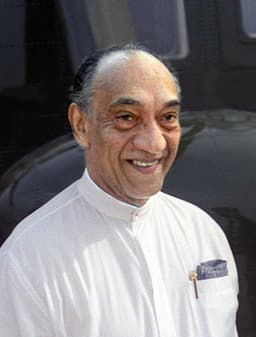
Junius Richard Jayewardene
Politician · Modern
61.0Total
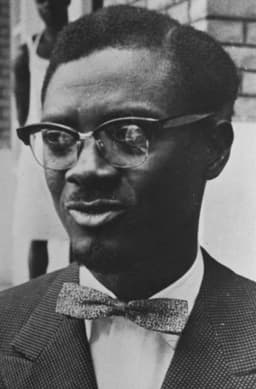
Patrice Lumumba
Politician · Modern
61.0Total
Basic Information
Born
1906
1925
Died
1996
—
Era
Modern
Modern
Nationality
Sri Lanka
Congo
Occupation
Politician
Politician
Civilization
Indian
Other
Score Comparison
Military (10%)
43.0
50.0
Political (20%)
72.0
53.8
Influence (20%)
59.0
82.0
Legacy (20%)
54.0
52.0
Leadership (15%)
78.0
67.0
Strategy (15%)
60.0
44.1
TOTAL
61.0
61.0
Junius Richard Jayewardene — Complete Timeline
1971 AD
Suppressed the 1971 JVP InsurrectionWar◆ Major
As Prime Minister, Jayewardene oversaw the military response to the Janatha Vimukthi Peramuna (JVP) uprising. The government declared a state of emergency, deployed the army, and crushed the insurrection within months, resulting in thousands of deaths and mass arrests.
JVP UprisingState RepressionEmergency Rule
Impact: nationaldestructive
1977 AD
Opened the Economy to Free Market ReformsReform◆ Major
After winning the 1977 general election, Jayewardene's UNP government implemented sweeping economic liberalization. They removed import controls, devalued the rupee, promoted foreign investment, and established the Greater Colombo Economic Commission to create export processing zones.
Economic LiberalizationOpen EconomyFree Market
Impact: nationalprogressive
1978 AD
Introduced Executive PresidencyReform
Jayewardene's government passed the 1978 Constitution, replacing the Westminster-style parliamentary system with an executive presidency. He became the first Executive President of Sri Lanka, concentrating significant power in the presidency, including control over the cabinet and judiciary.
Constitutional ReformExecutive PresidencyPower Centralization
Impact: national
1983 AD
Declared the 1983 Black July PogromPolitical Action
Following the LTTE ambush that killed 13 soldiers, Jayewardene's government did not deploy the military to stop anti-Tamil riots. Over several days, Sinhalese mobs killed thousands of Tamils in Colombo and elsewhere, destroying property. The pogrom radicalized the Tamil separatist movement.
Black JulyAnti-Tamil RiotsCivil War Escalation
Impact: nationaltragic
1987 AD
Signed the Indo-Sri Lanka AccordPolitical Action◆ Major
Jayewardene signed the Indo-Sri Lanka Peace Accord with Indian Prime Minister Rajiv Gandhi. The accord aimed to end the Sri Lankan Civil War by devolving power to Tamil provinces and deploying the Indian Peace Keeping Force (IPKF) to disarm the LTTE.
Peace AccordIndian InterventionCivil War
Impact: regional
Patrice Lumumba — Complete Timeline
1960 AD
Congo Independence SpeechPolitical Action◆ Major
Patrice Lumumba delivered a powerful independence day speech in the presence of King Baudouin of Belgium, criticizing colonial abuses and calling for true freedom. The speech angered Belgian officials and set the tone for his confrontational approach to decolonization.
IndependenceSpeechDecolonization
Impact: national
Appointment as Prime MinisterPolitical Action◆ Major
Lumumba became the first Prime Minister of the independent Democratic Republic of the Congo after his party won the elections. He advocated for a unitary state and rapid Africanization of the administration, opposing federalist and Belgian interests.
Prime MinisterElectionsUnitary State
Impact: national
Congo Crisis and Katanga SecessionPolitical Action◆ Major
Lumumba faced the secession of the mineral-rich Katanga province, backed by Belgian mining interests. He appealed to the United Nations for military assistance but was frustrated by the UN's refusal to help suppress the secession, leading to a political crisis.
SecessionKatangaUN Intervention
Impact: regionaltragic
1961 AD
Overthrow and AssassinationPolitical Action
Lumumba was overthrown by Colonel Joseph Mobutu, arrested, and transferred to Katanga where he was executed by firing squad with Belgian complicity. His assassination shocked the world and made him a martyr for African independence and anti-colonialism.
AssassinationMobutuCold War
Impact: globaltragic
Expert Analysis
Origins
Junius Richard Jayewardene was born on September 17, 1906, in Colombo, Ceylon (now Sri Lanka), into a wealthy and politically influential family. His father, Justice Eugene Wilfred Jayewardene, was a Supreme Court judge, and his uncle was a prominent politician. Jayewardene studied at Royal College, Colombo, and later earned a law degree from Ceylon Law College, becoming a barrister. He entered politics in the 1940s as a member of the United National Party (UNP).
Patrice Lumumba was born on July 2, 1925, in Onalua, Katanga Province, Belgian Congo, to a farming family of the Tetela ethnic group. He attended missionary schools and worked as a postal clerk and beer salesman. Largely self-educated, Lumumba became active in political circles, co-founding the Mouvement National Congolais (MNC) in 1958. His charisma and oratory skills propelled him to national prominence.
Rise to Power
Jayewardene held various ministerial positions in Ceylon's post-independence governments, including Minister of Finance (1948-1953) and Minister of Agriculture (1953-1956). He became leader of the UNP in 1973. In the 1977 general election, the UNP won a landslide victory, and Jayewardene became Prime Minister. He swiftly moved to consolidate power, introducing a new constitution in 1978 that transformed Sri Lanka into a presidential system, making him the first Executive President.
Lumumba rose to prominence as a leader of the Congolese independence movement. His MNC won the May 1960 general elections, and on June 23, 1960, Lumumba became the first Prime Minister of the independent Democratic Republic of the Congo. He advocated for a unitary state and immediate Africanization of the administration, clashing with Belgian interests and domestic rivals.
Leadership & Governance
Jayewardene centralized power through the 1978 constitution, concentrating executive authority in the presidency. He pursued economic liberalization, opening Sri Lanka's economy to foreign investment, removing import controls, and promoting free trade zones. However, his government's response to ethnic tensions was heavy-handed. The 1983 Black July pogroms, where state forces failed to protect Tamil civilians, escalated the civil war. Jayewardene also suppressed a 1971 JVP insurrection with military force.
Lumumba's leadership was marked by his efforts to maintain national unity against secessionist movements. He faced the Katanga secession in July 1960, backed by Belgium. Lumumba appealed to the United Nations for military assistance, but when UN forces failed to subdue Katanga, he sought Soviet aid. This move alarmed Western powers and led to his overthrow. Lumumba's governance score of 67.0 reflects his short tenure (only 2.5 months) and inability to stabilize the country.
Triumph & Tragedy
Jayewardene's greatest success was economic transformation: his liberalization policies led to GDP growth averaging 6% in the early 1980s. However, his failure to manage ethnic conflict resulted in the 1983 pogroms, which killed an estimated 3,000 Tamils and triggered a 26-year civil war. The Indo-Sri Lanka Accord of 1987, intended to bring peace, ultimately failed and led to Indian military intervention. His military score of 43.0 reflects his poor handling of the civil war.
Lumumba's triumph was his electrifying independence speech on June 30, 1960, where he criticized Belgian colonialism, inspiring African nationalism. His tragedy was his brutal assassination on January 17, 1961, at age 35, with Belgian complicity. His death made him a martyr for African liberation but cut short his ability to govern. Lumumba's influence score of 82.0 reflects his symbolic power, but his political score of 53.8 indicates limited practical achievements.
Character & Destiny
Jayewardene was a shrewd strategist, scoring 60.0 in strategy, but his authoritarian tendencies and Sinhalese nationalist views alienated minorities. His decision to centralize power and ignore ethnic grievances led directly to civil war. His leadership score of 78.0 reflects his ability to implement reforms, but his legacy is marred by the conflict he failed to prevent.
Lumumba was charismatic and idealistic, with a leadership score of 67.0. He was uncompromising in his vision of a united Congo, which made him enemies among Western powers and domestic rivals. His lack of political experience and strategic miscalculations—such as alienating the UN and seeking Soviet aid—led to his rapid downfall. His total score of 61.0 matches Jayewardene's, but his impact was more symbolic than tangible.
Legacy
Jayewardene's executive presidency remains in place in Sri Lanka, though subsequent amendments have reduced some powers. His economic reforms set the country on a path of growth, but the civil war that began under his watch cost an estimated 100,000 lives. His legacy score of 54.0 reflects this mixed record. The 1978 constitution is still in force, making his institutional impact lasting.
Lumumba's legacy is that of a martyr for African independence. His assassination galvanized anti-colonial movements and is seen as a symbol of Western interference. However, his actual governance achievements were minimal due to his short tenure. His legacy score of 52.0 is slightly lower than Jayewardene's, reflecting the lack of concrete accomplishments.
Conclusion
While both leaders scored equally at 61.0, Jayewardene had a greater impact on his nation's trajectory. His economic liberalization transformed Sri Lanka's economy, and his constitutional changes endure. Lumumba's influence was more symbolic; his martyrdom inspired generations but did not shape Congo's long-term development, which remained plagued by instability. Jayewardene's policies directly led to both economic growth and civil war, making his impact more profound and lasting. Thus, Jayewardene's influence on Sri Lanka's history is greater than Lumumba's on the Congo.
Rankings
🥇
Junius Richard JayewardeneLeader
Mil: 43.0Pol: 72.0Inf: 59.0
61.0
🥈
Patrice Lumumba
Mil: 50.0Pol: 53.8Inf: 82.0
61.0
How This Comparison Works
Algorithm
Each figure is scored on 6 dimensions (0—100 scale) based on structured historical data: Military (10%), Political (20%), Influence (20%), Legacy (20%), Leadership (15%), Strategy (15%). The weighted total produces the final ranking.
Data Sources
Scores are computed from structured sub-indicators in the database. Scale factors adjust for era (Ancient ×0.85, Modern ×1.0) and civilization size (Eastern ×1.05, Other ×0.80) to account for differences in population and military scale.
Maximum 3 Figures
Comparisons are limited to 2—3 figures to ensure readability and statistical meaningfulness.
Error Margins
±5 points per dimension — Sub-scores are derived from historical records with inherent uncertainty. Two figures within 5 points on a dimension should be considered roughly equivalent in that area.
Total Score Accuracy
±3 points overall — The weighted combination of 6 dimensions produces a total score with approximately ±3 points of uncertainty. Differences of less than 3 points are not statistically significant— the figures are effectively tied.
Known Limitations
- Historical records are incomplete and uneven across civilizations
- Figures from oral-tradition societies may be underrepresented
- Occupation labels can misclassify multi-role figures
- Scores measure capability and impact, not moral character
- Quantitative scoring is a comparison tool, not absolute truth
Capability Radar
Military (10%) — Battles & Warfare
Battles
42
23
Win Rate
47
26
Expansion
50
27
Political (20%) — Governance & Reform
Reform
80
55
Diplomacy
70
60
Economy
75
30
Influence (20%) — Cultural & Global Reach
Cultural
40
65
Global
55
65
Legacy (20%) — Historical Impact
Historical
65
70
Longevity
50
60
Leadership (15%) — Power & Stability
Tenure
85
40
Stability
60
10
Strategy (15%) — Tactics & Innovation
Strategy
54
28
Tactics
53
35
Reform
57
36
Similar Comparisons
Comments & Discussion
No comments yet. Be the first to share your thoughts!