Loading...
This comparison has not been analyzed yet.
One-time AI generation (~1 minute). Scores and timeline are already available below.
Juscelino Kubitschek vs Leni Robredo
Juscelino Kubitschek leads by 4.3 pts · 2 figures compared
…
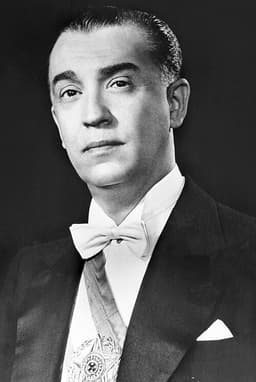
Juscelino Kubitschek
Politician · Modern
56.3Total

Leni Robredo
Politician · Modern
52.0Total
Basic Information
Born
1902
1965
Died
1976
—
Era
Modern
Modern
Nationality
Brazil
Philippines
Occupation
Politician
Politician
Civilization
Western
Eastern
Score Comparison
Military (10%)
50.0
12.9
Political (20%)
62.7
68.0
Influence (20%)
55.0
57.2
Legacy (20%)
52.0
45.8
Leadership (15%)
72.0
74.0
Strategy (15%)
43.9
37.1
TOTAL
56.3
52.0
Juscelino Kubitschek — Complete Timeline
1955 AD
Elected President of BrazilPolitical Action◆ Major
Juscelino Kubitschek was elected president of Brazil in 1955 as the candidate of the Social Democratic Party (PSD) and the Brazilian Labor Party (PTB). He assumed office on January 31, 1956, with a mandate for rapid development.
Brazilian PresidencyElectionDevelopment
Impact: nationalconstructive
1956 AD
Launched the 'Fifty Years in Five' Development PlanReform
Kubitschek launched the Plano de Metas (Goals Plan) in 1956, a comprehensive development program aiming to achieve fifty years of progress in five years. The plan focused on energy, transportation, industry, and agriculture, driving rapid economic growth.
Economic DevelopmentPlano de MetasBrazil
Impact: nationalconstructive
Expanded the Brazilian Automotive IndustryReform◆ Major
Kubitschek's government attracted foreign automakers such as Volkswagen, Ford, and General Motors to establish factories in Brazil. This policy created a domestic automotive industry, generating jobs and reducing imports.
IndustrializationAutomotiveBrazil
Impact: nationalconstructive
1959 AD
Faced the 1959 Military Revolt of AragarçasWar
In December 1959, a group of military officers led by Colonel Jo
Military RevoltPolitical InstabilityBrazil
Impact: nationaldestructive
1960 AD
Founded BrasíliaCultural
Kubitschek oversaw the construction of Bras
Urban PlanningBrasíliaModernization
Impact: nationalconstructive
Leni Robredo — Complete Timeline
2016 AD
Elected Vice President of the PhilippinesPolitical Action◆ Major
Robredo was elected vice president under the Liberal Party ticket, running alongside Mar Roxas. She defeated Bongbong Marcos by a narrow margin of 263,000 votes. The election result was later challenged by Marcos in the Supreme Court.
ElectionVice PresidencyMarcos
Impact: nationalconstructive
Appointed Chair of the Housing and Urban Development Coordinating CouncilPolitical Action
President Rodrigo Duterte appointed Robredo as chair of the HUDCC. She launched the 'Pabahay' program to provide housing for informal settlers. However, she was later removed from the position in 2017 after criticizing Duterte's war on drugs.
HousingDuterteCabinet
Impact: nationalconstructive
2017 AD
Became the leader of the opposition against DutertePolitical Action◆ Major
After being removed from the cabinet, Robredo emerged as the most prominent critic of the Duterte administration. She condemned the drug war killings, human rights abuses, and authoritarian tendencies. She led the opposition coalition in the 2019 and 2022 elections.
OppositionHuman RightsDuterte
Impact: nationalconstructive
2022 AD
Ran for President in 2022Political Action◆ Major
Robredo ran for president as the standard-bearer of the opposition. She campaigned on good governance and unity but lost to Bongbong Marcos by a landslide, receiving only 28% of the vote. She conceded and returned to private life.
ElectionDefeatMarcos
Impact: nationaltragic
This comparison has not been analyzed yet.
One-time AI generation (~1 minute). Scores and timeline are already available below.
Rankings
🥇
Juscelino KubitschekLeader
Mil: 50.0Pol: 62.7Inf: 55.0
56.3
🥈
Leni Robredo
Mil: 12.9Pol: 68.0Inf: 57.2
52.0
+4.3 behind
How This Comparison Works
Algorithm
Each figure is scored on 6 dimensions (0—100 scale) based on structured historical data: Military (10%), Political (20%), Influence (20%), Legacy (20%), Leadership (15%), Strategy (15%). The weighted total produces the final ranking.
Data Sources
Scores are computed from structured sub-indicators in the database. Scale factors adjust for era (Ancient ×0.85, Modern ×1.0) and civilization size (Eastern ×1.05, Other ×0.80) to account for differences in population and military scale.
Maximum 3 Figures
Comparisons are limited to 2—3 figures to ensure readability and statistical meaningfulness.
Error Margins
±5 points per dimension — Sub-scores are derived from historical records with inherent uncertainty. Two figures within 5 points on a dimension should be considered roughly equivalent in that area.
Total Score Accuracy
±3 points overall — The weighted combination of 6 dimensions produces a total score with approximately ±3 points of uncertainty. Differences of less than 3 points are not statistically significant— the figures are effectively tied.
Known Limitations
- Historical records are incomplete and uneven across civilizations
- Figures from oral-tradition societies may be underrepresented
- Occupation labels can misclassify multi-role figures
- Scores measure capability and impact, not moral character
- Quantitative scoring is a comparison tool, not absolute truth
Capability Radar
Military (10%) — Battles & Warfare
Battles
27
15
Win Rate
35
17
Expansion
32
20
Political (20%) — Governance & Reform
Reform
85
55
Diplomacy
70
60
Economy
80
45
Influence (20%) — Cultural & Global Reach
Cultural
65
45
Global
55
40
Legacy (20%) — Historical Impact
Historical
70
40
Longevity
60
35
Leadership (15%) — Power & Stability
Tenure
65
40
Stability
60
50
Strategy (15%) — Tactics & Innovation
Strategy
40
23
Tactics
42
26
Reform
46
26
Similar Comparisons
Comments & Discussion
No comments yet. Be the first to share your thoughts!