Loading...
Justin I vs Perseus of Macedon
Perseus of Macedon leads by 3.1 pts · 2 figures compared
…
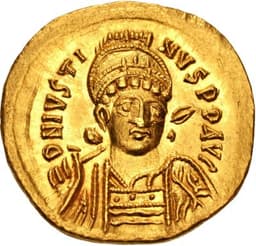
Justin I
Emperor · Ancient
41.8Total

Perseus of Macedon
Emperor · Ancient
44.9Total
Basic Information
Born
450
-212
Died
527
-166
Era
Ancient
Ancient
Nationality
Byzantine Empire
Macedon
Occupation
Emperor
Emperor
Civilization
Western
Western
Score Comparison
Military (10%)
25.9
38.3
Political (20%)
39.4
33.6
Influence (20%)
46.3
50.2
Legacy (20%)
37.5
40.8
Leadership (15%)
65.7
48.4
Strategy (15%)
25.0
60.0
TOTAL
41.8
44.9
Justin I — Complete Timeline
518 AD
Became Emperor of ByzantiumPolitical Action◆ Major
Upon the death of Emperor Anastasius I, Justin, the commander of the imperial guard, was elected emperor by the army and the Senate. His rise from a peasant background to the throne marked a significant change in the imperial administration.
AccessionByzantine EmpirePolitical Change
Impact: national
519 AD
Ended the Acacian SchismPolitical Action◆ Major
Justin, under the influence of his nephew Justinian, reconciled with the Papacy by accepting the Council of Chalcedon. This ended the Acacian Schism that had divided the Eastern and Western churches for 35 years.
Religious PolicyChurch UnityByzantine Empire
Impact: regionalconstructive
527 AD
Appointed Justinian as co-emperorPolitical Action◆ Major
As his health declined, Justin elevated his nephew Justinian to the rank of co-emperor. This ensured a smooth succession and allowed Justinian to assume full power upon Justin's death later that year.
SuccessionByzantine EmpireJustinian
Impact: national
Perseus of Macedon — Complete Timeline
168 BC
Battle of PydnaWar
Perseus's Macedonian army was crushed by the Roman legions under Lucius Aemilius Paullus at Pydna. The defeat was total, leading to the capture of Perseus and the end of the Antigonid dynasty, with Macedon divided into four republics.
Third Macedonian WarRoman ConquestEnd of Macedon
Impact: regionaldestructive
167 BC
Captured and paraded in RomePolitical Action◆ Major
After his capture, Perseus was paraded in chains during Aemilius Paullus's triumph in Rome. This public humiliation symbolized the complete subjugation of Macedon and served as a warning to other Hellenistic kingdoms.
Roman TriumphHumiliationSymbolic
Impact: regionaltragic
166 BC
Died in captivityOther
Perseus died while under house arrest in Alba Fucens, Italy, after reportedly being mistreated by his Roman captors. His death marked the final end of the Macedonian monarchy.
CaptivityDeath
Impact: nationaltragic
Expert Analysis
Origins
Justin I was born around 450 AD in the village of Bederiana in the province of Dardania (modern-day North Macedonia). Of Illyrian origin, he was a peasant who, along with his friends, fled to Constantinople to escape poverty. He joined the imperial guard, the Excubitors, and rose through the ranks due to his physical strength and loyalty. He was illiterate but shrewd. Perseus of Macedon was born around 212 BC, the eldest son of King Philip V of Macedon. He was raised in the royal court, educated in Greek culture, and groomed for kingship. His family, the Antigonid dynasty, had ruled Macedon for generations. Unlike Justin, Perseus inherited a kingdom already in conflict with Rome.
Rise to Power
Justin's rise was unconventional. He served under Emperor Anastasius I and became commander of the Excubitors. When Anastasius died in 518 AD, a succession crisis emerged. The Senate and army elected Justin, then around 68 years old, as emperor, largely because he was seen as a compromise candidate who could be controlled. However, Justin quickly asserted authority. Perseus, conversely, became king in 179 BC upon his father's death. He had been involved in diplomacy and military campaigns during Philip's reign, including the Second Macedonian War. He sought to revive Macedon's power by rebuilding alliances with Greek states and Illyrian tribes, challenging Rome's dominance.
Leadership & Governance
Justin's governance was marked by his reliance on his nephew Justinian, who effectively ran the administration. Justin's major political act was ending the Acacian Schism (484-519) by accepting the Council of Chalcedon, reconciling with the Papacy. This restored religious unity in the East and improved relations with the West. He also appointed Justinian as co-emperor in 527, ensuring a smooth transition. Perseus, with a political score of 33.6, attempted to consolidate Macedonian power through diplomacy and military buildup. He married Laodice, daughter of Seleucid king Seleucus IV, to form an alliance. However, his leadership was indecisive at critical moments. At the Battle of Pydna in 168 BC, his tactical errors led to a crushing defeat by Roman forces under Lucius Aemilius Paullus. His military score of 38.3 reflects his competence but inability to match Roman strategy.
Triumph & Tragedy
Justin's greatest triumph was his rise from peasant to emperor, a rare feat in Byzantine history. He also ended the Acacian Schism, a major religious achievement. His tragedy was his lack of education and reliance on Justinian, which meant his reign was overshadowed by his nephew's legacy. Perseus's triumph was his initial success in building a coalition against Rome, including an alliance with the Illyrian king Gentius. His tragedy, however, was total: defeat at Pydna, capture, and humiliation in a Roman triumph. He died in captivity in 166 BC under house arrest in Alba Fucens, reportedly after being mistreated. His legacy is that of the last king of Macedon, ending the Antigonid dynasty.
Character & Destiny
Justin was pragmatic and loyal, but his lack of education limited his strategic vision. His destiny was to be a transitional figure, paving the way for Justinian's golden age. Perseus was ambitious and capable, but his indecisiveness and inability to adapt to Roman military tactics sealed his fate. His character, marked by caution and occasional arrogance, alienated potential allies. Historical assessments view Justin as a capable administrator who made wise choices in appointing Justinian. Perseus is often seen as the last hope for Macedonian independence, but ultimately outmatched by Roman power.
Legacy
Justin's legacy is overshadowed by Justinian, but his reign stabilized the empire after Anastasius. His religious policy set the stage for the Byzantine Church's alignment with Rome. Perseus's legacy is more poignant: he is remembered as the last king of Macedon, a symbol of Greek resistance to Rome. His defeat led to the division of Macedon into four republics and the end of the Antigonid dynasty. In terms of scores, Perseus has a total of 44.9, slightly higher than Justin's 41.8. Perseus scores higher in military (38.3 vs 25.9), influence (50.2 vs 46.3), and strategy (60.0 vs 25.0), while Justin leads in political (39.4 vs 33.6) and leadership (65.7 vs 48.4).
Conclusion
While Perseus has a higher total score, Justin's impact on history is more enduring. Justin's reign restored religious unity and ensured the succession of Justinian, whose legal and architectural achievements shaped Western civilization. Perseus, despite his efforts, failed to preserve Macedonian independence and his defeat accelerated Roman hegemony. Therefore, Justin had greater historical impact through his enabling of Justinian's legacy. The score gap of 3.1 points does not reflect the long-term consequences of their actions.
Rankings
🥇
Perseus of MacedonLeader
Mil: 38.3Pol: 33.6Inf: 50.2
44.9
🥈
Justin I
Mil: 25.9Pol: 39.4Inf: 46.3
41.8
+3.1 behind
How This Comparison Works
Algorithm
Each figure is scored on 6 dimensions (0—100 scale) based on structured historical data: Military (10%), Political (20%), Influence (20%), Legacy (20%), Leadership (15%), Strategy (15%). The weighted total produces the final ranking.
Data Sources
Scores are computed from structured sub-indicators in the database. Scale factors adjust for era (Ancient ×0.85, Modern ×1.0) and civilization size (Eastern ×1.05, Other ×0.80) to account for differences in population and military scale.
Maximum 3 Figures
Comparisons are limited to 2—3 figures to ensure readability and statistical meaningfulness.
Error Margins
±5 points per dimension — Sub-scores are derived from historical records with inherent uncertainty. Two figures within 5 points on a dimension should be considered roughly equivalent in that area.
Total Score Accuracy
±3 points overall — The weighted combination of 6 dimensions produces a total score with approximately ±3 points of uncertainty. Differences of less than 3 points are not statistically significant— the figures are effectively tied.
Known Limitations
- Historical records are incomplete and uneven across civilizations
- Figures from oral-tradition societies may be underrepresented
- Occupation labels can misclassify multi-role figures
- Scores measure capability and impact, not moral character
- Quantitative scoring is a comparison tool, not absolute truth
Capability Radar
Military (10%) — Battles & Warfare
Battles
10
35
Win Rate
10
30
Expansion
10
25
Political (20%) — Governance & Reform
Reform
35
25
Diplomacy
40
30
Economy
30
30
Influence (20%) — Cultural & Global Reach
Cultural
20
25
Global
15
15
Legacy (20%) — Historical Impact
Historical
25
35
Longevity
20
20
Leadership (15%) — Power & Stability
Tenure
40
40
Stability
45
20
Strategy (15%) — Tactics & Innovation
Strategy
10
35
Tactics
10
40
Reform
15
20
Similar Comparisons
Comments & Discussion
No comments yet. Be the first to share your thoughts!