Loading...
Adad-nirari I vs Justin I
Adad-nirari I leads by 12.6 pts · 2 figures compared
…

Adad-nirari I
Emperor · Ancient
54.4Total
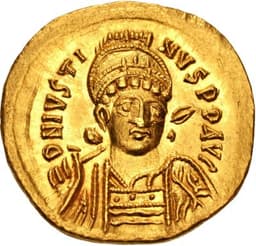
Justin I
Emperor · Ancient
41.8Total
Basic Information
Born
-1305
450
Died
-1274
527
Era
Ancient
Ancient
Nationality
Assyria
Byzantine Empire
Occupation
Emperor
Emperor
Civilization
Middle Eastern
Western
Score Comparison
Military (10%)
67.3
25.9
Political (20%)
68.0
39.4
Influence (20%)
54.1
46.3
Legacy (20%)
47.5
37.5
Leadership (15%)
40.0
65.7
Strategy (15%)
60.7
25.0
TOTAL
54.4
41.8
Adad-nirari I — Complete Timeline
1290 BC
Conquered the Mitanni kingdomWar
Adad-nirari I launched a successful military campaign against the Mitanni kingdom, defeating King Shattuara and annexing its territory. This conquest eliminated Assyria's main rival and brought the entire region of northern Mesopotamia under Assyrian control.
ConquestMitanniExpansion
Impact: regional
1285 BC
Expanded Assyrian borders to the EuphratesWar◆ Major
Adad-nirari I extended Assyrian territory westward to the Euphrates River, capturing cities like Harran and Carchemish. This expansion secured control over key trade routes and agricultural lands, strengthening the Assyrian economy and military.
ExpansionEuphratesTrade
Impact: regional
1280 BC
Defeated the Kassites and asserted dominance over BabylonWar◆ Major
Adad-nirari I fought against the Kassite rulers of Babylon, defeating them in battle and forcing them to accept Assyrian suzerainty. This victory established Assyria as the dominant power in Mesopotamia, overshadowing Babylon.
BabylonKassitesDominance
Impact: regional
Built and restored temples and fortificationsCultural
Adad-nirari I undertook building projects including the restoration of the temple of Ashur in the capital and the construction of fortifications in conquered cities. These works reinforced Assyrian control and demonstrated royal piety.
BuildingTempleFortification
constructive
Justin I — Complete Timeline
518 AD
Became Emperor of ByzantiumPolitical Action◆ Major
Upon the death of Emperor Anastasius I, Justin, the commander of the imperial guard, was elected emperor by the army and the Senate. His rise from a peasant background to the throne marked a significant change in the imperial administration.
AccessionByzantine EmpirePolitical Change
Impact: national
519 AD
Ended the Acacian SchismPolitical Action◆ Major
Justin, under the influence of his nephew Justinian, reconciled with the Papacy by accepting the Council of Chalcedon. This ended the Acacian Schism that had divided the Eastern and Western churches for 35 years.
Religious PolicyChurch UnityByzantine Empire
Impact: regionalconstructive
527 AD
Appointed Justinian as co-emperorPolitical Action◆ Major
As his health declined, Justin elevated his nephew Justinian to the rank of co-emperor. This ensured a smooth succession and allowed Justinian to assume full power upon Justin's death later that year.
SuccessionByzantine EmpireJustinian
Impact: national
Expert Analysis
Origins
Adad-nirari I was born around 1307 BCE into the Assyrian royal family, likely the son of Arik-den-ili. He grew up in Ashur, the religious and political center of Assyria, receiving training in warfare and administration. His family had already begun to revive Assyrian power after periods of decline under Mitanni domination. In contrast, Justin I was born around 450 CE in the Latin-speaking province of Dacia (modern Balkans), into a peasant family of Thraco-Roman origin. He had little education and began his career as a soldier, rising through the ranks due to his physical strength and loyalty. His nephew, Justinian, later became the driving force behind his reign.
Rise to Power
Adad-nirari I ascended the Assyrian throne in 1305 BCE, inheriting a kingdom that had recently regained independence from Mitanni. He immediately launched campaigns to secure and expand his borders. His decisive victory over Shattuara of Mitanni around 1295 BCE marked a turning point, as he annexed Mitanni territory and deported its population. This conquest established Assyria as a major power in Mesopotamia. Justin I's rise was more accidental. In 518 CE, Emperor Anastasius I died without an heir. Justin, as commander of the Excubitors (imperial guard), was elected emperor by the army and Senate, partly due to his reputation as a capable soldier and his lack of political enemies. He was already in his 60s and illiterate.
Leadership & Governance
Adad-nirari I governed as a warrior-king, personally leading campaigns and overseeing administrative consolidation. He rebuilt the temple of Ashur, constructed fortifications, and established Assyrian control over trade routes. His style was autocratic, with power centralized around the king and the god Ashur. Justin I, by contrast, relied heavily on his nephew Justinian, who was well-educated and ambitious. Justin ended the Acacian Schism (484–519) by accepting the Council of Chalcedon, reuniting the Eastern and Western churches. He also purged Monophysites from key positions. However, much of the governance was delegated, and Justin's reign saw limited domestic reform. Adad-nirari scored 68.0 in political skill, reflecting his ability to consolidate power, while Justin scored 39.4, showing his dependence on others.
Triumph & Tragedy
Adad-nirari's greatest triumph was the conquest of Mitanni, which scored 67.3 in military. He expanded Assyrian borders to the Euphrates, capturing Harran and Carchemish, and forced the Kassites of Babylon to accept Assyrian suzerainty. His failures include overextension; the conquered territories required constant military attention, and his successors faced rebellions. Justin I's triumph was ending the Acacian Schism, healing a religious rift that had lasted 35 years. He also appointed Justinian as co-emperor, ensuring a smooth succession. His tragedy was his lack of agency; his reign is often overshadowed by Justinian. Justin scored 25.9 in military, reflecting minimal personal involvement in warfare.
Character & Destiny
Adad-nirari I was aggressive and ambitious, driven to restore Assyria to its former glory. His inscriptions boast of his victories and building projects, showing a ruler focused on legacy. This character led to territorial expansion but also overreach. Justin I was modest and pragmatic, aware of his limitations. He relied on Justinian, which allowed the empire to benefit from a capable administrator. However, his perceived weakness may have encouraged opposition. Historical assessments often view Justin as a transitional figure, while Adad-nirari is seen as a founder of the Neo-Assyrian period.
Legacy
Adad-nirari I's conquests laid the foundation for Assyrian dominance in the Near East for centuries. His military campaigns set patterns for later Assyrian kings. He scored 47.5 in legacy, reflecting that his immediate impact was significant but later overshadowed by more famous successors. Justin I's legacy is tied to Justinian's reign; by appointing his nephew, he enabled the Justinianic era, including the reconquest of the West and the codification of Roman law. He also restored religious unity to the empire. Justin scored 37.5 in legacy, as his reign was brief and his personal contributions limited.
Conclusion
Adad-nirari I had a greater immediate impact through his military conquests and expansion of Assyrian power. His total score of 54.4 surpasses Justin's 41.8 by 12.6 points. While Justin's political and religious decisions were important, they were largely directed by Justinian. Adad-nirari's actions directly transformed Assyria into a dominant empire, setting the stage for its future greatness. Thus, Adad-nirari I emerges as the more impactful figure.
Rankings
🥇
Adad-nirari ILeader
Mil: 67.3Pol: 68.0Inf: 54.1
54.4
🥈
Justin I
Mil: 25.9Pol: 39.4Inf: 46.3
41.8
+12.6 behind
How This Comparison Works
Algorithm
Each figure is scored on 6 dimensions (0—100 scale) based on structured historical data: Military (10%), Political (20%), Influence (20%), Legacy (20%), Leadership (15%), Strategy (15%). The weighted total produces the final ranking.
Data Sources
Scores are computed from structured sub-indicators in the database. Scale factors adjust for era (Ancient ×0.85, Modern ×1.0) and civilization size (Eastern ×1.05, Other ×0.80) to account for differences in population and military scale.
Maximum 3 Figures
Comparisons are limited to 2—3 figures to ensure readability and statistical meaningfulness.
Error Margins
±5 points per dimension — Sub-scores are derived from historical records with inherent uncertainty. Two figures within 5 points on a dimension should be considered roughly equivalent in that area.
Total Score Accuracy
±3 points overall — The weighted combination of 6 dimensions produces a total score with approximately ±3 points of uncertainty. Differences of less than 3 points are not statistically significant— the figures are effectively tied.
Known Limitations
- Historical records are incomplete and uneven across civilizations
- Figures from oral-tradition societies may be underrepresented
- Occupation labels can misclassify multi-role figures
- Scores measure capability and impact, not moral character
- Quantitative scoring is a comparison tool, not absolute truth
Capability Radar
Military (10%) — Battles & Warfare
Battles
65
10
Win Rate
70
10
Expansion
70
10
Political (20%) — Governance & Reform
Reform
55
35
Diplomacy
60
40
Economy
50
30
Influence (20%) — Cultural & Global Reach
Cultural
45
20
Global
40
15
Legacy (20%) — Historical Impact
Historical
55
25
Longevity
50
20
Leadership (15%) — Power & Stability
Tenure
60
40
Stability
55
45
Strategy (15%) — Tactics & Innovation
Strategy
65
10
Tactics
60
10
Reform
55
15
Similar Comparisons
Comments & Discussion
No comments yet. Be the first to share your thoughts!