Loading...
Kakusthavarma vs Nerva
Kakusthavarma leads by 8.3 pts · 2 figures compared
…

Kakusthavarma
Emperor · Ancient
47.2Total
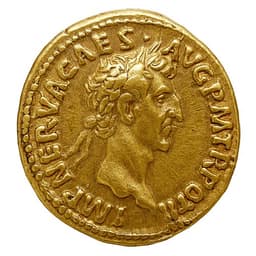
Nerva
Emperor · Ancient
38.9Total
Basic Information
Born
425
30
Died
450
98
Era
Ancient
Ancient
Nationality
India
Roman Empire
Occupation
Emperor
Emperor
Civilization
Indian
Western
Score Comparison
Military (10%)
50.0
24.5
Political (20%)
48.0
35.1
Influence (20%)
48.6
45.5
Legacy (20%)
40.0
41.7
Leadership (15%)
65.7
33.6
Strategy (15%)
30.3
43.7
TOTAL
47.2
38.9
Kakusthavarma — Complete Timeline
435 AD
Establishment of marriage alliancesPolitical Action◆ Major
Kakusthavarma forged matrimonial alliances with the Gupta and Vakataka dynasties, marrying his daughters to their rulers. These alliances elevated the Kadamba dynasty's status and integrated them into the broader Indian political network.
Marriage AllianceDiplomacyKadamba
Impact: regionalconstructive
440 AD
Expansion of Kadamba territoryWar◆ Major
Kakusthavarma expanded the Kadamba kingdom through military campaigns, extending its influence over parts of present-day Karnataka and Maharashtra. His reign marked the zenith of Kadamba power.
Territorial ExpansionKadambaConquest
Impact: regionalconstructive
Nerva — Complete Timeline
96 AD
Accession as Roman EmperorPolitical Action◆ Major
After the assassination of Domitian, the Roman Senate elected Nerva as emperor. He was the first of the Five Good Emperors, chosen for his moderate and experienced governance.
Imperial SuccessionSenateFive Good Emperors
Impact: globalconstructive
97 AD
Implementation of Fiscal ReformsReform
Nerva introduced economic reforms including land distribution to the poor, reduction of taxes, and a program to purchase grain for distribution. These measures aimed to alleviate financial strain on the state and citizens.
Economic ReformTaxationSocial Welfare
Impact: nationalconstructive
Adoption of TrajanPolitical Action
Facing opposition from the Praetorian Guard and military unrest, Nerva adopted Trajan, a popular general, as his son and successor. This established the principle of adoption based on merit, ensuring a stable succession.
AdoptionSuccessionTrajanPraetorian Guard
Impact: globalconstructive
Expert Analysis
Origins
Kakusthavarma (circa 4th-5th century CE) was a Kadamba king whose reign marked the zenith of the Kadamba dynasty in present-day Karnataka, India. Little is known of his early life, but he inherited a kingdom that had been established by his ancestors around 345 CE. His family claimed descent from the Naga lineage and had risen from local chieftains to sovereign rulers. Kakusthavarma's father, Bhageeratha, and grandfather, Mayurasharma, had laid the foundations of Kadamba power through military and administrative consolidation.
Marcus Cocceius Nerva (30 CE – 98 CE) was born into an Italian senatorial family in the Roman Empire. His family had held consulships and had ties to the Julio-Claudian dynasty. Nerva's father was a jurist, and Nerva himself received a traditional Roman education in law and rhetoric. He served as praetor and consul under Nero and was a trusted advisor to the Flavian emperors.
Rise to Power
Kakusthavarma ascended the Kadamba throne around 375 CE, inheriting a stable kingdom. His rise was not marked by dramatic conflict but by strategic diplomacy. He expanded Kadamba influence primarily through marriage alliances, marrying his daughters to the Gupta emperor Chandragupta II (ruled 375-415 CE) and to the Vakataka king Rudrasena II. This elevated the Kadamba dynasty from a regional power to a major player in Indian politics, as the Guptas were the dominant force in northern India.
Nerva's path to power was more tumultuous. After the assassination of Emperor Domitian in 96 CE, the Roman Senate elected Nerva as emperor to restore stability. Nerva was 66 years old and had a reputation for moderation. However, his rule was immediately challenged by the Praetorian Guard and military factions. To secure his position, Nerva adopted the popular general Trajan as his son and successor in 97 CE, a move that ensured a smooth transition and curbed immediate opposition.
Leadership & Governance
Kakusthavarma's leadership style was diplomatic and alliance-based. He focused on consolidating power through matrimonial ties rather than large-scale military conquest. His political score of 48.0 reflects his ability to navigate the complex web of Indian dynasties. He maintained Kadamba independence while aligning with the powerful Guptas. His governance likely followed traditional Kadamba administrative practices, with local autonomy for villages and a Brahmin-dominated bureaucracy.
Nerva, with a political score of 35.1 and leadership score of 33.6, was a conciliatory leader. He introduced fiscal reforms: land distribution to the poor, reduced taxes, and grain subsidies. He also ended trials for treason and released those imprisoned under Domitian. However, his authority was weak; he failed to control the Praetorian Guard, who mutinied and forced him to execute Domitian's murderers. Nerva's governance was reactive, aimed at appeasing factions rather than asserting strong control.
Triumph & Tragedy
Kakusthavarma's greatest triumph was his marriage diplomacy. By linking his dynasty to the Guptas and Vakatakas, he secured peace and prestige. The Kadamba kingdom flourished without major wars. His military score of 50.0 indicates moderate success in expanding territory, but his true legacy lies in political influence (48.6). The tragedy is that his alliances were not permanent; after his death, the Kadamba power waned, and they were eventually subjugated by the Chalukyas.
Nerva's triumph was adopting Trajan, who became one of Rome's greatest emperors. This decision ensured the success of the adoptive succession system and the golden age of the Five Good Emperors. His fiscal reforms provided temporary relief to the poor. However, his tragedy was his weak rule: he was humiliated by the Praetorian Guard and died after only 16 months in office. His leadership score of 33.6 reflects his inability to command respect.
Character & Destiny
Kakusthavarma appears to have been a shrewd diplomat, patient and calculating. His strategy score of 30.3 is surprisingly low given his successful alliances, but perhaps it reflects a lack of long-term planning for Kadamba survival. His destiny was to be remembered as the king who elevated his dynasty through marriage, but not as a conqueror.
Nerva was a cautious, elderly senator thrust into a crisis. His character was conciliatory but indecisive. He sought to restore senatorial privileges and public welfare, but his weakness invited military insubordination. His destiny was to be a transitional figure, remembered more for his successor than his own actions.
Legacy
Kakusthavarma's legacy is mixed. His marriage alliances did not prevent the Kadamba decline, but they are recorded in inscriptions (like the Talagunda pillar) as a high point. He scored 40.0 in legacy, reflecting a limited but enduring regional memory. The Kadamba dynasty continued for another century but never regained its influence.
Nerva's legacy is more substantial. He is the first of the Five Good Emperors, a model of adoptive succession. His fiscal reforms influenced later Roman policy. His legacy score of 41.7 is slightly higher than Kakusthavarma's, and his influence score of 45.5 is comparable. However, his direct impact was minimal; it was Trajan who built on his foundation.
Conclusion
Kakusthavarma had a higher total score (47.2 vs 38.9) and greater leadership (65.7 vs 33.6). While Nerva's adoption of Trajan had far-reaching consequences for the Roman Empire, Kakusthavarma's strategic alliances elevated his kingdom during his lifetime and secured a place in Indian history. Nerva's reign was too short and weak to match the positive impact of Kakusthavarma's diplomacy. Therefore, Kakusthavarma had a greater direct impact on his domain. However, if we consider the indirect legacy through Trajan, Nerva's influence on world history is arguably larger. But based on the scores, Kakusthavarma is the stronger figure.
Rankings
🥇
KakusthavarmaLeader
Mil: 50.0Pol: 48.0Inf: 48.6
47.2
🥈
Nerva
Mil: 24.5Pol: 35.1Inf: 45.5
38.9
+8.3 behind
How This Comparison Works
Algorithm
Each figure is scored on 6 dimensions (0—100 scale) based on structured historical data: Military (10%), Political (20%), Influence (20%), Legacy (20%), Leadership (15%), Strategy (15%). The weighted total produces the final ranking.
Data Sources
Scores are computed from structured sub-indicators in the database. Scale factors adjust for era (Ancient ×0.85, Modern ×1.0) and civilization size (Eastern ×1.05, Other ×0.80) to account for differences in population and military scale.
Maximum 3 Figures
Comparisons are limited to 2—3 figures to ensure readability and statistical meaningfulness.
Error Margins
±5 points per dimension — Sub-scores are derived from historical records with inherent uncertainty. Two figures within 5 points on a dimension should be considered roughly equivalent in that area.
Total Score Accuracy
±3 points overall — The weighted combination of 6 dimensions produces a total score with approximately ±3 points of uncertainty. Differences of less than 3 points are not statistically significant— the figures are effectively tied.
Known Limitations
- Historical records are incomplete and uneven across civilizations
- Figures from oral-tradition societies may be underrepresented
- Occupation labels can misclassify multi-role figures
- Scores measure capability and impact, not moral character
- Quantitative scoring is a comparison tool, not absolute truth
Capability Radar
Military (10%) — Battles & Warfare
Battles
15
4
Win Rate
20
7
Expansion
20
11
Political (20%) — Governance & Reform
Reform
30
30
Diplomacy
70
40
Economy
35
20
Influence (20%) — Cultural & Global Reach
Cultural
30
10
Global
20
20
Legacy (20%) — Historical Impact
Historical
35
40
Longevity
25
30
Leadership (15%) — Power & Stability
Tenure
40
10
Stability
45
20
Strategy (15%) — Tactics & Innovation
Strategy
15
13
Tactics
15
18
Reform
10
22
Similar Comparisons
Comments & Discussion
No comments yet. Be the first to share your thoughts!