Loading...
King Huiwen of Qin vs Nerva
King Huiwen of Qin leads by 25.4 pts · 2 figures compared
…

King Huiwen of Qin
Emperor · Ancient
64.3Total
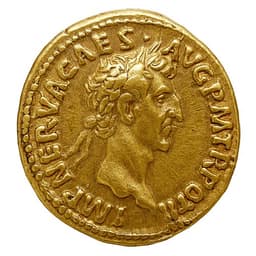
Nerva
Emperor · Ancient
38.9Total
Basic Information
Born
-356
30
Died
-311
98
Era
Ancient
Ancient
Nationality
Qin
Roman Empire
Occupation
Emperor
Emperor
Civilization
Eastern
Western
Score Comparison
Military (10%)
74.7
24.5
Political (20%)
72.0
35.1
Influence (20%)
60.0
45.5
Legacy (20%)
58.0
41.7
Leadership (15%)
66.0
33.6
Strategy (15%)
66.3
43.7
TOTAL
64.3
38.9
King Huiwen of Qin — Complete Timeline
325 BC
Adoption of the title of kingPolitical Action◆ Major
Duke Huiwen of Qin formally adopted the title of king (wang), breaking the Zhou monopoly on royal titles. This act asserted Qin's independence and ambition, setting a precedent for other states to claim kingship during the Warring States period.
QinTitleWarring States
Impact: national
316 BC
Conquest of ShuWar◆ Major
King Huiwen of Qin sent general Sima Cuo to conquer the Shu state in the Sichuan Basin. The acquisition of Shu's fertile lands and resources provided Qin with a strategic base for expansion and a major economic advantage over rival states.
QinConquestShu
Impact: regional
Nerva — Complete Timeline
96 AD
Accession as Roman EmperorPolitical Action◆ Major
After the assassination of Domitian, the Roman Senate elected Nerva as emperor. He was the first of the Five Good Emperors, chosen for his moderate and experienced governance.
Imperial SuccessionSenateFive Good Emperors
Impact: globalconstructive
97 AD
Implementation of Fiscal ReformsReform
Nerva introduced economic reforms including land distribution to the poor, reduction of taxes, and a program to purchase grain for distribution. These measures aimed to alleviate financial strain on the state and citizens.
Economic ReformTaxationSocial Welfare
Impact: nationalconstructive
Adoption of TrajanPolitical Action
Facing opposition from the Praetorian Guard and military unrest, Nerva adopted Trajan, a popular general, as his son and successor. This established the principle of adoption based on merit, ensuring a stable succession.
AdoptionSuccessionTrajanPraetorian Guard
Impact: globalconstructive
Expert Analysis
Origins
King Huiwen of Qin (born 356 BCE, reigned 337–311 BCE) was the son of Duke Xian of Qin. He ascended the throne after his father's death, inheriting a state that was undergoing reform but still considered semi-barbaric by Central Plains states. His education included Legalist principles from Shang Yang's reforms, though he later executed Shang Yang. Nerva (born 30 CE in Narnia, Italy) came from a senatorial family. His grandfather was a consul under Tiberius, and his father was a jurist. Nerva's early career included serving as praetor-elect under Nero and consul under Vespasian. He was a senator respected for his moderation.
Rise to Power
King Huiwen came to power at age 19 after his father's death. In 337 BCE, he executed Shang Yang, the reformer who had transformed Qin, but retained most of his reforms. This allowed him to consolidate power while maintaining the efficient bureaucratic and military systems. His major turning point was adopting the title of king in 325 BCE, breaking the Zhou monarchy's monopoly. Nerva's rise was more passive. After Domitian's assassination in 96 CE, the Senate elected Nerva as emperor due to his moderate reputation and lack of threat. He was already 66 years old. His key turning point was adopting Trajan in 97 CE, which secured his rule against military unrest.
Leadership & Governance
King Huiwen ruled Qin with a focus on expansion and centralization. He continued Legalist policies, emphasizing meritocracy and strict laws. His governance style was aggressive and strategic. For example, he launched campaigns against Shu (316 BCE) and Wei, using Sima Cuo's advice to conquer Shu for its resources. Nerva's governance was conciliatory and reformist. He reduced taxes, distributed land to the poor, and cut expenditures. He also established a program to purchase grain for distribution. However, his reign was short (96-98 CE) and marked by instability, including a mutiny by the Praetorian Guard in 97 CE.
Triumph & Tragedy
King Huiwen's greatest triumph was the conquest of Shu in 316 BCE, which provided Qin with immense agricultural wealth and a strategic base for later unification. His adoption of the kingly title also elevated Qin's status. His failures included alienating other states through aggression, leading to coalitions against Qin. He also faced a rebellion from the Zhou king, which he suppressed but which drained resources. Nerva's triumph was establishing the adoptive succession system by adopting Trajan, ensuring a stable transition and the era of the Five Good Emperors. His tragedy was his inability to control the military; the Praetorian Guard forced him to hand over Domitian's murderers. His reign was too short to implement lasting reforms.
Character & Destiny
King Huiwen was pragmatic and ruthless. He executed Shang Yang but kept his reforms, showing a willingness to sacrifice individuals for state benefit. His strategic acumen (score 66.3) drove Qin's expansion. Nerva was mild and scholarly, scoring 33.6 in leadership. His character led him to be a consensus builder, but it also made him vulnerable to military pressure. His destiny was to be a transitional figure; his adoption of Trajan was his most important act.
Legacy
King Huiwen's legacy is foundational for Qin's unification of China. His conquest of Shu provided the resources that enabled later campaigns. The title of king he adopted became standard for Chinese rulers. Nerva's legacy is as the first of the Five Good Emperors, setting a precedent for adoptive succession that brought stability. His reforms, though limited, influenced later Roman welfare policies. In terms of scores, King Huiwen's total of 64.3 far exceeds Nerva's 38.9, reflecting greater impact.
Conclusion
King Huiwen of Qin had a greater impact than Nerva. His military conquests (74.7 vs 24.5) and political maneuvering (72.0 vs 35.1) directly enabled Qin's eventual unification of China, a world-changing event. Nerva's reign was too brief and his actions too reactive to match this. While Nerva's adoption of Trajan was important, it was a single decision. King Huiwen's systematic expansion and institutional consolidation shaped history more profoundly. The score gap of 25.4 points reflects this disparity.
Rankings
🥇
King Huiwen of QinLeader
Mil: 74.7Pol: 72.0Inf: 60.0
64.3
🥈
Nerva
Mil: 24.5Pol: 35.1Inf: 45.5
38.9
+25.4 behind
How This Comparison Works
Algorithm
Each figure is scored on 6 dimensions (0—100 scale) based on structured historical data: Military (10%), Political (20%), Influence (20%), Legacy (20%), Leadership (15%), Strategy (15%). The weighted total produces the final ranking.
Data Sources
Scores are computed from structured sub-indicators in the database. Scale factors adjust for era (Ancient ×0.85, Modern ×1.0) and civilization size (Eastern ×1.05, Other ×0.80) to account for differences in population and military scale.
Maximum 3 Figures
Comparisons are limited to 2—3 figures to ensure readability and statistical meaningfulness.
Error Margins
±5 points per dimension — Sub-scores are derived from historical records with inherent uncertainty. Two figures within 5 points on a dimension should be considered roughly equivalent in that area.
Total Score Accuracy
±3 points overall — The weighted combination of 6 dimensions produces a total score with approximately ±3 points of uncertainty. Differences of less than 3 points are not statistically significant— the figures are effectively tied.
Known Limitations
- Historical records are incomplete and uneven across civilizations
- Figures from oral-tradition societies may be underrepresented
- Occupation labels can misclassify multi-role figures
- Scores measure capability and impact, not moral character
- Quantitative scoring is a comparison tool, not absolute truth
Capability Radar
Military (10%) — Battles & Warfare
Battles
65
4
Win Rate
70
7
Expansion
75
11
Political (20%) — Governance & Reform
Reform
85
30
Diplomacy
80
40
Economy
75
20
Influence (20%) — Cultural & Global Reach
Cultural
60
10
Global
60
20
Legacy (20%) — Historical Impact
Historical
75
40
Longevity
70
30
Leadership (15%) — Power & Stability
Tenure
70
10
Stability
65
20
Strategy (15%) — Tactics & Innovation
Strategy
75
13
Tactics
60
18
Reform
80
22
Similar Comparisons
Comments & Discussion
No comments yet. Be the first to share your thoughts!