Loading...
Khaba vs Nerva
Nerva leads by 1.9 pts · 2 figures compared
…
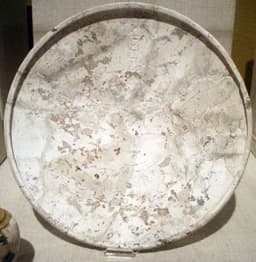
Khaba
Emperor · Ancient
37.0Total
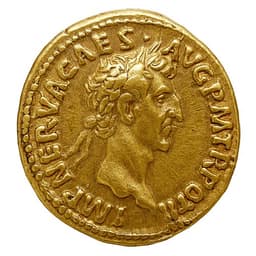
Nerva
Emperor · Ancient
38.9Total
Basic Information
Born
-2630
30
Died
-2620
98
Era
Ancient
Ancient
Nationality
Old Kingdom Egypt
Roman Empire
Occupation
Emperor
Emperor
Civilization
Middle Eastern
Western
Score Comparison
Military (10%)
10.2
24.5
Political (20%)
25.0
35.1
Influence (20%)
46.3
45.5
Legacy (20%)
37.5
41.7
Leadership (15%)
45.0
33.6
Strategy (15%)
45.0
43.7
TOTAL
37.0
38.9
Khaba — Complete Timeline
2630 BC
Construction of the Layer Pyramid at Zawyet el-AryanOther◆ Major
Khaba built the Layer Pyramid at Zawyet el-Aryan, a step pyramid with a unique construction of horizontal layers of stone. The pyramid was left unfinished, with only the core structure completed. It is associated with Khaba through seal impressions found at the site.
Pyramid ConstructionZawyet el-AryanUnfinished
Impact: national
Nerva — Complete Timeline
96 AD
Accession as Roman EmperorPolitical Action◆ Major
After the assassination of Domitian, the Roman Senate elected Nerva as emperor. He was the first of the Five Good Emperors, chosen for his moderate and experienced governance.
Imperial SuccessionSenateFive Good Emperors
Impact: globalconstructive
97 AD
Implementation of Fiscal ReformsReform
Nerva introduced economic reforms including land distribution to the poor, reduction of taxes, and a program to purchase grain for distribution. These measures aimed to alleviate financial strain on the state and citizens.
Economic ReformTaxationSocial Welfare
Impact: nationalconstructive
Adoption of TrajanPolitical Action
Facing opposition from the Praetorian Guard and military unrest, Nerva adopted Trajan, a popular general, as his son and successor. This established the principle of adoption based on merit, ensuring a stable succession.
AdoptionSuccessionTrajanPraetorian Guard
Impact: globalconstructive
Expert Analysis
Origins
Khaba (c. 2670 BC) was a pharaoh of Egypt's Third Dynasty, likely the successor of Sekhemkhet. Little is known of his early life; his name appears on stone vessels and the Layer Pyramid at Zawyet el-Aryan. He inherited a kingdom consolidating after the early dynastic period. Nerva (c. 30 AD – 98 AD) was born into the Italic nobility, his family long associated with the Julio-Claudian emperors. He served as consul under Nero and later as a senator under the Flavian dynasty, avoiding political persecution through quiet diplomacy. His early career was legal and administrative, not military.
Rise to Power
Khaba ascended the throne through dynastic succession, likely as a son or close relative of his predecessor. His reign is poorly documented, but he initiated the Layer Pyramid, a step pyramid built with horizontal stone layers, intended as his tomb. The project was abandoned early, suggesting a short reign. Nerva rose after the assassination of Domitian in 96 AD. The Senate, eager to restore its authority, elected the elderly, childless Nerva as emperor. He was a compromise candidate, acceptable to both senators and the military due to his lack of ambition. His accession marked the end of the Flavian dynasty and the start of the adoptive emperors.
Leadership & Governance
Khaba's leadership is inferred from his single known monument. The Layer Pyramid's innovative technique (horizontal layers rather than the stepped core of earlier pyramids) suggests an experimental approach, but its abandonment indicates limited resources or a short reign. He left no known administrative reforms. Nerva, by contrast, governed with explicit reforms: he recalled exiles, reduced taxes, instituted a program of land distribution to the poor, and established a grain dole for Rome. He also forbade accusations of treason (maiestas) and reduced imperial expenditures. His leadership style was conciliatory, seeking to heal the wounds of Domitian's tyranny. However, he lacked military control, and the Praetorian Guard forced him to execute Domitian's murderers, revealing his weakness.
Triumph & Tragedy
Khaba's triumph was the construction of the Layer Pyramid, which despite its unfinished state, represents a unique architectural phase. Its failure was its incompleteness and the fact that his tomb was never used; his body was likely never interred there. Nerva's triumph was establishing the adoptive system that produced Trajan, Hadrian, and the golden age of the Roman Empire. His tragedy was his brief reign (16 months) and his humiliation by the Praetorians in 97 AD, when they mutinied and forced him to hand over Domitian's killers. He died soon after, possibly of natural causes, but the incident underscored his lack of real power.
Character & Destiny
Khaba remains an enigma; his character is unknown. His destiny was to be a footnote in pyramid evolution. Nerva is described by ancient sources (Tacitus, Cassius Dio) as moderate, elderly, and prudent. His decision to adopt Trajan—a popular general—was a strategic masterstroke that secured his legacy. His character of compromise and legalism shaped his brief rule, but his destiny was to be the bridge between tyranny and the golden age. Modern scores reflect this: Khaba scores 10.2 in military, 25.0 political, 46.3 influence, 37.5 legacy, 45.0 leadership, 45.0 strategy, total 37.0. Nerva scores 24.5 military, 35.1 political, 45.5 influence, 41.7 legacy, 33.6 leadership, 43.7 strategy, total 38.9. The 1.9-point gap favors Nerva, driven by his political and legacy scores.
Legacy
Khaba's legacy is limited to Egyptology: the Layer Pyramid is a unique monument, but his name barely survives. He contributed no political or cultural innovations. Nerva's legacy is far-reaching: he established the adoptive system that gave Rome its best emperors for nearly a century. His fiscal reforms, though short-lived, set precedents for imperial welfare. He is remembered as the first of the Five Good Emperors, a model of constitutional rule. His score of 41.7 in legacy versus Khaba's 37.5 reflects this.
Conclusion
Nerva had a greater impact than Khaba. Despite his short reign and lack of military prowess, his adoption of Trajan fundamentally altered Roman history, leading to the peak of the empire. Khaba, while interesting architecturally, left no lasting political or cultural imprint. The data supports this: Nerva's total score of 38.9 exceeds Khaba's 37.0, and his influence and legacy scores are higher. Nerva's actions shaped the destiny of millions; Khaba's pyramid is a curiosity. Thus, Nerva is the more significant historical figure.
Rankings
🥇
NervaLeader
Mil: 24.5Pol: 35.1Inf: 45.5
38.9
🥈
Khaba
Mil: 10.2Pol: 25.0Inf: 46.3
37.0
+1.9 behind
How This Comparison Works
Algorithm
Each figure is scored on 6 dimensions (0—100 scale) based on structured historical data: Military (10%), Political (20%), Influence (20%), Legacy (20%), Leadership (15%), Strategy (15%). The weighted total produces the final ranking.
Data Sources
Scores are computed from structured sub-indicators in the database. Scale factors adjust for era (Ancient ×0.85, Modern ×1.0) and civilization size (Eastern ×1.05, Other ×0.80) to account for differences in population and military scale.
Maximum 3 Figures
Comparisons are limited to 2—3 figures to ensure readability and statistical meaningfulness.
Error Margins
±5 points per dimension — Sub-scores are derived from historical records with inherent uncertainty. Two figures within 5 points on a dimension should be considered roughly equivalent in that area.
Total Score Accuracy
±3 points overall — The weighted combination of 6 dimensions produces a total score with approximately ±3 points of uncertainty. Differences of less than 3 points are not statistically significant— the figures are effectively tied.
Known Limitations
- Historical records are incomplete and uneven across civilizations
- Figures from oral-tradition societies may be underrepresented
- Occupation labels can misclassify multi-role figures
- Scores measure capability and impact, not moral character
- Quantitative scoring is a comparison tool, not absolute truth
Capability Radar
Military (10%) — Battles & Warfare
Battles
5
4
Win Rate
5
7
Expansion
5
11
Political (20%) — Governance & Reform
Reform
20
30
Diplomacy
15
40
Economy
20
20
Influence (20%) — Cultural & Global Reach
Cultural
25
10
Global
10
20
Legacy (20%) — Historical Impact
Historical
25
40
Longevity
20
30
Leadership (15%) — Power & Stability
Tenure
30
10
Stability
25
20
Strategy (15%) — Tactics & Innovation
Strategy
5
13
Tactics
5
18
Reform
5
22
Similar Comparisons
Comments & Discussion
No comments yet. Be the first to share your thoughts!