Loading...
Kalakaua vs Vajiravudh
Vajiravudh leads by 5.0 pts · 2 figures compared
…
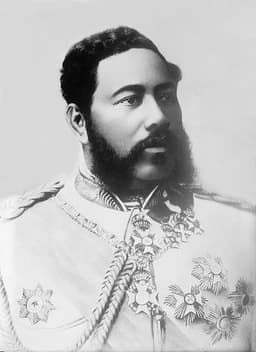
Kalakaua
Emperor · Modern
51.8Total

Vajiravudh
Emperor · Modern
56.8Total
Basic Information
Born
1836
1881
Died
1891
1925
Era
Modern
Modern
Nationality
Hawaii
Thailand
Occupation
Emperor
Emperor
Civilization
Other
Eastern
Score Comparison
Military (10%)
13.3
45.0
Political (20%)
72.0
68.0
Influence (20%)
61.0
55.7
Legacy (20%)
49.2
44.2
Leadership (15%)
53.2
74.0
Strategy (15%)
41.6
60.0
TOTAL
51.8
56.8
Kalakaua — Complete Timeline
1874 AD
Elected King of HawaiiPolitical Action◆ Major
David Kalākaua was elected king by the Hawaiian legislature after the death of King Lunalilo. His election sparked a riot by supporters of Queen Emma, which was suppressed by American and British troops.
ElectionMonarchy
Impact: national
1875 AD
Signed the Reciprocity Treaty of 1875Political Action◆ Major
Kalākaua signed a reciprocity treaty with the United States that eliminated tariffs on Hawaiian sugar and other products. In exchange, the US gained exclusive rights to use Pearl Harbor as a naval base, increasing American influence.
TradePearl Harbor
Impact: national
1881 AD
Circumnavigated the GlobeOther◆ Major
Kalākaua became the first monarch to circumnavigate the globe, traveling to the United States, Europe, and Asia. He sought to strengthen diplomatic ties, promote Hawaiian culture, and recruit immigrants to work on sugar plantations.
DiplomacyTravel
Impact: globalconstructive
1882 AD
Built ʻIolani PalaceCultural◆ Major
Kalākaua completed the construction of ʻIolani Palace in Honolulu, the only royal palace in the United States. The palace was equipped with modern amenities like electricity and telephones, symbolizing Hawaiian modernization.
ArchitectureRoyal palace
Impact: nationalconstructive
1887 AD
Forced to Sign the Bayonet ConstitutionPolitical Action◆ Major
Kalākaua was forced by a group of American and European businessmen, backed by the Honolulu Rifles militia, to sign a new constitution. The Bayonet Constitution stripped the monarchy of power, gave voting rights only to wealthy landowners, and favored foreign interests.
ConstitutionCoup
Impact: nationaldestructive
1891 AD
Died in San FranciscoOther◆ Major
Kalākaua died in San Francisco while on a diplomatic trip to the United States. His death was attributed to Bright's disease (kidney failure). He was the last reigning king of Hawaii.
DeathDiplomacy
Impact: nationaltragic
Vajiravudh — Complete Timeline
1910 AD
Promotion of Thai NationalismPolitical Action◆ Major
Vajiravudh, as King Rama VI, promoted a strong sense of Thai nationalism through speeches, writings, and policies. He emphasized loyalty to the nation, religion, and monarchy. His nationalism was aimed at unifying the country and resisting Western colonial influence.
NationalismMonarchyThai Identity
Impact: nationalconstructive
1911 AD
Creation of the Wild Tiger CorpsPolitical Action
Vajiravudh established the Wild Tiger Corps, a paramilitary organization loyal to the king. The corps was intended to counterbalance the regular army and promote royalist sentiment. It was controversial and seen as a tool to consolidate personal power.
ParamilitaryRoyalistPower Consolidation
Impact: national
1913 AD
Adoption of the Surname SystemReform
Vajiravudh introduced the use of surnames for all Thai citizens, a reform modeled on Western practices. The law required every family to adopt a surname, which helped in administrative record-keeping and promoted a sense of family identity.
Surname ReformAdministrationWesternization
Impact: nationalconstructive
1917 AD
Establishment of Chulalongkorn UniversityCultural◆ Major
Vajiravudh founded Chulalongkorn University, Thailand's first university, named after his father. The university was established to modernize education and train civil servants. It became a leading institution for higher education in Thailand.
EducationUniversityModernization
Impact: nationalconstructive
1921 AD
Introduction of Compulsory EducationReform◆ Major
Vajiravudh enacted the Compulsory Education Act, requiring all children to attend primary school. The reform aimed to increase literacy and create a more educated populace. It laid the foundation for Thailand's modern education system.
Education ReformLiteracyCompulsory Education
Impact: nationalconstructive
Expert Analysis
Origins
King David Kalākaua was born in 1836 in Honolulu, Hawaii, into a high-ranking chiefly family. He was educated at the Royal School, where he learned English and Hawaiian traditions. His brother was King Kamehameha V, and he served in various government roles before being elected king in 1874. King Vajiravudh (Rama VI) was born in 1881 in Bangkok, Siam, the son of King Chulalongkorn (Rama V). He was educated in England at Sandhurst and Oxford, absorbing Western ideas of nationalism and monarchy. His upbringing was cosmopolitan, preparing him for modernizing Siam.
Rise to Power
Kalākaua rose to power after the death of King Lunalilo in 1874. He was elected king by the legislature, sparking a riot by supporters of Queen Emma. He quickly consolidated power, leveraging his political skills against the American and European elite. Vajiravudh ascended the throne in 1910 after his father's death. He had been groomed as crown prince and was well-traveled. His first years focused on establishing his authority against the old guard, using his writings and speeches to promote a unified Thai identity.
Leadership & Governance
Kalākaua's leadership was characterized by diplomacy and cultural revival. He signed the Reciprocity Treaty of 1875, boosting Hawaii's economy but increasing US influence. He built 'Iolani Palace, symbolizing Hawaiian sovereignty, and became the first monarch to circumnavigate the globe, seeking allies. However, his political score of 72.0 was undermined by the Bayonet Constitution of 1887, forced upon him by foreign businessmen, stripping the monarchy of power. Vajiravudh, with a leadership score of 74.0, focused on nation-building. He introduced compulsory education, founded Chulalongkorn University, and implemented a surname system. He promoted Thai nationalism through the Wild Tiger Corps, a paramilitary loyal to him. His governance was more systematic, but he faced criticism for extravagance and nepotism.
Triumph & Tragedy
Kalākaua's triumphs include preserving Hawaiian sovereignty during his reign and fostering a sense of national pride through cultural events. He traveled extensively, earning the nickname "Merrie Monarch" for reviving hula and music. His tragedy was the Bayonet Constitution, which reduced him to a figurehead and paved the way for annexation. His legacy score of 49.2 reflects this decline. Vajiravudh's successes include modernizing education and instilling nationalism. He successfully navigated World War I by joining the Allies, gaining international standing. His tragedy was his inability to manage finances, leading to a near-bankrupt treasury. He also faced a failed assassination plot. His legacy score of 44.2 is lower due to these flaws.
Character & Destiny
Kalākaua was charismatic and culturally focused, but his political naivety allowed foreign interests to dominate. His strategy score of 41.6 reflects his reactive approach. Vajiravudh was intellectual and nationalistic, but his autocratic style alienated some elites. His military score of 45.0 shows his reliance on paramilitary forces. Both monarchs faced destinies shaped by external pressures: Kalākaua by American expansionism, Vajiravudh by Western colonialism and internal factions.
Legacy
Kalākaua is remembered in Hawaii as a symbol of resistance and cultural revival. His palace and the Merrie Monarch Festival endure. However, his political legacy is tarnished by the loss of sovereignty. Vajiravudh's legacy is more institutional: Chulalongkorn University, compulsory education, and the surname system remain. He shaped modern Thai identity, but his excessive spending and the Wild Tiger Corps are criticized. In terms of total scores, Vajiravudh leads 56.8 to 51.8, but the gap is narrow.
Conclusion
While Kalākaua fought against colonialism with charm and diplomacy, Vajiravudh proactively built a modern nation-state. Vajiravudh's educational reforms and nationalism had a more lasting impact on Thailand's development, despite his personal flaws. Kalākaua's story is tragic, but his influence is more symbolic than structural. Thus, Vajiravudh had greater impact, as his policies directly shaped the trajectory of a nation that remained independent.
Rankings
🥇
VajiravudhLeader
Mil: 45.0Pol: 68.0Inf: 55.7
56.8
🥈
Kalakaua
Mil: 13.3Pol: 72.0Inf: 61.0
51.8
+5.0 behind
How This Comparison Works
Algorithm
Each figure is scored on 6 dimensions (0—100 scale) based on structured historical data: Military (10%), Political (20%), Influence (20%), Legacy (20%), Leadership (15%), Strategy (15%). The weighted total produces the final ranking.
Data Sources
Scores are computed from structured sub-indicators in the database. Scale factors adjust for era (Ancient ×0.85, Modern ×1.0) and civilization size (Eastern ×1.05, Other ×0.80) to account for differences in population and military scale.
Maximum 3 Figures
Comparisons are limited to 2—3 figures to ensure readability and statistical meaningfulness.
Error Margins
±5 points per dimension — Sub-scores are derived from historical records with inherent uncertainty. Two figures within 5 points on a dimension should be considered roughly equivalent in that area.
Total Score Accuracy
±3 points overall — The weighted combination of 6 dimensions produces a total score with approximately ±3 points of uncertainty. Differences of less than 3 points are not statistically significant— the figures are effectively tied.
Known Limitations
- Historical records are incomplete and uneven across civilizations
- Figures from oral-tradition societies may be underrepresented
- Occupation labels can misclassify multi-role figures
- Scores measure capability and impact, not moral character
- Quantitative scoring is a comparison tool, not absolute truth
Capability Radar
Military (10%) — Battles & Warfare
Battles
8
0
Win Rate
9
0
Expansion
9
0
Political (20%) — Governance & Reform
Reform
55
60
Diplomacy
65
45
Economy
50
40
Influence (20%) — Cultural & Global Reach
Cultural
60
50
Global
45
25
Legacy (20%) — Historical Impact
Historical
55
45
Longevity
50
30
Leadership (15%) — Power & Stability
Tenure
60
55
Stability
40
35
Strategy (15%) — Tactics & Innovation
Strategy
15
0
Tactics
15
0
Reform
21
10
Similar Comparisons
Comments & Discussion
No comments yet. Be the first to share your thoughts!