Loading...
Kangxi Emperor vs Udai Singh II
Kangxi Emperor leads by 21.9 pts · 2 figures compared
…
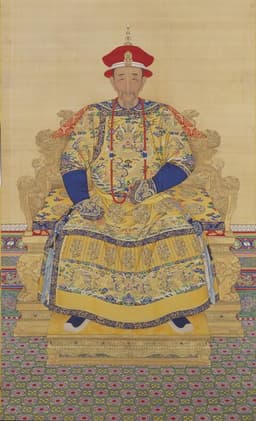
Kangxi Emperor
Emperor · Modern
73.4Total
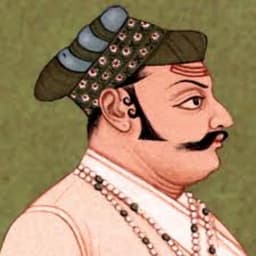
Udai Singh II
Emperor · Modern
51.5Total
Basic Information
Born
1654
1522
Died
1722
1572
Era
Modern
Modern
Nationality
China
India
Occupation
Emperor
Emperor
Civilization
Eastern
Indian
Score Comparison
Military (10%)
85.0
50.0
Political (20%)
78.0
45.1
Influence (20%)
69.8
55.7
Legacy (20%)
65.0
48.3
Leadership (15%)
81.3
65.7
Strategy (15%)
72.7
38.6
TOTAL
73.4
51.5
Kangxi Emperor — Complete Timeline
1673 AD
Suppression of the Revolt of the Three FeudatoriesWar
The Kangxi Emperor faced a major rebellion led by three powerful Han Chinese feudatories in southern China, including Wu Sangui. He personally directed military campaigns, and by 1681 the revolt was crushed, consolidating Qing control over the south.
RebellionFeudatoriesQing Dynasty
Impact: national
1683 AD
Conquest of TaiwanWar◆ Major
Kangxi ordered the invasion of Taiwan, then held by the Ming loyalist Zheng Keshuang. Qing naval forces defeated the Zheng fleet, and Taiwan was incorporated into the Qing Empire as a prefecture, ending the last major Ming resistance.
TaiwanConquestMing Loyalists
Impact: regional
1689 AD
Treaty of NerchinskPolitical Action◆ Major
The Kangxi Emperor negotiated the Treaty of Nerchinsk with the Russian Empire, establishing the border between Siberia and Manchuria. This was China's first treaty with a European power and secured the northern frontier, allowing trade and diplomatic relations.
TreatyRussiaBorder
Impact: globalconstructive
1691 AD
Incorporation of Outer MongoliaPolitical Action◆ Major
Kangxi personally met with Khalkha Mongol leaders at Dolon Nor, where they formally submitted to Qing authority. This brought Outer Mongolia under Qing control, ending the Dzungar threat and expanding the empire's northern borders.
MongoliaExpansionQing
Impact: regionalconstructive
1716 AD
Compilation of the Kangxi DictionaryCultural◆ Major
Kangxi commissioned the Kangxi Dictionary, a comprehensive dictionary of Chinese characters. It became the standard reference for Chinese lexicography, containing over 47,000 characters and influencing scholarship for centuries.
DictionaryLanguageScholarship
Impact: globalconstructive
Udai Singh II — Complete Timeline
1537 AD
Accession to the throne of MewarPolitical Action◆ Major
Udai Singh II succeeded his father Rana Sanga as the Maharana of Mewar. His reign was marked by the founding of Udaipur and the conflict with the Mughals. He ruled until his death in 1572.
SuccessionRoyal Rule
Impact: regional
1559 AD
Founding of Udaipur cityCultural◆ Major
Udai Singh II founded the city of Udaipur on the banks of Lake Pichola. The city was established as the new capital of Mewar after the fall of Chittorgarh. It became known for its lakes, palaces, and scenic beauty.
City FoundingCapitalArchitecture
Impact: regionalconstructive
1560 AD
Construction of Lake PicholaCultural◆ Major
Udai Singh II expanded Lake Pichola by building a dam, creating a large artificial lake. The lake provided water for the new city of Udaipur and became a central feature of its landscape. It later hosted the famous Lake Palace.
Water ManagementUrban PlanningLake
Impact: regionalconstructive
1567 AD
Siege of Chittorgarh by AkbarWar
Udai Singh II faced the Mughal siege of Chittorgarh by Emperor Akbar. After a prolonged siege, the fort fell to the Mughals. Udai Singh fled to the hills, leading to the loss of the traditional Mewar capital.
Mughal ConquestSiegeLoss of Capital
Impact: regionaltragic
Expert Analysis
Origins
**Kangxi Emperor** (born Xuanye, 1654–1722) was the third emperor of the Qing dynasty. He was the son of the Shunzhi Emperor and Empress Xiaokang. His early education was overseen by his grandmother, Empress Dowager Xiaozhuang, who ensured he received rigorous training in Chinese classics, Manchu language, and military arts. At age 8, he ascended the throne, with a regency led by four ministers, including the powerful Oboi. Kangxi's formative years were marked by court intrigue and the need to assert his authority, which he did by arresting Oboi in 1669 at age 15.
**Udai Singh II** (born 1522, died 1572) was the Maharana of Mewar, a Rajput kingdom in present-day Rajasthan, India. He was the son of Rana Sanga, a legendary warrior who fought against the Mughals. After his father's death in 1528, Mewar faced internal strife and external threats. Udai Singh II spent his early years in exile, as his uncle Vanvir seized the throne. With the help of loyal nobles, he regained his birthright and became Maharana in 1540, at age 18. His upbringing in a turbulent environment shaped his cautious and defensive approach.
Rise to Power
Kangxi's rise began with his personal assumption of power in 1669. He faced the Revolt of the Three Feudatories (1673–1681), a major rebellion led by Wu Sangui, Shang Kexi, and Geng Jingzhong. Kangxi directed the campaign personally, using a combination of military force and political maneuvering. By 1681, the revolt was crushed, solidifying his control over southern China. He then turned to Taiwan, where the Ming loyalist Zheng Keshuang held out. In 1683, Kangxi ordered a naval invasion; the Qing fleet defeated the Zheng forces, and Taiwan was incorporated into the Qing Empire.
Udai Singh II's rise was more defensive. After reclaiming Mewar, he focused on consolidating his rule. The Mughal Empire under Akbar was expanding into Rajputana. In 1567, Akbar besieged Chittorgarh, the historic capital of Mewar. Udai Singh II, facing overwhelming Mughal forces, evacuated the fort and retreated to the hills. The siege lasted several months, culminating in a Mughal victory. Udai Singh II's decision to abandon Chittorgarh was controversial but preserved his army for future resistance.
Leadership & Governance
Kangxi's leadership was marked by active, centralized governance. He personally led military campaigns, oversaw administrative reforms, and promoted learning. He completed the compilation of the Kangxi Dictionary in 1716, which standardized the Chinese language. He also balanced Manchu and Chinese interests, creating a stable multi-ethnic empire. His political score of 78.0 reflects his ability to manage a vast bureaucracy and integrate conquered territories.
Udai Singh II's governance was more localized. He founded the city of Udaipur in 1559, building a new capital around Lake Pichola. He expanded the lake by constructing a dam, ensuring water supply for the city. His leadership was characterized by resilience in the face of Mughal pressure. However, his political score of 45.1 indicates limited administrative reach beyond Mewar. He focused on maintaining Rajput traditions and independence rather than expanding his domain.
Triumph & Tragedy
Kangxi's greatest triumphs include the suppression of the Three Feudatories, the conquest of Taiwan, the Treaty of Nerchinsk (1689) with Russia, and the incorporation of Outer Mongolia in 1691. These expanded Qing territory to its largest extent. His tragedies include the costly campaigns and the failure to fully integrate Tibet and Xinjiang during his reign. He also faced succession issues, leading to the imprisonment of his heir Yinreng.
Udai Singh II's triumph was the founding of Udaipur, which became a symbol of Rajput resistance. His tragedy was the loss of Chittorgarh, a devastating blow to Mewar's prestige. The fall of the fort led to the infamous Jauhar (mass self-immolation) by Rajput women to avoid capture. Udai Singh II's decision to flee was seen as cowardly by some, but it allowed him to continue the struggle, later carried on by his son Maharana Pratap.
Character & Destiny
Kangxi was decisive, pragmatic, and intellectually curious. He studied astronomy, mathematics, and cartography, and welcomed Jesuit missionaries. His character drove him to seek control and stability, leading to a long and prosperous reign. His military score of 85.0 and strategy score of 72.7 reflect his calculated approach to warfare and diplomacy. His destiny was to unify China and set the stage for the 18th-century Qing golden age.
Udai Singh II was cautious and survival-oriented. He prioritized the preservation of his dynasty over heroic stands. His character led him to avoid direct confrontation with Akbar, a choice that preserved Mewar but also resulted in the loss of its historic capital. His strategy score of 38.6 indicates a less aggressive approach. His destiny was to be overshadowed by his son Pratap, who became the symbol of Rajput defiance.
Legacy
Kangxi's legacy is immense. He is remembered as one of China's greatest emperors, whose reign laid the foundation for the Qing dynasty's longevity. The Kangxi Dictionary remains a standard reference. His territorial gains in Taiwan, Mongolia, and Siberia shaped modern China's borders. His influence score of 69.8 and legacy score of 65.0 reflect his enduring impact on Chinese history and culture.
Udai Singh II's legacy is more regional. He is remembered as the founder of Udaipur, a city that became the heart of Mewar. His name is associated with the city's lakes and palaces. However, his legacy is often eclipsed by his son Maharana Pratap, who fought the Mughals at the Battle of Haldighati (1576). Udai Singh II's political and military scores (45.1 and 50.0) highlight his limited impact beyond his immediate realm.
Conclusion
Kangxi Emperor had a far greater impact on history than Udai Singh II. With a total score of 73.4 against Udai Singh II's 51.5, Kangxi's achievements in unifying China, expanding its territory, and fostering cultural development are on a global scale. Udai Singh II's significance is confined to the regional history of Rajasthan. While his founding of Udaipur is notable, it cannot compare to Kangxi's role in shaping the modern Chinese state. The score gap of 21.9 points reflects the vast difference in their influence, leadership, and legacy.
Rankings
🥇
Kangxi EmperorLeader
Mil: 85.0Pol: 78.0Inf: 69.8
73.4
🥈
Udai Singh II
Mil: 50.0Pol: 45.1Inf: 55.7
51.5
+21.9 behind
How This Comparison Works
Algorithm
Each figure is scored on 6 dimensions (0—100 scale) based on structured historical data: Military (10%), Political (20%), Influence (20%), Legacy (20%), Leadership (15%), Strategy (15%). The weighted total produces the final ranking.
Data Sources
Scores are computed from structured sub-indicators in the database. Scale factors adjust for era (Ancient ×0.85, Modern ×1.0) and civilization size (Eastern ×1.05, Other ×0.80) to account for differences in population and military scale.
Maximum 3 Figures
Comparisons are limited to 2—3 figures to ensure readability and statistical meaningfulness.
Error Margins
±5 points per dimension — Sub-scores are derived from historical records with inherent uncertainty. Two figures within 5 points on a dimension should be considered roughly equivalent in that area.
Total Score Accuracy
±3 points overall — The weighted combination of 6 dimensions produces a total score with approximately ±3 points of uncertainty. Differences of less than 3 points are not statistically significant— the figures are effectively tied.
Known Limitations
- Historical records are incomplete and uneven across civilizations
- Figures from oral-tradition societies may be underrepresented
- Occupation labels can misclassify multi-role figures
- Scores measure capability and impact, not moral character
- Quantitative scoring is a comparison tool, not absolute truth
Capability Radar
Military (10%) — Battles & Warfare
Battles
85
25
Win Rate
88
20
Expansion
92
20
Political (20%) — Governance & Reform
Reform
88
30
Diplomacy
90
35
Economy
85
30
Influence (20%) — Cultural & Global Reach
Cultural
88
45
Global
80
20
Legacy (20%) — Historical Impact
Historical
90
50
Longevity
85
40
Leadership (15%) — Power & Stability
Tenure
95
40
Stability
92
25
Strategy (15%) — Tactics & Innovation
Strategy
90
30
Tactics
82
30
Reform
85
15
Similar Comparisons
Comments & Discussion
No comments yet. Be the first to share your thoughts!