Loading...
Kato Kiyomasa vs Tachibana Muneshige
Kato Kiyomasa leads by 8.8 pts · 2 figures compared
…

Kato Kiyomasa
General · Modern
54.3Total
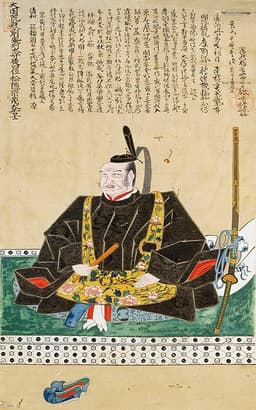
Tachibana Muneshige
General · Modern
45.5Total
Basic Information
Born
1562
1567
Died
1611
1643
Era
Modern
Modern
Nationality
Japan
Japan
Occupation
General
General
Civilization
Eastern
Eastern
Score Comparison
Military (10%)
61.7
40.0
Political (20%)
39.4
36.5
Influence (20%)
61.0
51.8
Legacy (20%)
47.5
42.5
Leadership (15%)
62.0
54.2
Strategy (15%)
57.5
43.3
TOTAL
54.3
45.5
Kato Kiyomasa — Complete Timeline
1592 AD
First Invasion of Korea (Imjin War)War◆ Major
Kato Kiyomasa led a Japanese division in the invasion of Korea, capturing the city of Seoul and advancing into the northeastern provinces. His forces engaged in brutal campaigns against Korean and Ming Chinese troops.
Imjin WarJapanese InvasionKorea
Impact: regionaldestructive
Tiger Hunting in KoreaOther
During the invasion of Korea, Kato Kiyomasa hunted tigers in the Korean mountains, reportedly killing several. This earned him the nickname 'Tiger Hunter' and became a celebrated aspect of his military reputation.
Tiger HuntingLegendKorea
1598 AD
Battle of UlsanWar◆ Major
Kato Kiyomasa defended the Japanese fortress at Ulsan against a siege by Ming Chinese and Korean forces. The siege lasted several months, and Kato's forces held out until reinforcements arrived, forcing the allies to withdraw.
Imjin WarSiegeDefense
Impact: regional
1600 AD
Battle of SekigaharaWar
Kato Kiyomasa fought on the Eastern Army side under Tokugawa Ieyasu at Sekigahara. His forces contributed to the defeat of the Western Army, securing Tokugawa's dominance and Kato's position as a major daimyo.
SekigaharaBattleTokugawa
Impact: nationalconstructive
Tachibana Muneshige — Complete Timeline
1581 AD
Marriage to Tachibana GinchiyoPolitical Action◆ Major
Tachibana Muneshige married Ginchiyo, the female head of the Tachibana clan, thereby becoming the de facto leader of the clan. This union consolidated the Tachibana domain in Kyushu and allowed Muneshige to command its samurai forces.
MarriageClan LeadershipKyushu
Impact: regional
1600 AD
Battle of SekigaharaWar◆ Major
Muneshige fought for the Western Army under Ishida Mitsunari at Sekigahara. His forces were defeated by the Eastern Army of Tokugawa Ieyasu. After the battle, Muneshige's domain was reduced, and he was later transferred to a smaller fief.
SekigaharaWestern ArmyDefeat
Impact: nationaldestructive
Siege of YanagawaWar
After Sekigahara, Muneshige defended Yanagawa Castle in Kyushu against the forces of Kato Kiyomasa and Kuroda Nagamasa. He surrendered after a brief siege, leading to the confiscation of his domain by Tokugawa Ieyasu.
SiegeSurrenderDomain Loss
Impact: regionaldestructive
1601 AD
Service under Tokugawa IeyasuPolitical Action
Following his defeat, Muneshige was pardoned by Tokugawa Ieyasu and granted a smaller fief in Dewa Province. He later served the Tokugawa shogunate as a hatamoto, participating in campaigns such as the Siege of Osaka.
TokugawaServiceHatamoto
Impact: national
Expert Analysis
Origins
Kato Kiyomasa (1562–1611) was born into a samurai family in Owari Province. His father, Kato Kiyoharu, died when Kiyomasa was young, and he was raised by his mother and later served under Toyotomi Hideyoshi. Kiyomasa's early years were marked by rigorous training in martial arts and a deep loyalty to Hideyoshi. Tachibana Muneshige (1567–1643) was born in Bungo Province to a samurai family. He married Tachibana Ginchiyo, the female head of the Tachibana clan, and took her surname. This marriage elevated his status and gave him control of the Tachibana domain. Unlike Kiyomasa, Muneshige's rise was largely through marriage and political maneuvering rather than personal military achievement.
Rise to Power
Kato Kiyomasa rose through the ranks under Toyotomi Hideyoshi, distinguishing himself in the Battle of Shizugatake (1583) and the Kyushu Campaign (1587). His key turning point came during the Imjin War (1592–1598) when he led a division into Korea, capturing Seoul and advancing into northeastern provinces. His forces were known for their brutality and efficiency. Kiyomasa's reputation as a fierce warrior was cemented by his tiger hunts, which earned him the nickname "Tiger Hunter." Tachibana Muneshige's rise was more gradual. After marrying Ginchiyo in 1582, he became the de facto leader of the Tachibana clan. He fought in the Kyushu Campaign and later supported the Western Army at Sekigahara (1600). His decision to join the losing side limited his power, but his marriage gave him a legacy that outlasted his military failures.
Leadership & Governance
Kato Kiyomasa was a strict and efficient administrator. He governed his domain of Kumamoto with a focus on infrastructure, building roads and castles, and promoting agriculture. His leadership style was authoritarian, demanding absolute loyalty. Militarily, he was aggressive and direct, as seen in his defense of Ulsan (1598) against a prolonged siege by Ming and Korean forces. Tachibana Muneshige was more diplomatic. After his defeat at Sekigahara and surrender at Yanagawa Castle, he was pardoned by Tokugawa Ieyasu and given a smaller fief in Dewa Province. He served the shogunate loyally, focusing on administration rather than military expansion. His leadership style was adaptive, prioritizing survival over glory.
Triumph & Tragedy
Kato Kiyomasa's greatest triumph was his successful military campaigns in Korea and his role in the Battle of Sekigahara, where he fought for the victorious Eastern Army. His defense of Ulsan showcased his tactical skill. However, his brutality in Korea and his rivalry with Konishi Yukinaga created long-term enmity. After Hideyoshi's death, Kiyomasa's political influence waned, and he died under mysterious circumstances, possibly poisoned. Tachibana Muneshige's triumph was his survival after Sekigahara and his ability to rebuild his clan. He served the Tokugawa effectively, but his greatest failure was choosing the losing side at Sekigahara, which reduced his domain from 130,000 to 10,000 koku. His military score of 40.0 reflects his limited success on the battlefield.
Character & Destiny
Kato Kiyomasa was ambitious, ruthless, and fiercely loyal. His character drove him to seek glory through conquest, but his lack of political finesse limited his rise. He was a devout follower of the Nichiren sect, which influenced his intolerance for Christianity. His fate was tied to Hideyoshi's legacy, and he struggled after Hideyoshi's death. Tachibana Muneshige was pragmatic and cautious. His marriage to Ginchiyo gave him a name but also tied him to her clan's fate. He accepted his reduced status after Sekigahara and focused on stability. Historians note his adaptability but criticize his strategic indecisiveness.
Legacy
Kato Kiyomasa is remembered as a legendary warrior, the "Tiger Hunter," and a symbol of samurai ferocity. His castle in Kumamoto remains a cultural landmark. His legacy score of 47.5 reflects his enduring reputation, though his political impact was limited. Tachibana Muneshige is remembered primarily through his marriage to Ginchiyo, who is celebrated as a female samurai. His legacy is intertwined with hers, and he is often seen as a supporting figure. His legacy score of 42.5 shows that while he preserved the Tachibana name, his individual impact was less.
Conclusion
Kato Kiyomasa had a greater impact on Japanese history than Tachibana Muneshige. With a total score of 54.3 versus Muneshige's 45.5, Kiyomasa's military achievements, his role in the Imjin War and Sekigahara, and his lasting reputation as a fierce warrior outweigh Muneshige's primarily political survival. While Muneshige's marriage to Ginchiyo is notable, Kiyomasa's direct influence on events and his enduring fame make him the more significant figure.
Rankings
🥇
Kato KiyomasaLeader
Mil: 61.7Pol: 39.4Inf: 61.0
54.3
🥈
Tachibana Muneshige
Mil: 40.0Pol: 36.5Inf: 51.8
45.5
+8.8 behind
How This Comparison Works
Algorithm
Each figure is scored on 6 dimensions (0—100 scale) based on structured historical data: Military (10%), Political (20%), Influence (20%), Legacy (20%), Leadership (15%), Strategy (15%). The weighted total produces the final ranking.
Data Sources
Scores are computed from structured sub-indicators in the database. Scale factors adjust for era (Ancient ×0.85, Modern ×1.0) and civilization size (Eastern ×1.05, Other ×0.80) to account for differences in population and military scale.
Maximum 3 Figures
Comparisons are limited to 2—3 figures to ensure readability and statistical meaningfulness.
Error Margins
±5 points per dimension — Sub-scores are derived from historical records with inherent uncertainty. Two figures within 5 points on a dimension should be considered roughly equivalent in that area.
Total Score Accuracy
±3 points overall — The weighted combination of 6 dimensions produces a total score with approximately ±3 points of uncertainty. Differences of less than 3 points are not statistically significant— the figures are effectively tied.
Known Limitations
- Historical records are incomplete and uneven across civilizations
- Figures from oral-tradition societies may be underrepresented
- Occupation labels can misclassify multi-role figures
- Scores measure capability and impact, not moral character
- Quantitative scoring is a comparison tool, not absolute truth
Capability Radar
Military (10%) — Battles & Warfare
Battles
70
35
Win Rate
65
40
Expansion
60
25
Political (20%) — Governance & Reform
Reform
20
15
Diplomacy
25
30
Economy
30
20
Influence (20%) — Cultural & Global Reach
Cultural
40
30
Global
35
10
Legacy (20%) — Historical Impact
Historical
45
25
Longevity
30
20
Leadership (15%) — Power & Stability
Tenure
45
30
Stability
40
25
Strategy (15%) — Tactics & Innovation
Strategy
55
40
Tactics
60
45
Reform
30
20
Similar Comparisons
Comments & Discussion
No comments yet. Be the first to share your thoughts!