Loading...
Ariel Sharon vs Tachibana Muneshige
Ariel Sharon leads by 12.8 pts · 2 figures compared
…

Ariel Sharon
General · Modern
58.3Total
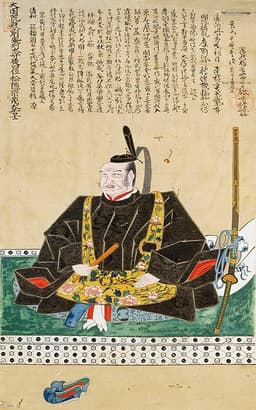
Tachibana Muneshige
General · Modern
45.5Total
Basic Information
Born
1928
1567
Died
—
1643
Era
Modern
Modern
Nationality
Israel
Japan
Occupation
General
General
Civilization
Middle Eastern
Eastern
Score Comparison
Military (10%)
67.3
40.0
Political (20%)
45.0
36.5
Influence (20%)
56.7
51.8
Legacy (20%)
54.0
42.5
Leadership (15%)
68.0
54.2
Strategy (15%)
69.1
43.3
TOTAL
58.3
45.5
Ariel Sharon — Complete Timeline
1982 AD
Command of the 1982 Lebanon WarWar◆ Major
As Minister of Defense, Sharon directed the Israeli invasion of Lebanon to expel the PLO. The war led to the Sabra and Shatila massacre, for which an Israeli commission found Sharon indirectly responsible, forcing his resignation as defense minister.
Lebanon WarSabra and ShatilaMilitary Campaign
Impact: regionaldestructive
2001 AD
Election as Prime MinisterPolitical Action◆ Major
Sharon was elected prime minister of Israel in a special election, defeating Ehud Barak. His victory came during the Second Intifada, and he adopted a hardline security policy, including military operations in Palestinian areas.
ElectionSecond IntifadaSecurity Policy
Impact: national
2005 AD
Disengagement from GazaPolitical Action◆ Major
Sharon implemented the unilateral disengagement plan, withdrawing all Israeli settlers and military forces from the Gaza Strip and dismantling four settlements in the West Bank. The move was controversial within Israel but internationally supported.
Gaza WithdrawalSettlementsUnilateral Action
Impact: regionalconstructive
Tachibana Muneshige — Complete Timeline
1581 AD
Marriage to Tachibana GinchiyoPolitical Action◆ Major
Tachibana Muneshige married Ginchiyo, the female head of the Tachibana clan, thereby becoming the de facto leader of the clan. This union consolidated the Tachibana domain in Kyushu and allowed Muneshige to command its samurai forces.
MarriageClan LeadershipKyushu
Impact: regional
1600 AD
Battle of SekigaharaWar◆ Major
Muneshige fought for the Western Army under Ishida Mitsunari at Sekigahara. His forces were defeated by the Eastern Army of Tokugawa Ieyasu. After the battle, Muneshige's domain was reduced, and he was later transferred to a smaller fief.
SekigaharaWestern ArmyDefeat
Impact: nationaldestructive
Siege of YanagawaWar
After Sekigahara, Muneshige defended Yanagawa Castle in Kyushu against the forces of Kato Kiyomasa and Kuroda Nagamasa. He surrendered after a brief siege, leading to the confiscation of his domain by Tokugawa Ieyasu.
SiegeSurrenderDomain Loss
Impact: regionaldestructive
1601 AD
Service under Tokugawa IeyasuPolitical Action
Following his defeat, Muneshige was pardoned by Tokugawa Ieyasu and granted a smaller fief in Dewa Province. He later served the Tokugawa shogunate as a hatamoto, participating in campaigns such as the Siege of Osaka.
TokugawaServiceHatamoto
Impact: national
Expert Analysis
Origins
Ariel Sharon was born in 1928 in Kfar Malal, British Mandate of Palestine, to a family of Jewish farmers from Belarus. His early life involved working on the family farm and joining the Haganah, the Jewish paramilitary organization, at age 14. He attended the Hebrew University of Jerusalem but did not complete a degree. Sharon's military education came through the British Army's officer training and later the Israeli Defense Forces (IDF) command courses.
Tachibana Muneshige was born in 1567 in Kyushu, Japan, as the son of Takahashi Shigetane, a retainer of the Otomo clan. He was adopted into the Tachibana clan after marrying Ginchiyo, the female head of the clan, in 1575. Muneshige's upbringing was steeped in samurai traditions, with training in martial arts, strategy, and governance. His marriage was a political arrangement to consolidate power in the Otomo domain.
Rise to Power
Sharon rose through the ranks of the IDF, commanding the elite Unit 101 in the 1950s, which conducted reprisal operations against Palestinian fedayeen. He became a hero after the 1967 Six-Day War, leading the 55th Paratroopers Brigade in capturing the Sinai. His political career began in 1973 when he helped found the Likud party. In 1981, he became Minister of Defense under Prime Minister Menachem Begin, a role that gave him control over military operations. His rise was marked by ambition and a reputation for aggressive tactics.
Muneshige's rise came through his marriage and military service. By 1575, he was the de facto leader of the Tachibana clan, commanding a force of about 5,000 soldiers. He fought in the Japanese invasions of Korea (1592-1598) under Toyotomi Hideyoshi, gaining recognition for his bravery. His key turning point was the Battle of Sekigahara in 1600, where he led 2,000 men for the Western Army. Despite defeat, his survival and later service to Tokugawa Ieyasu allowed him to retain a samurai status.
Leadership & Governance
Sharon's leadership style was decisive and often unilateral. As Prime Minister (2001-2006), he faced the Second Intifada and authorized the construction of the West Bank barrier. His most notable governance act was the 2005 Disengagement from Gaza, ordering the evacuation of 8,000 settlers from 21 settlements. This move was controversial within his own Likud party, leading to his departure and formation of Kadima. Sharon's military score of 67.3 reflects his strategic acumen, but his political score of 45.0 indicates the divisiveness of his policies.
Muneshige governed as a daimyo, managing his fief's economy and military. After his defeat at Sekigahara, he was stripped of his domain but later given a 10,000-koku fief in Dewa Province. He focused on rebuilding his clan's fortune and served the Tokugawa shogunate as a hatamoto (bannerman). His leadership score of 54.2 suggests competent but not exceptional governance, constrained by the Tokugawa peace. His military score of 40.0 reflects his limited impact in a period of consolidation.
Triumph & Tragedy
Sharon's greatest triumph was the Disengagement from Gaza, which reduced Israeli military commitments and international criticism. However, his tragedy was the 1982 Lebanon War, where his decision to allow Phalangist militias into Sabra and Shatila led to a massacre of Palestinian civilians. An Israeli commission found him indirectly responsible, forcing his resignation as Defense Minister. This event tarnished his legacy, with his legacy score of 54.0 reflecting a mix of achievements and controversy.
Muneshige's triumph was surviving Sekigahara and securing a position under the Tokugawa, preserving his clan. His tragedy was the loss of his original domain and the reduction of his status. He died in 1643, having lived through the transition from warring states to peace. His influence score of 51.8 owes to his marriage to Ginchiyo, a famous female samurai, but his individual accomplishments were modest.
Character & Destiny
Sharon was known as 'The Bulldozer' for his aggressive determination. He often bypassed protocols, leading to both successes and failures. His character shaped his destiny: his boldness led to the Gaza disengagement but also to the Lebanon disaster. Historians note his pragmatism, as he shifted from hardline to centrist policies. His overall score of 58.3 places him as a significant but polarizing figure.
Muneshige was a loyal retainer, first to the Otomo, then to the Western Army, and finally to the Tokugawa. His adaptability allowed him to survive, but his lack of independent ambition limited his historical impact. His total score of 45.5 reflects a competent but unremarkable career. His destiny was tied to the rise of the Tokugawa shogunate, which ended the era of warlords.
Legacy
Sharon's legacy includes the Gaza disengagement, which set a precedent for unilateral withdrawal, and the West Bank barrier, which remains a symbol of conflict. He is remembered as a transformative figure in Israeli politics, though his military tactics remain controversial. His influence score of 56.7 indicates a lasting impact on Israeli strategy.
Muneshige's legacy is primarily through his wife, Tachibana Ginchiyo, who is celebrated as a female samurai. He himself is a footnote in samurai history, remembered for his service at Sekigahara. His legacy score of 42.5 reflects limited lasting influence.
Conclusion
Ariel Sharon had a greater impact than Tachibana Muneshige, as evidenced by his higher scores across all categories except strategy (69.1 vs 43.3). Sharon's decisions affected millions and reshaped the Middle East, while Muneshige's actions were confined to a transitional period in Japanese history. Sharon's total score of 58.3 versus Muneshige's 45.5 reflects a wider historical footprint. While Muneshige's story is culturally interesting, Sharon's leadership and policies have enduring consequences.
Rankings
🥇
Ariel SharonLeader
Mil: 67.3Pol: 45.0Inf: 56.7
58.3
🥈
Tachibana Muneshige
Mil: 40.0Pol: 36.5Inf: 51.8
45.5
+12.8 behind
How This Comparison Works
Algorithm
Each figure is scored on 6 dimensions (0—100 scale) based on structured historical data: Military (10%), Political (20%), Influence (20%), Legacy (20%), Leadership (15%), Strategy (15%). The weighted total produces the final ranking.
Data Sources
Scores are computed from structured sub-indicators in the database. Scale factors adjust for era (Ancient ×0.85, Modern ×1.0) and civilization size (Eastern ×1.05, Other ×0.80) to account for differences in population and military scale.
Maximum 3 Figures
Comparisons are limited to 2—3 figures to ensure readability and statistical meaningfulness.
Error Margins
±5 points per dimension — Sub-scores are derived from historical records with inherent uncertainty. Two figures within 5 points on a dimension should be considered roughly equivalent in that area.
Total Score Accuracy
±3 points overall — The weighted combination of 6 dimensions produces a total score with approximately ±3 points of uncertainty. Differences of less than 3 points are not statistically significant— the figures are effectively tied.
Known Limitations
- Historical records are incomplete and uneven across civilizations
- Figures from oral-tradition societies may be underrepresented
- Occupation labels can misclassify multi-role figures
- Scores measure capability and impact, not moral character
- Quantitative scoring is a comparison tool, not absolute truth
Capability Radar
Military (10%) — Battles & Warfare
Battles
75
35
Win Rate
70
40
Expansion
60
25
Political (20%) — Governance & Reform
Reform
55
15
Diplomacy
50
30
Economy
45
20
Influence (20%) — Cultural & Global Reach
Cultural
55
30
Global
60
10
Legacy (20%) — Historical Impact
Historical
65
25
Longevity
50
20
Leadership (15%) — Power & Stability
Tenure
60
30
Stability
40
25
Strategy (15%) — Tactics & Innovation
Strategy
80
40
Tactics
85
45
Reform
65
20
Similar Comparisons
Comments & Discussion
No comments yet. Be the first to share your thoughts!