Loading...
Kebek vs Vlad II Dracul
Kebek leads by 12.6 pts · 2 figures compared
…
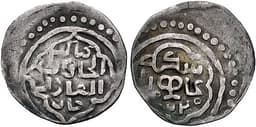
Kebek
Emperor · Medieval
55.3Total
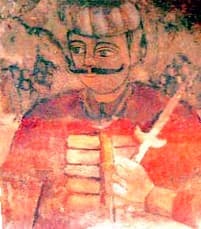
Vlad II Dracul
Emperor · Medieval
42.7Total
Basic Information
Born
1280
1395
Died
1325
1447
Era
Medieval
Medieval
Nationality
Chagatai Khanate
Wallachia
Occupation
Emperor
Emperor
Civilization
Eastern
Western
Score Comparison
Military (10%)
38.3
50.0
Political (20%)
68.0
29.3
Influence (20%)
52.5
51.0
Legacy (20%)
44.2
44.2
Leadership (15%)
74.0
38.1
Strategy (15%)
60.0
38.3
TOTAL
55.3
42.7
Kebek — Complete Timeline
1309 AD
Became Khan of the Chagatai KhanatePolitical Action◆ Major
Kebek became Khan of the Chagatai Khanate in 1309, succeeding his brother Esen Buqa I. His reign focused on administrative and economic reforms, moving the khanate toward greater stability and centralization.
Chagatai KhanateKhanEsen Buqa I
Impact: regional
1310 AD
Reformed Coinage SystemReform◆ Major
Kebek introduced a standardized silver coinage system across the Chagatai Khanate, replacing the diverse local currencies. The coins, known as 'Kebek dirhams,' facilitated trade and tax collection, strengthening the khanate's economy.
CoinageEconomic ReformTrade
Impact: regionalconstructive
1312 AD
Implemented Administrative ReformsReform◆ Major
Kebek reorganized the Chagatai Khanate's administration, dividing it into provinces (tumens) governed by appointed officials. He also established a centralized tax system and a postal relay network, improving governance and communication.
AdministrationTax ReformCentralization
Impact: regionalconstructive
1314 AD
Defeated by the Yuan DynastyWar
Kebek's forces were defeated by the Yuan dynasty in a border conflict in 1314. The loss forced him to pay tribute to the Yuan, acknowledging their supremacy and ending Kebek's expansionist ambitions in the east.
Yuan DynastyDefeatTribute
Impact: regionaldestructive
Vlad II Dracul — Complete Timeline
1436 AD
Accession as Voivode of WallachiaPolitical Action◆ Major
Vlad II Dracul became Voivode of Wallachia after the death of his half-brother Alexander I Aldea. His reign was marked by a precarious balance between the Ottoman Empire and the Kingdom of Hungary.
SuccessionRule
Impact: regional
Alliance with the Ottoman EmpirePolitical Action◆ Major
Vlad II Dracul allied with the Ottoman Sultan Murad II, agreeing to pay tribute and provide military support. This alliance secured his position but made Wallachia a vassal state.
Ottoman AllianceVassalage
Impact: regional
1444 AD
Participation in the Crusade of VarnaWar◆ Major
Vlad II Dracul joined the Christian coalition led by John Hunyadi and King W
CrusadeDefeatVarna
Impact: regionaltragic
1447 AD
AssassinationPolitical Action◆ Major
Vlad II Dracul was assassinated on the orders of John Hunyadi, who suspected him of treachery. His death led to a power struggle in Wallachia and the eventual rise of his son Vlad the Impaler.
AssassinationPower Struggle
Impact: regionaltragic
Expert Analysis
Origins
Kebek was born around 1280 into the ruling house of the Chagatai Khanate, a Mongol successor state in Central Asia. His father was Duwa Khan, who expanded the khanate's territory. Kebek's early life was shaped by the nomadic traditions of the Mongols and the administrative challenges of ruling a diverse empire. He likely received education in Mongol customs and governance, preparing him for future leadership.
Vlad II Dracul was born around 1390 in Wallachia, a principality between Hungary and the Ottoman Empire. He was the son of Mircea the Elder, a respected voivode. Vlad II's early life was marked by the political instability of Wallachia, often caught between Hungarian and Ottoman influences. He spent time as a hostage at the Ottoman court, where he learned their language and military tactics.
Rise to Power
Kebek became Khan of the Chagatai Khanate in 1309 after the death of his brother Esen Buqa I. His rise was smooth due to his family's established dominance. He quickly focused on internal consolidation, aiming to strengthen the khanate's economy and administration. His key turning point was his decision to reform the coinage system, which would define his reign.
Vlad II Dracul ascended as Voivode of Wallachia in 1436 after the death of his half-brother Alexander I Aldea. His rise was contested, and he secured power through an alliance with the Ottoman Sultan Murad II. He agreed to pay tribute and provide military support, which allowed him to rule but made him a vassal. His participation in the Crusade of Varna in 1444, however, strained his relationship with the Ottomans.
Leadership & Governance
Kebek's leadership was administrative and reform-oriented. He introduced a standardized silver coinage, known as 'Kebek coins', which facilitated trade and tax collection across the khanate. He also reorganized the administration into provinces (tumens) with appointed officials, centralizing power. His governance scored 74.0 in leadership, reflecting his effective reforms.
Vlad II Dracul's leadership was precarious and reactive. He balanced between the Ottoman Empire and the Kingdom of Hungary, often shifting alliances to survive. His political score of 29.3 indicates his struggle to maintain autonomy. He failed to establish stable institutions, as Wallachia remained a battleground for larger powers.
Triumph & Tragedy
Kebek's greatest success was his coinage reform, which standardized the economy and left a lasting legacy in numismatics. His administrative reforms also improved governance. However, his military defeat by the Yuan dynasty in 1314 forced him to pay tribute, undermining his authority. His total score of 55.3 reflects moderate overall impact.
Vlad II Dracul's success was securing the throne and fathering Vlad the Impaler, who would become infamous. His participation in the Crusade of Varna showed his commitment to Christianity. However, his alliance with the Ottomans alienated him from Hungarian allies, leading to his assassination on the orders of John Hunyadi in 1447. His political score of 29.3 and military score of 50.0 highlight his failures in governance and strategy.
Character & Destiny
Kebek was pragmatic and focused on internal development. His character was that of a reformer, not a warrior. He chose to strengthen the state through economic and administrative means, which suited the needs of the Chagatai Khanate. His destiny was limited by external pressures, but his reforms endured.
Vlad II Dracul was cunning and adaptable, but his duplicity led to distrust. He made strategic alliances but failed to commit fully to any side. His character, marked by survival instincts, ultimately led to his downfall. Historical assessments view him as a weak ruler who was outmaneuvered by stronger powers.
Legacy
Kebek's legacy is primarily economic: his coinage system influenced later Mongolian and Central Asian currencies. The 'Kebek coins' are still studied by historians. His administrative reforms set a precedent for centralized governance in the Chagatai Khanate, although his dynasty soon declined. His influence score of 52.5 reflects his moderate but lasting impact.
Vlad II Dracul's legacy is overshadowed by his son, Vlad the Impaler. He is remembered as a voivode who struggled to maintain Wallachia's independence. His political maneuvering contributed to the region's instability. His legacy score of 44.2 is similar to Kebek's, but his impact is more negative, as his failures led to internal strife.
Conclusion
Kebek had a greater impact than Vlad II Dracul, as evidenced by his higher total score of 55.3 versus 42.7. Kebek's reforms in coinage and administration had lasting economic and political effects in Central Asia, while Vlad II's reign was a series of failed alliances that weakened Wallachia. Although both were medieval rulers, Kebek's constructive policies contrast sharply with Vlad II's destructive balancing act. Kebek's legacy of standardized currency and provincial governance outlasted his reign, whereas Vlad II's legacy is tied to his son's infamy. Thus, Kebek emerges as the more effective and influential leader.
Rankings
🥇
KebekLeader
Mil: 38.3Pol: 68.0Inf: 52.5
55.3
🥈
Vlad II Dracul
Mil: 50.0Pol: 29.3Inf: 51.0
42.7
+12.6 behind
How This Comparison Works
Algorithm
Each figure is scored on 6 dimensions (0—100 scale) based on structured historical data: Military (10%), Political (20%), Influence (20%), Legacy (20%), Leadership (15%), Strategy (15%). The weighted total produces the final ranking.
Data Sources
Scores are computed from structured sub-indicators in the database. Scale factors adjust for era (Ancient ×0.85, Modern ×1.0) and civilization size (Eastern ×1.05, Other ×0.80) to account for differences in population and military scale.
Maximum 3 Figures
Comparisons are limited to 2—3 figures to ensure readability and statistical meaningfulness.
Error Margins
±5 points per dimension — Sub-scores are derived from historical records with inherent uncertainty. Two figures within 5 points on a dimension should be considered roughly equivalent in that area.
Total Score Accuracy
±3 points overall — The weighted combination of 6 dimensions produces a total score with approximately ±3 points of uncertainty. Differences of less than 3 points are not statistically significant— the figures are effectively tied.
Known Limitations
- Historical records are incomplete and uneven across civilizations
- Figures from oral-tradition societies may be underrepresented
- Occupation labels can misclassify multi-role figures
- Scores measure capability and impact, not moral character
- Quantitative scoring is a comparison tool, not absolute truth
Capability Radar
Military (10%) — Battles & Warfare
Battles
30
20
Win Rate
35
25
Expansion
35
15
Political (20%) — Governance & Reform
Reform
65
15
Diplomacy
50
35
Economy
60
20
Influence (20%) — Cultural & Global Reach
Cultural
30
20
Global
25
15
Legacy (20%) — Historical Impact
Historical
35
35
Longevity
30
30
Leadership (15%) — Power & Stability
Tenure
50
30
Stability
55
15
Strategy (15%) — Tactics & Innovation
Strategy
40
25
Tactics
40
30
Reform
45
10
Similar Comparisons
Comments & Discussion
No comments yet. Be the first to share your thoughts!