Loading...
Robert II the Pious vs Vlad II Dracul
Robert II the Pious leads by 2.2 pts · 2 figures compared
…
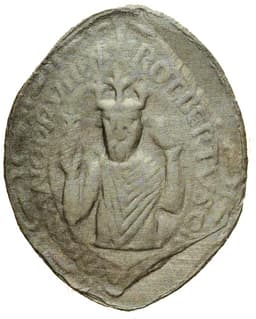
Robert II the Pious
Emperor · Medieval
44.9Total
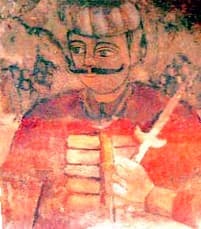
Vlad II Dracul
Emperor · Medieval
42.7Total
Basic Information
Born
972
1395
Died
1031
1447
Era
Medieval
Medieval
Nationality
France
Wallachia
Occupation
Emperor
Emperor
Civilization
Western
Western
Score Comparison
Military (10%)
20.0
50.0
Political (20%)
37.9
29.3
Influence (20%)
50.2
51.0
Legacy (20%)
41.7
44.2
Leadership (15%)
65.0
38.1
Strategy (15%)
45.0
38.3
TOTAL
44.9
42.7
Robert II the Pious — Complete Timeline
996 AD
Reign as King of the FranksPolitical Action◆ Major
Robert II succeeded his father Hugh Capet as King of the Franks. His reign was marked by efforts to consolidate royal power, but he faced challenges from powerful nobles and the Church, limiting his authority.
KingshipCapetianReign
Impact: national
998 AD
Excommunication for Marriage to Bertha of BurgundyPolitical Action◆ Major
Robert II was excommunicated by Pope Gregory V for marrying Bertha of Burgundy, his cousin, without papal dispensation. The excommunication was lifted after Robert repudiated Bertha, but it damaged his reputation and strained relations with the Church.
ExcommunicationMarriageChurch Conflict
Impact: nationaltragic
1000 AD
Patronage of the Cluniac ReformsCultural
Robert II supported the Cluniac monastic reforms, which aimed to purify the Church and reduce secular influence. His patronage strengthened the Cluniac movement and enhanced the Church's moral authority in France.
Church ReformClunyPatronage
Impact: regionalconstructive
1002 AD
Conflict with the Duchy of BurgundyWar
Robert II attempted to assert control over the Duchy of Burgundy after the death of Duke Henry I. The conflict lasted several years and resulted in limited success, as Burgundy remained largely independent under its own dukes.
WarBurgundyTerritorial Conflict
Impact: regional
Vlad II Dracul — Complete Timeline
1436 AD
Accession as Voivode of WallachiaPolitical Action◆ Major
Vlad II Dracul became Voivode of Wallachia after the death of his half-brother Alexander I Aldea. His reign was marked by a precarious balance between the Ottoman Empire and the Kingdom of Hungary.
SuccessionRule
Impact: regional
Alliance with the Ottoman EmpirePolitical Action◆ Major
Vlad II Dracul allied with the Ottoman Sultan Murad II, agreeing to pay tribute and provide military support. This alliance secured his position but made Wallachia a vassal state.
Ottoman AllianceVassalage
Impact: regional
1444 AD
Participation in the Crusade of VarnaWar◆ Major
Vlad II Dracul joined the Christian coalition led by John Hunyadi and King W
CrusadeDefeatVarna
Impact: regionaltragic
1447 AD
AssassinationPolitical Action◆ Major
Vlad II Dracul was assassinated on the orders of John Hunyadi, who suspected him of treachery. His death led to a power struggle in Wallachia and the eventual rise of his son Vlad the Impaler.
AssassinationPower Struggle
Impact: regionaltragic
Expert Analysis
Origins
Robert II the Pious (born 972) was the son of Hugh Capet, founder of the Capetian dynasty. His mother, Adelaide of Aquitaine, provided connections to powerful southern nobles. Educated at the Abbey of Saint-Denis, Robert was steeped in religious learning, which shaped his later piety. In contrast, Vlad II Dracul (born c. 1395) was a member of the House of Basarab, the ruling family of Wallachia. His father, Mircea the Elder, was a strong ruler, but Vlad II grew up amidst political turmoil and Ottoman pressure. He was sent as a hostage to the Ottoman court, where he learned diplomacy and military tactics.
Rise to Power
Robert II was crowned co-king in 987 alongside his father and became sole king upon Hugh's death in 996. His rise was smooth due to the Capetian principle of hereditary succession. However, his marriage to Bertha of Burgundy (his cousin) without papal approval led to excommunication by Pope Gregory V in 998. The excommunication was lifted only after Robert repudiated Bertha. Vlad II Dracul seized power in 1436 after the death of his half-brother Alexander I Aldea. His accession was contested, requiring him to balance between the Ottoman Empire and the Kingdom of Hungary. He initially allied with the Ottomans, paying tribute and providing military support, which secured his throne but made him a vassal.
Leadership & Governance
Robert II's leadership was characterized by piety and support for the Cluniac reforms, which aimed to reduce secular influence in the Church. He promoted monasticism and built churches, but his political power was limited. He attempted to assert control over the Duchy of Burgundy after Duke Henry I's death in 1002, but the conflict lasted until 1016 and resulted in little gain. His governance score of 65.0 reflects his moral authority but weak central control. Vlad II Dracul ruled Wallachia through pragmatism. He allied with the Ottoman Sultan Murad II in 1436, paying tribute and sending his sons (including Vlad the Impaler) as hostages. This alliance kept his throne stable. He also joined the Christian coalition in the Crusade of Varna in 1444, but his participation was hesitant and he switched sides when the Ottomans threatened. His leadership score of 38.1 indicates his reliance on shifting allegiances rather than strong governance.
Triumph & Tragedy
Robert II's greatest triumph was his role in strengthening the Capetian dynasty through piety and church support, which laid the foundation for future kings. His patronage of Cluniac reforms increased the Church's independence and moral authority. However, his greatest failure was the Burgundian conflict, which drained resources and yielded no territory. He also failed to produce a male heir with his first three wives; his son Henry I succeeded him only after Robert's death. Vlad II Dracul's triumph was securing Wallachian autonomy through a delicate balance of power. By paying tribute to the Ottomans, he avoided invasion for several years. His tragedy was his assassination in 1447 on the orders of John Hunyadi, who suspected him of treachery. His death plunged Wallachia into chaos and led to the rise of his son Vlad the Impaler.
Character & Destiny
Robert II was deeply religious, earning the epithet "the Pious." His excommunication for marrying his cousin showed a willingness to defy the Church for personal desire, but he later submitted. His character was cautious and devout, which limited his political ambition. His total score of 44.9 reflects a balanced but unspectacular reign. Vlad II Dracul was pragmatic and opportunistic, often switching sides to survive. His nickname "Dracul" (meaning "dragon" or "devil") came from his membership in the Order of the Dragon, a chivalric order. His character was shaped by hostage experiences, making him distrustful and calculating. His total score of 42.7 shows comparable but slightly lower overall impact.
Legacy
Robert II's legacy is mixed. He is remembered as a pious king who supported church reform, but his political achievements were modest. The Capetian dynasty continued, but his reign did not significantly expand royal power. He scored 41.7 in legacy. Vlad II Dracul's legacy is overshadowed by his son, but his balancing act between powers set a precedent for Wallachian rulers. His alliance with the Ottomans and participation in the Crusade of Varna are key historical events. He scored 44.2 in legacy, slightly higher than Robert.
Conclusion
While Robert II the Pious holds a higher total score (44.9 vs 42.7), Vlad II Dracul's influence on the geopolitics of Eastern Europe was more consequential. Robert's piety strengthened the Church but did not alter the course of French history. Vlad II's decisions directly shaped the Ottoman-Wallachian relationship and enabled the rise of his infamous son. Therefore, Vlad II Dracul had a greater impact on historical events, despite his lower score. The score gap of 2.2 points is narrow, but Vlad II's legacy in the context of Ottoman expansion and Romanian history is more significant.
Rankings
🥇
Robert II the PiousLeader
Mil: 20.0Pol: 37.9Inf: 50.2
44.9
🥈
Vlad II Dracul
Mil: 50.0Pol: 29.3Inf: 51.0
42.7
+2.2 behind
How This Comparison Works
Algorithm
Each figure is scored on 6 dimensions (0—100 scale) based on structured historical data: Military (10%), Political (20%), Influence (20%), Legacy (20%), Leadership (15%), Strategy (15%). The weighted total produces the final ranking.
Data Sources
Scores are computed from structured sub-indicators in the database. Scale factors adjust for era (Ancient ×0.85, Modern ×1.0) and civilization size (Eastern ×1.05, Other ×0.80) to account for differences in population and military scale.
Maximum 3 Figures
Comparisons are limited to 2—3 figures to ensure readability and statistical meaningfulness.
Error Margins
±5 points per dimension — Sub-scores are derived from historical records with inherent uncertainty. Two figures within 5 points on a dimension should be considered roughly equivalent in that area.
Total Score Accuracy
±3 points overall — The weighted combination of 6 dimensions produces a total score with approximately ±3 points of uncertainty. Differences of less than 3 points are not statistically significant— the figures are effectively tied.
Known Limitations
- Historical records are incomplete and uneven across civilizations
- Figures from oral-tradition societies may be underrepresented
- Occupation labels can misclassify multi-role figures
- Scores measure capability and impact, not moral character
- Quantitative scoring is a comparison tool, not absolute truth
Capability Radar
Military (10%) — Battles & Warfare
Battles
5
20
Win Rate
5
25
Expansion
5
15
Political (20%) — Governance & Reform
Reform
40
15
Diplomacy
30
35
Economy
30
20
Influence (20%) — Cultural & Global Reach
Cultural
30
20
Global
10
15
Legacy (20%) — Historical Impact
Historical
30
35
Longevity
20
30
Leadership (15%) — Power & Stability
Tenure
60
30
Stability
40
15
Strategy (15%) — Tactics & Innovation
Strategy
5
25
Tactics
5
30
Reform
5
10
Similar Comparisons
Comments & Discussion
No comments yet. Be the first to share your thoughts!