Loading...
This comparison has not been analyzed yet.
One-time AI generation (~1 minute). Scores and timeline are already available below.
Kenny Anthony vs Yingluck Shinawatra
Kenny Anthony leads by 3.8 pts · 2 figures compared
…

Kenny Anthony
Politician · Modern
52.2Total
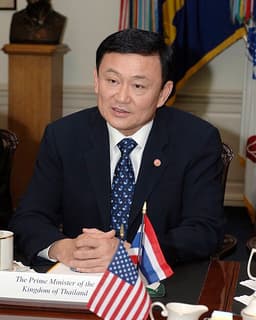
Yingluck Shinawatra
Politician · Modern
48.4Total
Basic Information
Born
1951
1967
Died
—
—
Era
Modern
Modern
Nationality
Saint Lucia
Thailand
Occupation
Politician
Politician
Civilization
Other
Eastern
Score Comparison
Military (10%)
50.0
11.3
Political (20%)
53.8
68.0
Influence (20%)
54.1
53.3
Legacy (20%)
41.7
42.5
Leadership (15%)
72.0
65.7
Strategy (15%)
43.8
33.1
TOTAL
52.2
48.4
Kenny Anthony — Complete Timeline
1990 AD
Published Legal ScholarshipCultural
Before entering politics, Anthony published academic works on Caribbean constitutional law and human rights. His scholarship influenced legal thinking in the region.
LegalScholarshipCaribbean
Impact: regionalconstructive
1997 AD
Elected Prime Minister of Saint LuciaPolitical Action◆ Major
Kenny Anthony led the Saint Lucia Labour Party to victory in the 1997 general election, becoming prime minister. His government focused on education reform and economic diversification.
ElectionSaint LuciaSLP
Impact: nationalconstructive
1998 AD
Implemented Education ReformsReform◆ Major
Anthony introduced free secondary education and expanded access to tertiary education in Saint Lucia. This policy increased literacy rates and educational attainment across the country.
EducationReformSaint Lucia
Impact: nationalprogressive
2006 AD
Lost 2006 General ElectionPolitical Action◆ Major
Anthony's SLP was defeated by the United Workers Party in the 2006 general election, ending his nine-year tenure. He stepped down as party leader but remained active in politics.
ElectionSaint LuciaDefeat
Impact: national
2011 AD
Returned as Prime Minister in 2011Political Action◆ Major
Anthony led the SLP to victory in the 2011 general election, returning as prime minister. His second term focused on economic recovery and infrastructure projects.
ElectionSaint LuciaSLP
Impact: nationalconstructive
Yingluck Shinawatra — Complete Timeline
2011 AD
Rice-pledging scheme implementationReform◆ Major
Yingluck's government launched a rice-pledging program that bought rice from farmers at above-market prices. The scheme initially boosted rural incomes but led to massive budget losses and rice stockpiles, contributing to economic strain.
AgricultureEconomic PolicyThailand
Impact: national
Election as first female Prime MinisterPolitical Action◆ Major
Yingluck Shinawatra led the Pheu Thai Party to victory in the 2011 general election, becoming Thailand's first female Prime Minister. Her campaign focused on reconciliation and populist policies similar to her brother Thaksin's.
ElectionGenderThailand
Impact: nationalconstructive
2014 AD
Constitutional Court removal from officePolitical Action◆ Major
Thailand's Constitutional Court ruled that Yingluck's 2011 transfer of the National Security Council chief was unconstitutional, forcing her to step down as Prime Minister. The decision was seen as politically motivated by her opponents.
LegalPolitical CrisisThailand
Impact: nationaldestructive
2015 AD
Impeachment and ban from politicsPolitical Action◆ Major
The military-appointed National Legislative Assembly impeached Yingluck for negligence in the rice-pledging scheme, banning her from politics for five years. She was later convicted in 2017 for mishandling the program.
ImpeachmentCorruptionThailand
Impact: nationaldestructive
This comparison has not been analyzed yet.
One-time AI generation (~1 minute). Scores and timeline are already available below.
Rankings
🥇
Kenny AnthonyLeader
Mil: 50.0Pol: 53.8Inf: 54.1
52.2
🥈
Yingluck Shinawatra
Mil: 11.3Pol: 68.0Inf: 53.3
48.4
+3.8 behind
How This Comparison Works
Algorithm
Each figure is scored on 6 dimensions (0—100 scale) based on structured historical data: Military (10%), Political (20%), Influence (20%), Legacy (20%), Leadership (15%), Strategy (15%). The weighted total produces the final ranking.
Data Sources
Scores are computed from structured sub-indicators in the database. Scale factors adjust for era (Ancient ×0.85, Modern ×1.0) and civilization size (Eastern ×1.05, Other ×0.80) to account for differences in population and military scale.
Maximum 3 Figures
Comparisons are limited to 2—3 figures to ensure readability and statistical meaningfulness.
Error Margins
±5 points per dimension — Sub-scores are derived from historical records with inherent uncertainty. Two figures within 5 points on a dimension should be considered roughly equivalent in that area.
Total Score Accuracy
±3 points overall — The weighted combination of 6 dimensions produces a total score with approximately ±3 points of uncertainty. Differences of less than 3 points are not statistically significant— the figures are effectively tied.
Known Limitations
- Historical records are incomplete and uneven across civilizations
- Figures from oral-tradition societies may be underrepresented
- Occupation labels can misclassify multi-role figures
- Scores measure capability and impact, not moral character
- Quantitative scoring is a comparison tool, not absolute truth
Capability Radar
Military (10%) — Battles & Warfare
Battles
23
17
Win Rate
26
15
Expansion
29
22
Political (20%) — Governance & Reform
Reform
60
40
Diplomacy
55
50
Economy
60
45
Influence (20%) — Cultural & Global Reach
Cultural
30
30
Global
25
30
Legacy (20%) — Historical Impact
Historical
30
35
Longevity
20
20
Leadership (15%) — Power & Stability
Tenure
65
45
Stability
55
20
Strategy (15%) — Tactics & Innovation
Strategy
31
23
Tactics
33
25
Reform
34
30
Similar Comparisons
Comments & Discussion
No comments yet. Be the first to share your thoughts!