Loading...
This comparison has not been analyzed yet.
One-time AI generation (~1 minute). Scores and timeline are already available below.
Juba II vs Rugila
Rugila leads by 3.8 pts · 2 figures compared
…
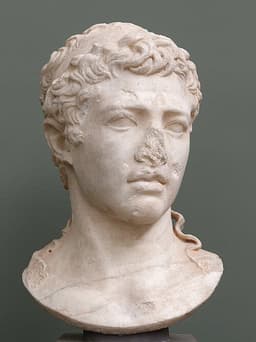
Juba II
Emperor · Ancient
49.9Total
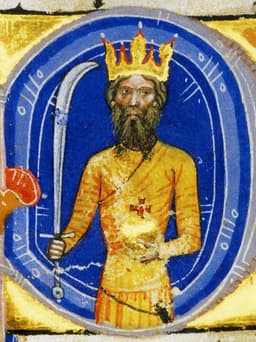
Rugila
Emperor · Ancient
53.7Total
Basic Information
Born
-48
370
Died
23
434
Era
Ancient
Ancient
Nationality
Mauretania
Hunnic Empire
Occupation
Emperor
Emperor
Civilization
Other
Western
Score Comparison
Military (10%)
50.0
52.5
Political (20%)
46.6
61.3
Influence (20%)
52.5
51.0
Legacy (20%)
42.5
44.2
Leadership (15%)
74.0
65.0
Strategy (15%)
30.3
57.5
TOTAL
49.9
53.7
Juba II — Complete Timeline
25 BC
Marriage to Cleopatra Selene IIPolitical Action◆ Major
Juba II married Cleopatra Selene II, daughter of Cleopatra VII and Mark Antony. The marriage was arranged by Augustus to unite the client kingdoms of Mauretania and Numidia under a loyal couple, consolidating Roman influence in North Africa.
Marriage AllianceRoman Client KingdomNorth Africa
Impact: regionalconstructive
Reign as King of MauretaniaPolitical Action◆ Major
Augustus appointed Juba II as king of Mauretania, a Roman client kingdom. Juba ruled for nearly 50 years, promoting Romanization, urban development, and trade. He established the capital at Caesarea (modern Cherchell) and fostered cultural exchange.
KingshipRomanizationUrban Development
Impact: regionalconstructive
20 BC
Publication of Scholarly WorksCultural◆ Major
Juba II wrote numerous scholarly works in Greek on history, geography, natural history, and art. His writings, though mostly lost, were cited by later authors like Pliny the Elder and Plutarch. He was considered one of the most learned kings of antiquity.
ScholarshipGreek LiteratureNatural History
Impact: regionalconstructive
10 BC
Expedition to the Canary IslandsOther
Juba II sent an expedition to the Canary Islands, which he named after the large dogs (canes) found there. He described the islands in his writings, providing one of the earliest known accounts of the archipelago. This expedition expanded geographical knowledge.
ExplorationGeographyCanary Islands
Impact: regionalconstructive
Rugila — Complete Timeline
432 AD
Unification of the HunsPolitical Action
Rugila consolidated various Hun tribes under his sole leadership, creating a unified and powerful confederation. This unification laid the foundation for the Hunnic Empire that would later threaten both the Eastern and Western Roman Empires.
HunsUnificationConfederation
Impact: regionalconstructive
433 AD
Negotiations with RomePolitical Action
Rugila engaged in diplomatic negotiations with the Eastern Roman Empire, demanding the return of Hun defectors and an annual tribute. These talks set a precedent for Hun-Roman relations, combining military threats with diplomatic demands.
HunsEastern Roman EmpireDiplomacyNegotiation
Impact: regional
434 AD
Raid on ThraceWar◆ Major
Rugila led a Hun army into the Roman province of Thrace, demanding increased tribute and the return of Hun refugees. This raid demonstrated Hun military power and forced the Eastern Roman Empire to negotiate under threat of invasion.
HunsEastern Roman EmpireRaidThrace
Impact: regionaldestructive
Death during campaignOther◆ Major
Rugila died suddenly while preparing for a major campaign against the Eastern Roman Empire, reportedly struck by lightning. His death led to the succession of his nephews Bleda and Attila, who inherited his unified Hun forces.
HunsDeathSuccession
Impact: regional
This comparison has not been analyzed yet.
One-time AI generation (~1 minute). Scores and timeline are already available below.
Rankings
🥇
RugilaLeader
Mil: 52.5Pol: 61.3Inf: 51.0
53.7
🥈
Juba II
Mil: 50.0Pol: 46.6Inf: 52.5
49.9
+3.8 behind
How This Comparison Works
Algorithm
Each figure is scored on 6 dimensions (0—100 scale) based on structured historical data: Military (10%), Political (20%), Influence (20%), Legacy (20%), Leadership (15%), Strategy (15%). The weighted total produces the final ranking.
Data Sources
Scores are computed from structured sub-indicators in the database. Scale factors adjust for era (Ancient ×0.85, Modern ×1.0) and civilization size (Eastern ×1.05, Other ×0.80) to account for differences in population and military scale.
Maximum 3 Figures
Comparisons are limited to 2—3 figures to ensure readability and statistical meaningfulness.
Error Margins
±5 points per dimension — Sub-scores are derived from historical records with inherent uncertainty. Two figures within 5 points on a dimension should be considered roughly equivalent in that area.
Total Score Accuracy
±3 points overall — The weighted combination of 6 dimensions produces a total score with approximately ±3 points of uncertainty. Differences of less than 3 points are not statistically significant— the figures are effectively tied.
Known Limitations
- Historical records are incomplete and uneven across civilizations
- Figures from oral-tradition societies may be underrepresented
- Occupation labels can misclassify multi-role figures
- Scores measure capability and impact, not moral character
- Quantitative scoring is a comparison tool, not absolute truth
Capability Radar
Military (10%) — Battles & Warfare
Battles
15
45
Win Rate
10
50
Expansion
10
60
Political (20%) — Governance & Reform
Reform
30
45
Diplomacy
60
50
Economy
40
35
Influence (20%) — Cultural & Global Reach
Cultural
45
30
Global
30
35
Legacy (20%) — Historical Impact
Historical
40
45
Longevity
35
40
Leadership (15%) — Power & Stability
Tenure
55
40
Stability
50
40
Strategy (15%) — Tactics & Innovation
Strategy
15
50
Tactics
20
40
Reform
5
55
Similar Comparisons
Comments & Discussion
No comments yet. Be the first to share your thoughts!