Loading...
This comparison has not been analyzed yet.
One-time AI generation (~1 minute). Scores and timeline are already available below.
King Danjong of Joseon vs William II of Bavaria
William II of Bavaria leads by 5.3 pts · 2 figures compared
…

King Danjong of Joseon
Emperor · Medieval
49.0Total
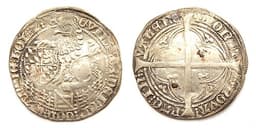
William II of Bavaria
Emperor · Medieval
54.3Total
Basic Information
Born
1441
1365
Died
1457
1417
Era
Medieval
Medieval
Nationality
Korea
Hainaut
Occupation
Emperor
Emperor
Civilization
Eastern
Western
Score Comparison
Military (10%)
49.8
11.1
Political (20%)
68.0
68.0
Influence (20%)
52.5
68.0
Legacy (20%)
35.8
55.0
Leadership (15%)
45.0
55.3
Strategy (15%)
50.0
39.2
TOTAL
49.0
54.3
King Danjong of Joseon — Complete Timeline
1452 AD
Accession to the thronePolitical Action◆ Major
Danjong became king of Joseon at age 12 following the death of his father, King Munjong. His youth made him vulnerable to political manipulation by his uncle, Grand Prince Suyang, who soon seized power.
SuccessionJoseon Dynasty
Impact: national
1453 AD
Deposition by Grand Prince SuyangPolitical Action
Grand Prince Suyang, Danjong's uncle, staged a coup, killing key officials and forcing Danjong to abdicate. Suyang then took the throne as King Sejo, ending Danjong's brief reign.
CoupAbdicationPower Struggle
Impact: nationaldestructive
1457 AD
Execution of DanjongPolitical Action◆ Major
After a failed rebellion by loyalists to restore him, the deposed Danjong was forced to drink poison by order of King Sejo. He died at age 16, becoming a symbol of tragic royal victimhood in Korean history.
ExecutionPolitical ViolenceJoseon Dynasty
Impact: nationaltragic
William II of Bavaria — Complete Timeline
1404 AD
Inherited County of HainautOther◆ Major
William II inherited the County of Hainaut, Holland, and Zeeland upon the death of his father, Albert I. This made him one of the most powerful nobles in the Low Countries, controlling key trade routes.
InheritanceNobilityLow Countries
Impact: regional
1410 AD
Conflict with the Hook FactionOther◆ Major
William II faced a rebellion from the Hook faction, a noble party opposed to his rule in Holland. The conflict involved sieges and battles, weakening his authority and draining resources.
Civil WarRebellionHolland
Impact: regionaldestructive
1417 AD
Died from a Dog BiteOther◆ Major
William II died from complications of a dog bite, which became infected. His death without a male heir led to a succession crisis, triggering the Hook and Cod wars in the Low Countries.
DeathSuccession CrisisLow Countries
Impact: regionaldestructive
This comparison has not been analyzed yet.
One-time AI generation (~1 minute). Scores and timeline are already available below.
Rankings
🥇
William II of BavariaLeader
Mil: 11.1Pol: 68.0Inf: 68.0
54.3
🥈
King Danjong of Joseon
Mil: 49.8Pol: 68.0Inf: 52.5
49.0
+5.3 behind
How This Comparison Works
Algorithm
Each figure is scored on 6 dimensions (0—100 scale) based on structured historical data: Military (10%), Political (20%), Influence (20%), Legacy (20%), Leadership (15%), Strategy (15%). The weighted total produces the final ranking.
Data Sources
Scores are computed from structured sub-indicators in the database. Scale factors adjust for era (Ancient ×0.85, Modern ×1.0) and civilization size (Eastern ×1.05, Other ×0.80) to account for differences in population and military scale.
Maximum 3 Figures
Comparisons are limited to 2—3 figures to ensure readability and statistical meaningfulness.
Error Margins
±5 points per dimension — Sub-scores are derived from historical records with inherent uncertainty. Two figures within 5 points on a dimension should be considered roughly equivalent in that area.
Total Score Accuracy
±3 points overall — The weighted combination of 6 dimensions produces a total score with approximately ±3 points of uncertainty. Differences of less than 3 points are not statistically significant— the figures are effectively tied.
Known Limitations
- Historical records are incomplete and uneven across civilizations
- Figures from oral-tradition societies may be underrepresented
- Occupation labels can misclassify multi-role figures
- Scores measure capability and impact, not moral character
- Quantitative scoring is a comparison tool, not absolute truth
Capability Radar
Military (10%) — Battles & Warfare
Battles
45
8
Win Rate
51
7
Expansion
52
9
Political (20%) — Governance & Reform
Reform
0
0
Diplomacy
0
0
Economy
0
0
Influence (20%) — Cultural & Global Reach
Cultural
5
66
Global
0
77
Legacy (20%) — Historical Impact
Historical
10
69
Longevity
5
75
Leadership (15%) — Power & Stability
Tenure
5
5
Stability
0
5
Strategy (15%) — Tactics & Innovation
Strategy
52
17
Tactics
54
20
Reform
63
22
Similar Comparisons
Comments & Discussion
No comments yet. Be the first to share your thoughts!