Loading...
This comparison has not been analyzed yet.
One-time AI generation (~1 minute). Scores and timeline are already available below.
Deva Raya II vs William II of Bavaria
Deva Raya II leads by 16.4 pts · 2 figures compared
…
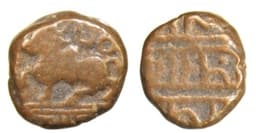
Deva Raya II
Emperor · Medieval
70.7Total
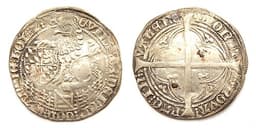
William II of Bavaria
Emperor · Medieval
54.3Total
Basic Information
Born
1422
1365
Died
1446
1417
Era
Medieval
Medieval
Nationality
India
Hainaut
Occupation
Emperor
Emperor
Civilization
Indian
Western
Score Comparison
Military (10%)
82.0
11.1
Political (20%)
72.0
68.0
Influence (20%)
82.0
68.0
Legacy (20%)
52.0
55.0
Leadership (15%)
78.0
55.3
Strategy (15%)
65.4
39.2
TOTAL
70.7
54.3
Deva Raya II — Complete Timeline
1425 AD
Campaigns against the Bahmani SultanateWar◆ Major
Deva Raya II led multiple military expeditions against the Bahmani Sultanate, capturing key fortresses such as Mudgal and Raichur. These victories expanded Vijayanagara's northern frontier and secured control over the Raichur Doab region.
WarExpansionBahmani
Impact: regional
1430 AD
Patronage of Literature and ArtsCultural◆ Major
Deva Raya II became a noted patron of Telugu and Sanskrit literature. Poets such as Srinatha and Chamarasa flourished at his court, producing works like 'Haravilasa' and 'Prabodhachandrodaya'. This period is considered a golden age of Telugu literature.
PatronageLiteratureCulture
Impact: nationalconstructive
1433 AD
Embassy to the Ming DynastyPolitical Action
Deva Raya II sent an embassy to the court of the Ming Emperor Xuande in China. The mission established diplomatic and trade relations, leading to the exchange of gifts and the import of Chinese goods such as porcelain and silk.
DiplomacyTradeChina
Impact: globalconstructive
1435 AD
Construction of the Hazara Rama TempleCultural
Deva Raya II commissioned the Hazara Rama Temple in Vijayanagara, dedicated to Lord Rama. The temple features intricate bas-reliefs depicting scenes from the Ramayana and served as a private shrine for the royal family.
ArchitectureTempleHinduism
constructive
William II of Bavaria — Complete Timeline
1404 AD
Inherited County of HainautOther◆ Major
William II inherited the County of Hainaut, Holland, and Zeeland upon the death of his father, Albert I. This made him one of the most powerful nobles in the Low Countries, controlling key trade routes.
InheritanceNobilityLow Countries
Impact: regional
1410 AD
Conflict with the Hook FactionOther◆ Major
William II faced a rebellion from the Hook faction, a noble party opposed to his rule in Holland. The conflict involved sieges and battles, weakening his authority and draining resources.
Civil WarRebellionHolland
Impact: regionaldestructive
1417 AD
Died from a Dog BiteOther◆ Major
William II died from complications of a dog bite, which became infected. His death without a male heir led to a succession crisis, triggering the Hook and Cod wars in the Low Countries.
DeathSuccession CrisisLow Countries
Impact: regionaldestructive
This comparison has not been analyzed yet.
One-time AI generation (~1 minute). Scores and timeline are already available below.
Rankings
🥇
Deva Raya IILeader
Mil: 82.0Pol: 72.0Inf: 82.0
70.7
🥈
William II of Bavaria
Mil: 11.1Pol: 68.0Inf: 68.0
54.3
+16.4 behind
How This Comparison Works
Algorithm
Each figure is scored on 6 dimensions (0—100 scale) based on structured historical data: Military (10%), Political (20%), Influence (20%), Legacy (20%), Leadership (15%), Strategy (15%). The weighted total produces the final ranking.
Data Sources
Scores are computed from structured sub-indicators in the database. Scale factors adjust for era (Ancient ×0.85, Modern ×1.0) and civilization size (Eastern ×1.05, Other ×0.80) to account for differences in population and military scale.
Maximum 3 Figures
Comparisons are limited to 2—3 figures to ensure readability and statistical meaningfulness.
Error Margins
±5 points per dimension — Sub-scores are derived from historical records with inherent uncertainty. Two figures within 5 points on a dimension should be considered roughly equivalent in that area.
Total Score Accuracy
±3 points overall — The weighted combination of 6 dimensions produces a total score with approximately ±3 points of uncertainty. Differences of less than 3 points are not statistically significant— the figures are effectively tied.
Known Limitations
- Historical records are incomplete and uneven across civilizations
- Figures from oral-tradition societies may be underrepresented
- Occupation labels can misclassify multi-role figures
- Scores measure capability and impact, not moral character
- Quantitative scoring is a comparison tool, not absolute truth
Capability Radar
Military (10%) — Battles & Warfare
Battles
75
8
Win Rate
80
7
Expansion
70
9
Political (20%) — Governance & Reform
Reform
80
0
Diplomacy
75
0
Economy
85
0
Influence (20%) — Cultural & Global Reach
Cultural
75
66
Global
55
77
Legacy (20%) — Historical Impact
Historical
70
69
Longevity
65
75
Leadership (15%) — Power & Stability
Tenure
85
5
Stability
80
5
Strategy (15%) — Tactics & Innovation
Strategy
75
17
Tactics
70
20
Reform
65
22
Similar Comparisons
Comments & Discussion
No comments yet. Be the first to share your thoughts!