Loading...
Pepin the Short vs William II of Bavaria
William II of Bavaria leads by 1.4 pts · 2 figures compared
…
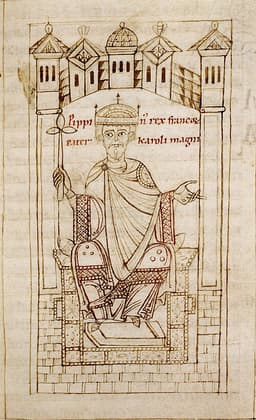
Pepin the Short
Emperor · Medieval
52.9Total
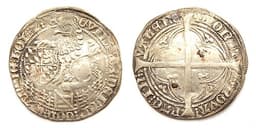
William II of Bavaria
Emperor · Medieval
54.3Total
Basic Information
Born
714
1365
Died
768
1417
Era
Medieval
Medieval
Nationality
Frankish Empire
Hainaut
Occupation
Emperor
Emperor
Civilization
Western
Western
Score Comparison
Military (10%)
70.0
11.1
Political (20%)
53.8
68.0
Influence (20%)
55.0
68.0
Legacy (20%)
40.0
55.0
Leadership (15%)
53.2
55.3
Strategy (15%)
60.7
39.2
TOTAL
52.9
54.3
Pepin the Short — Complete Timeline
751 AD
Anointment as King of the FranksPolitical Action
Pepin deposed the last Merovingian king, Childeric III, with the support of Pope Zachary. He was anointed king by Boniface, establishing the Carolingian dynasty and legitimizing his rule through papal approval.
Carolingian DynastyPapacyAnointment
Impact: regionalconstructive
755 AD
Siege of PaviaWar
Pepin besieged the Lombard capital of Pavia, forcing King Aistulf to surrender and cede territories. This campaign secured Frankish dominance in Italy and fulfilled Pepin's alliance with the papacy.
Lombard WarItalySiege
Impact: regional
756 AD
Donation of PepinPolitical Action◆ Major
Pepin granted the Pope control over territories in central Italy, including Ravenna and the Pentapolis, after defeating the Lombards. This created the Papal States and established the temporal power of the papacy.
Papal StatesLombardsDonation
Impact: regionalconstructive
William II of Bavaria — Complete Timeline
1404 AD
Inherited County of HainautOther◆ Major
William II inherited the County of Hainaut, Holland, and Zeeland upon the death of his father, Albert I. This made him one of the most powerful nobles in the Low Countries, controlling key trade routes.
InheritanceNobilityLow Countries
Impact: regional
1410 AD
Conflict with the Hook FactionOther◆ Major
William II faced a rebellion from the Hook faction, a noble party opposed to his rule in Holland. The conflict involved sieges and battles, weakening his authority and draining resources.
Civil WarRebellionHolland
Impact: regionaldestructive
1417 AD
Died from a Dog BiteOther◆ Major
William II died from complications of a dog bite, which became infected. His death without a male heir led to a succession crisis, triggering the Hook and Cod wars in the Low Countries.
DeathSuccession CrisisLow Countries
Impact: regionaldestructive
Expert Analysis
Origins
Pepin the Short (714-768) was born into the powerful Carolingian family, serving as Mayor of the Palace under the Merovingian kings. His father, Charles Martel, had saved Europe from the Umayyad invasion at Tours in 732. Pepin was raised in the Frankish court, learning military and administrative skills. He was physically short, hence his epithet, but possessed strong ambition and piety.
William II of Bavaria (1365-1417), also known as William II, Duke of Bavaria-Straubing, was born into the House of Wittelsbach. He inherited the County of Hainaut, Holland, and Zeeland from his father, Albert I, in 1404. His early life was marked by the political intrigues of the Low Countries, where noble factions—the Hooks and the Cods—competed for power.
Rise to Power
Pepin's rise came through a decisive alliance with the Papacy. In 751, he sent envoys to Pope Zachary, asking whether the king who held power or the one with the title should rule. The Pope, seeking Frankish support against the Lombards, sanctioned the deposition of the last Merovingian king, Childeric III. Pepin was then anointed king by Boniface, establishing the Carolingian dynasty. This act set a precedent for papal involvement in royal succession.
William II's rise was straightforward: inheritance. He became Count of Hainaut, Holland, and Zeeland in 1404 upon his father's death. Already as a young man, he was involved in the ongoing conflict between the Hook and Cod factions in Holland. The Hooks, a coalition of conservative nobles, opposed the centralizing policies of the Bavarian Wittelsbachs. William's rule was immediately challenged by this faction.
Leadership & Governance
Pepin's governance combined military force with ecclesiastical support. He implemented the "Donation of Pepin" in 756, granting the Pope control over central Italian territories (Ravenna and the Pentapolis) after defeating the Lombards. This created the Papal States and ensured papal backing for Carolingian rule. He also reformed the Frankish church, promoting Benedictine monasticism and strengthening ties with Rome. His leadership style was pragmatic: he used his military score of 70.0 to secure borders, while his political score of 53.8 reflects his reliance on church alliances rather than administrative innovation.
William II ruled over a complex patchwork of counties. His political score of 68.0 indicates adeptness at managing noble factions, but he faced constant rebellion. The Hook faction, led by the van Arkel family, contested his authority. William responded with sieges and military campaigns, but his military score of 11.1 suggests limited effectiveness. His strategy score of 39.2 shows he lacked long-term planning. He failed to secure a male heir, a critical governance failure.
Triumph & Tragedy
Pepin's greatest triumph was founding the Carolingian dynasty and securing its legitimacy through papal anointment. His Donation of Pepin established a political framework that lasted over a millennium. He also expanded Frankish influence into Italy, defeating the Lombards and forcing King Aistulf to surrender Pavia. His tragedy was his early death at 54, leaving his young sons Carloman and Charlemagne to inherit a divided kingdom.
William II's triumph was maintaining his inheritance against the Hook rebellion for over a decade. He managed to keep the counties of Holland and Hainaut under his control. However, his tragedy was his death from a dog bite in 1417. The infection led to his demise without a male heir, triggering the Hook and Cod Wars that devastated the region. His legacy score of 55.0 is overshadowed by this catastrophic succession crisis.
Character & Destiny
Pepin was decisive and pious, willing to depose a king and ally with the Pope. His character shaped his destiny: he chose the path of legitimacy through the Church, which ensured his dynasty's survival. He was also pragmatic, as seen in his division of the kingdom between his sons, a decision that led to later conflicts but was standard Frankish practice.
William II was stubborn and perhaps unlucky. He faced constant opposition but lacked the military skill to crush it decisively. His death from a dog bite—an absurd, random event—underscores the role of chance in history. His personality likely contributed to his failure to produce an heir, as he had a wife but no surviving sons.
Legacy
Pepin's legacy is immense. He founded the Carolingian dynasty, which under Charlemagne would unify much of Western Europe. The Papal States he created lasted until 1870. His anointment set a precedent for divine right and papal authority in coronations. He scored 55.0 in influence and 40.0 in legacy, but his impact is arguably larger than these numbers suggest, as he enabled Charlemagne's achievements.
William II's legacy is primarily negative. His death without an heir led to the Hook and Cod Wars, which weakened the Burgundian Netherlands. The succession crisis eventually brought the territories under Burgundian control. He is remembered as a minor figure, notable mainly for his bizarre death. His total score of 54.3 slightly edges Pepin's 52.9, but this reflects his political maneuvering rather than lasting impact.
Conclusion
Pepin the Short had significantly greater impact on history. While his total score (52.9) is slightly lower than William II's (54.3), this is due to William's higher political and influence scores. However, Pepin's actions—founding a dynasty, creating the Papal States, and securing the Carolingian legacy—shaped the course of Europe for centuries. William II's death from a dog bite had only local consequences. Pepin's influence is foundational, while William's is ephemeral. Thus, Pepin the Short is the more consequential figure.
Rankings
🥇
William II of BavariaLeader
Mil: 11.1Pol: 68.0Inf: 68.0
54.3
🥈
Pepin the Short
Mil: 70.0Pol: 53.8Inf: 55.0
52.9
+1.4 behind
How This Comparison Works
Algorithm
Each figure is scored on 6 dimensions (0—100 scale) based on structured historical data: Military (10%), Political (20%), Influence (20%), Legacy (20%), Leadership (15%), Strategy (15%). The weighted total produces the final ranking.
Data Sources
Scores are computed from structured sub-indicators in the database. Scale factors adjust for era (Ancient ×0.85, Modern ×1.0) and civilization size (Eastern ×1.05, Other ×0.80) to account for differences in population and military scale.
Maximum 3 Figures
Comparisons are limited to 2—3 figures to ensure readability and statistical meaningfulness.
Error Margins
±5 points per dimension — Sub-scores are derived from historical records with inherent uncertainty. Two figures within 5 points on a dimension should be considered roughly equivalent in that area.
Total Score Accuracy
±3 points overall — The weighted combination of 6 dimensions produces a total score with approximately ±3 points of uncertainty. Differences of less than 3 points are not statistically significant— the figures are effectively tied.
Known Limitations
- Historical records are incomplete and uneven across civilizations
- Figures from oral-tradition societies may be underrepresented
- Occupation labels can misclassify multi-role figures
- Scores measure capability and impact, not moral character
- Quantitative scoring is a comparison tool, not absolute truth
Capability Radar
Military (10%) — Battles & Warfare
Battles
55
8
Win Rate
65
7
Expansion
65
9
Political (20%) — Governance & Reform
Reform
70
0
Diplomacy
65
0
Economy
55
0
Influence (20%) — Cultural & Global Reach
Cultural
50
66
Global
60
77
Legacy (20%) — Historical Impact
Historical
75
69
Longevity
70
75
Leadership (15%) — Power & Stability
Tenure
60
5
Stability
60
5
Strategy (15%) — Tactics & Innovation
Strategy
60
17
Tactics
50
20
Reform
70
22
Similar Comparisons
Comments & Discussion
No comments yet. Be the first to share your thoughts!