Loading...
King Fuchai of Wu vs Nebuchadnezzar II
Nebuchadnezzar II leads by 12.2 pts · 2 figures compared
…

King Fuchai of Wu
Emperor · Ancient
51.8Total
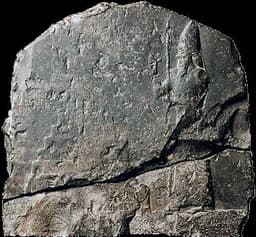
Nebuchadnezzar II
Emperor · Ancient
64.0Total
Basic Information
Born
-528
-634
Died
-473
-562
Era
Ancient
Ancient
Nationality
China
Babylon
Occupation
Emperor
Emperor
Civilization
Eastern
Middle Eastern
Score Comparison
Military (10%)
65.0
78.0
Political (20%)
42.3
72.0
Influence (20%)
51.8
68.0
Legacy (20%)
45.8
40.0
Leadership (15%)
58.8
78.0
Strategy (15%)
57.5
67.2
TOTAL
51.8
64.0
King Fuchai of Wu — Complete Timeline
494 BC
Defeated Yue and Captured GoujianWar◆ Major
King Fuchai of Wu defeated the state of Yue at the Battle of Fujiao. He captured King Goujian of Yue and took him as a hostage, but later released him after Goujian feigned submission, a decision that proved fatal.
VictoryYueGoujian
Impact: regional
491 BC
Spared Goujian's LifePolitical Action
Fuchai, persuaded by his minister Bo Pi and deceived by Goujian's apparent loyalty, released the Yue king. This act of clemency allowed Goujian to return to Yue and secretly rebuild his strength for revenge.
MistakeGoujianRelease
Impact: regionaldestructive
482 BC
Became Hegemon of the Spring and Autumn PeriodPolitical Action◆ Major
Fuchai convened a meeting of feudal lords at Huangchi and was recognized as hegemon. However, while he was away, Yue attacked Wu's capital, weakening Wu and exposing the vulnerability of his overextension.
HegemonYue AttackOverreach
Impact: regional
473 BC
Committed Suicide After Wu's FallOther◆ Major
Yue forces under Goujian conquered Wu. Fuchai, surrounded and defeated, committed suicide. His death ended the Wu state, and his earlier decision to spare Goujian was seen as the cause of his downfall.
DeathDefeatYue
Impact: regionaltragic
Nebuchadnezzar II — Complete Timeline
597 BC
Conquest of JudahWar◆ Major
Nebuchadnezzar II first captured Jerusalem in 597 BCE, deposing King Jehoiachin and installing Zedekiah as a vassal. This initial conquest began the Babylonian domination of Judah.
ConquestJudahBabylon
Impact: regional
587 BC
Destruction of the First TempleWar
Nebuchadnezzar II's Babylonian army besieged Jerusalem, destroyed Solomon's Temple, and deported many Jews to Babylon. This event, known as the Babylonian Captivity, reshaped Jewish religious and national identity.
SiegeJerusalemJewish History
Impact: globaldestructive
580 BC
Construction of the Hanging GardensCultural◆ Major
Nebuchadnezzar II is traditionally credited with building the Hanging Gardens of Babylon, one of the Seven Wonders of the Ancient World. The gardens were a terraced structure with exotic plants, though their existence is debated.
ArchitectureWonderBabylon
Impact: globalconstructive
575 BC
Construction of the Ishtar GateCultural◆ Major
Nebuchadnezzar II built the Ishtar Gate, a monumental entrance to Babylon decorated with glazed bricks depicting lions and dragons. The gate symbolized Babylonian power and was part of his extensive building program.
ArchitectureGateBabylon
Impact: regionalconstructive
Expert Analysis
Origins
King Fuchai of Wu (c. 528–473 BCE) was the last king of the state of Wu during the Spring and Autumn period of China. He was the son of King Helü, who had been killed in battle against Yue. Fuchai ascended the throne around 495 BCE, inheriting a powerful but embattled kingdom. Little is known of his early life, but he was trained in military affairs from a young age. Nebuchadnezzar II (c. 642–562 BCE) was the second and greatest king of the Neo-Babylonian Empire, son of Nabopolassar, who had freed Babylon from Assyrian rule. Nebuchadnezzar was likely involved in his father's campaigns before ascending the throne in 605 BCE. He came from a Chaldean dynasty and was educated in Babylonian traditions.
Rise to Power
Fuchai's rise was immediate upon his father's death. He vowed revenge against Yue, and in 494 BCE, he led Wu to a decisive victory at the Battle of Fujiao, capturing King Goujian of Yue. Fuchai then made the fateful decision to spare Goujian's life, influenced by his minister Bo Pi, who had been bribed by Yue. Fuchai then turned his attention northward, convening a meeting of feudal lords at Huangchi in 482 BCE, where he was recognized as hegemon (overlord) of the Chinese states. Nebuchadnezzar II's rise was marked by military success. In 605 BCE, as crown prince, he defeated the Egyptian army at Carchemish, securing Babylonian control over Syria and Palestine. After his father's death, he quickly consolidated power and began a series of campaigns. He besieged Jerusalem in 597 BCE, capturing King Jehoiachin and installing Zedekiah as a vassal. When Zedekiah rebelled, Nebuchadnezzar destroyed Jerusalem and the First Temple in 586 BCE, deporting thousands of Jews to Babylon.
Leadership & Governance
Fuchai's leadership was characterized by aggressive expansion but poor strategic judgment. He focused on military campaigns and personal glory, neglecting internal governance and the threat from Yue. His decision to spare Goujian, though politically motivated, proved disastrous. He also alienated allies like the state of Qi. In contrast, Nebuchadnezzar II was a master of both military and administrative power. He rebuilt Babylon into a magnificent city, constructing the Ishtar Gate and the Hanging Gardens (if historical). He implemented a system of provincial governance, appointed loyal governors, and used deportation as a tool to integrate conquered peoples. His Jewish policy included settling deportees in Babylon, where they maintained their identity, influencing later Jewish history. Nebuchadnezzar's political score of 72.0 versus Fuchai's 42.3 reflects this difference.
Triumph & Tragedy
Fuchai's greatest triumph was his victory over Yue and his recognition as hegemon at Huangchi. However, his tragedy was his inability to capitalize on these successes. While he was away at Huangchi, Yue attacked Wu's capital. Fuchai's subsequent attempts to recover failed, and he was eventually defeated and besieged by Goujian. In 473 BCE, Wu fell, and Fuchai committed suicide. His earlier clemency is often cited as the cause of his downfall. Nebuchadnezzar's triumphs include the conquest of Judah, the destruction of Jerusalem, and the construction of Babylon's wonders. His greatest tragedy might be the loss of his legacy: the Hanging Gardens are now lost, and his empire fell to the Persians in 539 BCE. However, his influence on Jewish history and the Babylonian exile is enduring. Nebuchadnezzar's military score of 78.0 versus Fuchai's 65.0 underscores his greater success.
Character & Destiny
Fuchai was proud and overconfident, traits that led him to underestimate Goujian. He was also susceptible to flattery, as shown by his trust in Bo Pi. His character made him unable to recognize the long-term threat from a seemingly submissive enemy. Nebuchadnezzar was ruthless, ambitious, and methodical. He was also a builder and a patron of religion, as seen in his inscriptions praising Marduk. His character combined military aggression with administrative vision. Historical assessments often depict him as a wise but stern ruler, while Fuchai is remembered as a cautionary tale of hubris.
Legacy
Fuchai's legacy is largely negative in Chinese history. His story is used to illustrate the danger of showing mercy to enemies and the importance of constant vigilance. Wu disappeared after his death, and his achievements were overshadowed by his failure. Nebuchadnezzar II, despite his empire's fall, left a monumental legacy. The Ishtar Gate survives in museums, and the Babylonian exile shaped Judaism and Christianity. His name appears in the Bible and in later literature. Nebuchadnezzar's influence score of 68.0 is higher than Fuchai's 51.8, reflecting his broader impact.
Conclusion
Nebuchadnezzar II had greater impact than King Fuchai of Wu. While Fuchai achieved short-term dominance, his reign ended in disaster and left no lasting institutions. Nebuchadnezzar, with a total score of 64.0 versus Fuchai's 51.8, built a lasting empire, influenced world religions, and created architectural marvels. Fuchai's story is instructive but ultimately provincial, whereas Nebuchadnezzar's actions resonate globally. The data supports this: Nebuchadnezzar scored higher in every category except legacy, where Fuchai's cautionary tale gives him a slight edge. Thus, Nebuchadnezzar II is the more significant historical figure.
Rankings
🥇
Nebuchadnezzar IILeader
Mil: 78.0Pol: 72.0Inf: 68.0
64.0
🥈
King Fuchai of Wu
Mil: 65.0Pol: 42.3Inf: 51.8
51.8
+12.2 behind
How This Comparison Works
Algorithm
Each figure is scored on 6 dimensions (0—100 scale) based on structured historical data: Military (10%), Political (20%), Influence (20%), Legacy (20%), Leadership (15%), Strategy (15%). The weighted total produces the final ranking.
Data Sources
Scores are computed from structured sub-indicators in the database. Scale factors adjust for era (Ancient ×0.85, Modern ×1.0) and civilization size (Eastern ×1.05, Other ×0.80) to account for differences in population and military scale.
Maximum 3 Figures
Comparisons are limited to 2—3 figures to ensure readability and statistical meaningfulness.
Error Margins
±5 points per dimension — Sub-scores are derived from historical records with inherent uncertainty. Two figures within 5 points on a dimension should be considered roughly equivalent in that area.
Total Score Accuracy
±3 points overall — The weighted combination of 6 dimensions produces a total score with approximately ±3 points of uncertainty. Differences of less than 3 points are not statistically significant— the figures are effectively tied.
Known Limitations
- Historical records are incomplete and uneven across civilizations
- Figures from oral-tradition societies may be underrepresented
- Occupation labels can misclassify multi-role figures
- Scores measure capability and impact, not moral character
- Quantitative scoring is a comparison tool, not absolute truth
Capability Radar
Military (10%) — Battles & Warfare
Battles
65
85
Win Rate
60
80
Expansion
60
85
Political (20%) — Governance & Reform
Reform
40
70
Diplomacy
30
75
Economy
45
80
Influence (20%) — Cultural & Global Reach
Cultural
40
85
Global
30
80
Legacy (20%) — Historical Impact
Historical
55
90
Longevity
40
85
Leadership (15%) — Power & Stability
Tenure
55
80
Stability
20
70
Strategy (15%) — Tactics & Innovation
Strategy
50
85
Tactics
55
75
Reform
40
60
Similar Comparisons
Comments & Discussion
No comments yet. Be the first to share your thoughts!