Loading...
Lipit-Ishtar vs Nebuchadnezzar II
Nebuchadnezzar II leads by 11.4 pts · 2 figures compared
…
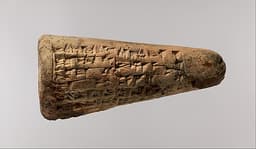
Lipit-Ishtar
Emperor · Ancient
52.6Total
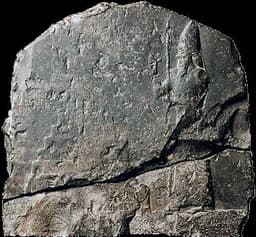
Nebuchadnezzar II
Emperor · Ancient
64.0Total
Basic Information
Born
-1870
-634
Died
-1860
-562
Era
Ancient
Ancient
Nationality
Isin
Babylon
Occupation
Emperor
Emperor
Civilization
Middle Eastern
Middle Eastern
Score Comparison
Military (10%)
25.9
78.0
Political (20%)
68.0
72.0
Influence (20%)
53.3
68.0
Legacy (20%)
46.7
40.0
Leadership (15%)
74.0
78.0
Strategy (15%)
36.8
67.2
TOTAL
52.6
64.0
Lipit-Ishtar — Complete Timeline
1865 BC
Issuance of the Code of Lipit-IshtarReform◆ Major
Lipit-Ishtar issued a law code written in Sumerian, one of the earliest known legal codes. It covered family law, property rights, and commercial transactions. The code aimed to establish justice and order in Isin, influencing later legal traditions including the Code of Hammurabi.
Law CodeSumerian LawLegal History
Impact: regionalconstructive
Nebuchadnezzar II — Complete Timeline
597 BC
Conquest of JudahWar◆ Major
Nebuchadnezzar II first captured Jerusalem in 597 BCE, deposing King Jehoiachin and installing Zedekiah as a vassal. This initial conquest began the Babylonian domination of Judah.
ConquestJudahBabylon
Impact: regional
587 BC
Destruction of the First TempleWar
Nebuchadnezzar II's Babylonian army besieged Jerusalem, destroyed Solomon's Temple, and deported many Jews to Babylon. This event, known as the Babylonian Captivity, reshaped Jewish religious and national identity.
SiegeJerusalemJewish History
Impact: globaldestructive
580 BC
Construction of the Hanging GardensCultural◆ Major
Nebuchadnezzar II is traditionally credited with building the Hanging Gardens of Babylon, one of the Seven Wonders of the Ancient World. The gardens were a terraced structure with exotic plants, though their existence is debated.
ArchitectureWonderBabylon
Impact: globalconstructive
575 BC
Construction of the Ishtar GateCultural◆ Major
Nebuchadnezzar II built the Ishtar Gate, a monumental entrance to Babylon decorated with glazed bricks depicting lions and dragons. The gate symbolized Babylonian power and was part of his extensive building program.
ArchitectureGateBabylon
Impact: regionalconstructive
Expert Analysis
Origins
Lipit-Ishtar (reigned c. 1934–1924 BCE) was the fifth king of the First Dynasty of Isin, a city-state in southern Mesopotamia. Born into a ruling family, his early life is poorly documented. He inherited a kingdom that controlled the ancient cities of Nippur, Ur, and Uruk, but faced pressure from rival dynasties such as Larsa. His background was steeped in Sumerian traditions, which influenced his legal reforms.
Nebuchadnezzar II (reigned 605–562 BCE) was the second king of the Neo-Babylonian Empire, son of Nabopolassar, who had freed Babylon from Assyrian rule. Born around 634 BCE, he was trained as a military commander and led campaigns alongside his father. His early life was shaped by the empire's expansionist ambitions and the desire to restore Babylon to its former glory.
Rise to Power
Lipit-Ishtar ascended to the throne of Isin around 1934 BCE, likely through dynastic succession. His reign is marked by internal consolidation rather than external conquest. He is best known for issuing the Code of Lipit-Ishtar, a legal code written in Sumerian, which predates the more famous Code of Hammurabi by about two centuries. This code covered family law, property rights, and commercial transactions, establishing him as a reformer.
Nebuchadnezzar II rose to power as a military commander under his father, Nabopolassar. He led the Babylonian army to victory against the Egyptians at the Battle of Carchemish in 605 BCE, securing Babylonian dominance in the region. When his father died later that year, Nebuchadnezzar quickly returned to Babylon and assumed the throne without opposition. His military success solidified his authority.
Leadership & Governance
Lipit-Itar's leadership focused on legal and administrative reforms. His code standardized laws across his kingdom, reducing arbitrary judgments. He also engaged in building projects, such as restoring temples in Nippur and Ur, to legitimize his rule. However, his political score of 68.0 reflects limited territorial expansion. His governance was typical of a Mesopotamian city-state ruler, relying on traditional Sumerian institutions.
Nebuchadnezzar II's leadership was characterized by military conquest and monumental construction. He waged campaigns in Syria, Phoenicia, and Judah, crushing rebellions and deporting populations. His political score of 72.0 indicates effective control over a vast empire. He rebuilt Babylon on a grand scale, constructing the Ishtar Gate and the Hanging Gardens (if historical). His strategy score of 67.2 reflects systematic planning in both war and architecture.
Triumph & Tragedy
Lipit-Itar's greatest triumph was the issuance of his law code, which influenced later legal systems. However, his kingdom was not militarily strong; he scored only 25.9 in military. His reign ended with Isin losing territory to Larsa, and his code was eventually overshadowed by Hammurabi's. His legacy score of 46.7 shows moderate enduring impact.
Nebuchadnezzar II's triumphs include the destruction of Jerusalem's First Temple in 587 BCE and the construction of the Ishtar Gate. His military score of 78.0 reflects successful campaigns. However, his legacy score of 40.0 is lower due to the eventual fall of Babylon to the Persians. The Hanging Gardens, if they existed, were not preserved. His harsh treatment of conquered peoples, such as the Babylonian Captivity of the Jews, left a mixed legacy.
Character & Destiny
Lipit-Itar appears as a reformer and traditionalist, prioritizing law and order over conquest. His character shaped a reign of stability but limited ambition. His destiny was to be a footnote in legal history, remembered primarily by scholars.
Nebuchadnezzar II was ambitious, ruthless, and visionary. His character drove him to expand Babylon's power and rebuild its capital. However, his pride and cruelty, as depicted in the biblical Book of Daniel, may have contributed to his empire's eventual decline. His destiny was to be a symbol of both Babylonian glory and tyranny.
Legacy
Lipit-Itar's legacy lies in his law code, which provides insight into early Sumerian jurisprudence. It influenced later codes, but his name is little known outside academic circles. His overall score of 52.6 reflects a modest but distinct contribution to legal history.
Nebuchadnezzar II's legacy is vast: he destroyed the First Temple, an event central to Jewish history, and built wonders that symbolized ancient power. He appears in the Bible as a tool of divine judgment. His overall score of 64.0 reflects significant impact, though his monuments have largely vanished.
Conclusion
Nebuchadnezzar II had greater impact than Lipit-Ishtar. His military conquests, architectural projects, and role in biblical history shaped the ancient Near East more profoundly. Lipit-Ishtar's legal contributions are important but confined to a smaller scope. With a total score of 64.0 against 52.6, Nebuchadnezzar II's influence on history is undeniably greater.
Rankings
🥇
Nebuchadnezzar IILeader
Mil: 78.0Pol: 72.0Inf: 68.0
64.0
🥈
Lipit-Ishtar
Mil: 25.9Pol: 68.0Inf: 53.3
52.6
+11.4 behind
How This Comparison Works
Algorithm
Each figure is scored on 6 dimensions (0—100 scale) based on structured historical data: Military (10%), Political (20%), Influence (20%), Legacy (20%), Leadership (15%), Strategy (15%). The weighted total produces the final ranking.
Data Sources
Scores are computed from structured sub-indicators in the database. Scale factors adjust for era (Ancient ×0.85, Modern ×1.0) and civilization size (Eastern ×1.05, Other ×0.80) to account for differences in population and military scale.
Maximum 3 Figures
Comparisons are limited to 2—3 figures to ensure readability and statistical meaningfulness.
Error Margins
±5 points per dimension — Sub-scores are derived from historical records with inherent uncertainty. Two figures within 5 points on a dimension should be considered roughly equivalent in that area.
Total Score Accuracy
±3 points overall — The weighted combination of 6 dimensions produces a total score with approximately ±3 points of uncertainty. Differences of less than 3 points are not statistically significant— the figures are effectively tied.
Known Limitations
- Historical records are incomplete and uneven across civilizations
- Figures from oral-tradition societies may be underrepresented
- Occupation labels can misclassify multi-role figures
- Scores measure capability and impact, not moral character
- Quantitative scoring is a comparison tool, not absolute truth
Capability Radar
Military (10%) — Battles & Warfare
Battles
10
85
Win Rate
10
80
Expansion
10
85
Political (20%) — Governance & Reform
Reform
60
70
Diplomacy
40
75
Economy
40
80
Influence (20%) — Cultural & Global Reach
Cultural
50
85
Global
30
80
Legacy (20%) — Historical Impact
Historical
50
90
Longevity
40
85
Leadership (15%) — Power & Stability
Tenure
40
80
Stability
50
70
Strategy (15%) — Tactics & Innovation
Strategy
10
85
Tactics
10
75
Reform
10
60
Similar Comparisons
Comments & Discussion
No comments yet. Be the first to share your thoughts!