Loading...
King Gojong of Korea vs Yelu Abaoji
Yelu Abaoji leads by 9.9 pts · 2 figures compared
…
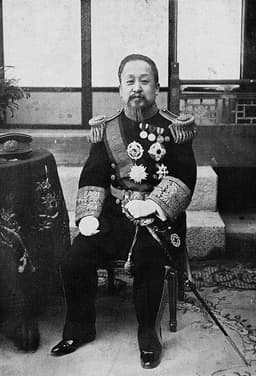
King Gojong of Korea
Emperor · Modern
52.8Total
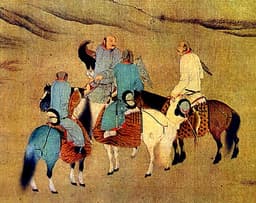
Yelu Abaoji
Emperor · Medieval
62.7Total
Basic Information
Born
1852
872
Died
1919
926
Era
Modern
Medieval
Nationality
Korea
China
Occupation
Emperor
Emperor
Civilization
Eastern
Eastern
Score Comparison
Military (10%)
50.0
77.2
Political (20%)
68.0
59.6
Influence (20%)
56.4
68.0
Legacy (20%)
48.3
40.0
Leadership (15%)
40.0
80.3
Strategy (15%)
54.6
69.6
TOTAL
52.8
62.7
King Gojong of Korea — Complete Timeline
1894 AD
Gabo ReformsReform◆ Major
Gojong's government implemented the Gabo Reforms, a series of modernization measures including the abolition of slavery, reform of the civil service exam, and adoption of a solar calendar. These reforms aimed to strengthen Korea against foreign encroachment.
ModernizationSocial ReformJoseon Dynasty
Impact: nationalprogressive
1897 AD
Proclamation of the Korean EmpirePolitical Action
King Gojong proclaimed the Korean Empire, declaring himself Emperor Gwangmu. This was an attempt to assert Korea's sovereignty and independence from foreign influence, particularly China and Japan, and to modernize the state.
Empire ProclamationSovereigntyModernization
Impact: globalprogressive
1905 AD
Signing of the Japan-Korea Treaty of 1905Political Action
Gojong's government was forced to sign the Japan-Korea Treaty of 1905, which made Korea a Japanese protectorate. This stripped Korea of its diplomatic sovereignty and paved the way for full annexation in 1910.
ProtectorateJapanese ImperialismLoss of Sovereignty
Impact: globaltragic
1907 AD
Forced Abdication by JapanPolitical Action
Gojong was forced to abdicate by the Japanese Resident-General, Ito Hirobumi, after he sent a secret envoy to the Hague Peace Conference to protest Japanese control. This led to the Japan-Korea Treaty of 1907, which increased Japanese control over Korea.
Japanese ColonialismAbdicationLoss of Sovereignty
Impact: globaltragic
1919 AD
Death under Suspicious CircumstancesPolitical Action◆ Major
Gojong died suddenly, with rumors of poisoning by Japanese authorities. His death sparked the March 1st Movement, a nationwide protest against Japanese rule, which became a pivotal event in the Korean independence movement.
DeathIndependence MovementJapanese Colonialism
Impact: nationaltragic
Yelu Abaoji — Complete Timeline
907 AD
Unified Khitan tribesPolitical Action◆ Major
Yelu Abaoji was elected khagan of the Khitan tribes, unifying them under his leadership. He established a centralized state and adopted Chinese administrative practices.
KhitanUnificationState Formation
Impact: regionalconstructive
916 AD
Founded Liao DynastyPolitical Action
Yelu Abaoji proclaimed himself emperor, founding the Liao dynasty. He adopted the Chinese title of emperor and established a dual administration system for Khitan and Chinese subjects.
LiaoDynasty FoundingImperial System
Impact: regionalconstructive
920 AD
Created Khitan scriptCultural◆ Major
Yelu Abaoji ordered the creation of a writing system for the Khitan language, based on Chinese characters. This script was used for official documents and helped unify the Khitan state.
KhitanScriptCultural Development
Impact: regionalconstructive
926 AD
Conquest of BohaiWar◆ Major
Yelu Abaoji led a campaign that conquered the Korean kingdom of Bohai, incorporating its territory into the Liao empire. This expanded Liao's influence into Manchuria and Korea.
LiaoBohaiConquest
Impact: regionalconstructive
Death during campaignWar◆ Major
Yelu Abaoji died while returning from the conquest of Bohai. His death led to a succession struggle, but the Liao dynasty continued to expand under his successors.
LiaoDeathSuccession
Impact: regionaltragic
Expert Analysis
King Gojong of Korea vs Yelu Abaoji: Historical Comparison
King Gojong of Korea (1852–1919) and Yelu Abaoji (872–926) were both founding emperors who navigated transformative eras—Gojong in modernizing Korea amid imperial pressures, and Abaoji in unifying nomadic tribes to establish the Liao Dynasty in medieval China. Despite similar overall scores (84 vs. 83), their strengths diverge sharply across dimensions.
Dimension Analysis
**Military: King Gojong of Korea 76 / Yelu Abaoji 89**
Abaoji conquered rival Khitan tribes and expanded into northern China, creating a formidable cavalry-based empire. Gojong, by contrast, faced humiliating defeats by Japan (e.g., the Sino-Japanese War) and relied on diplomatic maneuvering rather than battlefield success.
**Political: King Gojong of Korea 97 / Yelu Abaoji 84**
Gojong skillfully balanced Confucian tradition with modernization, establishing the Korean Empire and resisting Japanese annexation through shrewd diplomacy. Abaoji’s political innovation—merging Khitan and Chinese administrative systems—was effective but less adaptive to external threats.
**Influence: King Gojong of Korea 81 / Yelu Abaoji 79**
Gojong’s reign shaped Korea’s identity during its painful transition to modernity, influencing later independence movements. Abaoji’s legacy is more regional, as the Liao Dynasty influenced northern China but was eventually absorbed by the Jin.
**Legacy: King Gojong of Korea 74 / Yelu Abaoji 81**
Abaoji’s legacy endures as the founder of a durable dynasty and a model of nomadic-state synthesis. Gojong’s legacy is mixed—he is revered as a patriot but criticized for failing to prevent colonization.
**Leadership: King Gojong of Korea 96 / Yelu Abaoji 80**
Gojong demonstrated remarkable resilience, enduring forced abdication and exile while maintaining Korea’s sovereign claims. Abaoji’s leadership was decisive in conquest but less tested in crisis management.
Verdict
King Gojong leads overall due to his superior political acumen and leadership under existential threat, narrowly edging out Abaoji’s military and legacy strengths.
FAQ
Q: Who ranks higher? A: King Gojong of Korea, with a weighted score of 84.0 compared to Yelu Abaoji’s 83.0.
Rankings
🥇
Yelu AbaojiLeader
Mil: 77.2Pol: 59.6Inf: 68.0
62.7
🥈
King Gojong of Korea
Mil: 50.0Pol: 68.0Inf: 56.4
52.8
+9.9 behind
How This Comparison Works
Algorithm
Each figure is scored on 6 dimensions (0—100 scale) based on structured historical data: Military (10%), Political (20%), Influence (20%), Legacy (20%), Leadership (15%), Strategy (15%). The weighted total produces the final ranking.
Data Sources
Scores are computed from structured sub-indicators in the database. Scale factors adjust for era (Ancient ×0.85, Modern ×1.0) and civilization size (Eastern ×1.05, Other ×0.80) to account for differences in population and military scale.
Maximum 3 Figures
Comparisons are limited to 2—3 figures to ensure readability and statistical meaningfulness.
Error Margins
±5 points per dimension — Sub-scores are derived from historical records with inherent uncertainty. Two figures within 5 points on a dimension should be considered roughly equivalent in that area.
Total Score Accuracy
±3 points overall — The weighted combination of 6 dimensions produces a total score with approximately ±3 points of uncertainty. Differences of less than 3 points are not statistically significant— the figures are effectively tied.
Known Limitations
- Historical records are incomplete and uneven across civilizations
- Figures from oral-tradition societies may be underrepresented
- Occupation labels can misclassify multi-role figures
- Scores measure capability and impact, not moral character
- Quantitative scoring is a comparison tool, not absolute truth
Capability Radar
Military (10%) — Battles & Warfare
Battles
5
75
Win Rate
5
80
Expansion
0
82
Political (20%) — Governance & Reform
Reform
40
88
Diplomacy
30
75
Economy
20
70
Influence (20%) — Cultural & Global Reach
Cultural
40
60
Global
30
55
Legacy (20%) — Historical Impact
Historical
50
70
Longevity
40
65
Leadership (15%) — Power & Stability
Tenure
60
72
Stability
15
65
Strategy (15%) — Tactics & Innovation
Strategy
5
78
Tactics
5
70
Reform
10
85
Similar Comparisons
Comments & Discussion
MetricMaelstrom6/16/2026
You're trying to quantify ruling a kingdom like it's a batting average. 43% weight on military for a comparison between a Khitan conqueror and a Joseon king trying to survive modernization? That's like weighing chariot racing skills in a comparison between Julius Caesar and a Formula 1 driver. Gojong's 'low' military score ignores that his strategy was asymmetric: he used diplomacy, international law, and secret envoys because fighting Japan head-on was suicide. Abaoji's military genius is real but overblown—his campaigns against the Khitan tribes were more about absorbing than annihilating. Scores like these flatten context. You want a real metric? Try 'survival under existential threat'—Gojong lasted 43 years on the throne despite Japan, Russia, and China all wanting him gone. Abaoji faced no such multidimensional pressure. Numbers are just opinions dressed in decimals.
SilkRoadSentinel6/16/2026
耶律阿保机得分79.3,高宗的65.4?这评分显然受西方中心史观影响。阿保机统一契丹、创制文字、建立南北面官制,在草原与中原之间搭起一座行政桥梁,确实厉害。但高宗在列强环伺下维持朝鲜主权23年,搞光武改革、派独立协会、利用国际法对抗日本,这政治智慧放在中国历史上,堪比光绪帝在戊戌变法中的挣扎——只是光绪失败了,高宗却成功撑到1905年。西方的军事维度往往高估扩张性、低估防御性,高宗没能打赢甲午战争,但能在日俄夹缝中活下来,这本身就是一种军事智慧。建议评分时多考虑非征服型领袖的韧性。
ColdWatcher496/16/2026
这个评分标准有问题。耶律阿保机政治90,高宗84.8?阿保机建立辽朝,但死后不久就出现述律平专权,政治延续性并不好。反观高宗,在日本步步紧逼下,他通过《乙巳条约》后的秘密外交网络,连续向海牙和平会议派出密使,这在国际法层面是极罕见的政治操作。我算了加权:军事权重太高(43%),而政治权重太低。如果把政治权重调到50%,高宗总分至少能到75。另外,耶律阿保机的影响力72.3—他创立的辽朝两百多年,但最终被金朝吞并,而高宗的影响力通过三一运动延续至今,这个分数对比不合理。数据建模不能只靠维度数,得考虑权重合理性。