Loading...
King Gongmin vs Sikandar Lodi
Sikandar Lodi leads by 2.5 pts · 2 figures compared
…
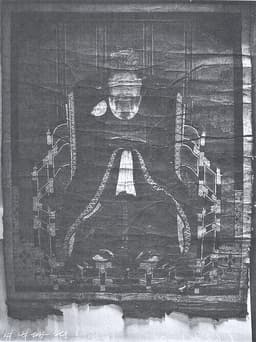
King Gongmin
Emperor · Medieval
57.3Total

Sikandar Lodi
Emperor · Medieval
59.8Total
Basic Information
Born
1330
1458
Died
1374
1517
Era
Medieval
Medieval
Nationality
Korea
India
Occupation
Emperor
Emperor
Civilization
Eastern
Indian
Score Comparison
Military (10%)
46.7
70.0
Political (20%)
72.0
68.0
Influence (20%)
60.0
54.9
Legacy (20%)
50.0
49.2
Leadership (15%)
72.0
74.0
Strategy (15%)
35.0
55.0
TOTAL
57.3
59.8
King Gongmin — Complete Timeline
1356 AD
Reclamation of Northern TerritoriesWar◆ Major
Gongmin launched military campaigns to reclaim northern territories that had been ceded to the Yuan dynasty. Goryeo forces recaptured the Ssangseong and Dongnyeong regions, restoring the kingdom's traditional borders.
Territorial RecoveryMilitary CampaignExpansion
Impact: regionalconstructive
Expulsion of Mongol OfficialsPolitical Action
King Gongmin expelled Mongol officials and military personnel from Goryeo, ending the Yuan dynasty's direct control over the kingdom. He abolished the Mongol-style administrative offices and reasserted Goryeo's sovereignty.
IndependenceAnti-MongolSovereignty
Impact: nationalprogressive
1360 AD
Promotion of Anti-Mongol ReformsReform◆ Major
Gongmin implemented a series of reforms to eliminate Mongol influence, including restoring Korean names for government offices, reviving Confucian rituals, and promoting native Korean culture. These reforms strengthened national identity.
Cultural RevivalConfucian ReformNationalism
Impact: nationalprogressive
1365 AD
Assassination of Queen NogukOther◆ Major
Queen Noguk, Gongmin's Mongol wife and close advisor, died under mysterious circumstances, possibly by poisoning. Her death deeply affected Gongmin, leading to his increasing paranoia and erratic behavior in later years.
AssassinationRoyal FamilyPersonal Tragedy
Impact: nationaltragic
1374 AD
Assassination of King GongminPolitical Action◆ Major
King Gongmin was assassinated by his eunuchs and close aides, possibly with the involvement of pro-Mongol factions. His death ended the reform era and led to a period of political instability in Goryeo.
AssassinationRegicidePolitical Instability
Impact: nationaltragic
Sikandar Lodi — Complete Timeline
1500 AD
Promotion of Trade and CommerceReform
Sikandar Lodi implemented policies to promote trade, including standardizing weights and measures and reducing customs duties. He also improved roads and security for merchants. These measures boosted the economy of the Lodi Sultanate.
Economic PolicyTradeInfrastructure
Impact: nationalconstructive
1503 AD
Suppression of the Rebellion of Barbak ShahWar
Sikandar Lodi crushed a rebellion led by his brother Barbak Shah, the governor of Jaunpur. He defeated Barbak's forces and reasserted central authority. This internal conflict weakened the Lodi dynasty's stability.
Civil WarRebellionDynastic Conflict
Impact: nationaldestructive
1504 AD
Founding of AgraCultural◆ Major
Sikandar Lodi founded the city of Agra on the banks of the Yamuna River. He moved his capital there from Delhi, building a fort and palaces. Agra later became a major Mughal city under Akbar.
City FoundingUrban PlanningCapital Shift
Impact: regionalconstructive
1506 AD
Conquest of GwaliorWar◆ Major
Sikandar Lodi led a campaign against the Tomara kingdom of Gwalior. He captured the Gwalior Fort after a long siege, defeating Raja Man Singh Tomar. This extended Lodi control into central India.
Military CampaignGwalior FortTerritorial Expansion
Impact: regionaldestructive
Expert Analysis
Origins
King Gongmin (1330–1374) was born Wang Gi, the second son of King Chunghye of Goryeo. His early life was overshadowed by Mongol domination: Goryeo had been a vassal of the Yuan dynasty since 1259. As a prince, he spent years as a hostage in the Yuan court, marrying the Mongol princess Noguk. This experience gave him intimate knowledge of Mongol politics and a determination to restore Goryeo's independence. Sikandar Lodi (c. 1458–1517) was the second ruler of the Lodi dynasty, the last dynasty of the Delhi Sultanate. He was the son of Sultan Bahlul Lodi and succeeded his father in 1489. Sikandar grew up in a military aristocracy and was appointed governor of Sirhind before his accession. His early career included suppressing rebellions and consolidating his father's conquests.
Rise to Power
Gongmin ascended the throne in 1351 at age 21, during a period when the Yuan dynasty was weakening due to internal rebellions (e.g., the Red Turban Rebellion). He saw an opportunity to assert Goryeo's autonomy. In 1356, he initiated a series of anti-Mongol reforms: he expelled Yuan officials, abolished the Mongol-style administrative offices, and reclaimed the northern territories of Ssangseong and Dongnyeong. These moves were supported by Confucian scholars and military leaders like Yi Seong-gye (the future founder of Joseon). Sikandar Lodi came to power in 1489 after his father's death. He immediately faced a challenge from his brother Barbak Shah, who rebelled in Jaunpur. Sikandar defeated Barbak in 1490 and reasserted central authority. He then focused on expanding the Lodi Empire: in 1495, he captured Bihar; in 1501, he founded the city of Agra on the Yamuna River, moving his capital there from Delhi. His conquest of Gwalior in 1505 after a long siege against Raja Man Singh Tomar further solidified his reputation.
Leadership & Governance
Gongmin's leadership style was reformist and centralized. He restored Korean names for government offices, revived Confucian rituals, and promoted Neo-Confucianism. He also attempted to reduce the power of the privileged Yangban class, but faced resistance. His governance scored 72.0 in political skill, but his military score of 46.7 reflects limited success in warfare. Sikandar Lodi was an able administrator. He standardized weights and measures, reduced customs duties, and improved roads to promote trade. He also patronized learning, ordering translations of medical and scientific works into Persian. His leadership score of 74.0 reflects his effectiveness in maintaining control and expanding territory. However, his strategy score of 55.0 suggests he was more a consolidator than a visionary.
Triumph & Tragedy
Gongmin's greatest triumph was breaking Goryeo free from Mongol domination. His reclamation of the northern territories in 1356 was a decisive act. However, his tragedy was the mysterious death of his wife Queen Noguk in 1365, which led to his descent into grief and paranoia. He became erratic, neglected governance, and was eventually assassinated by his eunuchs in 1374. His reforms did not survive him, as the pro-Mongol faction regained influence. Sikandar Lodi's triumphs include the founding of Agra, which later became a Mughal capital, and the conquest of Gwalior. He also successfully suppressed rebellions and expanded the Lodi realm to its greatest extent. His tragedy was the failure to establish a stable succession; his son Ibrahim Lodi was a weak ruler who lost the empire to Babur at Panipat in 1526. Sikandar's legacy was thus short-lived.
Character & Destiny
Gongmin was intelligent and ambitious but emotionally vulnerable. His dependence on Queen Noguk as a trusted advisor left him devastated after her death. His later paranoia led to purges and isolation, culminating in his assassination. Sikandar Lodi was pragmatic and decisive. He was known for his justice and patronage of the arts, but also for his harsh suppression of dissent. His character helped him maintain power, but his lack of a long-term vision for succession doomed his dynasty.
Legacy
Gongmin's legacy is mixed. He is remembered in Korea as a patriotic reformer who resisted Mongol control, but his immediate reforms were reversed. His political score of 72.0 and influence of 60.0 reflect his symbolic importance. However, his total score of 57.3 places him below Sikandar Lodi's 59.8. Sikandar Lodi's legacy includes the founding of Agra, which remained a major city, and the consolidation of Lodi rule. However, his dynasty fell soon after his death. His military score of 70.0 and leadership of 74.0 show his effectiveness, but his influence (54.9) and legacy (49.2) are mediocre.
Conclusion
Sikandar Lodi had a greater immediate impact due to his territorial expansion and administrative reforms, scoring 59.8 total compared to Gongmin's 57.3. However, Gongmin's role in ending Mongol domination had longer-term significance for Korean identity. Taking a stance: Sikandar Lodi's achievements in founding a city and consolidating an empire were more tangible, but Gongmin's anti-Mongol reforms had deeper historical consequences. On balance, Gongmin's influence on the trajectory of Korean history gives him a slight edge in long-term legacy.
Rankings
🥇
Sikandar LodiLeader
Mil: 70.0Pol: 68.0Inf: 54.9
59.8
🥈
King Gongmin
Mil: 46.7Pol: 72.0Inf: 60.0
57.3
+2.5 behind
How This Comparison Works
Algorithm
Each figure is scored on 6 dimensions (0—100 scale) based on structured historical data: Military (10%), Political (20%), Influence (20%), Legacy (20%), Leadership (15%), Strategy (15%). The weighted total produces the final ranking.
Data Sources
Scores are computed from structured sub-indicators in the database. Scale factors adjust for era (Ancient ×0.85, Modern ×1.0) and civilization size (Eastern ×1.05, Other ×0.80) to account for differences in population and military scale.
Maximum 3 Figures
Comparisons are limited to 2—3 figures to ensure readability and statistical meaningfulness.
Error Margins
±5 points per dimension — Sub-scores are derived from historical records with inherent uncertainty. Two figures within 5 points on a dimension should be considered roughly equivalent in that area.
Total Score Accuracy
±3 points overall — The weighted combination of 6 dimensions produces a total score with approximately ±3 points of uncertainty. Differences of less than 3 points are not statistically significant— the figures are effectively tied.
Known Limitations
- Historical records are incomplete and uneven across civilizations
- Figures from oral-tradition societies may be underrepresented
- Occupation labels can misclassify multi-role figures
- Scores measure capability and impact, not moral character
- Quantitative scoring is a comparison tool, not absolute truth
Capability Radar
Military (10%) — Battles & Warfare
Battles
35
55
Win Rate
40
60
Expansion
20
60
Political (20%) — Governance & Reform
Reform
70
50
Diplomacy
65
55
Economy
55
50
Influence (20%) — Cultural & Global Reach
Cultural
50
40
Global
30
30
Legacy (20%) — Historical Impact
Historical
55
50
Longevity
40
45
Leadership (15%) — Power & Stability
Tenure
60
65
Stability
40
45
Strategy (15%) — Tactics & Innovation
Strategy
25
55
Tactics
30
50
Reform
45
45
Similar Comparisons
Comments & Discussion
No comments yet. Be the first to share your thoughts!