Loading...
This comparison has not been analyzed yet.
One-time AI generation (~1 minute). Scores and timeline are already available below.
King Jinheung vs King Muyeol
King Jinheung leads by 3.9 pts · 2 figures compared
…
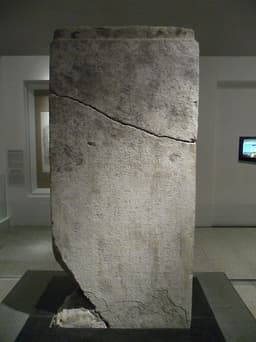
King Jinheung
Emperor · Ancient
57.9Total

King Muyeol
Emperor · Ancient
54.0Total
Basic Information
Born
-526
-604
Died
—
—
Era
Ancient
Ancient
Nationality
Korea
Korea
Occupation
Emperor
Emperor
Civilization
Eastern
Eastern
Score Comparison
Military (10%)
63.3
65.0
Political (20%)
45.0
68.0
Influence (20%)
57.2
54.1
Legacy (20%)
52.0
50.0
Leadership (15%)
79.8
40.0
Strategy (15%)
55.0
52.5
TOTAL
57.9
54.0
King Jinheung — Complete Timeline
540 AD
Created the HwarangReform
Jinheung formally organized the Hwarang, an elite youth corps that combined military training with cultural and spiritual education. The Hwarang became a key institution in Silla's unification of Korea.
HwarangMilitarySilla
Impact: regionalconstructive
Ascended to the Throne of SillaPolitical Action◆ Major
Jinheung became king of Silla, one of the Three Kingdoms of Korea. His reign marked a period of significant territorial expansion and cultural development.
AccessionSillaKorea
Impact: regional
550 AD
Promoted BuddhismCultural◆ Major
Jinheung actively promoted Buddhism as a state religion, building temples and supporting monks. This helped unify the kingdom and fostered cultural exchange with China.
BuddhismReligionSilla
Impact: regionalconstructive
553 AD
Expanded into the Han River ValleyWar◆ Major
Jinheung captured the Han River valley from Baekje, gaining control of a strategic region with access to China. This victory significantly strengthened Silla's position.
ExpansionHan RiverSilla
Impact: regional
562 AD
Conquered the Gaya ConfederacyWar◆ Major
Jinheung's forces conquered the Gaya Confederacy, a group of city-states in southern Korea. This annexation expanded Silla's territory and resources.
ConquestGayaSilla
Impact: regional
King Muyeol — Complete Timeline
654 AD
Ascended to the Throne of SillaPolitical Action◆ Major
Muyeol became king of Silla, beginning a period of alliance with Tang China that would lead to the unification of the Korean Peninsula.
AccessionSillaKorea
Impact: regional
655 AD
Formed Alliance with Tang ChinaPolitical Action
Muyeol secured a military alliance with the Tang dynasty of China, agreeing to jointly conquer Baekje and Goguryeo. This alliance was crucial for Silla's unification efforts.
AllianceTangSilla
Impact: regionalconstructive
660 AD
Conquered BaekjeWar
Muyeol led Silla forces, in coordination with the Tang army, to conquer Baekje. The fall of Baekje was a major step toward the unification of the Korean Peninsula under Silla.
ConquestBaekjeUnification
Impact: regional
661 AD
Died Before Goguryeo's FallOther◆ Major
Muyeol died before the conquest of Goguryeo was completed. His son, Munmu, succeeded him and finished the unification process.
DeathSuccessionSilla
Impact: regional
This comparison has not been analyzed yet.
One-time AI generation (~1 minute). Scores and timeline are already available below.
Rankings
🥇
King JinheungLeader
Mil: 63.3Pol: 45.0Inf: 57.2
57.9
🥈
King Muyeol
Mil: 65.0Pol: 68.0Inf: 54.1
54.0
+3.9 behind
How This Comparison Works
Algorithm
Each figure is scored on 6 dimensions (0—100 scale) based on structured historical data: Military (10%), Political (20%), Influence (20%), Legacy (20%), Leadership (15%), Strategy (15%). The weighted total produces the final ranking.
Data Sources
Scores are computed from structured sub-indicators in the database. Scale factors adjust for era (Ancient ×0.85, Modern ×1.0) and civilization size (Eastern ×1.05, Other ×0.80) to account for differences in population and military scale.
Maximum 3 Figures
Comparisons are limited to 2—3 figures to ensure readability and statistical meaningfulness.
Error Margins
±5 points per dimension — Sub-scores are derived from historical records with inherent uncertainty. Two figures within 5 points on a dimension should be considered roughly equivalent in that area.
Total Score Accuracy
±3 points overall — The weighted combination of 6 dimensions produces a total score with approximately ±3 points of uncertainty. Differences of less than 3 points are not statistically significant— the figures are effectively tied.
Known Limitations
- Historical records are incomplete and uneven across civilizations
- Figures from oral-tradition societies may be underrepresented
- Occupation labels can misclassify multi-role figures
- Scores measure capability and impact, not moral character
- Quantitative scoring is a comparison tool, not absolute truth
Capability Radar
Military (10%) — Battles & Warfare
Battles
55
55
Win Rate
60
60
Expansion
75
70
Political (20%) — Governance & Reform
Reform
70
55
Diplomacy
65
75
Economy
60
50
Influence (20%) — Cultural & Global Reach
Cultural
65
45
Global
40
40
Legacy (20%) — Historical Impact
Historical
70
60
Longevity
60
50
Leadership (15%) — Power & Stability
Tenure
80
60
Stability
70
55
Strategy (15%) — Tactics & Innovation
Strategy
65
65
Tactics
50
50
Reform
70
40
Similar Comparisons
Comments & Discussion
No comments yet. Be the first to share your thoughts!