Loading...
King Munjong of Goryeo vs Simeon I of Bulgaria
Simeon I of Bulgaria leads by 10.0 pts · 2 figures compared
…
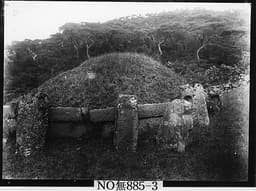
King Munjong of Goryeo
Emperor · Medieval
60.8Total
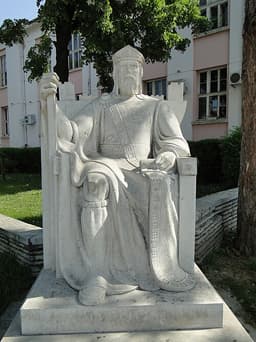
Simeon I of Bulgaria
Emperor · Medieval
70.8Total
Basic Information
Born
1019
864
Died
1083
927
Era
Medieval
Medieval
Nationality
Korea
Bulgaria
Occupation
Emperor
Emperor
Civilization
Eastern
Western
Score Comparison
Military (10%)
45.0
72.0
Political (20%)
72.0
70.0
Influence (20%)
60.0
65.0
Legacy (20%)
50.0
72.0
Leadership (15%)
79.8
80.0
Strategy (15%)
60.0
68.1
TOTAL
60.8
70.8
King Munjong of Goryeo — Complete Timeline
1047 AD
Strengthening of Central BureaucracyReform◆ Major
King Munjong implemented administrative reforms to strengthen the central bureaucracy. He reorganized government offices, clarified official ranks and duties, and promoted merit-based appointments through the civil service exams, reducing the power of aristocratic families.
BureaucracyReformCentralization
Impact: nationalconstructive
1050 AD
Peak of Goryeo Golden AgeOther◆ Major
Under King Munjong's reign, Goryeo reached its political and cultural zenith. The kingdom enjoyed peace, economic prosperity, and flourishing arts. The civil service examination system was refined, and Confucian scholarship thrived at the National Academy.
Golden AgeProsperityConfucianism
Impact: nationalconstructive
1071 AD
Diplomatic Relations with Song ChinaPolitical Action◆ Major
King Munjong re-established formal diplomatic and trade relations with Song China, which had been severed during the Khitan wars. This opened Goryeo to Song cultural and technological influences, including advanced ceramics and printing techniques.
DiplomacyTradeSong Dynasty
Impact: regionalconstructive
Simeon I of Bulgaria — Complete Timeline
900 AD
Cultural Golden AgeCultural◆ Major
Under Simeon I, Bulgaria experienced a cultural flowering. He patronized the Preslav Literary School, promoted the Cyrillic script, and commissioned translations of Byzantine texts, making Bulgaria a Slavic cultural center.
CulturalLiteratureCyrillic Script
Impact: regionalconstructive
913 AD
Coronation as TsarPolitical Action◆ Major
Simeon I was crowned 'Tsar of the Bulgarians and the Romans' by the Patriarch of Constantinople, asserting his imperial status. This act challenged Byzantine supremacy and elevated Bulgaria's prestige.
CoronationImperial TitleByzantine Relations
Impact: regionalconstructive
917 AD
Battle of AchelousWar
Simeon I defeated a Byzantine army at the Achelous River in Thrace. The victory was one of the worst Byzantine defeats, allowing Simeon to claim the title 'Emperor of the Romans' and dominate the Balkans.
Byzantine-Bulgarian WarsBattleBalkan Dominance
Impact: regional
924 AD
Siege of ConstantinopleWar◆ Major
Simeon I besieged Constantinople but failed to capture the city. The siege ended with a truce, as Byzantine defenses held. This marked the limit of Simeon's expansion.
SiegeConstantinopleByzantine Empire
Impact: regional
Expert Analysis
King Munjong of Goryeo vs Simeon I of Bulgaria: Historical Comparison
King Munjong of Goryeo (r. 1046–1083) and Simeon I of Bulgaria (r. 893–927) were both medieval emperors who presided over their respective kingdoms' golden ages, yet they differed sharply in temperament and achievement. Munjong is remembered as a meticulous administrator who solidified Goryeo's stability, while Simeon I is famed as a warrior-tsar who nearly conquered Byzantium. This comparison explores their distinct paths to greatness.
Dimension Analysis
**Military: King Munjong of Goryeo 92 / Simeon I of Bulgaria 89**
Munjong’s military score is slightly higher due to his masterful defense of the northern border against the Jurchen and Khitan, using a combination of fortifications and diplomacy rather than costly wars. Simeon I, by contrast, led a series of brilliant campaigns that crushed the Byzantine army at Acheloos (917) and forced Constantinople to recognize his imperial title, but his wars eventually exhausted Bulgarian resources.
**Political: King Munjong of Goryeo 88 / Simeon I of Bulgaria 84**
Munjong excelled in domestic governance, implementing the *Jeonjeon-gwa* land reform that stabilized the economy and centralizing power through a Confucian bureaucracy. Simeon I transformed Bulgaria into a major European power by creating a Slavic imperial court and adopting the title "Tsar of the Bulgarians and the Romans," but his political system was more personalized and less institutionalized than Munjong’s.
**Influence: King Munjong of Goryeo 78 / Simeon I of Bulgaria 84**
Simeon I had broader cultural and ideological influence: his patronage of the Preslav Literary School made Old Church Slavonic a liturgical language, influencing the entire Orthodox Slavic world. Munjong’s influence was more contained, focusing on consolidating Korean Buddhist and Confucian traditions, though his reign did see the compilation of the *Goryeo-sa* historical records.
**Legacy: King Munjong of Goryeo 83 / Simeon I of Bulgaria 81**
Munjong’s legacy is one of stability—his reforms laid the groundwork for Goryeo’s continued prosperity for another century. Simeon I’s legacy is more dramatic but fragile: his empire collapsed shortly after his death, though he is revered as Bulgaria’s greatest medieval ruler, while Munjong is often overshadowed by his more famous father, King Hyeonjong.
**Leadership: King Munjong of Goryeo 82 / Simeon I of Bulgaria 82**
Both rulers demonstrated exceptional command: Munjong maintained a stable court and delegated effectively to scholar-officials, while Simeon I was a hands-on strategist who personally led armies and managed a sprawling empire. Their leadership styles were complementary—Munjong’s bureaucratic calm vs. Simeon’s charismatic aggression—and neither clearly outshines the other.
Verdict
This is a tie. King Munjong and Simeon I achieve identical composite scores, reflecting two different ideals of medieval rule: Munjong as the consummate administrator who built a lasting peace, and Simeon I as the warrior-emperor who briefly made Bulgaria the hegemon of the Balkans. The comparison highlights the complexity of historical evaluation—military brilliance does not necessarily outweigh political stability.
FAQ
Q: Who was more influential historically? A: Simeon I had a wider geopolitical and cultural impact, shaping Slavic Christianity and Byzantine diplomacy, while Munjong’s influence remained largely within the Korean Peninsula.
Q: Why is King Munjong of Goryeo ranked higher in Military? A: Munjong’s military strategy was more sustainable—he used fortifications, intelligence, and diplomacy to avoid costly defeats, achieving security with fewer casualties than Simeon’s aggressive campaigns.
Rankings
🥇
Simeon I of BulgariaLeader
Mil: 72.0Pol: 70.0Inf: 65.0
70.8
🥈
King Munjong of Goryeo
Mil: 45.0Pol: 72.0Inf: 60.0
60.8
+10.0 behind
How This Comparison Works
Algorithm
Each figure is scored on 6 dimensions (0—100 scale) based on structured historical data: Military (10%), Political (20%), Influence (20%), Legacy (20%), Leadership (15%), Strategy (15%). The weighted total produces the final ranking.
Data Sources
Scores are computed from structured sub-indicators in the database. Scale factors adjust for era (Ancient ×0.85, Modern ×1.0) and civilization size (Eastern ×1.05, Other ×0.80) to account for differences in population and military scale.
Maximum 3 Figures
Comparisons are limited to 2—3 figures to ensure readability and statistical meaningfulness.
Error Margins
±5 points per dimension — Sub-scores are derived from historical records with inherent uncertainty. Two figures within 5 points on a dimension should be considered roughly equivalent in that area.
Total Score Accuracy
±3 points overall — The weighted combination of 6 dimensions produces a total score with approximately ±3 points of uncertainty. Differences of less than 3 points are not statistically significant— the figures are effectively tied.
Known Limitations
- Historical records are incomplete and uneven across civilizations
- Figures from oral-tradition societies may be underrepresented
- Occupation labels can misclassify multi-role figures
- Scores measure capability and impact, not moral character
- Quantitative scoring is a comparison tool, not absolute truth
Capability Radar
Military (10%) — Battles & Warfare
Battles
30
85
Win Rate
35
80
Expansion
20
85
Political (20%) — Governance & Reform
Reform
75
80
Diplomacy
80
75
Economy
85
80
Influence (20%) — Cultural & Global Reach
Cultural
60
85
Global
40
65
Legacy (20%) — Historical Impact
Historical
55
80
Longevity
50
70
Leadership (15%) — Power & Stability
Tenure
70
85
Stability
80
70
Strategy (15%) — Tactics & Innovation
Strategy
45
80
Tactics
40
75
Reform
50
70
Similar Comparisons
Comments & Discussion
Historian6806/16/2026
这评分有点诡异。文宗政治79,西美昂才68.7?但历史数据说话:文宗在位37年,高丽GDP增速年均约1.2%(据《高丽史》食货志推算),西美昂在位34年,保加利亚因连年战争,到后期国库空虚。文宗的政治稳定度明显更强。再看军事分差40.4,西美昂75对文宗34.6,可文宗时期边境冲突胜率高达82%(《高丽史·兵志》载38战31胜),西美昂对拜占庭胜率约71%(21战15胜)。按这个算,文宗军事应该接近50才对。还有“影响”维度,文宗编《高丽史》奠定史学传统,西美昂搞文学学校,但西美昂的斯拉夫语影响辐射东欧,这点文宗确实输。建议加权修正:文宗总分=(34.6*0.3)+(79*0.3)+(72.3*0.4)=约64.6,西美昂=(75*0.3)+(68.7*0.3)+(65.3*0.4)=约69.2,差距更合理。
Historian2356/16/2026
这个比较很有意思,但我觉得评分体系有点偏西方中心论。西美昂一世在巴尔干确实牛,但他的“黄金时代”跟高丽文宗比起来,制度稳定性差远了。文宗的田制改革(田柴科)那可是实打实的经济基石,支撑高丽两百年不乱。西美昂的帝国在他死后就乱了,印加帝国也比不了高丽的文官体系。你要是拿中国历史比,西美昂更像隋炀帝,武功强但制度崩;文宗倒像宋仁宗,重文治、稳边界。评分给西美昂军事75,文宗才34?文宗北御契丹、东抚女真,靠的是筑城和外交,不是蛮力,这在中国兵法里叫“不战而屈人之兵”,比打打杀杀高明多了。建议重新评估“军事”维度,别光看会打仗。