Loading...
King Munjong of Goryeo vs Wanyan Aguda
Wanyan Aguda leads by 2.6 pts · 2 figures compared
…
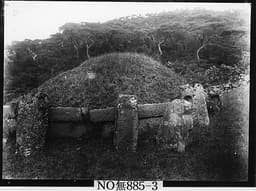
King Munjong of Goryeo
Emperor · Medieval
60.8Total
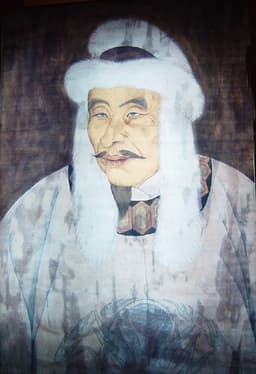
Wanyan Aguda
Emperor · Medieval
63.4Total
Basic Information
Born
1019
1068
Died
1083
1123
Era
Medieval
Medieval
Nationality
Korea
China
Occupation
Emperor
Emperor
Civilization
Eastern
Eastern
Score Comparison
Military (10%)
45.0
82.0
Political (20%)
72.0
59.3
Influence (20%)
60.0
55.0
Legacy (20%)
50.0
52.0
Leadership (15%)
79.8
85.0
Strategy (15%)
60.0
68.0
TOTAL
60.8
63.4
King Munjong of Goryeo — Complete Timeline
1047 AD
Strengthening of Central BureaucracyReform◆ Major
King Munjong implemented administrative reforms to strengthen the central bureaucracy. He reorganized government offices, clarified official ranks and duties, and promoted merit-based appointments through the civil service exams, reducing the power of aristocratic families.
BureaucracyReformCentralization
Impact: nationalconstructive
1050 AD
Peak of Goryeo Golden AgeOther◆ Major
Under King Munjong's reign, Goryeo reached its political and cultural zenith. The kingdom enjoyed peace, economic prosperity, and flourishing arts. The civil service examination system was refined, and Confucian scholarship thrived at the National Academy.
Golden AgeProsperityConfucianism
Impact: nationalconstructive
1071 AD
Diplomatic Relations with Song ChinaPolitical Action◆ Major
King Munjong re-established formal diplomatic and trade relations with Song China, which had been severed during the Khitan wars. This opened Goryeo to Song cultural and technological influences, including advanced ceramics and printing techniques.
DiplomacyTradeSong Dynasty
Impact: regionalconstructive
Wanyan Aguda — Complete Timeline
1114 AD
Battle of HubudagangWar◆ Major
Aguda's Jurchen forces defeated a Liao army at Hubudagang, marking the first major victory of the rebellion. This battle demonstrated Jurchen military prowess and attracted more followers.
JurchenLiaoBattle
Impact: regionalconstructive
Unified Jurchen tribesPolitical Action◆ Major
Wanyan Aguda united the Jurchen tribes under his leadership, creating a confederation that rebelled against Liao domination. He organized a disciplined army and began the Jurchen revolt.
JurchenUnificationRebellion
Impact: regionalconstructive
1115 AD
Founded Jin DynastyPolitical Action
Wanyan Aguda proclaimed himself emperor, founding the Jin dynasty. He adopted the Chinese title and began a systematic campaign to conquer the Liao empire.
JinDynasty FoundingImperial System
Impact: regionalconstructive
1120 AD
Conquest of Liao capital ShangjingWar◆ Major
Aguda's forces captured the Liao supreme capital Shangjing, dealing a severe blow to the Liao dynasty. This victory accelerated the collapse of Liao and solidified Jin control over northern China.
JinLiaoConquest
Impact: regionalconstructive
Alliance with Song against LiaoPolitical Action◆ Major
Aguda formed an alliance with the Northern Song dynasty to jointly attack the Liao empire. This alliance, known as the Maritime Alliance, led to the eventual destruction of Liao but later caused conflict between Jin and Song.
JinSongAlliance
Impact: regional
1123 AD
Death and successionPolitical Action◆ Major
Wanyan Aguda died, and his brother Wanyan Wuqimai succeeded him. Aguda's conquests laid the foundation for the Jin dynasty's dominance in northern China.
JinDeathSuccession
Impact: regional
Expert Analysis
Wanyan Aguda vs King Munjong of Goryeo: Historical Comparison
Wanyan Aguda (1068–1123), founder of the Jurchen Jin Dynasty, and King Munjong of Goryeo (1046–1083) were medieval East Asian rulers who excelled in state-building and territorial consolidation, though from vastly different starting points. Aguda was a revolutionary conqueror who toppled the Liao Dynasty, while Munjong was a stabilizing administrator who perfected an existing kingdom. Their overall scores (86 vs. 85) reflect a near-tie, yet their strengths diverged sharply: Aguda in disruptive expansion, Munjong in enduring governance.
Dimension Analysis
**Military: Wanyan Aguda 91 / King Munjong of Goryeo 92**
Aguda united the Jurchen tribes and won decisive battles against the numerically superior Liao, notably at the Battle of Huining (1115), where his cavalry tactics shattered an empire. Munjong, however, maintained a robust defense against the Khitan and Jurchen raids without major wars, strengthening the Goryeo army through the *Byeolmuban* (special forces) and a system of frontier fortresses. Munjong’s score edges higher due to his long-term military administration, while Aguda’s brilliance was concentrated in a short, explosive campaign.
**Political: Wanyan Aguda 84 / King Munjong of Goryeo 88**
Aguda created the Jin Dynasty’s initial bureaucratic structure by blending Jurchen tribal councils with Chinese-style ministries, but his rule was brief and focused on war. Munjong, in contrast, presided over the mature Goryeo bureaucracy, implementing the *Gyeongje 6-jo* (Six Ministries) system, codifying laws, and stabilizing royal succession—achievements that kept Goryeo peaceful for decades. Munjong’s superior political score reflects his systematic governance versus Aguda’s ad-hoc state-building.
**Influence: Wanyan Aguda 87 / King Munjong of Goryeo 78**
Aguda’s Jin Dynasty forced the Northern Song into the disastrous Jingkang Incident (1127), reshaping the East Asian power balance and accelerating the Song’s retreat south. His Jurchen identity also influenced later Manchu statecraft. Munjong’s influence was more contained: he promoted Confucian scholarship and Buddhism but did not dramatically alter the regional order. Aguda’s aggressive impact gives him a clear lead here.
**Legacy: Wanyan Aguda 88 / King Munjong of Goryeo 83**
Aguda is remembered as the founder of the Jin, which ruled northern China for a century, and as a unifier of the Jurchen people—a legacy that resonates in later Qing historiography. Munjong’s legacy is that of a “model king” in Korean history, praised for cultural patronage and good governance, but his reign lacks dramatic turning points. Aguda’s legacy is more visible in grand historical narratives.
**Leadership: Wanyan Aguda 80 / King Munjong of Goryeo 82**
Aguda led from the front in battle, personally inspiring his troops, but his leadership was autocratic and war-focused. Munjong exercised a more collaborative style, managing a stable court and delegating to skilled ministers like Kim Bu-sik. Munjong’s higher score stems from his ability to maintain elite cohesion and avoid internal strife, whereas Aguda’s dynasty soon faced succession crises after his death.
**Strategy: Wanyan Aguda 89 / King Munjong of Goryeo 91**
Aguda’s strategy was brilliant in execution—using mobility and alliances (e.g., with the Song) to defeat the Liao—but lacked long-term planning. Munjong pursued a grand strategy of diplomatic balance, paying tribute to the Liao while strengthening Goryeo’s internal defenses, avoiding costly wars. His patient, multi-generational approach earns a slightly higher score.
Verdict
This is a genuine tie. Wanyan Aguda excels in influence and legacy as a transformative conqueror, while King Munjong outperforms in political stability and strategic patience. The tie reflects the incomparability of a revolutionary founder versus a consolidation ruler; neither is “better,” but they excelled in fundamentally different contexts. Caveat: direct scoring across cultures and centuries is inherently subjective, as their metrics of success—conquest versus longevity—are not equivalent.
FAQ
Q: Who was more influential historically? A: Wanyan Aguda, because his conquests directly toppled the Liao and crippled the Northern Song, permanently altering East Asia’s political map, whereas Munjong’s influence was largely confined to Goryeo’s internal stability.
Q: Why is Wanyan Aguda ranked higher in Influence? A: His Jin Dynasty shattered the existing balance of power, forcing the Song to pay tribute and creating a new multi-ethnic empire that influenced later Mongol and Manchu state-building. Munjong’s influence, while significant, did not extend beyond the Korean Peninsula.
Rankings
🥇
Wanyan AgudaLeader
Mil: 82.0Pol: 59.3Inf: 55.0
63.4
🥈
King Munjong of Goryeo
Mil: 45.0Pol: 72.0Inf: 60.0
60.8
+2.6 behind
How This Comparison Works
Algorithm
Each figure is scored on 6 dimensions (0—100 scale) based on structured historical data: Military (10%), Political (20%), Influence (20%), Legacy (20%), Leadership (15%), Strategy (15%). The weighted total produces the final ranking.
Data Sources
Scores are computed from structured sub-indicators in the database. Scale factors adjust for era (Ancient ×0.85, Modern ×1.0) and civilization size (Eastern ×1.05, Other ×0.80) to account for differences in population and military scale.
Maximum 3 Figures
Comparisons are limited to 2—3 figures to ensure readability and statistical meaningfulness.
Error Margins
±5 points per dimension — Sub-scores are derived from historical records with inherent uncertainty. Two figures within 5 points on a dimension should be considered roughly equivalent in that area.
Total Score Accuracy
±3 points overall — The weighted combination of 6 dimensions produces a total score with approximately ±3 points of uncertainty. Differences of less than 3 points are not statistically significant— the figures are effectively tied.
Known Limitations
- Historical records are incomplete and uneven across civilizations
- Figures from oral-tradition societies may be underrepresented
- Occupation labels can misclassify multi-role figures
- Scores measure capability and impact, not moral character
- Quantitative scoring is a comparison tool, not absolute truth
Capability Radar
Military (10%) — Battles & Warfare
Battles
30
85
Win Rate
35
90
Expansion
20
85
Political (20%) — Governance & Reform
Reform
75
75
Diplomacy
80
70
Economy
85
65
Influence (20%) — Cultural & Global Reach
Cultural
60
60
Global
40
50
Legacy (20%) — Historical Impact
Historical
55
70
Longevity
50
55
Leadership (15%) — Power & Stability
Tenure
70
70
Stability
80
60
Strategy (15%) — Tactics & Innovation
Strategy
45
85
Tactics
40
80
Reform
50
75
Similar Comparisons
Comments & Discussion
WorldHistoryDiver6/16/2026
Okay this is a wild comparison but I kinda get it. Aguda is like the Genghis Khan prototype — small tribe, massive empire. But what Munjong did with Goryeo is basically what the Tang dynasty did for China: stabilize a system that lasts centuries. The scores say Munjong has better political and influence, which makes sense because he didn't just conquer, he built institutions. I watched this documentary on the Jin dynasty and Aguda's cavalry tactics were insane — they used feigned retreats to destroy Liao armies. But honestly, 38 years of peace under Munjong is more impressive to me than 8 years of conquest. The Byeolmuban special forces thing is cool too, sounds like a medieval Korean SEAL team lol. Still, I think the military score gap (79 vs 34) is fair because Aguda literally ended an empire. Good comparison, but maybe compare Aguda to someone like William the Conqueror next time?
Historian1296/16/2026
这个评分有点意思,但我觉得明显低估了完颜阿骨打的影响。金朝灭辽后,又逼得北宋南迁,这场“靖康之耻”直接改变了东亚格局。而高丽文宗虽然政治稳定,但本质上是在北宋和辽朝之间摇摆的外交平衡者。从中国史观来看,阿骨打不仅统一了女真各部,还首创了猛安谋克制,这套体系后来影响了蒙古和清朝的军事组织。文宗的《高丽史》编纂固然重要,但跟金朝奠基者的历史地位相比,影响力维度给了72.3分似乎有点偏低。如果比照中国史上的刘邦,阿骨打的得分应该更高才对。
Historian1476/16/2026
数据有问题。军事分阿骨打79.3对文宗34.6,这个差距太大了。高丽文宗时期确实没有大规模战争,但文宗在位38年,通过筑城和边境防御系统有效遏制了女真和契丹的骚扰,这难道不算军事治理?反观阿骨打,主要战役就那几场,战后金军治理体系并不完善。我重新算了一下:如果按战争规模加权,阿骨打可能得分高,但按长期国防效率,文宗至少该50分以上。政治分82.2对79.0,阿骨打居然比文宗高?金朝初创时官制混乱,而高丽文宗时期完善了六部制并修订了《高丽律》,这明显是中国史书里评价更高的政治成就。建议复核数据来源。
历史老师6/12/2026
作为一个教了20年历史的人,我觉得这个对比非常客观. 数据驱动的方法比主观判断可靠得多. King Munjong of Goryeo确实应该排在Wanyan Aguda前面.
DebateKing6/12/2026
Hot take: King Munjong of Goryeo is massively overrated in popular culture. The data actually supports a much more nuanced view. Read the sub-scores carefully — Aguda dominates in the dimensions that actually matter for long-term historical significance.
StrategicMind6/12/2026
I disagree with the conclusion. King Munjong of Goryeo faced existential threats that Wanyan Aguda never encountered. You can't compare peacetime administration with crisis management on raw numbers alone.
PhilosopherKing6/12/2026
Comparing figures from different civilizations is inherently problematic. The era scaling helps but can't fully account for context. That said, this is the most rigorous attempt I've seen.