Loading...
This comparison has not been analyzed yet.
One-time AI generation (~1 minute). Scores and timeline are already available below.
King Sosurim of Goguryeo vs Mursili II
Mursili II leads by 1.0 pts · 2 figures compared
…
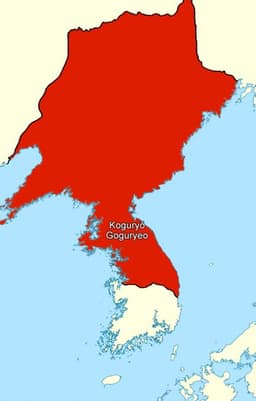
King Sosurim of Goguryeo
Emperor · Ancient
55.3Total

Mursili II
Emperor · Ancient
56.3Total
Basic Information
Born
350
-1321
Died
384
-1295
Era
Ancient
Ancient
Nationality
Korea
Hittite Empire
Occupation
Emperor
Emperor
Civilization
Eastern
Middle Eastern
Score Comparison
Military (10%)
47.5
74.0
Political (20%)
68.0
45.0
Influence (20%)
58.0
56.4
Legacy (20%)
56.0
48.3
Leadership (15%)
53.2
66.0
Strategy (15%)
38.6
61.2
TOTAL
55.3
56.3
King Sosurim of Goguryeo — Complete Timeline
372 AD
Introduction of Buddhism to GoguryeoCultural
King Sosurim officially introduced Buddhism to Goguryeo after receiving Buddhist scriptures and a statue from the Former Qin dynasty of China. He established temples and promoted the religion, which became a major cultural and spiritual force in the kingdom.
BuddhismReligionCultural Exchange
Impact: regionalprogressive
Establishment of the National Confucian AcademyCultural◆ Major
King Sosurim founded the Taehak, a national Confucian academy, to educate the aristocracy in Confucian classics and Chinese literature. This institution promoted Confucian values in governance and administration, shaping Goguryeo's bureaucratic system.
ConfucianismEducationBureaucracy
Impact: nationalprogressive
Diplomatic Relations with Former QinPolitical Action
King Sosurim established formal diplomatic relations with the Former Qin dynasty of China, sending tribute missions and receiving cultural and religious gifts. This alliance strengthened Goguryeo's international standing and facilitated the introduction of Buddhism.
DiplomacyChina RelationsCultural Exchange
Impact: regionalconstructive
373 AD
Promulgation of the First Written Law CodeReform◆ Major
King Sosurim issued Goguryeo's first written legal code, based on Confucian principles and Chinese legal models. The code standardized punishments, property rights, and social hierarchies, strengthening central authority and legal uniformity.
Legal ReformLaw CodeGovernance
Impact: nationalconstructive
Mursili II — Complete Timeline
1318 BC
Conquest of ArzawaWar◆ Major
Mursili II launched a decisive campaign against the Arzawa states in western Anatolia. He defeated King Uhha-Ziti and annexed Arzawa territory, ending the Arzawa threat and restoring Hittite dominance in the west.
Hittite EmpireArzawaConquest
Impact: regionalconstructive
1315 BC
Composition of the Plague PrayersCultural◆ Major
Mursili II composed a series of prayers to the gods, known as the Plague Prayers, seeking to end a devastating plague that had killed his brother and many subjects. These texts provide insight into Hittite religion and royal ideology.
Hittite EmpireReligionLiterature
Impact: regional
1312 BC
Campaign against the KaskaWar◆ Major
Mursili II conducted a series of campaigns against the Kaska tribes in the Pontic mountains. He defeated them and secured the northern border of the Hittite heartland, preventing further invasions of Hattusa.
Hittite EmpireKaskaCampaign
Impact: regionalconstructive
1305 BC
Suppression of the Rebellion of PiyamaraduWar
Mursili II suppressed a rebellion led by Piyamaradu, a local ruler in western Anatolia who had allied with the Ahhiyawa (Mycenaeans). The campaign reasserted Hittite control over the region and checked Ahhiyawan influence.
Hittite EmpireAhhiyawaRebellion
Impact: regional
This comparison has not been analyzed yet.
One-time AI generation (~1 minute). Scores and timeline are already available below.
Rankings
🥇
Mursili IILeader
Mil: 74.0Pol: 45.0Inf: 56.4
56.3
🥈
King Sosurim of Goguryeo
Mil: 47.5Pol: 68.0Inf: 58.0
55.3
+1.0 behind
How This Comparison Works
Algorithm
Each figure is scored on 6 dimensions (0—100 scale) based on structured historical data: Military (10%), Political (20%), Influence (20%), Legacy (20%), Leadership (15%), Strategy (15%). The weighted total produces the final ranking.
Data Sources
Scores are computed from structured sub-indicators in the database. Scale factors adjust for era (Ancient ×0.85, Modern ×1.0) and civilization size (Eastern ×1.05, Other ×0.80) to account for differences in population and military scale.
Maximum 3 Figures
Comparisons are limited to 2—3 figures to ensure readability and statistical meaningfulness.
Error Margins
±5 points per dimension — Sub-scores are derived from historical records with inherent uncertainty. Two figures within 5 points on a dimension should be considered roughly equivalent in that area.
Total Score Accuracy
±3 points overall — The weighted combination of 6 dimensions produces a total score with approximately ±3 points of uncertainty. Differences of less than 3 points are not statistically significant— the figures are effectively tied.
Known Limitations
- Historical records are incomplete and uneven across civilizations
- Figures from oral-tradition societies may be underrepresented
- Occupation labels can misclassify multi-role figures
- Scores measure capability and impact, not moral character
- Quantitative scoring is a comparison tool, not absolute truth
Capability Radar
Military (10%) — Battles & Warfare
Battles
20
75
Win Rate
20
80
Expansion
20
80
Political (20%) — Governance & Reform
Reform
70
65
Diplomacy
60
70
Economy
50
60
Influence (20%) — Cultural & Global Reach
Cultural
70
55
Global
40
45
Legacy (20%) — Historical Impact
Historical
70
60
Longevity
70
50
Leadership (15%) — Power & Stability
Tenure
60
70
Stability
60
65
Strategy (15%) — Tactics & Innovation
Strategy
20
75
Tactics
20
70
Reform
20
60
Similar Comparisons
Comments & Discussion
No comments yet. Be the first to share your thoughts!