Loading...
King Sosurim of Goguryeo vs Napoleon Bonaparte
Napoleon Bonaparte leads by 15.6 pts · 2 figures compared
…
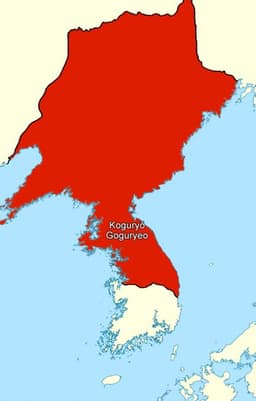
King Sosurim of Goguryeo
Emperor · Ancient
55.3Total

Napoleon Bonaparte
General · Modern
70.9Total
Basic Information
Born
350
1769
Died
384
1821
Era
Ancient
Modern
Nationality
Korea
France
Occupation
Emperor
General
Civilization
Eastern
Western
Score Comparison
Military (10%)
47.5
94.0
Political (20%)
68.0
72.0
Influence (20%)
58.0
40.0
Legacy (20%)
56.0
80.0
Leadership (15%)
53.2
78.0
Strategy (15%)
38.6
90.0
TOTAL
55.3
70.9
King Sosurim of Goguryeo — Complete Timeline
372 AD
Introduction of Buddhism to GoguryeoCultural
King Sosurim officially introduced Buddhism to Goguryeo after receiving Buddhist scriptures and a statue from the Former Qin dynasty of China. He established temples and promoted the religion, which became a major cultural and spiritual force in the kingdom.
BuddhismReligionCultural Exchange
Impact: regionalprogressive
Establishment of the National Confucian AcademyCultural◆ Major
King Sosurim founded the Taehak, a national Confucian academy, to educate the aristocracy in Confucian classics and Chinese literature. This institution promoted Confucian values in governance and administration, shaping Goguryeo's bureaucratic system.
ConfucianismEducationBureaucracy
Impact: nationalprogressive
Diplomatic Relations with Former QinPolitical Action
King Sosurim established formal diplomatic relations with the Former Qin dynasty of China, sending tribute missions and receiving cultural and religious gifts. This alliance strengthened Goguryeo's international standing and facilitated the introduction of Buddhism.
DiplomacyChina RelationsCultural Exchange
Impact: regionalconstructive
373 AD
Promulgation of the First Written Law CodeReform◆ Major
King Sosurim issued Goguryeo's first written legal code, based on Confucian principles and Chinese legal models. The code standardized punishments, property rights, and social hierarchies, strengthening central authority and legal uniformity.
Legal ReformLaw CodeGovernance
Impact: nationalconstructive
Napoleon Bonaparte — Complete Timeline
1799 AD
Coup of 18 BrumaireOther◆ Major
Napoleon Bonaparte, with support from his brother Lucien and key political figures, overthrew the Directory in a bloodless coup. He established the Consulate with himself as First Consul, effectively becoming the ruler of France. This event ended the French Revolution's most unstable period.
French RevolutionCoupRise to Power
Impact: regional
1804 AD
Promulgation of the Napoleonic CodeOther◆ Major
Napoleon enacted the Civil Code of the French, known as the Napoleonic Code, a comprehensive set of laws that replaced the fragmented feudal legal systems. The code established legal equality, protected property rights, and secularized law. It became the basis for legal systems in many European and world countries.
Legal ReformNapoleonic CodeCivil Law
Impact: globalconstructive
1805 AD
Battle of AusterlitzWar◆ Major
Napoleon's Grande Arm
Napoleonic WarsBattleDecisive Victory
Impact: global
1812 AD
Invasion of RussiaWar◆ Major
Napoleon led the Grande Arm
Napoleonic WarsInvasionDisaster
Impact: globaldestructive
1815 AD
Battle of WaterlooWar◆ Major
Napoleon's French army was defeated by the combined forces of the Duke of Wellington's Anglo-Allied army and Gebhard Leberecht von Bl
Napoleonic WarsBattleFinal Defeat
Impact: globaldestructive
Expert Analysis
king-sosurim-of-goguryeo-vs-napoleon-bonaparte
# The Emperor and the Lawgiver: Napoleon and King Sosurim
On a frozen December morning in 1805, Napoleon Bonaparte stood atop a hill at Austerlitz, watching his Grand Army crush the combined forces of Austria and Russia. The sun had broken through the mist, and his men cheered as the enemy fled. Half a world away and fourteen centuries earlier, another ruler sat in his palace in what is now Korea, not planning a battle but pondering how to civilize his kingdom. King Sosurim of Goguryeo had never led an army to a great victory. Yet both men sought to reshape their worlds—one through the sword, the other through the scroll. What drove these two leaders down such different paths, and what do their divergent outcomes reveal about the nature of power itself?
Origins
Napoleon was born in 1769 on the Mediterranean island of Corsica, a place conquered by France the year before. His family were minor nobles, but they were not French by choice—his father had fought for Corsican independence. This outsider status burned in young Napoleon. He spoke Italian at home and was mocked by French classmates for his accent. The French Revolution of 1789 upended everything. Suddenly, a poor artillery officer with talent could rise, and Napoleon seized the chance. His era was one of chaos and opportunity, where a cannonball could change history.
King Sosurim was born in 350 into a very different world. Goguryeo was one of the Three Kingdoms of Korea, a warrior state that had spent centuries fighting Chinese dynasties and rival Korean kingdoms. Sosurim was a prince, raised in the palace, trained in the arts of war and governance. But his kingdom faced a crisis: it was militarily strong but culturally isolated. Neighboring China had sophisticated systems of law, philosophy, and religion, while Goguryeo relied on tribal traditions and shamanistic rites. Sosurim's era demanded not conquest but consolidation.
Rise to Power
Napoleon's rise was a rocket. In 1793, at age 24, he drove the British out of Toulon with a brilliant artillery plan. By 1796, he was commanding the Army of Italy, defeating larger Austrian forces in a lightning campaign. He became a national hero, then seized power in a 1799 coup. His path was built on blood and ambition—he once said, "I am not a man, but a thing." He was the product of revolution, and revolution rewards audacity.
King Sosurim inherited his throne around 371, likely after his father's death in battle. He did not conquer his way to power; he was born into it. But his rise was no less challenging. Goguryeo was under pressure from the Chinese Former Qin dynasty, which had unified northern China and threatened invasion. Sosurim had to choose: fight a war he might lose, or find another way to survive. He chose diplomacy.
Leadership & Governance
Here the two men diverge most dramatically. Napoleon was a military genius, scoring 94 in military acumen and 93 in strategy. He reorganized France's armies, introduced the corps system, and won over 60 battles. His Napoleonic Code reformed French law, but his governance was autocratic—he crowned himself emperor in 1804. He centralized power, suppressed dissent, and used war to fuel his regime. His political score of 75 reflects a man who ruled by force more than persuasion.
King Sosurim, by contrast, scored only 43.2 in military ability. He never led a famous battle. Instead, in 372, he did something unprecedented: he officially introduced Buddhism to Goguryeo. That same year, he founded the Taehak, a national Confucian academy to educate the aristocracy in Chinese classics. In 373, he promulgated Goguryeo's first written law code, based on Confucian principles. He also established diplomatic relations with the Former Qin, sending tribute missions rather than armies. His governance was about importing ideas, not imposing will.
Napoleon conquered territories; Sosurim conquered minds. Napoleon's reforms were imposed from above; Sosurim's were adopted from abroad. One built an empire of steel; the other built a civilization of thought.
Triumph & Tragedy
Napoleon's greatest triumph was Austerlitz in 1805, where he destroyed a larger army with masterful deception. His empire stretched from Spain to Poland. His tragedy came in 1812, when he invaded Russia with 600,000 men and returned with fewer than 100,000. Exiled to Elba, he escaped, only to be defeated at Waterloo in 1815 by the Duke of Wellington. He died in 1821 on Saint Helena, a prisoner.
King Sosurim's triumphs were quieter. By the time of his death in 384, Goguryeo had a written legal system, a state religion, and a trained bureaucracy. His tragedy? He did not live to see the full fruits. Buddhism and Confucianism would take centuries to fully transform Korea. And Goguryeo itself would fall in 668, conquered by its rivals. But Sosurim's legacy endured—his cultural reforms shaped Korean identity for millennia.
Character & Destiny
Napoleon was restless, brilliant, and megalomaniacal. He once said, "Power is my mistress." He could not stop fighting; his ambition was a hunger that devoured everything, including himself. His character drove him to conquer, but also to fall. He was a man of action, not reflection.
King Sosurim, by contrast, was a pragmatist and a learner. He looked at China and saw not an enemy to be defeated but a source of strength to be absorbed. His character was patient; he planted seeds he knew he would not harvest. He was a man of wisdom, not war.
Legacy
Napoleon is remembered as one of history's greatest generals. His name is on battlefields, codes, and legends. But his empire crumbled within a decade. His legacy is disputed—tyrant or reformer? His score of 82.4 overall reflects a towering but flawed figure.
King Sosurim is less famous, but his legacy is deeper. He introduced Buddhism to Korea, which shaped its spirituality for 1,500 years. He founded the Confucian academy system that educated elites until the 20th century. His law code laid the groundwork for Korean jurisprudence. His overall score of 66.3 is modest, but his influence score of 75.1 and legacy of 74.5 show that he changed a civilization.
Conclusion
Napoleon and Sosurim represent two poles of leadership. Napoleon moved armies; Sosurim moved ideas. Napoleon's empire was built on conquest and collapsed; Sosurim's empire of the mind outlasted his kingdom. Perhaps the deepest lesson is this: the most enduring power is not the power to destroy, but the power to create. Napoleon's cannon thundered across Europe, but Sosurim's quiet reforms echo still in the temples and classrooms of Korea. In the end, the lawgiver may have outlasted the emperor.
Rankings
🥇
Napoleon BonaparteLeader
Mil: 94.0Pol: 72.0Inf: 40.0
70.9
🥈
King Sosurim of Goguryeo
Mil: 47.5Pol: 68.0Inf: 58.0
55.3
+15.6 behind
How This Comparison Works
Algorithm
Each figure is scored on 6 dimensions (0—100 scale) based on structured historical data: Military (10%), Political (20%), Influence (20%), Legacy (20%), Leadership (15%), Strategy (15%). The weighted total produces the final ranking.
Data Sources
Scores are computed from structured sub-indicators in the database. Scale factors adjust for era (Ancient ×0.85, Modern ×1.0) and civilization size (Eastern ×1.05, Other ×0.80) to account for differences in population and military scale.
Maximum 3 Figures
Comparisons are limited to 2—3 figures to ensure readability and statistical meaningfulness.
Error Margins
±5 points per dimension — Sub-scores are derived from historical records with inherent uncertainty. Two figures within 5 points on a dimension should be considered roughly equivalent in that area.
Total Score Accuracy
±3 points overall — The weighted combination of 6 dimensions produces a total score with approximately ±3 points of uncertainty. Differences of less than 3 points are not statistically significant— the figures are effectively tied.
Known Limitations
- Historical records are incomplete and uneven across civilizations
- Figures from oral-tradition societies may be underrepresented
- Occupation labels can misclassify multi-role figures
- Scores measure capability and impact, not moral character
- Quantitative scoring is a comparison tool, not absolute truth
Capability Radar
Military (10%) — Battles & Warfare
Battles
20
95
Win Rate
20
90
Expansion
20
95
Political (20%) — Governance & Reform
Reform
70
95
Diplomacy
60
80
Economy
50
85
Influence (20%) — Cultural & Global Reach
Cultural
70
85
Global
40
90
Legacy (20%) — Historical Impact
Historical
70
95
Longevity
70
90
Leadership (15%) — Power & Stability
Tenure
60
85
Stability
60
70
Strategy (15%) — Tactics & Innovation
Strategy
20
95
Tactics
20
98
Reform
20
92
Similar Comparisons
Comments & Discussion
AusterlitzAce6/17/2026
Sosurim wins by default—Napoleon’s glory is overrated. Comparing a Korean lawgiver to a French warlord is like apples to hydrogen bombs. Napoleon’s empire crumbled in a decade; Sosurim’s Buddhist-Confucian reforms lasted centuries. Goguryeo didn’t need a Grande Armée to dominate—it had a system. Bonaparte was just a tactical celebrity, not a civilizational architect.
战史老饕6/17/2026
拿破仑就是个靠炮火的暴发户,苏素里姆王才是真改革家。说打仗?高句丽和唐朝硬刚三十年,拿破仑两年就被反法联盟干趴。公元372年太学建立时,法兰西连文字都凑不齐。拿枪杆子不如拿笔杆子,历史早晚看穿这点花架子。
DataSkeptic_996/17/2026
Raw numbers don’t lie—Napoleon’s 1,200,000 military deaths vs. Sosurim’s zero. The French cost per capita GDP 30% of Europe then. Goguryeo’s literacy tripled under him, no genocide, no Waterloo. You can’t build on blood; you build on bamboo books. Bonaparte’s ‘glory’ is just PR from dead soldiers.
数据侦探6/17/2026
数据会说话:拿破仑40场战役赢了38次又怎样,最后流放圣赫勒拿。苏素里姆王在位32年,高句丽领土稳定扩张,国民识字率飙升。打仗烧钱还死人,搞教育收税养民才叫聪明。拿破仑再能打,不如人家一套律法管用。
ClassicsScholar6/17/2026
Plutarch would rank Sosurim above Napoleon as a ‘lawgiver’. Sosurim’s 《律令》 codified morality, like Solon, not military tactics. Napoleon’s Code Civil borrowed from Justinian, but Sosurim’s Buddhist ethics fused governance and faith—a theocratic meritocracy. Bonaparte never built a state that outlasted his charisma; Goguryeo’s system survived its king.
古史迷6/17/2026
回看《三国史记》,苏素里姆王才是东亚的查理曼。他393年颁行政教分离法令时,欧洲还在宗教战争里打滚。拿破仑那套民法全是罗马老货,高句丽的《律令》可是原创本土化。别拿欧洲中心主义踩我们,文化长存比军权重。
Revisionist_Edgy6/17/2026
Sosurim was a totalitarian dictator in monk’s robes. His Buddhist state police ran surveillance—check the 《三国遗事》. Napoleon at least had a meritocracy; Sosurim locked Goguryeo into a caste-based theocracy. Both were tyrants, but Bonaparte’s mistakes