Loading...
Konstantin Pobedonostsev vs Truong Chinh
Truong Chinh leads by 4.2 pts · 2 figures compared
…

Konstantin Pobedonostsev
Politician · Modern
47.4Total
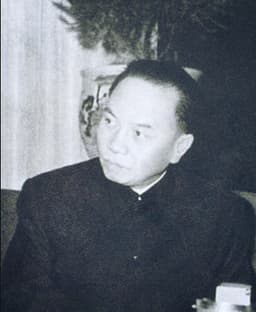
Truong Chinh
Politician · Modern
51.6Total
Basic Information
Born
1827
1907
Died
1907
1988
Era
Modern
Modern
Nationality
Russia
Vietnam
Occupation
Politician
Politician
Civilization
Western
Eastern
Score Comparison
Military (10%)
50.0
11.6
Political (20%)
29.3
68.0
Influence (20%)
53.3
56.4
Legacy (20%)
44.2
49.2
Leadership (15%)
62.2
68.0
Strategy (15%)
42.9
36.1
TOTAL
47.4
51.6
Konstantin Pobedonostsev — Complete Timeline
1880 AD
Appointed Ober-Procurator of the Most Holy SynodPolitical Action◆ Major
Konstantin Pobedonostsev was appointed Ober-Procurator of the Most Holy Synod, the lay head of the Russian Orthodox Church. He held this position for 25 years, using it to enforce religious orthodoxy, suppress dissent, and promote a reactionary agenda under Alexander III and Nicholas II.
ChurchOrthodoxyReaction
Impact: nationaldestructive
1881 AD
Drafted the 1881 'Temporary Rules' on press censorshipPolitical Action◆ Major
Pobedonostsev drafted and implemented the 'Temporary Rules' that severely restricted press freedom in Russia. The rules allowed the government to shut down newspapers, impose fines, and prosecute editors for criticizing the monarchy or the Orthodox Church, stifling public debate.
CensorshipPressReaction
Impact: nationaldestructive
1882 AD
Influenced the 1882 'May Laws' against JewsPolitical Action◆ Major
Pobedonostsev was a key advisor behind the 'May Laws' that imposed severe restrictions on Jewish residence, property ownership, and economic activities in the Pale of Settlement. These laws intensified state-sponsored anti-Semitism and contributed to widespread pogroms and emigration.
Anti-SemitismJewsPale of Settlement
Impact: nationaldestructive
1905 AD
Opposed the 1905 October ManifestoPolitical Action◆ Major
Pobedonostsev vehemently opposed the October Manifesto, which granted civil liberties and established the State Duma. He argued that any concession to constitutionalism would weaken autocracy and lead to revolution, but his influence waned as Nicholas II accepted the reforms.
October ManifestoConstitutionAutocracy
Impact: nationaldestructive
Truong Chinh — Complete Timeline
1941 AD
General Secretary of the Communist PartyPolitical Action◆ Major
Truong Chinh became General Secretary of the Communist Party of Vietnam, serving during the First Indochina War. He was a close ally of Ho Chi Minh and helped lead the resistance against French colonial rule.
General SecretaryFirst Indochina WarHo Chi Minh
Impact: nationalconstructive
1950 AD
Land reform theoristCultural◆ Major
Truong Chinh was a leading communist theorist who advocated for radical land reform in North Vietnam. His policies led to the redistribution of land from landlords to peasants, but also caused widespread famine and repression.
Land reformCommunist theoryFamine
Impact: nationaldestructive
1956 AD
Resignation over land reform failuresPolitical Action◆ Major
Truong Chinh resigned as General Secretary after the disastrous land reform campaign caused widespread unrest and famine. He was blamed for the excesses but remained a senior party figure.
ResignationLand reformFamine
Impact: nationaltragic
1960 AD
Chairman of the National AssemblyPolitical Action
Truong Chinh was elected Chairman of the National Assembly of Vietnam, a largely ceremonial role. He continued to influence party policy and ideology until his death.
National AssemblyChairmanCeremonial
Impact: nationalconstructive
Expert Analysis
Origins
Konstantin Pobedonostsev (1827–1907) was born into a clerical family in Moscow. His father was a priest and professor of theology. He studied law at the Imperial School of Jurisprudence and later taught civil law at Moscow University. His conservative views were shaped by his legal background and opposition to Western liberalism.
Truong Chinh (1907–1988) was born in Nam Dinh province, northern Vietnam, to a poor Confucian scholar family. He attended the prestigious Quoc Hoc school in Hue but was expelled for revolutionary activities. He joined the Communist Party of Vietnam in 1930 and became a leading Marxist theorist, studying under Ho Chi Minh.
Rise to Power
Pobedonostsev rose through the Russian legal system, serving as a senator and tutor to the future Tsar Alexander III. In 1880, he was appointed Ober-Procurator of the Most Holy Synod, effectively head of the Russian Orthodox Church. He became the chief ideologue of Alexander III's autocratic rule, advocating for Orthodox faith, autocracy, and nationalism.
Truong Chinh rose within the Communist Party of Vietnam, becoming a key figure in the Viet Minh during the First Indochina War. He was elected General Secretary in 1941, succeeding Ho Chi Minh. He led the party during the war against French colonial forces and was instrumental in implementing communist policies in North Vietnam.
Leadership & Governance
Pobedonostsev governed through influence rather than formal power. He used his position to shape education, press, and church policy. He drafted the 1881 'Temporary Rules' that severely restricted press freedom, allowing the government to shut down any publication deemed harmful. He also influenced the 1882 'May Laws' that imposed severe restrictions on Jewish residence and economic activities. His leadership was reactionary, opposing any reform, including the 1905 October Manifesto which granted civil liberties.
Truong Chinh led the Communist Party with ideological rigidity. He was the chief theorist of radical land reform in North Vietnam, implementing policies that redistributed land from landlords to peasants. However, the campaign from 1953 to 1956 led to widespread executions, famine, and unrest. He resigned as General Secretary in 1956 due to the failures, but later returned as Chairman of the National Assembly. His governance was centralized and harsh, prioritizing communist ideology over popular welfare.
Triumph & Tragedy
Pobedonostsev's triumphs include his successful suppression of liberal reforms and maintenance of autocratic rule during Alexander III's reign. He ensured the Orthodox Church remained a pillar of the state. However, his policies exacerbated ethnic and religious tensions, fueling anti-Semitism and revolutionary movements. His opposition to reform contributed to the eventual collapse of the Russian Empire.
Truong Chinh's triumph was his role in guiding the Communist Party through the First Indochina War and establishing North Vietnam's political structure. However, the land reform disaster was his tragedy: an estimated 15,000 to 50,000 peasants were executed, and over 100,000 were sent to re-education camps. The famine that followed killed thousands. His ideological rigidity caused immense suffering.
Character & Destiny
Pobedonostsev was a deeply conservative, cynical man who believed in the necessity of authoritarian rule. He saw democracy as a dangerous illusion. His character shaped his fate: his unwavering opposition to change made him a symbol of reaction, and his policies sowed the seeds of revolution. Historians note his score of 62.2 in leadership reflects his ability to maintain influence but not adapt.
Truong Chinh was a dedicated Marxist-Leninist, dogmatic and uncompromising. His character led to the implementation of radical policies without regard for human cost. His political score of 68.0 shows his effectiveness within the party, but his lack of strategic flexibility (strategy score 36.1) led to his downfall. He later admitted mistakes but remained committed to communist ideology.
Legacy
Pobedonostsev's legacy is one of reactionary politics. He is remembered as the 'gray cardinal' who stifled reform. His influence on Russian conservatism endured in anti-Western, authoritarian trends. His scores: influence 53.3, legacy 44.2. Truong Chinh's legacy is mixed: he is honored as a revolutionary theorist but also blamed for the land reform catastrophe. His influence score of 56.4 and legacy score of 49.2 reflect this ambivalence. Both left lasting impacts on their nations' political cultures.
Conclusion
Truong Chinh had a greater impact on history, despite his failures. His total score of 51.6 surpasses Pobedonostsev's 47.4. While Pobedonostsev's reactionary policies delayed reform, Truong Chinh's land reform fundamentally transformed Vietnamese society, albeit with great suffering. The scope of change—land redistribution, class struggle—was more profound than Pobedonostsev's efforts to preserve the old order. Truong Chinh's ideological contributions to Vietnamese communism also outlasted Pobedonostsev's influence, which faded with the empire. Thus, Truong Chinh's impact, though tragic, was more consequential.
Rankings
🥇
Truong ChinhLeader
Mil: 11.6Pol: 68.0Inf: 56.4
51.6
🥈
Konstantin Pobedonostsev
Mil: 50.0Pol: 29.3Inf: 53.3
47.4
+4.2 behind
How This Comparison Works
Algorithm
Each figure is scored on 6 dimensions (0—100 scale) based on structured historical data: Military (10%), Political (20%), Influence (20%), Legacy (20%), Leadership (15%), Strategy (15%). The weighted total produces the final ranking.
Data Sources
Scores are computed from structured sub-indicators in the database. Scale factors adjust for era (Ancient ×0.85, Modern ×1.0) and civilization size (Eastern ×1.05, Other ×0.80) to account for differences in population and military scale.
Maximum 3 Figures
Comparisons are limited to 2—3 figures to ensure readability and statistical meaningfulness.
Error Margins
±5 points per dimension — Sub-scores are derived from historical records with inherent uncertainty. Two figures within 5 points on a dimension should be considered roughly equivalent in that area.
Total Score Accuracy
±3 points overall — The weighted combination of 6 dimensions produces a total score with approximately ±3 points of uncertainty. Differences of less than 3 points are not statistically significant— the figures are effectively tied.
Known Limitations
- Historical records are incomplete and uneven across civilizations
- Figures from oral-tradition societies may be underrepresented
- Occupation labels can misclassify multi-role figures
- Scores measure capability and impact, not moral character
- Quantitative scoring is a comparison tool, not absolute truth
Capability Radar
Military (10%) — Battles & Warfare
Battles
28
16
Win Rate
29
19
Expansion
36
19
Political (20%) — Governance & Reform
Reform
10
55
Diplomacy
30
50
Economy
15
40
Influence (20%) — Cultural & Global Reach
Cultural
30
40
Global
20
40
Legacy (20%) — Historical Impact
Historical
40
50
Longevity
25
45
Leadership (15%) — Power & Stability
Tenure
40
60
Stability
20
45
Strategy (15%) — Tactics & Innovation
Strategy
38
21
Tactics
43
29
Reform
42
27
Similar Comparisons
Comments & Discussion
No comments yet. Be the first to share your thoughts!