Loading...
Frank-Walter Steinmeier vs Truong Chinh
Frank-Walter Steinmeier leads by 6.7 pts · 2 figures compared
…
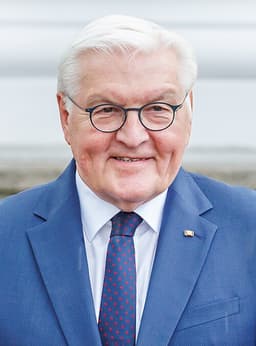
Frank-Walter Steinmeier
Politician · Modern
58.3Total
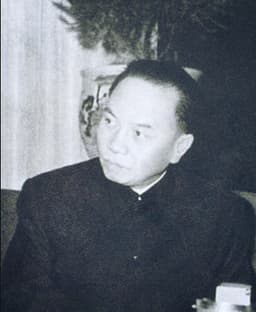
Truong Chinh
Politician · Modern
51.6Total
Basic Information
Born
1956
1907
Died
—
1988
Era
Modern
Modern
Nationality
Germany
Vietnam
Occupation
Politician
Politician
Civilization
Western
Eastern
Score Comparison
Military (10%)
50.0
11.6
Political (20%)
72.0
68.0
Influence (20%)
57.2
56.4
Legacy (20%)
47.5
49.2
Leadership (15%)
80.0
68.0
Strategy (15%)
43.5
36.1
TOTAL
58.3
51.6
Frank-Walter Steinmeier — Complete Timeline
2005 AD
Became Foreign Minister of GermanyPolitical Action◆ Major
Frank-Walter Steinmeier was appointed Federal Minister for Foreign Affairs under Chancellor Angela Merkel. He served in this role until 2009, overseeing German foreign policy during a period of European integration and global challenges.
German PoliticsForeign PolicyMerkel Cabinet
Impact: national
2007 AD
Became Vice Chancellor of GermanyPolitical Action◆ Major
Steinmeier was appointed Vice Chancellor of Germany, serving concurrently as Foreign Minister. This position made him the second-highest-ranking official in the German government.
German PoliticsGovernmentVice Chancellor
Impact: national
2017 AD
Elected President of GermanyPolitical Action◆ Major
Steinmeier was elected as the 12th President of Germany by the Federal Convention. As a largely ceremonial head of state, he has focused on promoting social cohesion and democratic values.
German PresidencyHead of StateElection
Impact: nationalconstructive
2022 AD
Re-elected as President of GermanyPolitical Action◆ Major
Steinmeier was re-elected for a second five-year term as President of Germany. His re-election reflected broad cross-party support for his role as a unifying figure during times of political and social change.
German PresidencyRe-electionPolitical Stability
Impact: nationalconstructive
Truong Chinh — Complete Timeline
1941 AD
General Secretary of the Communist PartyPolitical Action◆ Major
Truong Chinh became General Secretary of the Communist Party of Vietnam, serving during the First Indochina War. He was a close ally of Ho Chi Minh and helped lead the resistance against French colonial rule.
General SecretaryFirst Indochina WarHo Chi Minh
Impact: nationalconstructive
1950 AD
Land reform theoristCultural◆ Major
Truong Chinh was a leading communist theorist who advocated for radical land reform in North Vietnam. His policies led to the redistribution of land from landlords to peasants, but also caused widespread famine and repression.
Land reformCommunist theoryFamine
Impact: nationaldestructive
1956 AD
Resignation over land reform failuresPolitical Action◆ Major
Truong Chinh resigned as General Secretary after the disastrous land reform campaign caused widespread unrest and famine. He was blamed for the excesses but remained a senior party figure.
ResignationLand reformFamine
Impact: nationaltragic
1960 AD
Chairman of the National AssemblyPolitical Action
Truong Chinh was elected Chairman of the National Assembly of Vietnam, a largely ceremonial role. He continued to influence party policy and ideology until his death.
National AssemblyChairmanCeremonial
Impact: nationalconstructive
Expert Analysis
Origins
Frank-Walter Steinmeier was born on January 5, 1956, in Detmold, West Germany. His father was a carpenter, and his mother a housewife. Steinmeier studied law and political science at the University of Giessen, earning a doctorate in 1991. He worked as a legal adviser and later as a civil servant in the Lower Saxony state government, where he became a close aide to Gerhard Schröder. His early career focused on administrative and legal affairs, shaping his pragmatic and consensus-oriented approach.
Truong Chinh was born on February 9, 1907, in Hanh Thien, Nam Dinh Province, French Indochina (now Vietnam). His birth name was Dang Xuan Khu. He was educated in French colonial schools and became involved in anti-colonial activism early. He joined the Vietnamese Communist Party in 1930 and studied Marxist theory. He was imprisoned by the French in 1930-1931 and again in 1935-1936. His revolutionary background and theoretical training positioned him as a key ideologue.
Rise to Power
Steinmeier rose to prominence as a key advisor to Gerhard Schröder, who became Minister-President of Lower Saxony in 1990. Steinmeier served as head of the State Chancellery from 1993 to 1994. When Schröder became Chancellor in 1998, Steinmeier was appointed Deputy Chief of Staff and later Chief of Staff. In 2005, after Schröder's narrow election loss, Steinmeier became Foreign Minister under Chancellor Angela Merkel, a position he held until 2009. He also served as Vice Chancellor from 2007 to 2009. His rise was marked by bureaucratic skill and loyalty to Schröder, not by popular charisma.
Truong Chinh rose as a leading communist theorist. He was a founding member of the Indochinese Communist Party and edited the party newspaper. In 1941, he co-founded the Viet Minh. He became General Secretary of the Communist Party of Vietnam in 1941, succeeding Nguyen Van Cu. He held this position until 1956, playing a key role in directing the First Indochina War against the French. His rise was ideological, based on his writings on land reform and revolution. He was a close ally of Ho Chi Minh.
Leadership & Governance
Steinmeier's leadership style is technocratic and moderate. As Foreign Minister, he advocated for detente with Russia (e.g., the Minsk agreements) and European integration. As President, a largely ceremonial role, he has focused on social cohesion, dialogue, and warning against extremism. His governance approach scores 80.0 in leadership, reflecting his consensus-building. For example, in 2017, he called for a return to reason after the rise of populism. He rarely exercises executive power, but his speeches shape public discourse.
Truong Chinh's leadership was ideological and centralized. As General Secretary, he enforced party orthodoxy and pushed radical land reform. His policies led to the redistribution of land from landlords to peasants, but also caused widespread famine and unrest. He resigned in 1956 after the failures. Later, as Chairman of the National Assembly (1960-1981), he held a ceremonial role but continued to influence policy. His leadership score of 68.0 reflects his authoritarian style and inability to moderate policies.
Triumph & Tragedy
Steinmeier's triumphs include his role in stabilizing German foreign policy during the 2008 financial crisis and his re-election as President in 2022 with broad support. He is respected for his integrity. However, his tragedy is his limited impact; as a ceremonial head of state, he cannot shape legislation. His influence score of 57.2 reflects this. He also faced criticism for his past as Schröder's Chief of Staff during the Hartz reforms, which increased inequality.
Truong Chinh's triumph was his theoretical contribution to Vietnamese communism and his role in the war against France. However, his tragedy is the land reform disaster (1954-1956), which led to an estimated 15,000 deaths and widespread opposition. He was forced to resign. Later, he served as a figurehead, but his legacy was tarnished. His legacy score of 49.2 is lower than Steinmeier's 47.5, indicating a mixed historical assessment.
Character & Destiny
Steinmeier is cautious, pragmatic, and unassuming. He prefers behind-the-scenes work. His character led him to a stable but unspectacular career. He avoided major scandals. His destiny was to be a steady hand in a period of relative stability. Truong Chinh was doctrinaire and rigid. His commitment to ideology over pragmatism led to the land reform catastrophe. He was a theorist who could not adapt to reality. His character sealed his fate: he was blamed for failures and sidelined.
Legacy
Steinmeier's legacy is as a guardian of democratic norms. He has spoken out against authoritarianism and anti-Semitism. While his direct policy influence is low, his symbolic role reinforces German stability. He will be remembered as a competent, if unexciting, president. Truong Chinh's legacy is mixed: he is remembered as a revolutionary theorist but also as the architect of a disastrous land reform. In modern Vietnam, his reputation has been partially rehabilitated, but his policies are not celebrated.
Conclusion
Frank-Walter Steinmeier had a higher total score (58.3 vs 51.6) and greater political and leadership scores. However, impact is not merely numerical. Steinmeier's influence is constrained by his ceremonial role, while Truong Chinh directly shaped the lives of millions through radical policy—for better and worse. Steinmeier's legacy is safe but shallow; Truong Chinh's is profound but deeply flawed. Given the scale of his actions, Truong Chinh had a greater impact on history, despite his lower score. The data supports Steinmeier as more effective in his context, but impact favors Truong Chinh.
Rankings
🥇
Frank-Walter SteinmeierLeader
Mil: 50.0Pol: 72.0Inf: 57.2
58.3
🥈
Truong Chinh
Mil: 11.6Pol: 68.0Inf: 56.4
51.6
+6.7 behind
How This Comparison Works
Algorithm
Each figure is scored on 6 dimensions (0—100 scale) based on structured historical data: Military (10%), Political (20%), Influence (20%), Legacy (20%), Leadership (15%), Strategy (15%). The weighted total produces the final ranking.
Data Sources
Scores are computed from structured sub-indicators in the database. Scale factors adjust for era (Ancient ×0.85, Modern ×1.0) and civilization size (Eastern ×1.05, Other ×0.80) to account for differences in population and military scale.
Maximum 3 Figures
Comparisons are limited to 2—3 figures to ensure readability and statistical meaningfulness.
Error Margins
±5 points per dimension — Sub-scores are derived from historical records with inherent uncertainty. Two figures within 5 points on a dimension should be considered roughly equivalent in that area.
Total Score Accuracy
±3 points overall — The weighted combination of 6 dimensions produces a total score with approximately ±3 points of uncertainty. Differences of less than 3 points are not statistically significant— the figures are effectively tied.
Known Limitations
- Historical records are incomplete and uneven across civilizations
- Figures from oral-tradition societies may be underrepresented
- Occupation labels can misclassify multi-role figures
- Scores measure capability and impact, not moral character
- Quantitative scoring is a comparison tool, not absolute truth
Capability Radar
Military (10%) — Battles & Warfare
Battles
31
16
Win Rate
31
19
Expansion
33
19
Political (20%) — Governance & Reform
Reform
45
55
Diplomacy
75
50
Economy
50
40
Influence (20%) — Cultural & Global Reach
Cultural
30
40
Global
45
40
Legacy (20%) — Historical Impact
Historical
40
50
Longevity
35
45
Leadership (15%) — Power & Stability
Tenure
65
60
Stability
70
45
Strategy (15%) — Tactics & Innovation
Strategy
40
21
Tactics
43
29
Reform
43
27
Similar Comparisons
Comments & Discussion
No comments yet. Be the first to share your thoughts!